4.1M
Downloads
929
Episodes
Are you an Amazon FBA, TikTok Shop, Walmart, or Ecommerce Seller, or someone interested in becoming one? The Serious Sellers Podcast by Helium 10 is an unscripted, unrehearsed, BS-free, organic conversation between host Bradley Sutton, and real life sellers and thought leaders in the ecommerce world, where they share the top strategies that will help sellers of all levels succeed. In addition, every week there is an episode of the ”Weekly Buzz” which gives a rundown of the latest news in the Ecommerce world. ► Instagram: instagram.com/serioussellerspodcast ► Free Amazon Seller Chrome Extension: https://h10.me/extension ► Sign Up For Helium 10: https://h10.me/signup (Use SSP10 To Save 10% For Life) ► Learn How To Sell on Amazon: https://h10.me/ft ► Watch The Podcasts On Youtube: youtube.com/@Helium10/videos
Episodes
Tuesday May 02, 2023
Tuesday May 02, 2023
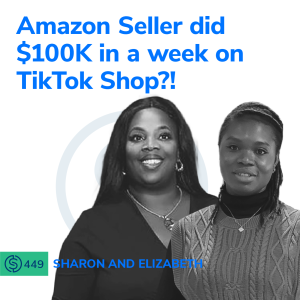
In episode #449 of the Serious Sellers Podcast, Bradley, Sharon, and Elizabeth chat about all they have been up to, including massively successful TikTok Shop campaigns, and even starting side hustles like wedding planning businesses!
Despite her success, Sharon has been struggling with motivation to focus on her Amazon business. However, instead of giving up, she has been exploring the idea of starting a new business venture after her time with Amazon. In addition, Sharon’s Amazon brand was making an impressive $1.7 million in 2022 while running on autopilot.
In episode 449 of the Serious Sellers Podcast, Bradley, Sharon, and Elizabeth discuss:
- 02:57 – What Are Elizabeth And Sharon Up To These Days?
- 04:15 – Joining Amazon’s Black Business Accelerator
- 05:56 – Losing Motivation To Focus On Her Amazon Business
- 09:16 – Starting A New Business After Amazon
- 12:15 – Still Making $1.7 million in 2022 While On Autopilot
- 12:56 – Building Her Brand In TikTok Shop
- 17:05 – Getting A Million Views On TikTok
- 22:18 – Close To $6 Million In Sales In 2022
- 22:48 – Using Amazon Skills For A New Business Venture
- 35:26 – Healthy Habits & Hobbies Outside The Business Grind
- 41:46 – Elizabeth’s 60-Second Tip
► Instagram: instagram.com/serioussellerspodcast
► Free Amazon Seller Chrome Extension: https://h10.me/extension
► Sign Up For Helium 10: https://h10.me/signup (Use SSP10 To Save 10% For Life)
► Learn How To Sell on Amazon: https://h10.me/ft
► Watch The Podcasts On Youtube: youtube.com/@Helium10/videos
Transcript
Bradley Sutton:
Today, we’ve got two of my favorite guests back on the show, and they’re gonna talk about a lot of things they’ve been up to, such as starting brand new offline businesses, and also being able to have a TikTok shop that did a hundred thousand dollars worth of sales in less than two weeks. How cool is that? Pretty cool I think.
Bradley Sutton:
You wanna know what keywords are driving the most sales for listings on Amazon. To do that, you need to know what highly searched for keywords the product is ranking for maybe at the top of page one. You can actually find that out in seconds by using helium ten’s keyword research tool, Cerebro. Now, that’s just one of the many, many functions that make this tool my favorite tool in the whole suite, and it’s the most powerful keyword research tool ever created for e-commerce sellers. For more information, go to h10.me/cerebro, h10.me/cerebro. Don’t pay full price. Use our podcast discount code SSP10. Hello everybody and welcome to another episode of the Serious Sellers Podcast by Helium 10. I am your host, Bradley Sutton, and this is the show that’s a completely BS free, unscripted, and unrehearsed organic conversation about serious strategies for serious sellers of any level in the e-commerce world. And we’ve got a couple serious sellers back here on the show. I think this is like their third time. And two of my favorite guests we have here on the podcast, Elizabeth and Sharon, the dynamic duo. I’m not gonna say who’s Batman and who’s Robin? They’re both Batman and Batwoman. We’ll just say like, you’re the top of the top, both of you. No, no, Robins here. But anyways welcome back to the show. It’s great to have you guys back.
Sharon:
Thank you so much for having us, Bradley.
Bradley Sutton:
Awesome. Awesome. Now we’re not gonna go completely into their backstory, guys, because they’ve been on the show before. So write this down. If you guys have never heard of them before, they’ve got, you know, some really inspiring stories. Their first episode was episode 206. So find out how they were able to 30x their income of what they were making in Nigeria before moving to the States and before selling on Amazon. And then check out episode 317. You can do that h10.me/317. And then you can find out how since that first episode, they were able to scale their sales from 1.7 to 6.4 million in 2021. So now I don’t know what they’ve been doing completely over the last few months. We keep in contact a little bit here or there, but I’m gonna find out with you guys how their 2022 was and what’s going on here in 2023.
Bradley Sutton:
So first of all right before we started talking, I had to stop Elizabeth. I’m like, she started telling Sharon about something. I was like, no, no, no, I wanna record this. I want to hear about this, you know, live from you. So the first thing I’m gonna ask you, Elizabeth, is you mentioned that you are part of the black-owned business program at Amazon. I actually, you didn’t know about this, but I had a podcast episode all about that. But can you tell me, like, what kind of benefits do you get from being part of that, that program?
Elizabeth:
So I do have an account manager that has manages 10 other accounts, including mine. Nine other accounts are including mine. So it’s more like a personal approach to account management that Amazon is offering. Small business owners, black business owners. I do have calls within every week to kind of go over my accounts, help you know, point me in the right direction, you know, talk about strategies on how to scale my business and stuff like that. We just started having these calls three weeks ago and it’s been so helpful, to be honest. So if you have the opportunity to register your business as a small black-owned business, you should definitely take that advantage because I know this type of personalized account management, Amazon charge premium fee for those and for them to give us for free is unbelievable. My account manager, I just believe is like maybe the one of the best, I don’t know.
Bradley Sutton:
Can you gimme an example of something that maybe you or he was able to help for you or you did as being part of this program that maybe, like before you wouldn’t have been able to, to do it, can you give like, maybe one example?
Elizabeth:
Well, mostly, but some of my products are like in the bachelorette party decoration niche. And I do have a lot of issues with like adults flagging and stuff like that. He’ll tell me, you know what, just call, just gimme a call. Like, I have this number basically on speed dial.
Bradley Sutton:
Phone number. You can actually click get him. Oh wow.
Elizabeth:
I’m not reaching to any what do you call it again? Selling support extension. Nothing like directed to him. I’m like, Hey, you know, I have this issue. I’m like, hold on Elizabeth, let me hop on this. It’s gonna hook in like an internet ticket for me. And that’s like over, like, I cannot under read that.
Sharon:
Wow. That’s amazing.
Bradley Sutton:
Sharon’s about to sign up right now.
Sharon:
Not adults, but keeps betting the adult flag. So I would definitely love that.
Elizabeth:
Yeah. And you know, he called me up, I was like, cause mine did expired cuz I registered like two years ago. It did expire, but at that point I wasn’t getting like, no personnel follow up, nothing. So I was like, you know what, maybe it’s not just for me. He called me and told me, Hey, I’m going to send you a link to register directly free of child three years license for the small business certificate. Like, he did that all for me. So like, I don’t know, maybe they, yeah. I’m definitely going to hook you up. It’s really cool.
Sharon:
All right. I like it. Now let’s switch back to Sharon. We keep things real here on the show, and I remember, I, I don’t know if it was last year or sometime you were telling me that, that there there were times last year where maybe you were neglecting a little bit or maybe your Amazon business or not as motivated as before. Am I just completely confused or was that you?
Sharon:
That was me. Absolutely.
Bradley Sutton:
Let’s talk about that. Vecause this is real.
Sharon:
So from the second half of last year, I just started getting like bored pretty much of Amazon. I do a lot of PPP C coaching personal students come around and I do, I teach PPC in my PPC clinic. So I have small meetings, it’s like a small group where I just like meet with students and then check their PPC account. We meet every week, right? So I just started getting bored and in September I’m like, okay, maybe it’s this PPC clinic that’s overwhelming me maybe. So I told other students do not renew because it’s usually like monthly. I took the whole of September of and half of October. By the second week of October I resumed PPC clinic, but I was just still not motivated. And then I have been trying to sell one of my brands, actually, I don’t know if you remember from our last meeting, so maybe that was part of it. I don’t know what was the problem, but I had all these I can’t accounts tied together in the same seller, central account, all those brands. Oh. And I was trying to sell one of those because I figured it, it had grown to a point whereby I didn’t feel like I could grow it any further by myself. So, so
Bradley Sutton:
You’re talking about one, you have one seller central account, and then you had started your own multiple brands, different private label brands.
Sharon:
And then two of the brands, we are doing much better than the other three brands. And it has gotten to a point where I believe that this brand had so much potential, it would be better off if I just sell it out that one brand so I can focus on one and sell the other one, which was good. I already connected with somebody I met, I think I met a company through the Helium 10 marketplace or something like that, forgotten what it’s called. And we were already working, but unfortunately the buyer or wherever they said they were gonna, they would need it with the seller central account. I’m like, no, that’s not gonna happen because I have all the brands and then Elizabeth or like Sharon, they want seller central account, open a new seller central account and migrate this brand before you sell.
Sharon:
I’m like, why didn’t I think of that? So I started that process and it was just being a headache because this was a product that was selling a lot. So I had thousands of inventory in my old seller center account. I didn’t wanna pull it because that would mean stopping sales and stopping revenue. So I had to wait to sell it true. And not other products were selling somewhere slow, somewhere fast. And I was trying to move to the new one and I ran out of stuff as the bestseller and just everything was going on at the same time with me just being done with Amazon that September, October. Then in November I just started a new business altogether. And that even then made, that was more interesting to me like,
Bradley Sutton:
Like an offline business, right?
Sharon:
Totally offline. Yeah. Like event the corridor, I’m an event designer, you know, it’s, I just started a luxury event rental business in November.
Bradley Sutton:
So like you use the money you’ve been accumulating from Amazon and then now you were able to start another business because you had this capital. I like it.
Sharon:
So I moved the capital that I had, I was using to, I would’ve used to like build my Amazon business. I move, and if you know about the luxury rental business, it needs a lot of upfront capital. So I put a lot of funds out of Amazon to just start this new business. And that again, took all my time and all whatnot. So as a matter of fact, only in the last two weeks did I finally, I think I should take a look back on Amazon and I’m just trying to get back into the grind.
Bradley Sutton:
I mean, you have like maybe virtual assistance or staff who are like managing inventory and things like that and Oh yeah.
Sharon:
I did not shut down my Amazon business because at the end of the day, Amazon was then like, my job. Sure. And then this new business was my side gig. Does that make sense? You know how we still have to go to work even though you don’t like the work, but you need the money. So, of course I continued managing my Amazon, but I would not do the extra stuff that we needed to do that put us above. I was like, I would go a week. I would not log to seller central, for example. I would only go there to check, do I need to send in more inventory for something. If there was any customer service thing, my VA team would handle it and all they would just message me.So I was not doing, so from September up to now, I’ve not been doing anything above and beyond. I have not taken any classes like to educate myself listening to any podcasts. I’ve not been active in any Facebook group as much. I have just been more focused on the wedding design business.
Bradley Sutton:
How’s that business going?
Sharon:
Actually, it’s going good. Basically, some of our Instagram posts and I was like, oh, that looks so cute.
Elizabeth:
Doing a good job, Sharon.
Sharon:
So, but in the last two weeks, I kind of feel like I just suddenly had space in my head come back to Amazon.
Bradley Sutton:
Did you ever finish that migration of that one brand out? Or It’s still in, so you’re still waiting to deplete the inventory from one?
Sharon:
I’m still waiting to deplete the inventory from there. Okay. And all the best sellers have been depleted, so that’s good.
Bradley Sutton:
So did you start on the new account, the replenishment of the best seller? I thought you like, just let it run out or something completely. Okay, that’s good. Yeah.
Sharon:
So immediately I opened a new account. The next order I created, I sent it to the new account.
Bradley Sutton:
Okay, cool. Cool. What did you end your 2022 in sales, would you say roughly?
Sharon:
Funny enough, it was almost the same or slightly higher than 2021. I think I ended with about 1.7.
Bradley Sutton:
1.7 million. Okay. And then even that’s with it almost being on autopilot for like the second part of the year.
Sharon:
Yes, and in 2021 I had a Covid product that was really helping.
Bradley Sutton:
Ah, okay. Okay. And then without that, so that must mean you had some other products that, that increased in sales. Cause obviously that Covid product wasn’t doing well last year. Okay. Really cool. All Alright. Elizabeth’s falling asleep over there. So we gotta pair some attention.
Sharon:
All over the place?
Bradley Sutton:
Elizabeth, did you start some side hustles too or what was your 2022 like?
Elizabeth:
2022 no side hustle. It was all Amazon. Amazon by itself for me was like a lot, just because I have a lot of multiple brands multiple brands that I’m dealing with. I think about four different brands. So I was mostly growing out more brands within the Amazon space last year and this year I’m looking more into like the off Amazon part of the business actually, TikTok, which that’s another story for another day. But yeah.
Bradley Sutton:
So, for those you know who haven’t heard your other episodes. You’ve been very successful in getting like sometimes like viral products and you get inspired by TikTok originally. Did you also have some of that last year as well? Were you, or what was it last year or was it the year before where you had a, a few products that just like did crazy numbers, like a million dollars in a month or something like that?
Elizabeth:
Yeah, yeah. That was two years ago. And also last year same thing happened, of course. I wouldn’t say back to back, but it can happen like maybe twice a year. I could find those kind of products on TikTok or on Instagram. That would do crazy numbers. But of course like anything that’s viral, it has like a peak and then oof it slows down cuz every other person can see that product. You know what I mean? On Helium 10, thanks to you guys anyways. Thanks. But no thanks.
Bradley Sutton:
Okay. Well, but being the first to it, you know, still, you know, you get the most reviews and, and there’s, there’s something to be said about being the first now. You mentioned other marketplaces. So what marketplaces are you selling on now total?
Elizabeth:
TikTok.
Bradley Sutton:
So the TikTok shop?
Sharon:
I never completed my TikTok shop.
Bradley Sutton:
TikTok shop. Now how do is TikTok shop, is it its own marketplace or is it like pulling from Shopify or something? Nope,
Elizabeth:
It’s own marketplace. Oh yeah, you should definitely try it out. So last year I found out that TikTok did have a shop in marketplace, but that wasn’t in the US it was in just Indonesia and the UK. And when I heard about that, I’m like, that’s really interesting. I tried to open a TikTok shop in the uk, which I did. It was very hard. But yeah, I found a way around it and I did I put in my product the first day I got a sale, I was so excited. I was like, yay, this, you know, seemed nice. But to be honest, the reason why I did open the UK one was just to kind of get ahead of the trend, kind of understand it, digest it. And so when it comes to the US I’m like already a pro in it. I’m not trying to find, oh, what am I supposed to do here? You know what I mean? So that was the reason. And unfortunately for me, I then quickly realize that with TikTok you can only ship within that marketplace country. Like the country. Exactly. So you can ship from the US to the UK, you can ship from China to the UK, you have to be in the UK to ship to the customers that purchased your items, if that makes sense. Okay.
Bradley Sutton:
Yep. Yep.
Elizabeth:
So I had to cancel that order and I’m like, you know what, okay, maybe this is not for me. But, you know, and then when I got the invite to that the US marketplace was open on I think they were doing like the better stage. I got the invite, I was like, you know what, I’ve been waiting for this. I got that email, I believe at midnight. I was about to go to bed actually. And then my husband just saw me, you know, cuz I was so hyper when it comes to things like this. He saw me pick up my laptop and I run, I started doing, I was like, babe, this could wait tomorrow. I’m like, Uhuh, I don’t want them to change their mind.
Bradley Sutton:
Yeah. Wow.
Elizabeth:
But wait, long story short we started posting, I posted a lot of items. Well, I’ve moved all my items on there.
Bradley Sutton:
Hold on though. Like, until then, did you already have a TikTok account for your brand that you were just like posting content to? So it’s not like, oh, that you just randomly got this invites because you had a already a TikTok account and they’re like, Hey, do you want to join this program for TikTok shop?
Elizabeth:
I had a TikTok business account.
Bradley Sutton:
Yes.
Elizabeth:
Registered
Bradley Sutton:
For, for just one of your brands? Or was it like one account that you used for to promote all of your brands?
Elizabeth:
No, one of my brands. Okay. That’s my main brand. Okay. So when I did get that, I was like, oh wow, that’s cool. You know, so I put in all my products that I know that bestsellers and then there’s this TikTok live and you know, stuff like that. I started posting videos and boom, one of my video went viral.
Bradley Sutton:
You yourself or did you hire like an influencer or what?
Elizabeth:
To me, cuz I have UGCs, I don’t know. Maybe that’s another topic.
Bradley Sutton:
I like all these topics.
Elizabeth:
I don’t have UGC content creators that I work with. Almost like my sister do almost like a mini agency that she does like a UGC content creators. She’s also a UGC content creator and she has like group of friends that do the same thing. And then you produce content for e-commerce business and stuff like that.
Bradley Sutton:
So then you took some UGC that you created and then you, you posted it to your account? And then it like linked to the TikTok shop. And then you said one of these videos went viral. So what, what does going viral mean? Like how many views or whatever did it get
Elizabeth:
It was crazy. It went like 3 million views. Wow. And yeah I’m just recalling.
Bradley Sutton:
No ads. It was all organic.
Elizabeth:
Organic. And I’m just recovering from the sales and everything else. And that’s why you saw me on that vacation. Cause I had to run away for the weekend cause it was so crazy. Anyways. and unfortunately, unfortunately for me, I could only get 200 orders maximum a day because you have to be on like a probation period. And during those probation period, you can’t, they’re not gonna give you more than 200 orders a day. So I was selling out on my 200 space before I wake up in the morning. Can you beat that on TikTok?
Bradley Sutton:
It’s okay. How, how is it set up? So like you get a sale there, like how, what is the fulfillment? Like is it pulling from your warehouse or you, you’re doing it yourself or you’re tying it to your Amazon inventory?
Elizabeth:
So for me, I was fulfilling myself at the time because I did not expect for it to go viral. You know what I mean?
Bradley Sutton:
So every day you’re doing 200 shipments from your house?
Elizabeth:
Yeah.
Bradley Sutton:
Or should I say your husband is he helping?
Elizabeth:
Was like a whole family thing. My husband, my kid, my two year old, she was stopping the stuff and the being taking it to the UPN and stuff like that. So it was really crazy. So imagine posting something three days prior and then on the fourth days, like boom, 200 orders before you wake up. When I saw it, I was like, is this a glitch? You know what I mean? It was crazy. And then all my inventory ran out of, I think we sold about 2,500 units of the item until I ran out of inventory. And when I did the momentum, of course load down because when they click on the product, it’s saying sold out. And you can’t click from Amazon. It’s not allowed. You have to fulfill from the warehouse that is tied to your store. So how it works. When you upload the video you can link like a little icon to the video. So once when they watch the video, they just click on that link and then just purchase the item like right from the video literally. So it’s the, the conversion rate is still a little low obviously. Cause with 3 million views and selling 2,500 units is still relatively slow.
Bradley Sutton:
What was the retail price of the product?
Elizabeth:
It was $32.99. And guess what? I charged shipping with $5.
Bradley Sutton:
Okay So, that’s like almost a hundred thousand dollars, including shipping a worth of.
Elizabeth:
Oh my gosh, Bradley.
Bradley Sutton:
Ah, my goodness. Sharon, look at all the, you see Sharon, are are you re are you feeling revitalized about e-commerce yet Sharon?
Sharon:
I’m on my second screen right now, I’m on TikTok shop.
Bradley Sutton:
Accepting that beta invite, I hope.
Elizabeth:
Now it’s not invite only. You can just go on there, join
Sharon:
The email, I could not find it. I just went on Google and I’m literally on seller us.tiktok.com and right now I’m verifying my business information. I ain’t no joking.
Bradley Sutton:
You see, guys, I apologize. I forgot where you live. Sharon. But the Texas In Texas, yeah. I apologize to the wedding community there. You might be a little bit late in some of your wedding supplies. Cause Sharon is now revitalized in, in e-commerce with the black business program and now with TikTok shop. Okay. Wow. All right. That, that’s pretty cool, Elizabeth. So like what did you and your 2022 sales about?
Elizabeth:
It was close to 6 million for sure.
Bradley Sutton:
Alright. Close to 6 million. And, and so that’s on Amazon. And then probably, you know, not much, you know, TikTok I know is new for you. Yeah. Are there other market places that you are on? Like were you selling on Shopify or Walmart or anything like that? Yeah, there
Elizabeth:
There was not left coming from those medium to be honest. 99.99% was from Amazon.
Sharon:
Yeah, me too.
Bradley Sutton:
Okay. All right. All right. Let’s go back to Sharon here. If you, if I can take you away from your TikTok registration. Talk to me about how you decided on the business, because I think this, this is what you did last year is something that is on the, a lot of seller’s minds. You know, they, they get a lot of money from Amazon. They’re like, Hey, I could just put it all back into Amazon. I could start other businesses. I could do like Bradley and do like sports cards and NFTs and things like that. But I think a lot of people, you know are intrigued by starting their own offline business. So like what, was it something you’ve always wanted to do or did you just do some like research and to businesses or how did you come?
Sharon:
I always loved events planning. Not just event, but wedding planning and party planning and just everything. Parties, I love parties, but the fun for me ends when the party starts, my social battery is like this. I don’t go to parties. I enjoy planning it. And then I wanna sit down and watch you guys enjoy the party.
Bradley Sutton:
Okay.
Sharon:
At that point, my social battery is just off. So in my church, I’m very active in my church. All the youngsters that are getting married is always, Hey, aunt Sharon, my wedding, we’re planning this person’s wedding. So I’ve always been doing that and stuff. And then last year one of my youngsters friends reached out to me. She was like, Hey auntie, I’m getting married. I’m like, congratulations. Thinking she was inviting me. She was like, yeah, well you’re gonna plan this. I’m like, no, I do not plan weddings anymore. Because in 2017 I was actually the official wedding planner for her brother. I’m like, I do not plan weddings anymore. I do not have time. Amazon is taking all my time. She was like, oh no, I see you’re planning my wedding. You know, and we got talking. I’m like, okay, here’s what I can do for you.
Sharon:
I can coordinate. Just pay me to coordinate. But for the planning itself, don’t pay me just go planning. But if you need any help along the way, I’ll do it. As long as it doesn’t involve me physically doing someone. So in getting that, I started getting excited again in about weddings when I’m discussing with her. And just the whole planning really got me excited. And that was when I was able to pinpoint it, like, wait a minute. It’s really not every part of wedding planning that I love. It’s just a design part. I don’t care what your dress looks like. I don’t wanna follow you to your dress rehersal. I don’t wanna go taste the food with you. I don’t care. I just wanna know what a food looks like when it’s plated. I don’t care if it’s gonna be chicken or fish.
Sharon:
I don’t care if it’s sweet. I don’t care if it’s too soft or too hard or whatever. I just care about the presentation. And that was when I’m like, this is the part that really interest me. And then when we got to the part of planning had decor and renting of luxury furniture, it was a new I did not, I was not aware. I guess I was, but I just did not know the, how it was about that part. Like, wait, I can actually niche this down to the part that I really do care about. And then I just told him and her fiance, I’m like, guys, look, I can sauce this inventory. Would you guys give me the job to provide a luxury furniture for your wedding?
Bradley Sutton:
So she was the fist official customer for your new wedding.
Sharon:
I guarantee you that you would see it in January. Your wedding is in April. In January you would have it because of my experience with China shipping and all that, it was so much easier for me.
Bradley Sutton:
So this is stuff that are you reusing it or you rental buying it just for one event? So rental. Okay. I was about to say, yeah, that would be kind of expensive to, so rental expensive. Cause So then did you have to get a warehouse for this style ?
Sharon:
I still have a warehouse now.
Bradley Sutton:
You didn’t have it for Amazon before?
Sharon:
My Amazon, I was using my garage other, now I finally just got a space. But for my Amazon, I was using my garage. But for the wedding business events, the locks is the name. It’s I got a warehouse because the first container that came was a 40 foot container and then some less than container here.
Bradley Sutton:
40 foot container of wedding supplies.
Sharon:
Think about your dining chairs. And I have two, 240 of those. Just think about that.
Bradley Sutton:
You invested a couple dollars into this. Wow. Okay. Now, now did you set up the business? Like did you use like the LLC from your Amazon business? Did you set up a completely separate entity?
Sharon:
Separate entity? I up a brand new LLC straight up to SO. Uhhuh, just so that I have all those set out right from the beginning. I literally registered with IWA and went to get accredited as an accredited event designer. So I’m just doing everything.
Bradley Sutton:
And then like did, did you hire employees? You just doing it with your, your family for right now or? Oh,
Sharon:
Right. Ah, my kids are too small. They can leave to finger. So when we do have events, I have, I, they’re not employees, they’re like contractors because the last event I did, I had 12 people working. I cannot afford that for full-time staff. Yeah, they’re contractors. I bought a box truck, and then the one,
Bradley Sutton:
How much did the box truck cost? I’m trying to buy one myself.
Sharon:
It’s a very old one.
Bradley Sutton:
No, that’s my style. Like I want an old one.
Sharon:
Okay. Okay. I actually got it off of Facebook Marketplace.
Bradley Sutton:
How much?
Sharon:
I got it out of Facebook Marketplace, it was 6,500, but it needed some repairs. So everything came out about 10,000. So it’s an old box truck. But it is working.
Bradley Sutton:
Are you gonna put like some fancy logo on the side?
Sharon:
Not yet. I’ve just had a lot going on, but I plan too.
Bradley Sutton:
So let’s say things go as planned. You continue to build it up for this year. Like what would you say, what do you think you would profit from this business for this year? L like this, this wedding business
Sharon:
Versus Amazon or on its own?
Bradley Sutton:
No. Just by itself not on its own.
Sharon:
Honestly, I don’t even know how to calculate that. Just because of the capital investor. Yeah, because remember furniture is upfront capital. So I don’t how to calculate.
Bradley Sutton:
How much gross revenue then? Like what are doing a month, like how many event, yeah.
Sharon:
Hopefully it gets better. But as of right now, I think I’m maybe about 70-80,000, I don’t know.
Bradley Sutton:
70, $80,000 you’ve, you’ve done so far? Yeah, in a couple, a few months. Okay. Hey, that’s some good revenue there. So, so guys out there you know, once you get into Amazon, that doesn’t mean that, oh, my whole life is revolves on Amazon. Oh no. So some, some people, hey, some, some people are and that’s, that’s totally fine. But, but for those of you who, who have like a itch to do something different, well yeah. That’s one way you can use your, your Amazon money is go with your passion, you know, so that’s something that Sharon’s been passionate about for a while. And yeah, it’s always cool to make money about what your passions are, and that’s another
Sharon:
What you can do for ree. You can make money of. That’s my mantra.
Bradley Sutton:
Alright. Going back to Elizabeth now how many videos did it take until that one went viral? Like, is it one out of 100 go viral, one out of 10, one out of 50? What would you say?
Elizabeth:
So, I honestly think TikTok portioning videos that are linked to product that are from TikTok shop my own opinion. But it was a third video that I posted that did, went viral.
Bradley Sutton:
Oh, good grief. Wow. That was pretty fast. Now what is do’s? Cut pn orders that go through the shop.
Elizabeth:
So right now they have a lot of promotions going on that they offer both the sellers and also the buyers for the sellers. I believe there’s zero fee for the first 90 days. That’s for the sellers, right. And then for the buyers, they’re giving them a 30% discount for their first order and also all shipping.
Bradley Sutton:
Hold on. So that $33 that you got plus shipping, TikTok was not taking a percentage from there?
Elizabeth:
No.
Bradley Sutton:
Oh my goodness. Sharo is even faster now. Registering right there.
Elizabeth:
They were not checking. And just because say like the product that I have on Amazon that is selling for $32 on TikTok, it’s like the first order that they make, they only paying $20, $21
Bradley Sutton:
Oh, is TikTok subsidizing you? Or that’s coming out of, so it’s not like you are only getting $20. Wow, okay. Yeah. My goodness. I wish Amazon would do that. Okay.
Elizabeth:
To somebody from TikTok and the person was telling me that TikTok did, am I saying this meaning not, okay, so let’s just scratch out.
Bradley Sutton:
This is fascinating to me. Now, now here’s a question. That product that went viral or the video, let me rephrase that. The product that was in the video that went viral, do you also sell that on Amazon? Did you see any increases on your Amazon sales for that product after that TikTok video, even though it was going to TikTok shop? So then probably it’s sold out. So then what people are doing is like, oh, let me see if this is on Amazon. So how did that, how, like, were you the only seller of it? Did you have competition at the time that this video went viral on Amazon? Did you have competition for it?
Elizabeth:
There’s a lot of competition.
Bradley Sutton:
So, how was it that they were still buying your product? Like were they searching by the brand, do you think?
Elizabeth:
So it’s on my TikTok page and on my TikTok bio, I do have the link tree that has all my products on there. So they just go in there, click and buy.
Bradley Sutton:
So how much would you say it increased on Amazon? Like what were you doing before the video went viral? Like, you know, like hundred orders a day, 50 orders a day, and then how much was it after? So that, you know that, oh, it must have been from this period.
Elizabeth:
It was almost like 30% lift. And so for sure.
Bradley Sutton:
Interesting. So how long is this probation period going to last for, for you where you have that limit of 200?
Elizabeth:
It’s 60 days. Okay. Painfully so, but they do have an exception when you sell certain amount of units and then you have a certain amount of ship through rates, tracking rates and stuff like that. Then you can request for early access to like the full thing.
Bradley Sutton:
Okay. Yeah. What are you using to fulfill the orders? Like me at my warehouse here or my house? I use stamps.com. Like do you have like a thermal label printer? And are you using a, a software in order to, to print like the addresses and everything? Or are you buying the postage directly from TikTok? How does that work?
Elizabeth:
So initially I was buying from I was using my Shipo, but I just switched to like the TikTok shipping thing method. Okay.
Bradley Sutton:
So it’s kinda like how Amazon works if you’re fulfilling your own. You can buy it at a slightly discounted rate, the Yeah. The shipping and then print out the labels. Okay. Yeah. I’m assuming, you know, you and your, your husband do not want to be, you know, shipping 300 products a day. So what’s your like, longer term plan as you scale this TikTok out for fulfillment? Like, are you opening a warehouse? Are you gonna use a three pl or are you gonna just keep doing it yourself with that two year old to work?
Elizabeth:
At the moment, we do have a big garage. It fits like a eight car garage that we have over here. So the thing is, you know, we had to pull a lot of inventory out of Amazon to be honest to the house, just so we have enough units to, to fulfill. And so we’re just putting things in place. I do have one person that you come, I think six hours a day now to help with you know, just getting everything organized and in preparation for the next video that might go viral. You know what I mean? So I do have one person coming to help with fulfillment, cuz that’s going to take a lot of time away from Amazon and I don’t want that.
Bradley Sutton:
Yeah. Okay. Alright. Last two questions for Sharon now. Something that we’re doing, we’re doing more this year. My theme of the podcast is also about like mental and physical health I think is important for entrepreneurs. Like, actually today is, is the one year anniversary from when I died for like 10 minutes and had my heart attack. So like, that’s why like this year’s my anniversay guys.
Sharon:
A year ago already.
Bradley Sutton:
Yeah, a year ago today. Like, exactly like, I even did a, it’s crazy. I was looking back and like, I remember like, I was doing a, I did a webinar that day and I had no, I have no remembrance of doing that webinar. I remember like when I woke up after being in the hospital, I was like, oh man, I remember I was supposed to do a webinar. I must have let the company down because I wasn’t available for it. And I look on YouTube, I’m like, there is me. I was like, I was like, that’s not me. I don’t remember this at all. Wow. But anyway, so, so, so Sharon, you know, like I’m sh you know, I I think I think part of what you were talking about, I think actually probably was good for your mental health. You know, you’re getting burnt out on Amazon, just so like you were able to go into doing something you know, to doing something else that, that gave you fulfillment. What else do you do for like, hobbies or maybe physical habits you know, special supplements. I don’t know what, whatever you want to talk about. Let me know.
Sharon:
So I am very active in church. I’m not a very social person like miss traveler right here. But, I’m very active in church and that’s pretty much what I do. I’m really close friends with my husband. We have a good relationship and we are both home buddies. We don’t go out. So I wish you could see where I am right now in this office. By the way, we just closed on this house. So in this office, this is my section and that’s his section and we’ll go to work from here.
Bradley Sutton:
What about physical health then? Because the, I think your situation’s very similar to me and, and my problem was, especially when we were remote, I’m here. I mean, this is my office, this is my podcast studio, but it’s in my house. And like I, there was times where I don’t get up, I don’t go to the gym or I don’t do anything because I’m just like, Hey, this is so comfortable, I’m just gonna stay my desk.
Sharon:
Actually one of the things that encouraged me to start this business, because my husband, when I started my husband, I was like, this is very physical. Like, are you gonna be able to do it? Because guys, I was weighing over 300 pounds.
Bradley Sutton:
Oh wow.
Sharon:
So I said I was gonna do it and like I said, I took the course. I plant so many things, and part of the things I plan in order to be successful in this business was I had a gastric bypass.
Bradley Sutton:
Okay.
Sharon:
On February 13th, I had gastric bypass. So it’s almost three months now and I’ve lost almost 50 pounds.
Bradley Sutton:
Wow. Very nice. Congratulations.
Sharon:
I haven’t been doing exercise though, but I’ll get there. I plan to actually, because now that my body, my muscles have been used to carrying around so much fat and now they don’t have that, so they’re gonna go to sleep and they will get weak.
Bradley Sutton:
So now you’re gonna be carrying around dining tables and chairs and stuff.
Sharon:
No, but for real though, I have to now actively challenge my muscle by going to the gym. Yeah. Otherwise, even though you look smaller, you’re gonna be weaker. So I just learned that. So now you gotta tell them. So don’t go to sleep. And actively train you now. So that’s the way I’m going to, but to be honest, that alone has really helped me mentally and just physically and, and because I have so much more energy than I had before.
Bradley Sutton:
Oh, that, yeah. I need that back. You know, I’ve probably gained like 60 pounds in the last three years, so I’m definitely the last year I’ve been working on getting that off. That’s alright. Excellent. Excellent. Very nice. Elizabeth same question to you. Sounds like you’re into travel from Sharon, making fun of you. Where did you go last weekend for like your de-stressing after that TikTok hundred thousand dollars?
Elizabeth:
Well, I just had to splodge and it put over Vita trip. It was nice. Just a three day trip Mexico. It was nice.
Bradley Sutton:
Next time you wanna do that, let me know. My parents have a house in Malan, which is very near, or this kinda like, not near, but like, so you can stay in our house over there.
Elizabeth:
That’s pretty cool. Yeah. Putto Vita was really nice. Weather was wonderful. We had like a really stressful weekend and then we decided to treat ourself on like a private, you know, little yacht moment.
Bradley Sutton:
I thought she was gonna say private jet. I was like, whoa. Okay. Elizabeth is really next level. Yeah. We took a private jet to Mexico. Okay. No private yacht. That’s just as good now. See us is cool. I like using splurge.
Elizabeth:
Yeah. It was like, I was, I was just putting the back of my mind. I’m like, yeah, TikTok pay for this. Tiktok pay
Bradley Sutton:
Yeah, exactly.
Elizabeth:
So yeah, so yeah, you know, we like to travel and for us, you know, this business has really given us the opportunity to have that kind of lifestyle that we travel at least once every three months for sure. You know, and I know without, you know, having this type of I wouldn’t call Amazon a passive income, to be honest with you, because we do put in a lot of work, especially when you get to a certain level of sales, I would say. So, yeah, so travel is my thing. We are foodies. We like to explore when it comes to food and stuff. So yeah, that’s what we do for fun. I do go to the gym once in a while, although I have slats for the past couple of weeks. But I think I’m gonna get back in there because mentally for me, when I drop the kids off from school, I just head straight to the gym and then that’s how my days get started.
Bradley Sutton:
I like it. I like it. All right. And now last one for you Elizabeth you’re a 30-second tip of the day or 60-second tip. It could be about Amazon, it could be about PPC could be about TikTok, product research, TikTok shop, whatever. What would you say is, is your strategy for everybody out there?
Elizabeth:
Keep posting that content because you never know. Cuz in the beginning for me having the TikTok store, I mean the TikTok what do you call it again?
Sharon:
Shop
Elizabeth:
Not the shop. The, the account was just for posting product. It wasn’t even about the sale. Yeah. But the consistency from my posting was what gave me like, the initial edge of joining TikTok shop. And that’s what, you know,
Bradley Sutton:
What is your consistency or what’s your cadence?
Elizabeth:
So I do post every day for sure. I post every day.
Bradley Sutton:
How many followers do you have now?
Elizabeth:
I have about 5,600 followers. It’s not a last one, you know,
Bradley Sutton:
So, so from an account that only has 5,600 followers, that was the account where you had that 3 million views? Okay. Interesting. Wow. I like it. Yeah. All right. Well ladies, it’s always great to have you on the show. Very inspiring stories. I always get a lot of, you know, Facebook or Instagram dms with, you know, people are like, oh, wow, that was so inspiring. So like, you know, just know that, you know, keep on doing what you’re doing because you’re inspiring a lot of people out there. And it’s inspiring me. Like I can’t lose 50 pounds in, in three months. I wish I could. I I used to back in the day, I could do that when I was younger, but, but those days are gone. But by the next time, here’s my pledge. By the next time Sharon I have you on, I should be able to say hopefully I’ve lost like another 40 or 50 pounds, so, okay.
Sharon:
Hopefully, I’ll get more.
Bradley Sutton:
I’ll try and get you here. Yeah, I love it.
Sharon:
Still have a lot to do.
Bradley Sutton:
And then Elizabeth I think, you know, you’re well on the way to eight figures your first eight figure year. So look forward, look forward to that this year. So, so guys, I hope to see you soon. You know, one of our Elite workshops, you know, maybe in May if you guys can come out here, and then if anybody’s getting married in Texas, do you have like a website we can out your new business, Sharon.
Sharon:
Actually, eventsdlux.com.
Bradley Sutton:
I love it. I love it. All right, so if you’re in Texas and you want to really have a luck, luxurious wedding. Hit up Sharon, although she might take some time getting back to you because now she’s going back to TikTok and Amazon.
Sharon:
Yeah. Thank you Bradley.
Bradley Sutton:
All right, well thank you so much and we’ll be seeing you soon.
Elizabeth:
Thank you.
Saturday Apr 29, 2023
Saturday Apr 29, 2023
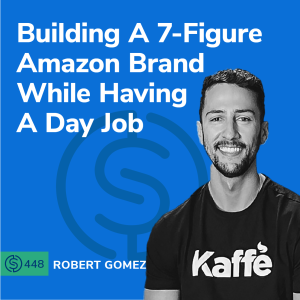
In episode #448 of the Serious Sellers Podcast, Bradley and Robert chat about how he grew his Amazon and retail brand to over $4 million in revenue while working a full-time job.
Robert shares his backstory and how he got into entrepreneurship at an early age. He then talks about how he transitioned into e-commerce and eventually started his Amazon brand while still working his day job as a consultant and now, senior finance manager at Microsoft.
Robert also shares how he got started in the coffee niche and how good supplier terms and building a good relationship with them helped his business grow. He even managed to reach $2 million in sales in his first year!
Despite having a full-time job, Robert managed to run his Amazon business successfully and with the help of agencies for other aspects of his business. His ultimate goal was to get his brands into retail, and he shares the process of getting into 4,000 Walmart retail stores.
Robert also talks about lightning deals and a new emerging marketplace called Faire that he uses to market his products and get them into mom-and-pop shops across the country. And as for his goal for 2023? You’ll have to tune in to find out!
In episode 448 of the Serious Sellers Podcast, Bradley and Robert discuss:
- 02:02 – Robert’s Backstory And His Early Start In Entrepreneurship
- 05:48 – How He Got Into E-commerce And Amazon
- 08:32 – Working A Day Job While Starting An Amazon Brand On The Side
- 10:22 – How Robert Got Started In The Coffee Niche
- 12:20 – $2 Million In Sales In His First Year
- 14:13 – How Good Supplier Terms Helped His Business Grow
- 14:50 – Building A Good Relationship With Suppliers Help
- 15:58 – Running His Amazon Business With A Full-Time Job
- 18:52 – Working As A Senior Finance Manager In Microsoft
- 20:26 – Reached $4 Million In Sales In 2022
- 20:56 – Leveraging Agencies For Other Aspects Of His Business
- 23:06 – The Goal Was To Get His Brands Into Retail
- 23:45– The Process On Getting Into 4,000 Walmart Retail Stores
- 25:10 – Lightning Deals And Other Strategies Robert Uses
- 28:35 – Marketplace To Get Your Products Into Mom & Pop Shops
- 30:59 – What Is Robert’s Goal This 2023?
► Instagram: instagram.com/serioussellerspodcast
► Free Amazon Seller Chrome Extension: https://h10.me/extension
► Sign Up For Helium 10: https://h10.me/signup (Use SSP10 To Save 10% For Life)
► Learn How To Sell on Amazon: https://h10.me/ft
► Watch The Podcasts On Youtube: youtube.com/@Helium10/videos
Transcript
Bradley Sutton:
Today we’ve got a seller who’s still working his everyday full-time job, but on the side, he’s been able to grow his online brand to over $4 million of revenue. How cool is that? Pretty cool I think.
Bradley Sutton:
Are you looking to learn how to sell on Amazon? The Freedom Ticket Course made by Kevin King is one of the most popular courses ever created for Amazon sellers. It’s got over 90 modules and 40 hours of detailed step-by-step training to help get you started on your entrepreneurial journey. Now, this course costs $997, but Helium 10 actually covers that cost of the course for any Helium 10 member. Find out why tens of thousands of students love this program by going to H ten.me/freedom ticket. Don’t forget that if you do, sign up for a Helium 10 account. Don’t pay full price. Use our podcast discount code SSP10 to save 10% off for life. Hello everybody and welcome to another episode of the Serious Sellers Podcast by Helium 10. I am your host, Bradley Sutton, and this is the show that’s a completely BS free, unscripted, and unrehearsed organic conversation about serious strategies for serious sellers of any level in the e-commerce world. We’ve got a serious seller on with us today. How’s it going, Robert?
Robert:
What’s going on Bradley? Thanks for having me.
Bradley Sutton:
Thanks for being here. It’s pretty cool that you’re here. We just had some technical difficulties. Made him wait for like 10 minutes as my audio was having issues, but, but he’s a trooper here, and that’s kind of like probably like part of the theme I should say, of what we were gonna be talking about today. Now I remember meeting you at the prosperous show. You know, you came by your booth and I was like, just learning a little bit about you. I’m like, hold on, say no more. Say no more. This sounds like an interesting story. I don’t wanna find out about it with the, with everybody else. So let’s start with your origin. You just told me a couple minutes ago you’re in the Georgia area right now. Is that where you were born and raised?
Robert:
No, so I was actually born and raised in Venezuela. So up to the age of 10 parents moved to the US and yeah, for the majority of, of the rest of so far we’ve been in Georgia, north of Atlanta.
Bradley Sutton:
Okay, excellent. Now, upon graduation of high school what, like how long did it take you to learn English as a 10 year old? 10 year old is early enough to pick it up pretty fast, I would imagine. Like me, I’m trying to learn languages now and it’s like impossible.
Robert:
I couldn’t imagine, I couldn’t imagine learning a language. Yeah. So at that age is still early enough that you can learn it pretty fast, ESL classes and all that. But I always say it’s still, 10 years it’s been there my first 10 years. I still remember. And I still speak Spanish obviously just as fluent as as I speak English. So it was definitely somewhat tough. As I remember at those times, but looking back at it, obviously way easier than trying to learn as an adult, that’s for sure. So yeah, did middle school and high school here in the US and then after that obviously college as well.
Bradley Sutton:
Awesome. All right. So after you graduated high school, did you, did you stay local for college or did you go to college? What did you do?
Robert:
So I was kind of one of those kids that from early on, I somehow like found a computer, found Photoshop, started doing design and like selling websites when I was in high school. And so I always thought I was gonna be an entrepreneur, but late high school, I basically thought, how,
Bradley Sutton:
How do you sell websites in high school?
Robert:
Yeah. Yeah. So I so I got into one thing led to another, basically selling design, like signatures for like $5 on forums that kind of hustle being a, a 13, 14 year old. And then that led to I saw websites being sold on Flippa, which used to be called SitePoint. And so I, I think I remember one summer I made almost $30,000 selling websites, and my parents thought I was doing something illegal and everything, but yeah, I was always just kind of tinkering.
Bradley Sutton:
$30,000 in a month. You were 15 there?
Robert:
In the summer, but yeah, that felt like I was rich. I didn’t know what to do with that much money at that time.
Bradley Sutton:
No, you were rich. If you make $30,000 as a 14-15 year old, a teenager, that’s rich.
Robert:
Yeah. Yeah. I felt rich. So that’s kind of what got me started a little bit into entrepreneur and stuff, so.
Bradley Sutton:
Okay. So, so then did you attend a university or, or did just go straight into like doing business basically?
Robert:
I still had good grades in high school. I never really took it too serious I played baseball. I didn’t really like school. I honestly didn’t, I didn’t get too used to school when moving to the US I kind of struggled with it, to be honest. But then towards the end of high school, I figured I shoot, I need to like apply for colleges and go to college and stuff like that. And I was never really thinking too much of it first generation also here in the US it’s not like our parents really knew the, the way to how to apply and all that. I just felt like towards the end of college, I saw more people doing it, so I had to apply to college, and so I did. And so one thing led to another and, and I’d like finance, I like business. So yeah, I went to my undergrad in, in finance, and so that led kind of a, a dual path that I’ve been following ever since of kind of having a career in a corporate route, but at the same time kind of always wanting to be an entrepreneur and trying things on the side. So that’s kind of where the split happened.
Bradley Sutton:
Okay. So did the website thing like stop being so lucrative, or, hey, if, if I was making $30,000 a month or two months or something, like, I’m not gonna stop that. So like, how, how did you migrate into to kind of more e-commerce and, and selling online?
Robert:
Yeah, so that happened. And then obviously being in high school, you take your eyes off of it, you don’t know what business really means. And then obviously that dried out after a while. And so it was one thing after another kind of trying little projects with friends and stuff on the side. But it wasn’t until 2012, which was basically a couple years after graduating high school while I was in college that I got into Amazon. And yeah, so that’s a whole nother story in itself. Didn’t get into it properly, but that’s kind of where my, e-com journey began.
Bradley Sutton:
What do you mean by didn’t get into it properly?
Robert:
Well being in college kind of not, not having a fully developed brain there. I started selling there was one weekend I found, kind of went online and found this equivalent of like Alibaba back in the day where you could find goods. And I thought I saw some OtterBox cases, not sure if you know what what those are, but those were total hit in the early 2010s. And so I bought a couple, and a couple turned into they sold out and more and more. And next thing you know, a couple months later, basically I had a copy of a lawsuit in the mail from auto products. They caught one of my accounts on eBay. And I had, I was suspended from Amazon and all that, so I didn’t really at the time put two and two together, like private label like this whole thing. I was just kind of trying to make a quick buck likely. And so, yeah, it took many years after that to be able to kind of open a new account and start off fresh as an actual business with my own brand.
Bradley Sutton:
So what year were you talking about when these things were happening?
Robert:
This was 2012 early late 2012, early 2013, that I got banned and went through all this and then back and forth with the lawyers and everything and took a while. And it wasn’t until 2016 that I think I opened a another account. And so like that late 2017 was when I really launched my first brand. So it took, it was a big gap in between there. Obviously my career-wise was going really well. I got some really nice internships. Started my career in finance, did a two year program where I moved around in the US and did all these things. And so ultimately got my MBA and all that later on. But at the time I was still doing consulting. My main client was Facebook actually. So I was out in the west coast a lot and on the side trying to launch an Amazon brand.
Bradley Sutton:
Okay, interesting, interesting. Now throughout this tim, you’re still working full-time quote unquote for the man. Now what, what happened with that, that brand that you, you started on Amazon? Like, what was the peak of it? Like, like what kind of level did you get to with that notebook brand? Yeah,
Robert:
So it was kind of thrilling. You know, I had a really great job at this time, I’m late twenties already making six figures. But at the same time, there was this urge to kind of do this on the side. And, and so like, I was trying to do it. I always saw it as ultimately I want this to be a company and a business rather than like a side kind of hustle and just make a couple bucks. So from the get-go, I tried to take it a lot more serious, at least a lot more serious than the amount of cash I had to do it with. But yeah, at first I remember launching basically last days of October, it was holiday season, obviously, and I’m launching a planner, so think of a you know, a planner you write in monthly, weekly it’s undated, so you could kind of use it all year round.
Robert:
But I was launching in the holidays, and I remember the November, December, I think I sold maybe $20,000 my first month in like 20,000-30,000, like in December. So it was like, wow like right away you’re seeing like, that feels like a a ton. And so like, okay, launch more variations and everything at start of, as to start the year in 2018. And so what happened with that first batch is you, a lot of lessons learned there. You know, there was some manufacturing defects, so kind of ruined the reviews right away and had to relaunch to begin 2018. And so basically that whole year was kind of like at the, at that same kind of level, right? So I, I scaled it to 20, 30,000 a month in sales. It was good margins and all back then, obviously no ads <laugh> or anything like that. So it was great, great times, but I really always kind of saw it as like, oh, I need to maybe like branch out into a brand in the home and kitchen space or something that was more like high volume like I saw this as office products may be declining long term. And so like overall I just wanted to, to have a brand I could get behind and, and be in, in a more competitive category.
Bradley Sutton:
Okay. All right. So then what was your next step?
Robert:
Yeah, so at this time, mid 2018, I’m still with this first brand. I’m thinking getting to another brand. I just started my MBA, so it was like, as part of my MBA in 2019, early 2019, we were going to China anyways, right? So it was like, okay, I was looking into another brand at the same time, looking for suppliers. So like what I could start and I see like kind of coffee products that’s kind of cool. It’s something I understand. I saw a couple other kind of niches, but like I was kind of set with this one supplier that I had met, and they had this product that they were developing. It was a coffee grinder. At the time I didn’t like their current model it was already being sold and everything, but they had this new model that I really liked.
Robert:
I told them like, no, thank you, but like maybe down the line once that model is finished. So it turns out like it was good timing as well. I was going to China and kind of trying to launch this cafe brand in mid 2019. That’s when I ultimately launched it. So I was in China in March for about a month. So I went two weeks with my, as part of my mba, and then stayed an extra couple weeks at the Canton Fair, met the supplier, and so ultimately decided to, to place a PO to launch this one SKU. You know, it was a coffee grinder, launched it mid 2019 and kind of just took it very serious by that point. I was determined to make it work. I saw it was a very competitive category, obviously. There were already big sellers, not just big sellers, but brands sold by Amazon one piece. And, and I just we took it very serious on the launch and just the branding and everything and, and everything was with the mission, kind of like to get it into retail one day or just kind of look bigger than it was and come out with a roadmap of coffee products. But yeah, that was mid 2019.
Bradley Sutton:
Mid 2019. So 2020 was your first full year with this new coffee brand, and what did you generate in revenue for that, for that year?
Robert:
Yeah, so 2020 obviously a crazy year cuz of Covid. But that year was able to do just about $2 million in despite being out of stock for long periods of time. You know, we were doing $600,000 in a couple weeks and then outta stock for a whole lot of weeks, right. And then on and off again. So it was a roller coaster of a year and definitely a lot of lessons learned there, growing pains, all those kind of words. But really like my second b a I call it was basically covid times and supply chain kind of crisis that were going on. So yeah, that was 2 million, you know yeah, at, at the time. It took a lot to be able to get there because if you think the year before we were doing just barely in, into the six figures, right?
Robert:
I think in 2019 when I had kind of both brands, but the the second one was new. I did maybe half a million dollars or so right to scale from there to 2 million. It kind of sounds easy, but a lot of things have to happen. And one of those things that had to happen was kind of the capital just the supplier terms, for example, right? So like before Covid I kind of had the standard supplier terms where you pay a deposit, which is normally like 30% or so, and then you pay the remaining 70% before the goods even leave China Sure. Before they get to the US right? And so given those terms, I would not have been able to scale at all because I just didn’t have the capital for it. Right. And being a consumer goods product business, you need more inventory, the better your product does, right? And so being bootstrapped that was just not an option. And so I had to negotiate really tough terms with the supplier that really allowed the risk to be kind of transferred to them and quite frankly for us to place bigger POs and be able to scale the products and and so on. So that was kind of 2020. Now,
Bradley Sutton:
Now this supplier was somebody you had met in person though, right? And like had a personal relationship with cuz you had visited them. So like you think that helped with this negotiation?
Robert:
I would say it didn’t hurt, that’s for sure. So I always tell people that are kind of trying to get in the space, you can always go to Alibaba, meet suppliers there and really kind of start fostering the relationship start messaging. But it’s not quite the same as I went to their factory, took a bullet train in the middle of nowhere. You know, he had me out to eat snake I ate snake that to them it’s like something you sit down and share like a delicacy I ate the gallbladder of the snake like that kind of relationship you can’t really do through. Yeah, it was terrible.
Bradley Sutton:
That’s some fear factor level stuff. Fear factor. Exactly. Exactly. I’ll be like, no.
Robert:
Everyone around the lazy susan, wow. Like, here you go the guest gets the gallbladder. So that was something, but that definitely helped. And you know, it’s a smaller factory, right? So it’s the owner, right? So I’m communicating directly with the owner. And so he saw us from the beginning, right? This was our first product. He saw it come from nothing to then, Hey, you’re getting POs and you’re getting all this traction, so we’ll grow our coffee selection through you as well. Right? So that was kind of like key and definitely a huge risk that I’ve seen huge sellers I know personally friends that are huge sellers and they can’t necessarily get those terms with their suppliers. You know, some suppliers are a lot bigger. They just simply don’t take those with their sellers.
Bradley Sutton:
Yeah. I don’t take the risk of eating snake gallbladder in myself .Hey to the victor of the spoils now, now 2 million, that, that’s still a significant amount regardless, but you are working full-time. So at this point, were you still doing everything by yourself or did you hire a staff, did you have virtual assistants or what was going on here?
Robert:
Yeah, so at that point I had a couple of maybe virtual assistants that I tried here and there, and it was always kind of like, ah, didn’t quite work out cuz maybe they were part-time or this and that, but I was essentially doing everything by myself. Yes. it was basically a one-man show. I had a couple people to help slightly, mainly on like the design part or things that I could do from back in the day, but like, I was just simply not gonna do. But certainly it was a one-man show on anything from sourcing all the way to,
Bradley Sutton:
So like managing your own PPC.
Robert:
Transfers to Amazon, setting up like channels outside of Amazon, setting up the infrastructure for that, setting up. Absolutely everything you could imagine I was the expert at, within the business. And that kind of, yeah, it took a toll on me. Okay. Thankfully COVID meant lockdown. So before Covid I was working for for a, a finance software company doing consulting. So I was traveling kind of a good bit. Like I said, Facebook was one of my main clients, so I was back and forth from the west coast, but Covid kind of shut everything down. And so that allowed me to really I was kind of cruise controlling on the corporate side for a little while at least. And so like this was right when everything was picking up with the Amazon stuff. So it was really a lot of long days and there was not much else to do cuz of Covid.
Bradley Sutton:
So 2020 2 million of sales, beginning of 2021 aggregator’s interest in your brand. What but fell through. What did you end of approximately 2021 in sales? Did you already increase on that 2 million?
Robert:
Yeah, so 2021 was probably toughest year on the supply chain side. You know, still managed with the same selection not really launching any new products cuz it was just so hectic hard to launch products during that time. We did almost 2.6 or so, so yeah, still increased it. The sales opened up channels outside of Amazon. I think that that year did you know, well into six figures, more than half a million or so in sales outside of Amazon, which was great great margins and all. And yeah, overall just got through it.
Bradley Sutton:
What were some of the main the main marketplaces that made up though, those six figures of, of sales? Yeah, so
Robert:
We were on all the dot coms. It took a while to open up like vendor rela, little vendor relationships like target.com macy’s dot com, home depot.com, qvc.com you know, walmart.com, it’s marketplace. But yeah, all the .coms they, they make a pretty even amount of the sales. And we have some like, pretty niche kind of channels like gift gifting kind of channels that are whoa and we just sell a whole lot through. And that’s, that’s great. But yeah, it was always a thought to kind of diversify from just Amazon to kind of an approach to being a company.
Bradley Sutton:
All right. Now was it in 2021, 2022 when you got this other job that kind of piqued my interest is what you told me at Prosper? Where you’re currently working now?
Robert:
Yeah, so what had happened was I had quit my consulting job probably I think it was late 2020 or something, right? Cuz I was like, okay, I, this thing is going either well or I’m gonna sell or whatever it is. Anyways I, I didn’t see long term in the corporate world, I’m gonna just quit and focus on this. And I did, I was that way kind of, it was almost nine months the deal didn’t go through. And so you know, recruiters are kind of always reaching out. You know, I had finished my MBA at the end of 20, 20 19 as well, so that was also happening. And mid 2021 I got a couple of recruiters reaching out. One was from LinkedIn and the other one actually was from Microsoft. So interesting enough, Microsoft owns LinkedIn, but I had two job offers for both companies separately. And yeah, ultimately it was a really good offer for Microsoft, fully remote. The team is in Seattle, but I’m here east coast and you know, as a senior finance manager. And so I took that and I’ve been there almost two years now that, that I’m coming around to finally leaving the position. Okay.
Bradley Sutton:
Now, now 2022. Now you’re working full-time Microsoft, and I’m assuming you’re scaling your business, so like what, what last year? No, that’s not last. Wait, it is last year. What year are we here? I worked in 2022. I don’t even know what year. Like yeah, time is flying by so fast. It’s already like middle of Q2 and 2023. I don’t even know what or when we are anyway, so then what last year did you end your, your sales with? Yeah,
Robert:
Last year was pretty good increase. We did almost 4 million. So that was good to be able to increase that while not necessarily increasing the, the employees or anything. You know, I’ve been essentially a one-man show. I do have, you know about 10 employees now, but really no one handling like the general managing of, of absolutely every aspect. Still I’m that involved.
Bradley Sutton:
So what are your 10 employees doing? So are they full-time or are they like part-time doing little different things here and there?
Robert:
Six or seven are full-time. Yeah, so think of one for fulfillment orders outside of Amazon, right? So we have a warehouse there’s one person that goes every day just to fulfill those orders cuz you know we have vendor relationships, so they pay for shipping, right? So we have to ship some of those products. We have customer service that is handled. We have one for logistics now we have one for obviously design which is very important. And then I think there’s a couple others. But the key thing is I try to leverage a lot our partners like agencies and stuff. So like and I can go further into all that with a new kind of announcement of how, how we’re going into retail and stuff. But yeah, we leverage agencies for supply chain production management, PR, influencers, affiliate management, all these kind of things that if you use ’em correctly, they lead to better than employees, right? Because they’re only in, they’re incentivized to kind of like do well kind of take care of their, their customers.
Bradley Sutton:
Okay. Interesting. So when you say 4 million, is that on Amazon or that’s across that all platform?
Robert:
That’s across all platforms. But outside of Amazon, it was still, it was pretty stagnant from the year before, maybe upwards of, of 600 or so thousand. So it was mainly Amazon over 3 million on Amazon. And then the rest there key thing is like we’re–
Bradley Sutton:
Only Amazon USA or other Amazon?
Robert:
Amazon USA. Okay. essentially with a small amount of SKUs you’re talking about basically 90 plus percent of those sales came from less than 10 SKUs so it’s, it’s a pretty good distribution there. And yeah, I think we’re trending a lot better so in December alone we did a million dollars and so that was great. You know, kind of like iconic moment that you think well, you would’ve never thought, like when starting a business right? Online, you’re, you’re thinking way too small back then. But yeah, that was, that was good. And we’re training a lot better and yeah, a lot of momentum outside of Amazon as well
Bradley Sutton:
So then you also said you got into retail. Talk a little bit about how that happened and then, and then what that process was like. Yeah,
Robert:
So like I said when launching cafe, the second brand I launched the goal was always to try to get into retail, right? So everything from, from the get-go, right? Way before we were even on Amazon, as I’m just thinking of the products, the packaging we were gonna use UPCB everything as small details as using UPC barcodes instead of the Amazon barcodes, right? From way back then, just because if you go into retail, you use the same barcodes, right? Just little things like that working on the packaging so that it’s kind of retail ready, somewhat, right? And, and just like getting certifications for it and just like reaching out to buyers with it. And so it’s been a lot of work. You know, we’ve gotten into a lot of the dot coms as vendors, which is still hard, but it’s not the physical retail.
Robert:
And so like thankfully last year after a lot of work visiting, you know Walmart headquarters a couple times, so we, we went to a line review with Walmart, and so we have a couple of our products now going into 4,000 Walmart locations. So essentially every Walmart in the US. And so that’s obviously a huge deal. It’s been in the works for a lot of months. But we’re finally delivering the products here in this next month, in in May. So that’s kind of an iconic moment for us. It’s awesome. It’s huge. A lot of work.
Bradley Sutton:
So have you seen the PO already?
Robert:
Yeah. It’s huge.
Bradley Sutton:
Is that like a seven, six figure PO? Seven figure PO?
Robert:
Six figures, but it’s only supposed to be enough for one po a couple weeks, so it should be a good time. Wow.
Bradley Sutton:
Mid six figures for a couple weeks of sales. That’s, yeah, that’s why I tell everybody, like once you get into 4,000 Walmart stores, that’s like, you know that that’s bigger than Amazon pretty much. Now I’m looking at your listing right now. So like, like right now it looks like you’re in the midst of a lightning deal looks like.
Robert:
Yeah, perhaps. Yeah. Yeah. Just a lightning deal one day or a couple.
Bradley Sutton:
See, I love it. You don’t even know what’s going on. You got a team who’s managing this stuff now. So is Lightning Deals something that you guys or deals of the day and things like that? Is that something that you guys do a lot or leverage.
Robert:
We do lightning deals, yes. They, they do help a lot. And we ran in trouble with those back in the day because those are guided by your last retail price or your, like your moving average price of what you retail at. So we used to run just like cut our price and try to run a lower price and then that would affect our Lightning deals and our seven day deals, and then we would have to run those deals at almost unprofitable at times back, back then. Right. So it took a while to be able to kind of gain some knowledge there and, and keep our retails kind of mapped out so that we’re able to run the deals at prices that still make sense for us.
Bradley Sutton:
Cool. Cool. Now what are some other strategies? You know, so we talked about lightning deals. I mean, obviously you have a well optimized listing these are just the basics things, but you know, frequent Lightning deals might not be something, something that’s a common strategy. So what are some other like maybe unique strategies you think that has really helped you get to this level where you’re at that, that maybe you can share with everybody?
Robert:
Yeah, certainly. I mean, we talked Lightning deals in seven day deals. I think if your product starts to perform well enough, you offer those seven day deals and that’s very important. You gain a lot of traction that week that you run those and obviously helps your organic ranking. We’ve kind of tried it all where we’ve tried everything from editorial recommendations. We try affiliate marketing, right? I think just today we were featured on the Kelly Clarkson show, so like you know, their Instagram has 1.5 million followers and they just kind of gain affiliate dollars from that, so when, once your listing starts to become more popular as well, more reviews, it’s more likely to kind of get picked up in different things, like people running videos, like UGCs and stuff, cuz they also kind of get affiliate dollars from it. Well,
Bradley Sutton:
How did you get on that show though? Like, like did you, was that something you did or they just like reached out to you? So
Robert:
That one was, they didn’t even reach out and yeah, we, we just found out by, I found out through a friend, they were scrolling their feet and saw it and sent it to us. So I, we literally had no clue on that one. Wow. But yeah now as of the past couple months, one of the things that we’re doing more of like I said with agencies is we have a PR agency and so they seek pr specifically like around our brand and, and our story and all that. And we also have an agency that handles influencers and, and affiliates. So they look specifically for like big media publications that are wanting to kind of feature our products and gain some affiliate dollars from it. So it’s kind of one of those streams where it, it can’t hurt but it’s about flowing sales from every direction Google ads, we’ve tried obviously, and, and all these kind of things to create the flywheel.
Bradley Sutton:
Okay. Now you, you’re on a lot of different websites you said and .com and things like that. So I think you would agree with the statement that, hey, start on amazon.com maybe number two Walmart and or your own website to start building your brand. And then obviously with a long-term goal of getting into Walmart stores. But if we’re just talking about online marketplaces, other than what what I almost call the big three is amazon, walmart.com, your own website, what would you say is the next couple of ones that you think give the most bang for the buck? Like are we like talking like Target or something or, or what website you think people might be sleeping on?
Robert:
I’ll give you the obvious ones. Obviously if you can get into Target, if you can get into Macy’s, all those are worth it just for the name alone, even if you’re not selling much, right? You associate your brand with being in those retailers, which not everybody can do. But I’ll give you a true sleeper and I’ll give you the quick story of how I found it. So I don’t know if you’ve heard of fair.com, have you ever heard of Fair? It’s essentially fair.com is a marketplace, it’s a like a unicorn startup. So it’s like huge I think value at like 10 billion or so. So it’s a big marketplace, but for like, think of like for mom and pop shops, right? So if you, if you own like a boutique or you own like a little coffee shop, you need to source goods for your store, right?
Robert:
And so you go to fair.com and, and that’s where you kind of buy them. But I came across because my my wife and I were on a road trip in Cali down the US one, and we stopped at this coffee shop and the coffee shop had like amazing items like all different brands, but they were like really nice. And I was like, wow, there’s no way that the coffee shop owner here is sourcing all these, or private labeling all these just no way, right? And so I, I, I asked the lady that was in the corner, I kind of do an inventory on a pad, like where do you you know, like, where do you source all these? And she said, oh, fair. And I was like, okay, note it. So I just kind of tapped it, went along with my road trip, got home, looked at fair, onboarded in there and essentially you’re selling to like physical locations so that’s the great thing. It’s like we’ve now sold over a hundred thousand dollars worth of products through fair after just kind of finding out randomly. And I get like pictures and stuff from friends from time to time like, Hey, I’m in this random coffee shop in North Carolina and I see your products here. Like how’d it get here? Or like, Hey, what is your product doing in the middle? You know? And so that’s amazing. And, and so like we have over a thousand customers.
Bradley Sutton:
So I mean, not only are getting sales from there, but you know, like customers who are just going to coffee shops and they’re like, man, this tastes good. Or they’re looking there and then they might be going home or just right there going on their Amazon app and looking up your brand. And so who knows what kind of residual benefit it is. I like it. Yeah.
Robert:
And sales are easy to fulfill their, their repeat purchase because you know, they’re buying for their coffee shop or their little store. And so like once they sell it, they’ll buy again. And so yeah, it’s one of those things where it’s it’s a little unlock and it’s, it’s worth a lot more than just the money it brings in, but rather your product having distribution and being out there spreading out your brand. And so that, that’s means a lot.
Bradley Sutton:
Cool. So it sounds like throughout this time you’ve been working full-time, you’ve hired staff though to, to help you, but is is 2023 the, the year that you’re gonna, you’re gonna retire from working for the man and now go all into your business and like, what’s your goals for your brand?
Robert:
Yeah, so it’s, it’s really good timing cuz I’m actually in the process of that, of, of quitting my job. It’s just coincidence that, that I’m on the pod and we’re talking about it. So, yeah being on Amazon, being on Amazon seller a lot of times and most Amazon sellers, like you said, we’re behind the curtain and we don’t care to be behind the curtain. We kind of hide behind our brands historically because who cares to know the, the founder, right? Like but with the whole Walmart thing where we’re now starting to be reached out for press or like interviews and, and just like overall you’re on the shelf. So like the brands kind of need a customer facing sort of name. And so like, it’s kind of the time to, to do it just because it, it’s kind of grown to the point where it also doesn’t make sense to stay.
Robert:
I almost wish my job wasn’t as good and didn’t pay as well or didn’t offer as much. Cuz then it would’ve made it a lot easier to, to quit a long time ago. But it’s allowed me to kind of really scale the team and just kind of go as long as I could before making that leap. So it’s not the first time I make the leap I did quit like I told you back in in the 2020. But this time hopefully it’s for good. And just to be able to fully take care of and run the company.
Bradley Sutton:
Cool, cool. Well definitely want to reach out to you maybe in a year or so and see how retired life is suiting you probably you’ll find that you’re actually probably working more than.
Robert:
Yeah. I wouldn’t say retired life
Bradley Sutton:
When you’re working full-time,
Robert:
Retired life. Yeah, you can word that differently. I would say committed to the game life.
Bradley Sutton:
There you go. There you go. Love it. Alright, well thank you so much for joining us and, and telling us about your journeys. Very inspiring and there’s people out there who, who might be in the similar shoes as you a few years ago. They’re still working full-time and they might have thought, man, I, the only way to scale my business is by quitting my job and just giving it full-time, right from the get go. But I think you’ve proven that, hey, no, there’s, there’s, there’s different ways to do it. You could still scale a business as long as you have good help while you’re, while you’re still in you know a great job that, that you might have, that you might like and find success. So it’s really great to, to see what you’ve accomplished and I look forward to seeing what you accomplished in the next couple of years.
Robert:
Appreciate that, Bradley. I hope I’m able to be back and tell really good stories by then.
Wednesday Apr 26, 2023
Wednesday Apr 26, 2023
In this special Serious Sellers Podcast episode, Carrie Miller and David Milstein of SellCord discuss all things Walmart.com. David shares his expertise and strategies for PPC, seller requirements, launch strategies, customer reviews, and listing optimization.
The episode starts with a discussion on the common mistakes sellers make when launching on Walmart and how to avoid them. David also sheds light on the improvements in Walmart’s PPC and how Adtomic is a game-changer for Walmart PPC.
You’ll get insights into what new features they should look out for on Walmart, and the requirements to become a Walmart seller, and the common reasons why sellers get denied.
David also answers the question of whether gated and un-gated products are the same as in Amazon and whether Walmart’s Brand Portal defends brand owners. He further elaborates on how to get reviews on Walmart and whether supplement selling is competitive on Walmart.
So, if you’re looking to expand your Amazon business and sell on Walmart, this is an episode you don’t want to miss!
In episode 447 of the Serious Sellers Podcast, Carrie and David discuss:
- 02:35 – Common Mistakes Sellers Make When Launching On Walmart
- 06:44 – Improvements On Walmart PPC
- 10:15 – How Adtomic Is A Game-Changer For Walmart PPC
- 11:20 – What New Features Should We Look Out For?
- 18:30 – Requirements To Become A Walmart Seller
- 20:12 – Read Carrie’s Blog On How International Sellers Can Start Selling On Walmart
- 20:35 – Common Reasons Why Sellers Get Denied
- 22:32 – Gated And Ungated Products The Same As In Amazon?
- 24:02 – Does Walmart Brand Portal Defend Brand Owners?
- 26:51 – How Do You Get Reviews On Walmart?
- 31:35 – Is Supplement Selling Competitive In Walmart?
- 33:31 – Can Google Ads Be Used Instead Of PPC In Walmart?
- 35:17 – Should I Launch A New Product In Amazon Or Walmart?
- 37:29 – Watch David Milstein’s Modules Inside Freedom Ticket
- 38:02 – How To Get In Touch With David And SellCord
► Instagram: instagram.com/serioussellerspodcast
► Free Amazon Seller Chrome Extension: https://h10.me/extension
► Sign Up For Helium 10: https://h10.me/signup (Use SSP10 To Save 10% For Life)
► Learn How To Sell on Amazon: https://h10.me/ft
► Watch The Podcasts On Youtube: youtube.com/@Helium10/videos
Transcript
Bradley Sutton:
Today we’ve got an expert on the show who’s gonna answer all of your top questions about walmart.com, everything from launch strategy to customer reviews, to listing optimization and more. How cool is that? Pretty cool I think
Bradley Sutton:
If you guys would like to network with other Walmart sellers, make sure join our brand new Facebook group called Helium 10 Winning with Walmart. You can actually just search for that on Facebook, or you can actually go to h10.me/walmartgroup, and you can go directly to that page. So make sure to join, you can tag me and carry with questions, and ask questions of other Walmart sellers or even share your own experiences in that Facebook group. Hello everybody and welcome to another episode of the Serious Sellers Podcast by Helium 10. I am your host, Bradley Sutton, and this is the show that’s our Walmart Wednesday show of the month, where we bring on an expert guest each month to talk about all of your questions that you guys are giving live and also through the Facebook groups on Walmart. So this month we are bringing onto the show David, who’s gonna be talking about, you know, product launches and how they’re different listing optimization strategy and migrating reviews over to Walmart. I mean, I think a lot of us who sell on Amazon, we would love to be able to start off an Amazon listing with reviews already, but did you know you could do that actually on Walmart? They’re gonna be talking about that. So as always, we have Carrie as our host of this special show. So Carrie and David, take it away.
Carrie:
Hello everyone, and welcome to Winning with Walmart Wednesday. I’m so glad to see you all here again on this Wednesday to go over some Walmart content with you today. We have a very special guest today. His name is David Milstein. He is from SellCord, and I actually have learned a ton from David. He actually taught me quite a bit of just the technical aspects about Walmart. So he is a wealth of knowledge, so I’m very, very excited to have him on today. So I’m gonna go ahead and bring him on.
David:
Hey, Carrie, great to see you as usual.
Carrie:
Thanks so much for joining us. I know you’ve got a lot of great info to share, so I’m excited. All right, let’s go ahead and get started, David, because I think we have some good questions to ask you. And then I really wanna get into questions that people have. We get a lot of questions in our Walmart groups, so I definitely wanna just answer any questions that people have. Alright, so let’s go ahead and start with my first question. You know, when people are launching, I get a lot of questions about, you know, launching and people, you know, starting off successfully on Walmart. When people launch, what are some common mistakes that they make when they are launching on their Walmart account in general, or just their first products? What do you think are the most common mistakes?
David:
For sure. So it’s definitely a really big topic. You know, these days you’re having more and more Walmart sellers. By the day it’s the fastest growing marketplace. So everyone jumps on the marketplace and then there’s a common, you know, you make the mistakes, then you learn from it. So what are some things that, that I try generally avoid? A very common thing that people do is they’ll use their Amazon content and just expect that to work. You know, there are plenty of tools that will be able to mirror your content over to Amazon, from Amazon to Walmart rather, but unfortunately, Walmart doesn’t want that. And that’s really going to actually give you problems. I’ll give you just a brief example. Copy is a very common thing. You know, Amazon has these long winded titles, you know, a lot of keyword stuffing, a lot of repetition there.
David:
And using those on Walmart are just gonna cause issues. You know, Walmart themselves, they give you a listing quality score, which you guys should all be familiar with, and they give you some general guidelines on how to get there and we’ll discuss a little bit more on about the listing quality score. But they’ll even tell you immediately if your, if your title’s too long, you should cut that down to 75 to 120 characters max. It does depend on the category and they give you some pretty good information in what to do. But in the end of the day, it is very generic and category specific, so you will have to do more research. But just using your Amazon copy is a big issue that a lot of people have because firstly, your titles are way too long. And then your bullet points on Amazon are very concise and bullet pointy.
David:
You want a nice long description that’s well actually broken down instead of having bullet points, which is maybe what you would do in a key feature, which is a little different than what you would have in your descriptions. Additionally, make sure you put in the work, a lot of people assume that Amazon, oh, I do so well on Amazon. It’s crazy, you know, you see with so many of these sellers, even these eight figure sellers that they put in all this effort into Amazon and they just assume that Walmart, oh, it’s the same thing. You know, I don’t really have to like, I just take my Amazon effort and it works on Walmart. That’s so far from what it is. Yes, there’s a lot of research and you understand your product and there’s so much on the product side and maybe on the fulfillment side that you need, that you already understand.
David:
But the same way that Amazon algorithm is so complex and we need to understand how it works. So too with Walmart, this is a whole complex algorithm that you need to make sure that your content on your listing, not just the copy, but also the images, also the attributes, the category, the category path, the product that there’s so many specifics that you need to audit and make sure are correct. And people that don’t do that, you could have a beautifully written listing, but just having an incorrect product type can cause you to not rank at all. A lot of categories, paths don’t even get selected automatically. Walmart, Walmart will put it in an unavailable status, it’ll be missing and your product’s just not ranking and you’re curious as to what’s going on because your copy looks so good. You have to do the same audit and the same level of work that you put into Amazon, into Walmart.
David:
And what some people are kind of adverse to that because, oh, Amazon makes me my money now, but you have to understand Walmart is a marketplace of the future. And having that understanding that also Walmart’s very much in a growth phase. It’s some, it’s a marketplace that it’s gonna only grow with time. And we’re seeing it grow tremendously compared to Amazon. We’re growing exponentially, right? Just in the past three years, Walmart’s had about 100% year-over-year growth continually in the past three years, cu cumulatively for Amazon, it’s been about 30%. That’s a huge, a huge change. And obviously, Amazon is growing, but Walmart’s growing at such a faster speed that if you think the future, you understand that this is a marketplace that you do have to put your time into and God just throw up your listings and be like, oh, I’m not making sales anyways. Cuz that’s a big mistake. Treat it as a marketplace, give it the respect deserves and that’s what’s gonna help you succeed.
Carrie:
I’m glad that you pointed that out and I learned a lot of all that stuff from you. And I’ve, I’ve been preaching that quite a bit. Also, I wanted to talk a little bit about PPC and just like some of the impro improvements that we’ve seen with PPC So what are the improvements that you’ve seen? Just, I don’t know, we’ve been working together probably for a year and a half or so, or you’ve been on Walmart for longer than that. So what have you seen as, you know, some of the improvements for pay-per-click on Walmart?
David:
So it’s very evident that Walmart, Walmart does know that PPC is obviously such a huge factor, and if Amazon had the amount of growth in terms of their changes to PPC as Walmart had, it would be like, it’s just not possible. Walmart has made such incredible changes just over the past years that are so, these huge changes. For example, two big ones I like to focus on are second price auction. That’s such a huge concept that like, is such a constant and obvious thing in Amazon was not there in Walmart, and Walmart recognized that and they implemented it and that’s now something that has been running for something like 8-10 months at this point. And similarly at about the same time they did two placements for your organic and your advertising, your promoted placement, your sponsored placement.
David:
And that’s just so beneficial to sellers because previously, like it was very difficult to track your organic rank and you had to turn off your ads and then you had to like use, let’s say you wanted to use day partying to check when things are going on. There’s so many things it was just not conducive to an easy like to, for a solid to have a good time. So Walmart’s been doing such huge changes. Just those two things are such, so huge just on top of all the changes that they, that all the other smaller changes, if you will. I know they’ve added in, in the past year to the self-service platform being able to do bulk operations, which is another huge thing. You know, that previously things were done a little bit slower. I know it’ll take you more time now I do have some suggestions for how to run your ads better, but just it’s great to see the changes that they’re doing and I would still say there is still a while ahead to get to that point where it does become as intricate as and as complex as Amazon’s.
David:
Like there’s no negative targeting, for example, right now in Walmart. And that’s something that potentially that they’ll add in at some point, which could help with some, with how you do some of your strategies. And there’s a lot of things that will come with time. Now, I will say this, if you are looking to sell on Walmart, you gotta advertise. It’s so basic. I would say even as little as a year and a half ago, you would be able to just rank your products well with just good content, which would get you, you know, get you somewhere. And you can make sales like that organically. Even now in some categories, you rank your product as long as you are in WFS have somewhat even a few reviews is fine. And if you don’t have reviews, that’s okay.
David:
Walmart does have review accelerator program to help things out, but as long as your listing has good shipping and is price matched to Amazon, you follow the listing quality score to get yourself to a good place. You could make some sales organically, but if you really understand the potential that Walmart has, throw some money at some ad spend and learn, succeed and fail. Now you could go a few different avenues here. If you’re just want to go very simple, Walmart does have their advertising ad center, you could apply advertising.walmart.com, go ahead, sign that seller, you could fill out the application and use that portal. It’s very nice, has some decent reporting and you could do some work through there, but there’s definitely limitations in what it does offer. What I would suggest is Helium 10 recently launched Adtomic fantastic. If you kind of have a little bit of an understanding with the PPC even if you do have some questions, but you wanna rely, they have a great AI that figures out, it looks at your campaigns, it tells you how to structure them, it shows you what edits you should make to your campaign and it will do what you need to know.
David:
If you’re not so advanced with PPC and you want to kind of just like, I want to run ppc, I don’t really know how to run PPC, you put your products in there, you have a basic understanding and you’ll be able to optimize from there and make sales and that that’s the goal. But for some of the more advanced users, I would definitely head towards Pacvue. It’s a great tool, extremely robust, like it’s something we’ve been using and been being able to work with and have launched thousands of campaigns. We’re able to do so much more work than just the basic self-service platform. Just from the huge list of automation of rules that you could set up as well as well as any sort of just, just bulk operations. So much more than that of the Walmart self-service portal.
David:
There’s so much you could do with the reporting. You could have multiple accounts in there. And I do wanna mention the reporting is huge. You know, if you wanna be able to really grow your PPC as you would, whether Amazon or Walmart, you gotta be able to look at those reports and the Pacvue reports that able to download really clean, you’re able to see. I was just looking at some basic things I’ll give an example here. I was looking to launch Rich Media for one of our accounts, which for those of you that are unaware, this is a great way to help boost your listings conversion rate, which has ads in right now. Videos and feature sets, which is Walmart’s version of PPC in general Rich Media is Walmart’s version of A+ content.
David:
Unfortunately, unlike Amazon right now, it’s a paid service. You can’t just put it directly on your listing to a regular picture, but it is, it is something that you could get on your listing through third party service providers. Now I was looking into doing this for one of the, one of the council manage, and what I want to see is I want to see my conversion rate between not impressions necessary to clicks because the impression doesn’t show you if it has rich media, but the clicks to orders, that’s gonna be the best place where I can see, oh, the lower conversion rate, obviously there’s something in my listing that’s not working and just downloading your report from Pack View, I could see that information and that helps me now determine, okay, here I have a 2% conversion rate, I wanna be better, I wanna get a close a 15% conversion rate.
David:
Let me see if adding rich media for a month. And I test that out and it’s just, that’s just one example you could see. I just identify from there where the problems lie. Oh, I just see that this has a really little conversion rate. Maybe it’s cuz my WFS it’s out of stock and WFS maybe the reviews, maybe I have two bad reviews on it. Maybe the copy just says some very basic three lines. You know, being able to use the data from all these different sources, the reports Walmart gives you, the reports that you could download from an ad platform. Putting all that data together will show you, here are your problems. And in the end of the day with Walmart, there’s no reason your listing shouldn’t succeed. Aside from a very few points, you’ll notice it’s either out of stock, which is a low stock issue, you have very bad reviews, or your pricing is much, much higher than the standard for your main keywords.
David:
And that’s something you should definitely be taking a look at competitive, look at your competitors and see where you fall in price-wise. One reason where you might see a little bit of issues with succeeding is if you’re in a really niche product. Niche products tend to not do as well on Walmart as they do on Amazon. And more generic products do well on Walmart, which is, it might sound bad if you have let’s say a very niche product than brand, but as a seller, the way I would go about it is this actually means that there’s opportunity to make a more generic product who doesn’t wanna sell more generic product. It’s much easier to source. And I could just put that on there. And if I can make sales on Walmart, that’s crazy. I’ll just give a brief example here. If you go to Walmart right now, look up a garlic press, which on Amazon it’s, it’s known to be like the most generic product that everyone is on.
David:
You could see that Walmart ability for you to be able to sell that product. Like you could look on the front page. How many of those listings are under 10 reviews? How many of them don’t have two day shipping? How many of them are overpriced for the market? Like yeah, there are some really hot, solid listings, but you could be on the front page in, in Walmart within, I would say a month or two if you have a quality listing that you put up over there, which just, it’s crazy to show the opportunity that exists there. And with the proper setup for your listings and the proper structure with your advertising to be able to push sales, get some eyes on your listings, you could really succeed.
Carrie:
Yeah, I think that you guys have actually launched some home products, right? And did pretty well. That’s kind of one of your strategies is finding those opportunities on Walmart and just launching directly on Walmart. So that’s, that’s a really good opportunity. All right, so my last question before we get into the questions. What are some things that you think we have to look forward to on Walmart? Any insights about what Walmart might be coming out with soon?
David:
For sure. As we’ve mentioned a few times already, Walmart’s had such crazy things over just the past year, a year and a half, just from the launch of WFS. That’s even been a relatively newer thing that Walmart has. And from when we started, we were one of the first sellers that were g able to get in with the program and then it launched, it was like one warehouse, two warehouse. Now they’re gonna be launching this year. There’s even been some accounts in beta, they called it previously the ICC program. Now it’s the ITS program, inbound transfer service where because WFS fulfillment centers are located all across the US and it’s an algorithm for how they assign you to the warehouse. Sometimes it’s a very high shipping cost to get it there.
David:
So what Walmart has done now is to have these inbound transfer centers where if you send your inventory to their first, it does have a little bit of an extra fee, but it’s definitely worth it and they’ll then send that to the FCS accordingly. So that’s something that is debuting for all sellers starting May 15th I believe. But you might have already gotten to beta and maybe some emails about that. Some other great things which we have heard some speculation about but don’t necessarily have saw launch dates for, which we’re very excited for firstly is the subscription model. We all love our subscribe and save, you know, that recurring revenue is fantastic. We all love it. So the fact that that is something that Walmart’s been hinting and alluding that it’s coming soon, we are super stoked for that. It’s already live with the Walmart business side of things, which just shows like it’s in testing just to see how they could figure it out in terms of whether it’s fulfillment or just internal system structures.
David:
Some other things we’re looking forward to is, we’ve heard some rumors about virtual bundles. It’s something that will be coming to Walmart, which is another great way for, to boost your catalog, build your catalog. You know, right now the way listings work is you need to have unique UPC for every product. So if you wanna sell a multi-pack or if you wanna sell, let’s say two different listings together, you would have to then send it into WFS bundle together with the same with the new UPC. And this kind of makes forecasting very difficult. You’d have to really figure things out with numbers and you might end up having, being stuck with a two-pack or a three pack, cuz that never sells because the single pack on the four pack itself, it just causes all sorts of issues by having to figure these things out right now.
David:
And the fact that virtual bundles is something that we hear are coming is just, that’s a big relief. You know, it lets us really help. Okay, I can have a bunch of new listings live on the platform that will could succeed now and I can just use my old data to see that. So that’s gonna be very exciting. And the last thing I’m really excited for is stores additionally here. We, we believe this is something that will be coming soon the same way we have our Amazon stores where we get to pretty much have our own website within Amazon that beautifully displays our products and so many different ways. I can’t wait to see what Walmart does with that. I’m sure it’ll be amazing.
Carrie:
Yeah, those are some really cool updates. I’m really excited. I think a lot of people will be pretty excited about, especially this subscribe and save a lot of people’s selling supplements or just things that you wanna buy on an ongoing basis that’s gonna be really great for them. So, alright, I think that’s a lot of great content and we do have some really great questions in here. This first one here, it says from Jay, he says, I know the questions will be answered later on, but I wanted to see if you can give some insight on the requirements to becoming a Walmart seller.
David:
For sure, for sure. And Walmart used to be a little bit more restrictive of who they allowed as sellers. This is actually, we, we referenced this earlier about having counterfeit sellers that Walmart sees that issue within Amazon and wants to avoid that. Now they did quote unquote open the floodgates last, I believe last August to additional sellers to make things a little bit less restrictive. But there’s still a business verification process. So you could go ahead to Walmart and now previously it would be that you had to apply and they would get back to you. Right Now you could actually create an account and you go into the business verification and as long as you have a legitimate LLC there’s a couple of other things I would suggest is you wanna have a real website. You don’t want to just have your products only on Amazon and have a legitimate website.
David:
And this is actually a great tip over here. Do not have an application with an @gmail.com that, yeah, like that kind of doesn’t show validity to yourself, you know, and okay, it’s $12 a month, just pay the extra money to get that nice @mybusiness.com and that will just to show Walmart that you’re legit, you’re real company and you’ll get there. Yes, star accounts that I’ve gotten approved with at Gmail. It happens. But this is just something that will help you with getting your application approved because you’re proving that you’re a real seller. So make sure you have all your legal docs in order and you do the business verification. If you are like an international seller, there are some restrictions into which countries you’re able to do that. All that information is, is really readily available and Walmart’s actually really good in terms of communication on that front.
Carrie:
I actually wrote a blog about it. So if you go to the Helium 10 blog, you can see each country the exact requirements that you need. So this is a continuation I think of that question. I am currently an Amazon seller, did three 70k last year with an LLC and applied, but was denied and they not give a reason. So do you wanna give any insights about, you know, if you were denied in the past, what to do kind of to reapply?
David:
So I would say if you applied before August of last year when they kind of got a little bit laxer on who they accepted, the first thing is don’t apply. Again, that is a surefire way to get stuck. Walmart system does not allow you to apply twice. If you do an application twice, it gets stuck and it just makes it impossible to ever come back. Not impossible, it’ll make it more difficult and you’re gonna just leave your account rep with, with much more issues. What I would suggest is just a shameless plug, you could reach out to me and I could help you out with that. But there are also resources within Walmart to reach out to them to have them help you out with checking into your application and see if there’s something that could be done there. But definitely don’t apply a second time.
David:
You want to really reach out to Walmart support. They have a lot of great members that will help you, help you get your account approved if you’re an actually a valid seller. Now, if you did apply more recently and you got denied, there’s probably some reasoning behind that. They’re not just a deny, they’re, they’re accepting a lot more sellers. So if you got recently denied, it probably means that possibly some of your legal documents are not an order. Make sure your addresses aligned from what you’re putting into Walmart compared to your LLC documentation, your SS-4, all that good stuff. You wanna make sure that it’s clean. The second Walmart smells something is off, they shut it down. Walmart doesn’t do nonsense. Walmart needs you to be legit and if they smell that something’s off, they’re not gonna allow you. Cuz they realize that’s very common and people are very shady in this, in this, in this industry. We all know it. We’ve all been hit by different things here and there. Whether our listing’s been taken down for the wrong reason, someone tried to try to do something to us, Walmart doesn’t like that and they’re trying to cut it out as much as possible. So this is kind of one of the reasons they’re denying more accounts and are more restrictive about it.
Carrie:
Awesome. And yeah, I mean, and you, you guys have some more insights as a service, right? Like you, you can help people with that kinda stuff at SellCord.co. Alright. The next question is about gated and ungated of products the same as in on Amazon.
David:
I do mostly focus on the private label side of things. That’s really where I would see a lot of success on, on Walmart and that’s generally the direction of a lot of sellers can take. But in terms of like resale and wholesale, there are a lot of brands that are not as restricted. You really have to do the research and just kind of see, I would just say like this, the main difference between Amazon and Walmart when it comes to these types of listings is look, if it’s a 1P listing on Walmart, cuz if it’s a 1P listing on Walmart, I don’t care how cheap you are, you’re not gonna win that buy box. Walmart is taking those sales cuz that’s just how it works. So if you’re looking to sell, let’s say like Dove soap and Walmart has the buy box sold and shipped by walmart.com, don’t bother.
David:
You’re gonna be able to add yourself as an additional seller, but you’re very rarely gonna be making sales over there. You could pretty much see by brand and if a brand’s selling the products themselves, then probably stay away from it. But if a brand is is being sold by some third party that has like 29,000 seller reviews probably means it’s being sold by some other distributor. And you could probably get in on that in general on this front, a lot of brands are very behind in terms of being on top of their brand portal, but it really is it comes down to the product. But in general, I’m not such an expert when it comes to the retail arbitrage or wholesale side of things.
Carrie:
The next question kind of goes into what you were saying is, does Walmart brand portal defend brand owners? Like, I think brand, what you were kinda mentioning is like one P but maybe you could just do a distinction between 1P and 3P there.
David:
Yeah, sure. So the brand portal has to be maintained at another of the day. You know if you just have an account that doesn’t do anything, you can’t, just having an account with Walmart just shows them that you’re registered. It does help you if you’re trying to do stuff with your listings but that’s gonna act as protection for you. There are are a shorter list of brands that actually have the protection from Walmart to restrict other sellers. But as a standard like just private label brand or even even some of the bigger brands, you have to actually do the work to protect your brand. And this is a very common theme. You know, we see so many listings that are hijacked and that could be as an additional seller on a listing or just taking the content, even sometimes they’ll take the pictures and just remove the branding.
David:
All of these things are cases that you need to be on top of as a seller, you need to go on to Walmart, look up your brand, and you very easy to search your brand. You can go into your listing, click the brand, or you can just type in the brand name. There’s branded searches, there’s regular searching for the brand. And just get those, get those item URLs, go into brand portal, make sure your brand’s registered and just start filing claims away. Go to town. You know, it’s, it’s a great way to take down all these listings and they’re, they’re very quick to get down these hijacked listings. Again, Walmart understands there’s a problem in the e-commerce space that there’s a lot of nonsense that happens and they hate that. So anytime any hijacking is a very common, easy to do problem that people will be facing. So Walmart’s trying to be on top of that to help out sellers to remove these these issues.
Carrie:
I yeah and something else I wanna kind of mention, and I have mentioned this before, is that you need to own your UPC codes. I know back in the day on Amazon, a lot of people were just like buying random third party, I guess UPCs where they would just, you know, cuz you would have to buy in bulk, like 500 or a thousand at a times. So people would sell their extras and then, you know, those UPCs are tied to the brand name that actually bought them from GS1. So if you don’t own your UPC code, then you’re gonna have a lot harder time with the brand portal and the ownership of your listings. So make sure that you own your UPC codes and they have your brand connected to them on that.
David:
Great point.
Carrie:
Next question. How do you get your first reviews on Walmart?
David:
Reviews is a huge strategy. You definitely, it’s gonna help you with your conversion rate. I just do wanna point out, unlike Amazon where sales volume is the number one driver of ranking on Walmart, it’s the conversion rate and there’s two conversion rates that reflects, it’s the impression to click and to click the sale. And aside from price and basic content, the best way to get that conversion is through reviews. Now, how do you get reviews on your product? I’m going to suggest two strategies. You have reviews syndication, which is a free program from Walmart that I don’t know why people are not as into finding it. Maybe they should probably run a promo, Hey, sign up for reviews, indication, maybe send emails. If you have reviews on your website, Walmart allows you to bring them to the program. Two platform for free. This is a free program.
David:
Now you have to make sure that it’s legit and you’re not bringing in only some of your five star reviews. You have to bring in all your reviews to the program. Additionally, you cannot have your Amazon reviews on Walmart illegal. Amazon is against terms of service. They technically own their reviews. Technically you shouldn’t even have them on your website in the first place, but that’s none of my business. But Walmart is not gonna let you take those reviews to Walmart. You could try and they’re gonna say, Hey, those are Amazon reviews, you can’t use those. But it’s a great way if you have reviews on your website, sign up for reviews syndication hopefully you’ll get accepted as long as you answer the case correctly. Don’t, don’t try a lie and try to cheat the system. They’re just gonna shut you down and potentially suspend your as a seller.
David:
No one wants that. And go ahead and bring in your reviews. Legitimately A second program, I would su strongly recommend, this is a new launch from Walmart, which is the review accelerator program. It allows, it’s similar to I guess the Amazon Vine, but I think it’s actually cheaper. It’s where you enroll certain listings. There is a bit of a restriction on what is allowed and there’s up to, you’re allowed to get up to five reviews per product and it doesn’t recommend, it’s not necessarily gonna get you a five star review. This is important to note, it’s just gonna get you a review. Walmart does claim that five reviews on a product increases the GMV by 75%, which I think is that’s pretty crazy. So there’s just two restrictions. You have to have a sale in the past x amount of time, I think potentially 30 days.
David:
And you have to have under five reviews and therefore that will make your item eligible for the program. And it costs you $10 per view that you get regardless of the rating. And the incentive to the seller, or to the customer rather the shopper is that they will get $3 credit towards their next purchase. So Walmart sends out an email to them, Hey ’em, hey some li review and you got $3 credit and you will get up to five reviews per product. It’s a great way, the only thing is it’s kind of a bit of a cash 22 cause you’re like, I need to get sales in order to get into the program, but I can’t get sales cause they don’t have reviews. Advertising is key folks. With advertising you’re guaranteed to get at least one sale as long as you’re not extremely priced. That’s as simple as it is.
Carrie:
That kind of, this is something I was I’ve been thinking about is because when you syndicate your reviews it’ll say, you know, it’s been syndicated by, it’ll sometimes put your website, but then it doesn’t have necessarily that verified purchaser, whereas the Review Seller Accelerator program does have the verified purchaser. Do you think people should maybe just do the paper click and do the review accelerator program until they get five reviews and then syndicate reviews so that you’ll have both? Or what are your thoughts on that?
David:
I think, I think that review syndication is the first stream that you should go through. The reason for that being that you could be a brand new seller and immediately have 500 views on your listing, obviously legitimately, right? And that’s huge. You know, it will help you with that initial conversion and it’s free, you know, you’re, I mean it takes you time to fill out the template on whatever. You might have to go back and forth with Walmart until you get it right. But still it’s free compared to having to pay $10 per review, that’s gonna cop out to about $50 per product. It could, it could start to rack up, especially if you have a larger catalog. I would say if you don’t have review syndication, then push for the View accelerator. There’s no currently no evidence backing that if you enroll your products in Review Accelerator, that Walmart’s gonna try get you a sale because they’re gonna make the few $10 off or the $7 difference.
David:
There’s no data to support that. I mean, if you want to come with conspiracy theory, sure, but I don’t believe that, I haven’t seen this happen, I’ve from many accounts that have enrolled this, it doesn’t increase their sales. The thing that increases sale is pushing PPC and actually having their reviews there. So that’s my, yeah, the verified purchase does help, but having three verified purchases compared to 150 unverified purchases is still 155 star reviews that hits different, and yeah, just to note Amazon compared to Walmart, very different to interview numbers. You’ll see, it’s very rare. You’ll find that Walmart something with five figure reviews, like there’s a couple and those are obviously syndicated or a product that’s been on Walmart for 10 years. You know, that’s just been a really old 1P listing. But for the most part, you’re not seeing, you’re not seeing that many. Even having legitimately 10 reviews could get you. I’ll challenge anyone over here if you could find me a keyword that on the front page, there’s no products that have under 10 reviews. I’m just telling you there’s a hundred percent is like that. So 10 reviews is even a great start.
Carrie:
Awesome. Okay. Supplement selling is very competitive on Amazon. How is it on Walmart?
David:
Great, great question. In general, supplements are the hottest thing in, in e-com. You know, it’s obvious because I guess the cost isn’t so high and it’s repetitive. This customer’s coming in monthly. So it’s still, I would say it’s the most competitive category on Walmart as well. But even though that is the case, I will not say, I’m not gonna dissuade you if I’m trying, as I mentioned before, every category can sell. I don’t necessarily recommend that this is the one if you’re gonna start a brand hit supplements on Walmart cuz there is staunch competition. But, and you’re gonna have to spend money to get in there and stay there. It’s gonna cost you, but I believe you’ll win in the, in the end run. So if you have, if you have the the pockets, definitely do it. I’m not saying it’s nowhere near launching a supplement brand on Amazon.
David:
So if you wanna do it, I would hit Walmart. It’s definitely worthwhile. But I would say there’s so many more generic products that you could get into that just sell. Well, there’s plenty of data out there that shows you which are the best selling categories on Walmart and ding ding ding, next Walmart hack, go to Helium 10 and search volume, look up, search volume. It’s, this is such a simple thing. Just look at the search volume, plug it into Walmart, look how many competitors you have. Look at the pricing. That’s how you do your product research. Just look up the search volume and that’s gonna be your biggest metric to see also just look percentage-wise, Amazon to Walmart search volume. You could see which products will do better. So there’s definitely competition there, but everything pales in comparison to that of Amazon. And I think it’s, everything has opportunity for you to be able to grow.
Carrie:
All right. Can Google ads be used instead of PPC on Walmart?
David:
You can use Google Ads in some way to drive your traffic to Walmart. I’m gonna be straight up here. I don’t have the most familiarity with the Google ads side of things, but I believe there’s capabilities over there. But why are you doing that instead of just use Walmart right now. Don’t try be so oh, I’m gonna be super creative and think of these great ways to get sales to Walmart. Gives you opportunity at Walmart itself has so many things. I wouldn’t say right now is the time to go to these outside venues to get your traffic, to come to Walmart. Focus right now on what Walmart gives you because that has opportunity there. If you’re failing there, then there’s probably some other issue, not your ads.
Carrie:
Something I wanna add here too is that they actually do what Walmart, when you start advertising with Walmart, they’ll put your products in Google shopping. So you’ll see your products like available on walmart.com in Google shopping already. So you kind of already have Google Ads provided by a Walmart for you. So I’ve seen my product when I’ve searched the main keyword on Google already without me running ads. And another thing is that I have run ads just to kind of test it out from Google and it did not help with ranking or anything. Cause I know for Amazon right now, it really does help with ranking when you are sending outside traffic. It’s not really the same on Walmart right now. So I would suggest, again, like David said, to focus on the Walmart paper clicks so that you rank much better with that.
Carrie:
I haven’t seen any, you know, direct correlation of, you know, any benefits to utilizing Google ads. And you already have the Google search with Walmart. So just wanted to add a little few tidbits there and now we can take a few more questions cuz we’re running shorter on time. Let’s see here. This next question, new products you wanna launch. How do you decide where to start on Amazon? There’s a lot of sellers on Walmart. No competition, but too many. Okay, I guess basically the question maybe is where do you start when you’re kind of deciding what products move to Walmart first?
David:
So we touched on this earlier, it’s the difference between launching as a new seller on Amazon and Walmart. I would say it’s easier to launch on Walmart because of not only because of the limited competition, but because generic products succeed. I’m gonna, this is, this is, if you get this and you understand this so you could succeed, generic products do better on Walmart because in Amazon they’re so saturated. You look up the main keywords and they are just flooded with listings with thousands, tens of thousands of reviews and sales. And they’ve been there on Amazon, they’ve been at the top for four or five years. Yeah, if you have the ability to win there, you’re gonna be making a lot of money today. But think of Walmart as an investment over here. You have the ability to take a generic keywords, something like we said, as simple as a garlic press go, as simple as anything, any of these basic home items.
David:
You could sell a utensil set. Maybe that’s not the best thing you could sell in the pet products. You could sell in the baby products. So many of these huge categories which on Amazon people are spending millions, hundreds of millions in ads to, to win on Walmart. You spend pennies and you’re able to win and get to the top of that ranking. You wanna know which products to pick. It’s not gonna be the same as the ones that you’re gonna be picking for Amazon. I would say it’s actually gonna be a little bit difficult to find products that would succeed on both Amazon and Walmart, because Amazon, there’s such a pull to be niche because that’s what differentiates you and helps you get those little small keywords and you can win over there versus all Walmart, those small keywords don’t really have that volume behind it. So you could go multiple ways if you’re trying to have a brand that grows on both, you could just go with the bigger with, I would say Walmart has a bigger potential for the future. If you’re trying to make the big dollars today, maybe take a more niche product and hit Amazon with it. But in the long run you’re gonna end up losing out because you just missed out on a huge opportunity of Walmart in two years when you could be the number one seller for a huge keyword.
Carrie:
Awesome. Well as you can all see, David is a wealth of information and if you didn’t know, he actually is a one of the main stars of our Freedom Ticket for Walmart. He goes through in detail a lot of the technical parts of Walmart, so you know, like flat files and WFS and all kinds of great information. So if you haven’t checked that out, you should, and you’re a Helium 10 member. This is free for Helium 10 members. It’s in week 11 on Freedom Ticket 3.0. So make sure you check that out And otherwise thank you so much for joining David, I think we got a lot of great information from you, so thank you so much.
David:
Of course, thank you for having me. It’s a pleasure.
Carrie:
And where can people find you if they wanna find you?
David:
For sure. So I’ll drop my personal email if you’d like over here. You can message me at david@sellcord.co. You could find me on LinkedIn as well, David Milstein look on their SellCord. You can probably find me at some other places as well if you look hard enough. But those two ways would be a sure way to find me and in general find out some more information about us at sellcord.co.
Carrie:
All right, yeah, thank you so much again and hopefully we’ll have you back and, and I’m sure we’ll do some more content with you so you know, make sure you’re all in our Facebook groups and you know, hopefully you’ll have David back and do some more great Q and A sessions cuz he obviously knows so much about Walmart. So thanks again and we’ll see you all later.
David:
Of course. Thanks for having me, Carrie.
Carrie:
Bye.
Bradley Sutton:
All right guys, thank you so much for that and for tuning in and thank you to Carrie and David for that information. Don’t forget guys, you don’t have to wait every month for the answers, just some of your questions, go right into our Winning with Walmart, Facebook group, Winning with Walmart. You can look it up anywhere on Facebook, it’s open to everybody. Hop in there, ask Carrie questions. David’s in there, you can tag him and ask him questions as well. But we really want you guys to have success selling on the Walmart platform. If you’ve got inventory already here in the United States, it’s a no-brainer guys. Make sure to get on Walmart.com and start getting those extra sales. We’ll see you guys next month in the next episode.
Tuesday Apr 25, 2023
Tuesday Apr 25, 2023
Join us in this special Seller Strategy Masterclass with Bradley Sutton. Today, we dive deep into the world of Amazon advertising and how to automate your review requests.
Bradley, who once hated Amazon PPC, but has since learned the ropes and with the help of Adtomic, how he found success managing hundreds of PPC campaigns. Bradley stresses the importance of learning Amazon PPC for yourself in order to gauge the success of your brands PPC campaigns. He also offers his unique features inside Adtomic like, viewing metrics such as TACOS over certain periods of time, as well as seeing your PPC performance by day of week and hour of day.
Bradley also shares tips on setting up PPC dayparting, viewing old PPC data up to years in the past, and instantly seeing if you have search terms you should negative match. He also shares ways to view your PPC performance by product and feed newly found keywords from broad and auto campaigns to exact manual campaigns. Optimizing your PPC campaigns bids is essential, and Bradley shares how to do this in seconds.
Additionally, he offers insights into automating the Amazon request a review process, complete with special time delays and other filters using Helium 10 Follow Up. For those without automation, he also shares how to bulk request a review to orders that you didn’t have automation set up on. Finally, Bradley offers tips on checking your review velocity for your products over time. Don’t miss out on the valuable insights this SSP seller strategy masterclass has to offer!
In episode 446 of the Serious Sellers Podcast, Bradley discussed:
- 01:50 – Bradley Hated Amazon PPC In The Beginning
- 02:18 – You Need To Learn Amazon PPC Yourself!
- 04:08 – How to View Unique Metrics Such as TACOS Over Certain Periods of Time
- 05:36 – How to See Your PPC Performance by Day of Week and Hour of Day
- 08:30 – How to Set Up PPC Day Parting
- 09:53 – How to See Your Old PPC Data Up To Years in the Past
- 11:54 – How to Instantly See if You Have Search Terms You Should Negative Match
- 14:18 – How to See in Seconds if You Have Search Terms with Unfavorable ACoS
- 15:57 – How to View Your PPC Performance by Product
- 17:51 – How to Feed Newly Found Keywords From Broad And Auto Campaigns To Exact Manual Campaigns
- 24:55 – How to Optimize Your PPC Campaigns Bids in Seconds
- 28:50 – How to Automate The Amazon Request a Review, With Special Time Delays And Other Filters
- 31:41 – How to Bulk Request a Review To Orders That You Didn’t Have Automation Set Up On
- 33:03 – How to Check Your Review Velocity For Your Products Over Time
► Instagram: instagram.com/serioussellerspodcast
► Free Amazon Seller Chrome Extension: https://h10.me/extension
► Sign Up For Helium 10: https://h10.me/signup (Use SSP10 To Save 10% For Life)
► Learn How To Sell on Amazon: https://h10.me/ft
► Watch The Podcasts On Youtube: youtube.com/@Helium10/videos
Transcript
Bradley Sutton:
Today’s another one of our Seller Strategy masterclass, where we’re gonna go deep this time into advertising. I’m gonna teach you how to do day partying and how to manage all of your bid suggestions just in seconds instead of hours. How cool is that? Pretty cool I think.
Bradley Sutton:
How can you get more buyers to leave you Amazon product reviews by following up with them in a way that’s compliant with Amazon terms of service? You can use Helium 10 Follow-up in order to automatically send out Amazon’s request or review emails to any customers you want. Not just that, but you can specify when they get the message and even filter out people that you don’t want to get that message, such as people who have asked for refunds or maybe ones that you gave discounts to. For more information, visit h10.me/followup. You can sign up for a free account, or you can sign it up for a platinum plan and get 10% off for life by using the discount code SSP10. Hello everybody and welcome to another episode of the Serious Sellers Podcast by Helium 10. I am your host, Bradley Sutton, and this is the show that’s a completely BS free, unscripted, and unrehearsed organic conversation about serious strategies for serious sellers of any level in the e-commerce world.
Bradley Sutton:
And today is another one of our seller strategy masterclass that we do once a month where we go deep into tool use. All right, so this is going to be using Adtomic by Helium 10. Now, whether you use Adtomic or not, these are principles and strategies that you should be using, whether you do your own PPC, whether you’re using another software, whether you’re using an agency, you know, you need to be checking up that they’re doing on this stuff. But this is, this is gonna be important for, for listeners no matter what stage of the game you guys are at. Now, for me, you know, you, some of you guys know my story. I hated PPC in the beginning. You know, when I was launching hundreds of products for my clients before I worked at Helium 10, I was like, hands off on PPC.
Bradley Sutton:
I’m like, I don’t wanna learn this stuff. This stuff is like way above me. You know, like, I’m just gonna focus on launch, listing optimization, keyword research, product research, stuff like that. Somebody else please handle a PPC. And then when I started selling myself, you know, after I started working at Helium 10, I’m like, okay, I need to finally figure out how to do PPC. In the beginning, it was rough. You know, I was, you know, happy to download all these spreadsheets and I didn’t know how to do pivot tables and, and all vlookups and all this stuff. And then finding the campaigns in Seller Central and the ad groups, it was just like a mess. And then that was right around the time that Ads, Helium 10 Ads came out, which is the predecessor Adtomic. And then I was like, okay, finally, now you know, something that helps me learn PPC, make sense?
Bradley Sutton:
And now, you know, I’m running over 200 campaigns, probably closer to 300 now all using this software. So I’m just gonna be going over some of these strategies using Adtomic. I’m gonna be showing sharing my screen, those of you watching on YouTube. But again, don’t tune out even if you don’t use Adtomic, because these are strategies that hopefully you guys are using. And it’s important, I think, in order to run efficient PPC. And, and I’ll, I’ll tell you guys right now, those of you who are newer sellers, if you are one of those people who’s like, oh, yeah, I need, I need a consultant, I need an agency, and you’re new, no, guys, please stop with that nonsense. Very important to understand how PPC works yourself before you ever even dream about outsourcing it. Now, hey, if you get to be too big and, you know, you can’t do everything yourself, of course, you need to hire people, maybe outsource some things here or there, but that’s after knowing how to do it yourself.
Bradley Sutton:
Because think about it, how could you hire somebody and be able to judge what they’re doing and, and their output and make sure that your ROI, you know, what you’re investing to pay this company is working out if you don’t even know what is good PPC strategy and what is bad. So, so anyways, just keep that in mind. Why don’t I have pet peeves I see in the Facebook groups, you guys can do it yourself if, if you’re new, for sure, as long as you have the right strategies. And that’s what we’re talking about today. So like with all seller strategy masterclass, how I do this is I just give you guys like problems to solve and then I’m gonna show you how to solve it. Problem number one, or strategy number one, how to use or view unique metrics such as TACoS over a certain period of time.
Bradley Sutton:
Now, TACoS is something interesting that is not a metric that’s in Seller Central, and that means like you’re total ACoS. So how does your advertising spend relate to your total sales? Right? So, you know, one, the way to do that in Adtomic is on just the dashboard. That’s actually one of the key metrics here is TACoS. And I like comparing different time periods. So for example, right now I’m looking at April one to April 16 here, and it’s 12.76%. And if I just take the previous 16 days, it actually dropped over 10%. You guys trust me, you, you’re gonna see stuff today that are like, what are these numbers, Bradley? You’re you’re PPC skills suck. But no, I don’t suck that bad. It’s just because everybody at Helium 10 uses this account to kind of like do their tests and things like that.
Bradley Sutton:
And so that’s why my ACoS and my TACoS are, are really bad. But anyways, this is just a simple way, guys. Compare what your metrics are, your total sales, your cost per click, your PPC sales over different time periods. It’s important to know how you’re doing, especially if you had a bad month like I did last month. You wanna know if the changes that you’ve implemented are working. So make sure to do that time over time. Next step is how to see your PPC performance by day of week or hour of day. Now, this is interesting. Some people call this like day partying and before people were always saying this like, Hey, I wanna be able to pause my PPC campaigns at the times of day that doesn’t work out for me. And they would like look at their PPC throughout the day and then make decisions based on that.
Bradley Sutton:
That’s completely wrong. Cause that’s not how PPC works. Somebody could have clicked something four days ago at 5:00 PM right? But maybe today at 8:00 AM is when they actually make the sale. Now, you might be looking at your PPC data and say, oh man, 8:00 AM is a great time for me because look at this low ACoS or whatever, right? But no, the actual click happened a few days ago at 5:00 PM So I hope that makes sense. Oh, before, or if you’re just looking at your Amazon data in Seller Central, you cannot base performance by time of day if you’re just looking at it live because of the attribution window. So what we have done in Adtomic is take a look at over time of day or which day of week campaigns are performing well. So I’m just gonna pick a campaign here the large coffin shelf product targeting ad cuz I know that’s like a big spender for us.
Bradley Sutton:
And then take a look, I’m looking here at the last like two, three months, and I can see that, look at this, at 12:00 AM to 1:00 AM 1:00 AM to 2:00 AM I’m spending some decent chunk, like actually for some reason, the highest chunk of sales for the day, or the highest chunk of spend for the day almost. And I’ve gotten zero sales at these times of day in two months. Zero sales. Compare that to, let’s just say here we go at 3:00 PM I’m getting 10% ACoS. Here’s another one at from two to 3:00 AM well, two, 2:00 PM and 2:00 AM sounds like or it seems like it’s a good deal. I’m spending $9 on average and 7% ACoS. So you can see here that different times of day performed differently. So what the fact that I haven’t gotten one sale in all this time from this time period of period of time that would show me that I need to maybe stop something.
Bradley Sutton:
I’m not gonna do ads from 12 to one. So this is important to think about because, you know, you could be wasting money by just keeping your PPC on all day. Now, I’m not saying you definitely are, but, and I’m not saying every campaign has these gaps where like performance is bad, but start taking a look at your high spending campaigns if you have history of campaigns not doing well at certain times a day. So in this one, let’s just say this is true. Like, what, what would I do? All right, so whatever software you’re using, you know, if I have like a time of day where I never get sales, but crazy spin, well, what I’m going to do is I want to make sure to pause perhaps that campaign during that time of day.
Bradley Sutton:
So that’s what I’m gonna do here. You know, guys, click on Schedules in Adtomic and then select the campaign. I selected that large coffin shelf, product targeting campaign, and then I’m picking this timeframe between 12:00 AM and 2:00 AM and I added it right here. And then I’m saying I want the status to be paused. So in other words, hey, pause this campaign from 12:00 AM to 2:00 AM, let’s just say starting on the 18th of April and never expire, and then hit next. And then it’s just going to confirm, hey, Monday, Tuesday, Wednesday, Thursday, Friday, Saturday, do you want to pause this campaign during this time of day? Absolutely, I do. I just hit launch and then it is pretty much done. So again, other software has definitely do this. This has been something that only Amazon sellers could do, probably in the last like six months or less, I think is when Amazon opened this up, or maybe a little bit more.
Bradley Sutton:
But this is definitely something you guys should be thinking about to potentially save you some money if you’ve got some bad performance at certain times. Now strategy number four, that was number three. Strategy number four is how to see your old PPC data up to years in the past. So if you’re just going into Seller Central, I think you can only go like six months back. Now, you might have had some great months that you were doing well in performance. You know, like if you’re using Cerebro and you’ve got the Helium 10 Elite account, you can actually look back in history and see where you were ranking on sponsored ads, right? And then be like, wow, look at this month I was just crushing it on sponsored ads, right? So this is important to know that you don’t have access to that data in Seller Central, but if you’re using Adtomic, this is where I want you to go.
Bradley Sutton:
Go to the analytics page and you can select any campaign you want, Or just go back in time to see everything, right? So like, hey, I wanna see what was going on. I had a great month overall in a certain timeframe. Let’s just say, you know, April of 2021, this is like even up to two years ago, April 2021, all the way up to May 2021 and Helium 10 is going to put up that data for you. So guys, this is a great way to look at old performance. Like oh my goodness, these campaigns were actually terrible back in, in these days. But here’s one. My Project X broad campaign was at 20% ACoS. So now I can see what was working for me at that time of day. This is also good, especially for if you’ve got a seasonal product, all right?
Bradley Sutton:
You probably do seasonal campaigns and you want to do a look back at a year, you know, like you’re not, you might not be able to do that unless you have downloaded that in Seller Central. So, you know, like for example, if you have some products that really pop off during Christmas maybe you have some special campaigns at Christmas. Well, I would wanna look back at last year’s Christmas and the previous year’s Christmas to see what my campaign performance was, and then I would use that to gauge this year’s. So that’s a strategy. Make sure to look back at your old campaigns if your software has access to that. Strategy number five here is how to instantly see if you have search terms that you should negative match. So I think you guys know how to do this.
Bradley Sutton:
Just if you’re just downloading Excel files, right? If you’re do downloading Excel files, you’ve just gotta run, you know, some formulas and, and sort it out to have like minimum number of clicks or minimum spend or something like that. And then just try and find it. So if you’re using Adtomic, here’s the strategy of what you should use, and it’s probably something similar in the software that you’re using. I like going to the analytics page, and then I hit search terms. And then what I enter is PPC orders zero to zero, meaning that, hey, this is a search term that has gotten me zero orders, but in the spend field I put minimum $15. Now, this is not just like a one size fits all number, you know, maybe some of you have a different threshold you want to use or whatever.
Bradley Sutton:
I like just doing 15. And then sure enough, I can see all of these keywords here or ASINs where it’s been showing up as search terms zero spend here, there’s a few hundred dollars worth of spend. And so what I would do is I would just negative match these. Now theoretically speaking, I should have caught these earlier if I was doing my PPC correctly. But if you just want to quick, like if this is like day one and you’ve gotta Adtomic or day one and you’re downloading reports, that’s the number one easiest way to save potentially hundreds of dollars is immediately stopping spend where you’re just spending hundreds of dollars potentially, and you are getting no, and because you’re getting lots of clicks, but you are getting no conversion. So now on the flip side, something you guys should probably do is if it’s a very important keyword for your niche and you’re getting lots of clicks, right?
Bradley Sutton:
But no sales, there’s obviously some buyer intent. So people are seeing something in the search results, right? That makes ’em think that they might want your product. So if you got a hundred clicks, there’s buyer intent there, right? Why are they not buying it? So that might be something that you could, you know, try and figure out, but in the meantime, I’m still gonna pause that target negative, match it for now, or just pause if it’s an exact target match just stop the bleed and then maybe on the back end try and figure out, okay, why, why are people not buying this after they click on it? And try to figure that out. And then maybe if I change something, maybe I can go ahead and restart that target. Now how to see in seconds if you have search terms that have unfavorable ACoS.
Bradley Sutton:
Alright, unfavorable. So maybe there are a couple of sales, but the ACoS is just bad. So same page, I go to my analytics page, I go to search terms. And again, you put what works for you, like what you don’t want to see as far as ACoS. I’m putting a minimum 80% ACoS here, And then I could see there’s not that many here. I’m kind of doing the right thing, I guess you could say. All right, so here are some search terms that have come up where, here’s one, I’ve spent $80, here’s one I’ve spent $50 and one of them was 80% ACoS, 140% ACoS. Now, I could do a couple of things here, right? I, I could just go ahead and negative match this. I’m like, Hey, you know, at this ACoS, you know, I’m not gonna make any sales.
Bradley Sutton:
Or I’m not gonna be able to bring this down to, to 20% ACoS, but maybe you were just looking at this and you did one for 50% and your target is 30%. Well, hey, it’s doable. So maybe I just write there, go in and start you know, adjusting those bids down to try and get to my target ACoS. But if you just want a quick snapshot across your whole account of all of the bad ACoS, then this is the, the way to do it. And of course, you can do that if you’re downloading reports, it just takes a little bit more time, just, you know, sort it by the, you know, in your search term report sort it by the, the high ACoS and try and filter those out. Like use a Excel filter in order to see what ones are over a certain spend and over a certain ACoS.
Bradley Sutton:
So that is number six. Strategy number seven is how to view your PPC performance by product. This is something I think you now can do inside of Seller Central as of a couple of months ago. Those of you use Adtomic, just go on the analytics page to the product tab, The product tab and scroll down, it has a list of all of your products. You know, you might have 5, 6, 7 campaigns, sponsored brands, sponsored display, sponsored product, broad match auto for every product. And you just sometimes might wanna see what is going on as far as you’re advertising. Like here, I don’t even know who set this up, but we have this stackable egg rack and the bottom rack, like, you would never buy that by itself, because it’s, it’s just meant to add layers to this stackable egg tray, egg rack that we have.
Bradley Sutton:
For some reason, I was running ads, I gotta shut this off, but I didn’t even know I was running to this one. And of course, look at this, ACoS is 150% for this target. So I’m gonna probably pause this as a as a target. And I might wanna see what are my good performing once here, maybe I wanna see, you know, what, what about buy campaign, you know, so I would just hit this campaign button, and now I can see all of the campaigns that a certain product is being advertised for. And this is important to understand, hey, where is all of this spend? Is $4,000 of spend for this one product. What are the good performing campaigns? And sure enough, the ones that you see that are really bad are the dang test that my product team was doing to ruin my ACoS here.
Bradley Sutton:
But most of the ones that I set up are, are doing pretty good, like auto campaign with 20% ACoS. That’s pretty darn good. All right, so now I can go in campaign by campaign and then see what are the good performing ones and what are the ones that I might need to kind of optimize a little bit more. The next problem to solve here is how to feed newly found keywords from broaden auto campaigns to exact manual campaigns. Let’s talk about this strategy as a whole, because this might be the one of the most important ones I’ve talked about today. And it’s something that applies to everybody. Doesn’t matter what software you’re using, but super important guys that you have a strategy to migrate or at least copy keywords from one campaign to another. Let’s talk about why you’d want to do that.
Bradley Sutton:
So if you are running I always suggest running multiple campaigns multiple different match types of campaigns. So a match type is how Amazon decides what keywords to show you for. If you’re doing an exact manual, what we call performance campaign in Adtomic, that means you, you give Amazon a keyword coffin shelf, and Amazon is only technically gonna show you for coffin shelf, might show you for a plural like coffin shelves or something like that, right? That’s important. Cause like, hey, these are the keywords I know I want to show up for constantly in PPC I want you to just, you know, show me for this keyword right now. Then you’ve got broad and phrase match where, hey, let me enter the word coffin shelf, and then, you know, maybe coffin shelf decor large coffin shelf, red coffin shelf, Amazon will start showing you for all these others, if you have a broader phrase match going on, the broad is very loose these days.
Bradley Sutton:
So you gotta watch out for that. And then you have an auto campaign where you’re just like, Hey, Amazon, take the wheel and you just show me for whatever you think. Now, the reason why broad and auto are good is that Amazon can show you for keywords you are not even indexed for. And if you start getting sales for, you’re gonna get indexed potentially for these keywords that you don’t even have in your listing. So for example, you know, like in an auto campaign, Amazon might show me for gothic bedroom, let’s just say, because whatever the algorithm is thinks that you you know, my coffin shelf is relevant to it. Well, I can’t target that in PPC myself if I don’t, if I’m not index sport and, and I wouldn’t show up in organic search results. So this is the potential for me to show up for other keywords that I don’t even have index.
Bradley Sutton:
Now here’s the thing, when you have the auto campaign going, it can show you for ASINs like on product targeting campaigns. It can show you for keywords. And then what’s important is that it’s just kind of like throw, you know, like, think of a big bucket of water and then they just like throw it all, all over the place. It just sprays all over the place. And then we’re just trying to see what, where, where it ends up this, this water. Well, if the water ends up in this one place that works out really well, you kind of wanna do that purposely going forward, right? So for example, like, hey, they’re showing me for this gothic bedroom. I get like three or four sales, that’s great. I’m like, wow, you found a keyword. Well, I don’t want to wait and cross my fingers and hope that Amazon shows me for this keyword going forward, which is what happens to the auto.
Bradley Sutton:
Cause a in an auto campaign, Amazon could, should be showing you for hundreds if not thousands of different keywords. And it’s not doing it consistently cuz it’s just, just trying to see what’s going on, right? So in this situation, if you have good performing keywords that Amazon has discovered in a broad or auto campaign, you don’t want to wait for Amazon to keep showing you for that. You want to tell Amazon, show me for this ASIN, show me for this search term 24 hours a day if possible, right? And that’s why we have exact manual campaigns or performance campaigns, right? So if you’re, if you don’t have software, you’ve gotta download all of these like maybe every week or every couple weeks and see what you have, like maybe two or more sales on, and then find your manual campaign that it corresponds to and then get it in there.
Bradley Sutton:
Now that sounds like a mouthful, that is because it’s a very tedious and long process. And so let me show you how to do that in Adtomic here. All right, so what we’re gonna do is you are going to go here and set rules up. And this is like the core part of Adtomic, guys is setting rules. So here I’m looking at our egg tray rule set, and I have, as you can see here about five, six campaigns that I’m having all talk to each other. So I’ve got my performance campaign, that’s my exact manual campaign. I’ve got a sponsored display campaign that’s for targeting other products or other ASINs. I’ve got an auto campaign, I’ve got a product targeting campaign. I’ve got a research campaign, which I actually have broad going. And so basically what I do is I put these all into this one rule group and then I say, Hey, under my sponsor display campaign, I put match type ASIN.
Bradley Sutton:
What that means is, is I’m telling Amazon, or I’m telling Helium 10 or Adtomic, Hey, if you find an ASIN a good performing ASIN in your, in the auto campaign, I want you to create the new target or suggest to me to create this new target right here in my sponsor display and in my product targeting campaign, right? Those are two different types of product targeting campaigns. And if I have an ASIN that I know is converting for me, I obviously want Amazon to be showing me for there. Same thing, my performance campaign, my research campaign. If I find something in the auto campaign, hey, let’s test it out in my broad campaign, let’s test it out in my performance campaign. So this is like game changing as far as the time that it takes you to manage your PPC because now all of a sudden, you know, if I start getting good performing keywords, what’s going to happen is that now Adtomic is gonna give me these suggestions and say, Hey, we found this keyword that hit your criteria.
Bradley Sutton:
And by the way, I didn’t show it to you guys, but you also gotta put what your criteria is. My personal one is, I like doing, if it has two conversions, I don’t like doing, if it has one conversion. Cuz every now and then you might get a complete fluke where, where somebody hits something and then they just happen to buy your product like six days later and it has nothing to do with the original ad, right? So I like getting at least two conversions on an ace in or a keyword and under like 40% ACoS because I know I could adjust in the future. And then if, so, what Adtomics is gonna do, as soon as that criteria happens, it’s gonna pop up something to me and say, Hey, you got two conversions, 35% ACoS on this one keyword from this auto campaign.
Bradley Sutton:
Do you want to put this in the manual campaign? You just hit yes or no, and then it automatically does it. That’s it. One click and you’re done. You know, the amount of time that thing saves like that, that literally takes me three seconds to do. It would take at least, you know, maybe three minutes if not 10 minutes just to be able to make reports and fi find that and then go back to seller central, et cetera. If I really like how Adtomic is, is taking care of it, I can actually even put automation on and it takes zero seconds. I just say, Hey, Amazon, add this to, you know, these campaigns, you know, I personally don’t do automation on anything in Adtomic because I like to control and know exactly what’s going on in my PPC and be able to just say yes or no.
Bradley Sutton:
It only takes me a few seconds more. But if you’re just like, Hey, I’m super pressed for time, I just want automation to do it, you can absolutely do that. All right, so really, really important. Now the last strategy for Adtomic, I’m gonna talk about today, and there’s probably like, you know, 50 more that we can do, and these are just some of the cooler ones that I wanted to bring out is how to optimize your PPC campaign bids in just seconds. So another thing that I put as far as my rules and Adtomic goes is I put it like a target ACoS for my campaigns, right? It really goes down to my target level. So I say usually let me just show you guys for a lot of my campaigns, I put the target like 20%, sometimes I put 24%, sometimes I’ll have 30%.
Bradley Sutton:
And then basically what’s going to happen is on these targets that I have, if it’s overperforming or underperforming, and that’s something that’s important. Adtomic is gonna gimme suggestions. So let’s say my target is 20% and I’m getting 3% ACoS, that is not time to just like jump up for joy. You might be like, oh, this is great, I must have done the right thing. If your ACoS is only 3% and you’re maxing out your bid, you’re probably, you are leaving money on the table, Because unless you’re at the very top of the page, you know already which by the way, Adtomic links with your keyword tracker, so you can see where you’re showing up on the page. You know, it’s not, it’s, this is not good because maybe you could be doubling or tripling your sales if you increase your bid and you’d still be under your target bid.
Bradley Sutton:
But so don’t think that if you have this tiny number of ACoS that you are just crushing the game, you’re probably leaving money on the table. So if you have super low ACoS, you might want to increase the bid to test if you can get some wider reach, more impressions, higher placement, right? The flip side is what you more normally think about, Hey, my target ACoS is 20%, I’m paying 40%. Well, I, I need to get that bid down to try and get to my target. And so that’s basically what Adtomic is doing is calculating based on what your ACoS is, what you might need to do. Like for example, here’s a broad match target wood egg holder. My target is 20% and it’s at 44%. So it’s like, hey, drop your bid 13 cents in order to get a little bit closer to your target.
Bradley Sutton:
And so if I wanted to go ahead and do that, I just hit this approved suggestion and boom, it’s done. I don’t have to go into Seller Central or anything. Here’s the one that’s the opposite, good grief. Here’s one where my ACoS is 0.77%. Man, that’s pretty crazy. 0.77%. So in this case, obviously it’s telling me to increase my bid. Who knows, maybe I can get some more play there. Here’s an ASIN one that was only 4%. So again, it’s telling me to increase my bid, and potentially I might be able to get some more play. So this is super, super important guys, that you guys get these strategies done, whether you have Adtomic or not. If some of this stuff I intrigues you and you want to check Adtomic out, go to h10.me/adtomic to get more information, you can add it on to any account.
Bradley Sutton:
Now, even if you have a Platinum account, you can add Adtomic for, I believe it’s $199 a month, but I mean a hundred, what do you value your time at? You value your time at $50 an hour. Adtomic will save you more than four hours you know, a month, guys. I mean, it saves me like probably like 50 hours a month of time. What I can do in Adtomic compared to what I would have to do if I was just downloading reports. Now let, let’s quickly switch over to Helium 10 Follow-up. Follow-up is something that is very, very important, you guys need to be using this goes to all levels of Helium 10, and this is for increasing your reviews, And I guarantee you, 80% of you probably don’t even realize some of these things that you have complete access to without having to pay 1 cent even more, right?
Bradley Sutton:
So number one, how to automate the Amazon request review with special time delays and other filters. Now, this is important because the request review is what Amazon has on their order pages where you just hit the button request review, and then Amazon sends a predetermined message out. This is the easiest and safest way to ask customers for a review because it’s a hundred percent terms of service compliant because all you’re doing is triggering an Amazon message that they have provided as a means to get a review. So it’s like, this is from Amazon. So before we used to have a Chrome extension that would trigger those for you. And when that went away or that, you know, became like not used, people thought, oh, Helium 10 Follow-up doesn’t have that Helium 10 Follow-up is only about doing emails, right? No, that’s not it.
Bradley Sutton:
We are triggering this, and this is what I actually suggest doing. So the way to do it is just go to Follow-up in your account and even like the base plans of Helium 10 have this guys, all right, then you go to email automation. So I’m going to hit here an email automation, new automation, and then this is the one that you guys want to pick. Send a message to request or review. This is not, oh, make a new email so that we can request review when, whenever you read request review inside of helium 10, that’s what it is talking about. It is talking about the Amazon request review. And you add filters here. I like putting this discount of less than 30%. I don’t want a request review going out to customers who have gotten discounts or sales or coupons or things like that.
Bradley Sutton:
I like also doing it by ASIN. You can do it by product name, you can do it by the price, you can do it by the SKU, and then you can put here how long to wait after the order is placed for the review to go out. And then that’s it, it’s done. Like you set this once and then forget it. Literally, set and forget it. And now every single order that is from that ASIN or from that product that doesn’t have a discount and now you have to wait a certain number of times after chips, and then the person is gonna get a request, a review. So this can definitely increase your review velocity. And it’s really good to put this timer on it, you know, because like if you have a supplement, I suggest waiting for like 20 or 25 days after shipment in order to send a request review because somebody needs some time to be able to know if they like the product or not, right?
Bradley Sutton:
So but if you have another product like party supplies, maybe they have a party right away. Usually, people who do party supplies get their stuff like kind of late in the game, right? So you want that review to go out as soon as possible. So that’s why it’s cool to kind of put that delay on there. But guys, that is like the easiest possible thing you can do. You need to set that up, ASAP. Now, let’s just say you’re setting it up now and you’re good going forward because you’re gonna have all of these, you know, request reviews sent out automatically, but you’re like, wait a minute, in the last month I’ve got like a thousand reviews or a thousand orders. I’ve sold a 500 orders, whatever.
Bradley Sutton:
What do I do for all of these? Because the automatic request review is not gonna start until new orders, right? Well, watch this. All you have to do is you’re going to hit orders on your Follow-up page. And you can do this manually too, at any time. Maybe you don’t have request reviews set up for all your products. I go to orders, find the ones that don’t say that they have one, like a message queued or sent, right? Because you know, that’s gonna be for most of you guys. If you’ve never used Follow-up, it won’t say queued or sent for anything, and then you just copy or select all of them you want and just hit this button. One button guys request a review, Like watch, I’m gonna do it for one of them right here.
Bradley Sutton:
You guys can see how easy it is. Let’s go ahead and do this one here, and I’m just gonna hit request review. Do you want a request review for this order and just confirm it? Now, this one I can’t actually do because it’s beyond 30 days old, but you guys can see how, how kind of easy it is. So that’s just a way to bulk request review orders that you don’t even have an automation set up for yet. The last is to how do you check your review velocity for your products over time? How do you check your review velocity for your products over time? This is something that’s important because if you’re requesting reviews, you kind of want to be able to know, Hey, is this working? So first of all at the account level on your Follow-up dashboard, you’ll be able to see all of your tracked product ratings.
Bradley Sutton:
Like, look at this order rating, conversion rate is 16% on all these products, Because I requested 103 ratings and I actually got 11 of them of the 66 orders that were, that were delivered. So 11 out of 66, That’s 16%. And then based on the number that I requested, it’s about 10%. I could see how many reviews were requested, how many message were sent, et cetera. If I want to keep drilling down, I would go here into the product ratings tab. I hit product ratings, and then I could see my products here. Let’s just look at this egg tray one, or this egg rack. All right, I’m going to hit this graph right here. And this graph is going to take me to the details of what’s going on in this products reviews.
Bradley Sutton:
So I could see my average rating. I can see how many five stars I could see in the last seven days, how many ratings I’ve received, how many reviews I’ve requested. Look at this here. I’ve gotten over the last 30 days, six ratings received out of 79 reviews requested. That’s, that’s pretty dang good, right? That’s almost 10% of what I asked for. I was able to get a review, right? So, and I can see, I can graph it over time. I can see my, my review velocity over time. A lot of data here I get, I bet you 90% of you guys didn’t even realize you have access to, but this is something that we all know how important reviews are, and most of you guys are already paying for Helium 10. You don’t need a Diamond account for this, you don’t need an Elite account.
Bradley Sutton:
This is on the base plan, guys. You have access to all of this information. And so it’s just a no-brainer to activate this and then Follow-up, no pun intended, with how your Follow-up is doing so that you can see you know, how your review requests are going. Cuz maybe you wanna, like, maybe it’s not great, your review velocity compared to how many of you reviews you’re requesting. So maybe you wanna move that date, you know about when you actually send the email. Maybe you wanna make it slower, maybe you wanna make it faster, but start experimenting with these guys, guys or have your team do it. All right guys. That’s it for this seller strategy masterclass. We went over Adtomic today. We went over Follow-up. I hope you guys were able to get some benefit. Remember, most of you are using Helium 10.
Bradley Sutton:
The few of you who aren’t, I guarantee you’re probably using another software that probably has similar capabilities, not as great as Helium 10. Obviously, nobody is as great as Helium 10. But whether you’re not, whether even if you’re not using Helium 10, make sure that your software is using these kind of strategies in your business. And if not, yeah, might be time to make the switch over to Helium 10. You know, I rarely give out this code, but anybody who wants to switch over to Helium 10, just use SSP10 and you’ll save 10% off for life. All right guys. Hope you enjoyed this episode. We’ll see you in the next one. Bye-Bye.
Saturday Apr 22, 2023
Saturday Apr 22, 2023
In this episode of the Serious Sellers Podcast, we had the privilege to interview Jason McLellan, an 8-figure seller on Amazon. He generously shared insights into his Amazon brand Vitacup, including his launch strategy, coupon strategy, and his use of AI advertising partners.
Jason also allowed us to see his listings, storefront, and Amazon activities, so we could all learn from his successes. We talked about his unique strategies like using emojis in your bullet points, checking other parts of his listings, and even shared insights on cool widgets inside his A+ Content.
In addition, Jason shared his Amazon Posts strategy, the widgets present on his listings, and how to he uses influencers to boost his brand’s sales. He also gave us tips on how to get tons of reviews for your Walmart listing and why he has 100 different variations in one listing.
Towards the end of the episode, Jason shared his favorite Helium 10 tool and revealed a secret that 90% of Amazon sellers are not doing a critical activity. He also offered a 20% discount on Vitacup this coming April 25!
Tune in to this episode if you want to learn from an 8-Figure Amazon seller.
In episode 445 of the Serious Sellers Podcast, Bradley and Jason discuss:
- 03:19 – Jason’s Backstory And How He Got Started On Amazon
- 04:25 – $13 Million Dollars In Gross Amazon Sales
- 06:29 – Talking About His Coupon Strategy
- 08:04 – Jason’s Amazon Launch Strategy
- 13:32 – Using Emojis In Your Amazon Bullet Points
- 15:15 – Why An AI Advertising Partner Is Important
- 18:08 – Checking Other Parts Of His Listings
- 18:58 – A Cool Widget Inside You’re A+ Content
- 19:59 – Inspiration From This Brand – Amazon Posts Widget
- 21:24– Influencer And Amazon Posts Strategy
- 23:17 – Getting A Ton Of Reviews For Your Walmart Listing
- 30:03 – 100 Different Variations In One Listing?
- 33:48 – Jason’s 60-Second Tips
- 36:11 – His Favorite Helium 10 Tool
- 38:27 – 90% Of Amazon Sellers Are Not Doing This
- 41:40 – Get 20% Discount On Vitacup
- 41:58 – How To Contact Jason McLellan
► Instagram: instagram.com/serioussellerspodcast
► Free Amazon Seller Chrome Extension: https://h10.me/extension
► Sign Up For Helium 10: https://h10.me/signup (Use SSP10 To Save 10% For Life)
► Learn How To Sell on Amazon: https://h10.me/ft
► Watch The Podcasts On Youtube: youtube.com/@Helium10/videos
Transcript
Bradley Sutton:
Today, for the first time on the podcast, we’ve got an eight figure seller here who is completely opening up his brand and allows us to completely tear apart his listings and storefront and all of his activities that he does on Amazon so that we can learn from it. How cool is that? Pretty cool I think.
Bradley Sutton:
Do you wanna see how your listing or maybe competitor’s listing rates as to best practices for listing optimization? Or maybe you wanna compare a group of ASINs or Amazon products to see how they compare to each other. Maybe you wanna see within seconds the top keywords for a single listing or a group of listings. You can do that and more with the Helium 10 Tool Listing Analyzer. For more information, go to h10.me/listinganalyzer. Hello everybody and welcome to another episode of the Serious Sellers Podcast by Helium 10. I am your host, Bradley Sutton, and this is the show that’s a completely BS free, unscripted, and unrehearsed organic conversation about serious strategies for serious sellers of any level in the e-commerce world. So, welcome to the show, this is your first time on the show. So what I always like to do is kind of like get your superhero origin story. Were you born and raised around this area, or where do you come from?
Jason:
Yeah. I was born and raised around the Kearney Mesa area, so deep into San Diego. And then over
Bradley Sutton:
What high school did you go to?
Jason:
I went to two. I went to a private school, Claremont Christian. And then I switched over to Madison.
Bradley Sutton:
So Oh, Madison. Yes, I know the, yeah, we played them in basketball sometimes. Okay, cool. Cool. And then did you go to college after that?
Jason:
Yeah, I did. I did my first two years up in the Bay Area, Marin in county at a college called Dominican University, and then I switched, came back to San Diego, went to and finished at USD.
Bradley Sutton:
So you like doing this two year and two year thing throughout your Scholastic career, huh?
Jason:
Not even that man. Like my first like, big job was on the East Coast with Liz Claiborne. So I stayed out there two years and I came back and settled back in San Diego.
Bradley Sutton:
Okay. All right. Us, you were a Terrero then, right?
Jason:
Yes, I was a Terrero.
Bradley Sutton:
Excellent. Excellent. So what was your major at or your USD
Jason:
The business emphasizes international trade.
Bradley Sutton:
Okay. And is that upon graduation, is that what you kind of got yourself into, or what did you do?
Jason:
So, the first company I worked with was a candle manufacturer. And ya I was doing some international customer service, and then I was running the logistics after that, and then totally something completely different. Got the opportunity to join Liz Clayborne and I ended up part-time in their vendor manage inventory department and part-time in their business re-engineering, and then rolled full-time into their business re-engineering department. So I was there for two years and did a variety of projects.
Bradley Sutton:
What does that mean? What do you say? Business re-engineering?
Jason:
Business re-engineering was big term back in the late nineties, mid-nineties, late nineties. You’re basically looking at how to make your business efficient. Going through, doing process breakdowns, looking at how you could just collapse steps, tasks writing a lot of SOPs
Bradley Sutton:
Now, how did you get into, what was your first entry into the Amazon world?
Jason:
First entry to Amazon World funny enough is second company after I worked for coming back to San Diego, I stuck in the apparel industry. Then I ended up getting into book wholesale as a, as a buyer. And we were a this was back when Amazon was only booked and they did have some, you know, key strategic partnerships like toys or us and other ones that they ended up putting out of business. But my last probably six months, I inherited into my buying responsibilities. Amazon is a customer, we’re a wholesaler.
Bradley Sutton:
But on the books, on the book side,
Jason:
On the book side, yeah. So trying to figure out missed opportunities and other things, making sure we’re buying accordingly. So I was getting there. When I took over, they gave me their the missed opportunity speed. So I was just, it was amazing, just like the sheer amount of volume of books they were looking for. Huh. And so that always stuck with me.
Bradley Sutton:
Just fast forward to the end. Like what, what did you guys end like last year in sales? You know I can just see in Helium 10, just the first page of your storefront, you know, looks like there’s about, you know, 2-3 million dollars worth of worth of sales there on the first page. And you’ve got like, you know, pages and pages more products. So around where are you guys? What kind of revenue are you guys doing a year?
Jason:
We did almost 13. We’ll do somewhere between 15 and 16 this year.
Bradley Sutton:
Okay. All right. So
Jason:
A million to be,
Bradley Sutton:
Yeah. Excellent. Excellent. So like what was it when you started, when you got there?
Jason:
It was three mils and change. Okay. So it’s been a great, it’s been a great journey. I mean, there’s, I mean, it’s been this crazy journey, crazy experiences. I mean, Amazon is always evolving, always changing, never stays stagnant. So it’s been,
Bradley Sutton:
I don’t tell, tell me a little about the brand though. Like, I know who you know, some major brands are, but was this a brand that is, is in brick and mortar a lot? Is it purely an online brand?
Jason:
No, we’re a mix. So we, we do D2C through our own website. We are in brick and mortar, target, Walmart sprouts since you’re in the area. And some other regional grocery chains. And we’re on Amazon, Amazon, Canada, Walmart, USA as a 3P seller in addition as a 1P.
Bradley Sutton:
I see you have a climate, what did you have to use to apply to get climate pledge friendly here?
Jason:
I didn’t have to apply for anything. It was by the nature of our package design you know, Amazon how we package things smoothing on our ground how we package our ground coffee and the, the compact size, the weight and the dimensions. It just automatically gave it to us. I’m not complaining at
Bradley Sutton:
All. Yeah. Yeah.
Jason:
Badges or badges, they catch attention.
Bradley Sutton:
Yeah. I like those. I also noticed just here that you utilize 20% off coupons on a lot of your things. So like I, I’m assuming you’ve tested a lot of different things. Discounts and coupons And things and, and this green tw thing and the, this 20% number seems to, to perform best for you?
Jason:
It does. Kind of the, you know, hopefully none of my competitors are listening to this, but I mean, we get a 20% conversion on a 20%, and that’s kind of the math on it. We’ve tried lower and the conversion doesn’t pencil out.
Bradley Sutton:
Hmm. Okay. So, and so this is like an evergreen thing you kind of have on, on o your skews, huh?
Jason:
It’s an evergreen thing. I call it the drug cuz we can’t get off of it. Slowly trying to whittle, whittle down. I don’t we’ve on some things we’ve slowly removed, but for the majority, yeah. You know for everyone who doesn’t have Vita Cup, we’re a functional coffee. We’re, we’re our in functional means that we’ve infused our, our product with vitamins and super feeds. To give you something a little bit more so we’re a premium product within the coffee ecosystem. And so we need to entice the consumer for trial, and that’s what the 20% does. We’re consumable product, so we’re, we’re always trying to build a flow of, of people coming in and moving them from trial to subscribe and save. Because as a consumable product, that’s where they’re really the the money is And how you make yourself profitable.
Bradley Sutton:
Talk to me about your launch strategy, you know, as an established brand and you’ve got so many SKUs and so many customers on subscribe and save. Like do you promote to an off Amazon audience like, Hey guys, we just launched on Amazon. Are, are you just doing launch like a regular Amazon seller who’s starting from scratch, you know, like, you know, doing some discounted PPC or since you’re such a strong brand are you just able to launch at regular price and, and nothing’s, you know, no special campaigns and, and you can get to page one for the keywords that you need to,
Jason:
You know what I’m gonna say is, is thank goodness for the honeymoon period you get on launch I mean if you start, I mean, it’s kind of a loaded question even for an established brand. Sure. Within that has relevancy within the space, in which you’re always launching to. If you start looking at how many paid spots versus organic spots within your organic search. You have, you have to have a PPC strategy there, you’re not gonna succeed even with that honeymoon period because the honeymoon period’s gonna push you up in organic ranking. You might, and you’re gonna have first page, but start breaking down the, the rows. You got sponsored brand, then you got the first four rows of the supposedly search results are all paid. And then the fifth one is organic, and then below that you have more paid. And then you have highly featured, which is all paid to play. And then, so really it’s like when you get that fifth and sixth rows, that’s when you start getting organic search. But how many people really scroll down there? So yes, we launch with a very strategic PPC strategy knowing what keywords that we want to target on. We bake those keywords into the listings title below points A+ content.
Bradley Sutton:
Looks like you have premium A+ content.
Jason:
Yes.
Bradley Sutton:
So amazing.
Jason:
Yeah. So I don’t know if the offer’s still going on, but we, we saw that the if you applied the brand’s story to all of your products, it unlocked A+ Content for you. And we took advantage of that. And I really love it because there’s different components, video and other stuff that you can get.
Bradley Sutton:
Yeah. I didn’t even realize..I mean that’s how I figured this was premium because I was like, wait a minute, I don’t remember videos being a regular A+ content being a thing.
Jason:
Yeah. What I have to say is you really want the premium A+ content. Cuz it really then goes back down to the how the consumer is searching for product and it’s not desktop. The majority of searches are going through mobile. And if you look at that, I’m not a hundred percent happy of how the layout is, but if you take that look, that same layout on mobile device is so much, the experience is really great.
Bradley Sutton:
Interesting.
Jason:
So that’s what you want. You know, we’ve been, we’ve been optimizing our search experience for mobile for probably the last three years. We had a gut before they released the data you can get, get out of business reports on what the percentage of experience was via mobile, via desktop. And it’s been like, and so as Amazon’s releasing this stuff to catch up to that, we’ve been trying to take advantage of it.
Bradley Sutton:
Okay. I’m just like trying to break, you know, it’s rare that we have bigger companies on here who they, they don’t care about competition because it’s like people there’s not gonna be somebody who’s like, Hey, let me go ahead and start a $13 million here tea and coffee pod brand. So you have nothing to fear here, but yeah, I’d like to take advantage that you’re opening your brand here. So I’m just, I just wanna get behind some of your strategies. So we talked a little about your coupon strategy here. You’ve got great images and, and videos and things. So are you doing these in-house? Are you outsourcing these assets?
Jason:
We’re doing, we’re doing it in-house. I mean, I’m very blessed. So you gotta go back to the founding of Vita Cup. Vita Cup was founded by our CEO, Brandon Fisherman. Brandon Fisherman, before this owned one of the largest, it was 150 employee internet marketing agency in California. He incubated this company Vita Cup out of that company, sold the other company off and focused on this a hundred percent. Coming over with him was the head creative director of that digital marketing agency. So I have my head creative Irene at Vita Cup who’s just a rockstar, is a hundred percent digital marketing experience. And so I’m just very fortunate, like we get a deep discussions on like, what we should do for ads, and then on the flip side, I’ll tell you like, I have her, she’s so in tuned with it. Like, we have the philosophy, you can always do better. She’s like, Hey, you know, what can we throw up and manage by experiments? Or can we run an AB test on creative? Like, let’s try something new. You know, everything’s always continually influx and changing and like, what can we do? Just eek out a couple more conversion points.
Bradley Sutton:
So like, I mean, video editing everything’s in-house,
Jason:
Everything’s in-house. I think there’s a couple services we might use for like, video that we outsource, but layout direction is all done in-house.
Bradley Sutton:
Okay. Cool. Here we go. Like I know you’re dialed into to Amazon and you have good connections in Amazon too. They, they don’t get mad that you’re using emojis in your bullet points. Like nobody’s ever frowned on that.
Jason:
Let’s not talk about that, I don’t want them watching this. Like, we haven’t been slapped yet. I mean, anytime we do an upload, I know it gets flagged.
Bradley Sutton:
Oh, when you upload it, there’s a message that says, Hey, what’s up with these emojis?
Jason:
Yeah. That’s not compliant.
Bradley Sutton:
But it still lets you do it though, huh?
Jason:
It still lets me do it.
Bradley Sutton:
Okay. I mean, to me, that’s kind of like the thing, like if you’re in a category where you’re selling white coffin shelves or something, for example, you know, it’s really hard to see on a white background. So, so I’ve noticed that in those categories, like Amazon kind of doesn’t mind overall if you don’t have complete white background where it’s kinda like, you know what, on, in that case, it’s like the worst that could happen is just they, they give you a su suppression, you have to fix it right away, but it’s not like it’s gonna get your account suspended. So I wonder if this emoji thing might be, might be similar to there where Yeah, it’s technically not not you know, compliant, but Amazon knows that in some categories it actually performs better, you know?
Bradley Sutton:
And so they’re like, you know what? We’ll, we’ll just let this slide unless somebody we would agree starts putting a bunch of eggplant emojis or something, you know, on here. But, okay. So yeah, I really like the way you have your bullet points set up here. I see that you are doing some defensive product display ads potentially over here. Yeah. So how do you know, do you just like, experiment with bids to see, hey, what, what, what’s gonna get you the, the position or, or what do you do there?
Jason:
So we, we have partnered and have been partnered for the last four years with an outside AI agency. But we have a very successful partnership, and their AI has, has done this great service and growth over the years. You know, I, I do recommend there’s, there’s only so much you can humanly test especially when you’re, you’re scaling at certain levels. I’d recommend to anyone to really check out an AI advertising partner as a human, like trying to test all those placements, what’s working, what’s not, and then getting rid of the stuff that’s not working. It”s not humanly possible. Yeah. At the scale we’re working at it’s, it’s just too much. So, it’s been great. It’s saved me a ton of time.
Bradley Sutton:
All right. Next thing I see, moving down the listing here, definitely using some virtual bundles. Like you haven’t done them all, but like, at least you have this slot here so that it’s pushing some of the ads down. I like that strategy. What made you just do one here? Like one bundle?
Jason:
So it depends. Like some have all five slots. Some have only one. I came up with a matrix on how we were creating ’em, and I looked at visibility and which ones I started aligned to. That would make sense. And then since then on some of these, we’re actually starting to create physical items, bundles, which we’re doing through fulfilled by merchant. And so we’re peeling those off as a virtual bundle. But yeah, some of our, some of our top performing ASINs, they’re gonna, you’re gonna see five come across. And I, we’ve been doing that. I don’t know what virtual rental’s been around since
Bradley Sutton:
It’s been a couple years at
Jason:
Least. Yeah, a couple years. Yeah. We were first introduced to it, I think either through launchpad or SAS. And we yeah, immediately, like it’s free advertising for yourself. You fill up another space.
Bradley Sutton:
No cost per click or anything on there?
Jason:
No. And then some we just started to peel on how we can do through FBM, because then we can start running a little more advertising a little bit. There’s, there’s a little more strategic things we can do to push ’em that we know that that’ll cause more growth.
Bradley Sutton:
Okay. Again, with the defensive ads, so like you do defensive product targeting ads, and you’ve got the entire row here of products with all your own brand. That’s super cool.
Jason:
Once again, I had to give credit the AI. They have a really great methodology on that
Bradley Sutton:
To be able to check what it takes to get there. Now, you know, you know, obviously you’re gonna have to, you know, bid very high. Are you actually getting conversions in virtual bundles in your defensive ads and things, and is it still worth it?
Jason:
It’s still worth it overall. Our, our whole category, we’re a very commoditized competitive space. And so, and I suspect that the CPC, the bit amount on it is not that much for the virtual. If pure competitor, please don’t target it my ACoS, but I suspect it’s, it’s not that much because we have all of ’em failed. If you look at some other high performing listings, we have a good portion of them fulfilled, but not all.
Bradley Sutton:
Okay. What is this you know, just for those who don’t have this or don’t know, like, what, what section is this? You know, people know about description, people know about A+ content, but the from the brand. So where can I go in Seller Central if I’m looking at this for the first time, and where can I, you know, get this kind of cool widget?
Jason:
So that is what they call your brand story, and that’s what unlocked all of our A+ Content during the promotional period. And if I remember correctly, when we put this together you access it through your A+ content section. Okay,
Bradley Sutton:
Cool.
Jason:
And it’s, once again, it’s another piece of content graphic in which you can fill up space, tell a great story, it’s gonna run across all of yours. I think graphic is important for engagement with the in consumer. It allows one more touchpoint to keep them longer on your page from breaking concentration and going, trying to find something else.
Bradley Sutton:
All right. Scrolling down here. We already look at your premium or the top part of your premium plus content. You know, the cool video that you have there. Since you have over a hundred products, do you have a rhyme and reason as far as what you choose to be the one that you have under, under this like product grid here, under your featured product section here at the bottom?
Jason:
Yeah. That’s a great question. We actually put a lot of thought into that. New product launches, some of it’s actually gut. But over time we actually update and refine these. We, we start looking under like what’s frequently bought together not just in what Amazon’s showing us, but what we’re, we’re pulling out and hashing through the order files and looking at what people bought together. What makes sense, what do we think that in addition to that, what do you think people are gonna also has a high repeat rate that we want them to introduce them to? So some of it’s partly we know there’s our affinity for it. We wanna highlight something that we know that has used as an advertising spot to promote another, another product that has a high repeat rate, which if they bought purchase, there’s a higher propensity that they’re gonna repurchase it, which will lead ’em to sms.
Bradley Sutton:
Okay. Excellent. I noticed this is in the unique finds category. So like how did, how did you, I don’t know. Is that on purpose or
Jason:
No, no idea. Amazon bots. We don’t know why some things like that occur. As long as sales aren’t going down, we’re okay.
Bradley Sutton:
Yeah. Makes sense. Inspiration from this brand. So, wait, are these, these, these are your Amazon posts or these, these are from.
Jason:
These are our Amazon posts. Okay. So we’re we’re, we’re a very big believer in Amazon posts we were fortunate to be a beta tester on it. And so we embraced it early on. We saw, well, you know, no idea where the posts actually get posted to. It was all random. It’s still random. We still have no idea. But we really did see that it was a great way to once again, hit a touch point in which we can engage with the in consumer in a meaningful way. And we, you know, we, we enjoy looking at how much we, we continue to grow on followers, and we and so we know customers are actually ingesting the content
Bradley Sutton:
Now how many of these are your, you know, own in-house? I mean, some of these look like UGC, some, some user-generated content here. We,
Jason:
We repurpose a lot of our UGC content for it.
Bradley Sutton:
How are you getting the UGC?
Jason:
have a whole social, I have a small social media team they engage with. We have some brand ambassadors and some influencers. And so we have rights to it. And then we also have some rights through some other programs we participate that they, we participate in that we get the UGC content. And then there’s just stuff that we probably requested that we have rights to. So having engagement with brand ambassadors really helps on the UGC side.
Bradley Sutton:
Okay. have you done the what is it called again, you know, now that Amazon Post came first, but then you allowed, you know, Amazon Post allowed you to get brand followers and things, and then isn’t there a new thing, I forgot what it’s called offhand, but now you can reach out to those brand followers.
Jason:
So customer engagement tool.
Bradley Sutton:
Yeah. That’s the one.
Jason:
. Yeah. So yeah. And that was yeah, we’ve, we’ve participating in that since state one. I love it. Absolutely. Love, love it. If anyone wants to really stay engaged with a brand, they’re, they’re, they really love on Amazon go and click follow. Please go and follow ViCAP and go to our brand store and on Amazon and click that little follow button. We will send out a weekly email. It’ll be highly graphic. It’ll contain two graphic images. And we utilize it to, to not just hit our brand followers, but they rolled out when was the Helium 10 Sell and Scale?
Bradley Sutton:
Around September of last year.
Jason:
So around September of last year, they rolled out three new product groups that you can launch too. And some of them are over the last like 365, you’re people who’ve bought high repeat, and then there’s another, I forget the other segmentation. And, and two of them, maybe three can only hit every two weeks. Brand followers you can hit every week. And so we rotate through it. And, you know, it’s, there a call to action anywhere there that you’re allowed to do? Or is it mainly just kind of informationat with, yeah, so here’s the thing. You can’t have a call to action. Okay. So you have to, so you have to be creative in your wording. Everyone, if you wanna know how to be creative, go and follow me. I need more followers on and you’ll, and start, start reading on our call to action. But you can get creative on it that makes it very terms of service compliant. You just have to td and you have to think about your product. But yeah, I love it. Like, there’s, everyone complains has been complaining, there’s no way for me to reach out to my customers. There’s no way for me to engage into it. It’s very restrictive in what you can and can’t do. Cuz let’s be honest, like over this course of a decade, two decades that Amazon’s been there, I mean, people have, sellers have abused, like there’s a small portion, but they have abused. So they’ve had to put rails on. And it’s always been that way. I mean, from eBay, people, sellers were abusing to try and make a sale. Sure. And a lot of that meth methodologies have shifted over. So I get why Amazon’s done a lot of stuff. I get why they have rails on it, but it would be I, I’m just hopeful they’re gonna start loosening more and more up as they gain a little more confidence in how sellers are utilizing their tool.
Bradley Sutton:
Well for you then, you know, like obviously if there’s a call to action. Like let’s say you’re doing Amazon attribution, you’re doing a off Amazon campaign, you could see the kind of impact it’s gonna have, you know, PPC, you can see the impact, you know, with Amazon posts and the engagements and stuff. There’s not per se an ROI tool where you can see, so how, how are you gauging success and how are you gauging the attention you need to give? Because like you just said, you’ve got this weekly cadence now where you’re sending this out, but like, how do you know that effort is worth it? Like, what kind of metrics are you even looking at?
Jason:
So we look at, like, for Asen, especially on one of the bigger engagement groups, or like, did we see a spike in sales on the product that we’re featuring in there? Is here, cuz we’re always trying to test out different creative. Like, is there a creative, like it popped, okay, what creative was it? Let’s log that in. Next time we send that creative out, did it pop again? Is there certain creative types that the consumer’s engaging more with? Amazon posts, one of the metrics we always have looked at is just followers. How is our followers group growing? And the same we’re doing with live Amazon Live it’s, it’s, you know, have we seen an above average, normal growth in followers when we do an Amazon Live? So there’s, there’s not these hardcore KPIs you can, can like ingest in and how successful it is. But I think if you can grow your co who’s, who’s your consumer group on who’s following you you can track it. I think that’s a good KPI because the broader the group, the more you’re gonna be able to retarget them in customer engagement and the more people you know, are gonna see stuff about your brand.
Bradley Sutton:
Okay. Are you in charge of your Walmart listings as well?
Jason:
Yes. And we’re continuing to go and try and refine that.
Bradley Sutton:
You’ve got like 7,000 reviews on one of your Walmart. Did you use that one thing where you can migrate reviews over, or, or are these 7,000 actual Walmart reviews?
Jason:
No, we engaged with a couple different companies yeah.
Bradley Sutton:
That are out. The ones that can, can take reviews and wouldn’t it be nice if Amazon offered that?
Jason:
It it would, it would be great. So yes, we’re able to port all of the mortar over. Yeah, we’re still really trying, we’re still young in the in the Walmart three piece space. We’re still how
Bradley Sutton:
How’s sales on Walmart, you know, at the same, you know, 13 million on Amazon, how about Walmart in that same time period?
Jason:
No, I’ll do a thousand dollars a day. You know, so we’re looking at about 30k. But, so it’s, it’s not much. I, I really like the way they’re going. I really equate, you know, you know, history tends to repeat itself. You know, I, fortunately I gotta live between the eBay to Amazon transition and I really see that going on right now with Amazon and Walmart. Amazon’s still gonna retain major relevance, unlike, I mean, eBay definitely has the snitches. I still sell stuff some collectibles. I’ll flip collectibles on eBay, and I think it’s a great platform for that and some other stuff. But you know, Amazon came to all sellers and was like, how dare eBay give you non-US customer support? How eBay hates your sellers, they abuse you. And it was, in the early days, Amazon was incredible. You’d always get someone on the US on the phone.
Jason:
It would like, it would be easy to get through issues. And you know, now Amazon’s become what they scoffed at eBay. You know, there’s only it in the online marketplace. No one has really figured out how to really scale and manage that growth to, to mass. And I think that’s what we’re going through now. And I think it’s interesting that we’re seeing, seeing Walmart at this point in time, really starting to scale up. It almost feels very strategic. It almost feels like, you know, what Amazon did to eBay. And I think they have a huge opportunity to have long-term growth. And definitely we’re starting to invest more time and energy into the Walmart side.
Bradley Sutton:
All right. Going back to Amazon, I just noticed one of your listings here looks like it’s got like 100 different variations here. So Yeah. What’s the thought process here? Because that green tea that we were breaking down only has like two or three and a couple of others, and I’m just looking like Yeah. At a million variations here. So like, what was the thought process to have so many here as opposed to splitting some of these out?
Jason:
So part of the thought process is, is we have, we found, and as our catalog’s grown, this has grown, like variating it together people if they click initially, and, and I’ll do like thought process and funneling ’em in. If someone clicks on our listing, they’re like, they’re intrigued about a functional coffee. They’re intrigued about finding some type of improvement that they can get through their day, through their, their morning cup of coffee or afternoon cup of coffee, whether it be our genius blend or slim blend. Our focus blend, you know each has different super foods addressing different needs. It allows them for discovery. They might click in on Genius, but they might end up on focus blend, which is a mushroom and coffee blend. Or they might go towards our extra shot, which is a dark roast coffee with a shot of espresso in it plus some B vitamins, which I’m drinking right now.
Jason:
Like if you need to pick me up, that’ll do. It’s, it’s my afternoon picking. Pick me up for me. And so it allows us, and then I’m gonna, I’m gonna be honest, like it gets us, you know, you look at it, we have 20,000 reviews because of it aggregated together gets us up higher on the bsr. There is some visibility being in the first page of bestseller ranking. People shop that, you know, the closer you can get to the top, the more draft you’re gonna get.
Bradley Sutton:
So yep, you’re number 54 and single-serve coffee capsules. This is where it comes in. Like most of us, or maybe I’m thinking from Helium 10 standpoint, but from most, a lot of other sellers too, like didn’t, like when Amazon changed to give one single BSR for a whole variation because then you can’t really.
Jason:
Screwed. It’s screwed up. It’s screwed up how you guys are scraping stuff, like you’re formula scraping, but like you’re calculating off. Yeah,
Bradley Sutton:
I, nobody can calculate. No, you know, nobody can calculate, you know, overall, like, so, so the, but the number refers to, you know, the, the estimated sales is for everything now put together, but, you know, without looking at reviews, you don’t know which one is selling. But now all of a sudden, you know, you might not have had one SKU that could crack the top 100 in a sub bsr main BSR category right now. Now you’re showing up. So now, but all these variations that you have on this one do you also have standalone listings for like this flavor or something so that.
Jason:
No.
Bradley Sutton:
So the only way I can find this Vita Cup extra shot coffee plus espresso is in this variation family here.
Jason:
Not necessarily. We’re also running PPC against it, so for search and, and we do rank an organic search for each individual one under keywords. So yeah, like, yeah. And then when it comes up, you’re gonna, like going back to, you’re gonna see that 20% coupon, you’re gonna see the total number of reviews, so, and you’re gonna see a great image that clearly says what the product is. Our images are very strategic on how we design packaging for Amazon.
Bradley Sutton:
Okay. Cool. Now this is just a bunch of stuff that I can see, you know, looking at your, your storefront and things, but what haven’t we talked about? Like what are some strategies that you guys are utilizing that you think, you know a lot of sellers, you know, might not, might not be, like, do you have any unique things that you’re doing that we haven’t
Jason:
Mentioned? No, we, I don’t know a lot of the stuff’s. I mean, I can kind of go through some high level stuff that we, we do and, and I think we really take a really hardcore approach is we’ve, we’ve maintained our data since 2017 when the company’s was created. So we really understand our cohorts and how we grow it, and making sure that the customers that we continue to add to it are repeating through that and the percentages is going. And then we really have been focused on understanding what our product repeat rates are. And then you can get into one of our business successes is striking a balance between short, what I’d call short-term revenue versus long-term revenue. You can have a product that is going to, the bids are cheap, has a lot of people searching for it.
Jason:
You can sell that thing all day long, and you can fund a lot of funnel, a lot of advertising money into it. And you can have great short-term sales, but you’re building no long-term revenue because repeat rates is much lower on it. Versus where you have a product where the repeat rate is phenomenal, like people are, the odds are people are when they, like most of the people are gonna buy it, they’re gonna repeat. It might be small, it might be a slower mover, but you’re then we’re fine-tuning our advertising to how our products perform and on that basis, and then still balancing out, we need short-term revenue to grow. And then from that, it allows you to grow. You start putting the people in a funnel to get them into SN s and then SNS is just reoccurring revenue, easy money, that, and then,
Bradley Sutton:
So, so are you taking, you know, like, like most people in groceries and other categories like you take in a loss on your initial paper click, but then un completely fine with it because knowing that you’re making it up on, on the subscribe and save or, or you’re still even profitable on that first, that first touch,
Jason:
You know I would say we are not profitable on new product watches. That’s where we take the loss on building that segment. But at this point, we’re in its established product, even on the first collect we’re about that you know, is beneficial for people?
Jason:
You know, I understand your business and, and the market and what you’re operating. I live in, and we’ve talked about this, you and I offline. Like, live in product Opportunity Explorer and there’s like, there’s a lot of stuff I get to garner from there, and there’s a lot of stuff I bang between product opportunity Explorer, looking at listings and pulling stuff in for the refinement through X-ray when I’m on, on those competitor listings, listings that they’re identified, and then stuff taking in and, and aggregating data through Helium 10 when I’m looking at you know, the reverse ASIN lookup. And
Bradley Sutton:
It’s so product opportunity Explorer, like looking for new potential flavors or, or things that people are, are looking for, or what,
Jason:
Yeah, looking, looking for innovation and also just the ecosystem can change over time on Amazon and just looking at what keywords are being searched. Is there a switch to that? I can tell you on some certain categories that we’ve, we’ve seen different keywords switch over the last year and you know, we were able to, to, to jump on that and, and launch some new advertising to specifically address that. And also to then, excuse me to then further bake those into our, the back end of our listings on, on the search, the backend search terms and some meta places on A+ content and bullet points. I mean, it’s, it’s, you can continually improve. Like there’s nothing about setting and forgetting it. Like you’re, you, you’re always gonna have competition out there who’s gonna try and be better than you. So you better be on your A game and try and be better than them.
Bradley Sutton:
Yeah, for sure. Favorite Healing 10 tool?
Jason:
Right now, X-Ray Chrome extension. Awesome. I probably use it every day. Like I’m in product Opportunity Explorer every day I’m looking at competitors. It’s very tactical, functional, easy to use. You’re right there. You just, you click on it pops up what I need to digest really quickly is something changing. It’s something I’m wasn’t figuring a keyword that they’re, that they’re probably on. And it gives me, you know, understanding that gives me, I can go out and take immediate action and do something.
Bradley Sutton:
Awesome. Awesome. Love it. All right. So last thing, like maybe is there something that you think a lot of sellers are kind of like maybe forgetting about or they’re trying, you know, because it’s, it’s too tedious or, or it’s just like, seems like a no-brainer that you think people are, might be leaving money in the table. Like, is there something that you do with like, just general reports that has given you insight and actually made you take action on something that you probably think that 90% of the sellers out there aren’t doing?
Jason:
Yeah, I, you know, I would say the brand analytics report, you got, you got two, you got the search query performance and you got the, the catalog like search query performance is great just to understand what you have relevancy on. First functional coffee, we actually saw some keywords in it that we really weren’t addressing in a functional way. We actually launched a product based off that a couple of years ago. And then second was Cala Performance. Like two days ago. Boss and I we’re like, we had, we had some time and on a regular basis, we’ll go through and look at how can we, once again, how can we improve our performance. We went to Kellogg’s performance. We extracted out large number of weeks data and we to get a trend line on, on the clickthrough rate to see is there are any, if we have products that have high repeat rates, but low clickthrough rate, what can we do?
Jason:
Like let’s review those products on their images, their titles is a coupon, right? Is, yeah. Is, you know, all those different things. Because if you can get someone to click in, it means a whole lot of world. You, you have them and then what you do with them on that real estate that you have on your product page, you need to convert ’em. So it’s like half the battles Get ’em com is, get ’em to click in. So we’re able to make some quick changes and some messaging. We reallocated how some of the wording to make sure that some of the things we’re trying to communicate were in probably in the first 72-75 characters of the title. So that would pick up more on mobile. So since that’s where the majority of the shopping experiences. And, you know, then we’ll go back in about another two weeks and we’ll take a look again, on the CTR end and see did, did that, did, did that work out? Did the CTR go up?
Bradley Sutton:
Awesome. Awesome. All right. Well, cool. It’s this has been cool to kind of you know, I don’t think I, I’ve done something this deep, like as far as like going through the anatomy of somebody’s account or somebody’s listings like this in the last quarter.
Jason:
Hopefully I don’t get any calls from my boss, doesn’t get any calls from our board of directors. You gave too much information out
Bradley Sutton:
Nah, it’s good. I know you as much as he gave out guys there, there’s stuff that we can’t even talk about, you know, that they do. Here that he’s got plenty of his leave. I’m sure they’ll be, they’ll be fine. So this is, this is kind of cool. Thanks for opening it up and, and you know, I know you’ve been offering to me, I guess actually while I was on this call, I shared it in my little group chat with my family, the link to your store, because there, you know, that green tea has intrigued me. And then you had a couple of other ones that I think we might wanna try for whatever reason, I didn’t realize that you guys had pods and the packs too. So I’m definitely going to try some of these products. Everybody else out there, invite a cup on Amazon, follow them and take advantage of that 20% discount that they’ve gotten all their products. Support a local Helium 10 member here.
Jason:
And if you want a great deal, something we just got approval on yesterday April 25th, we’re gonna have a top deal. And it’s gonna be a minimum 30% off.
Bradley Sutton:
And if people want to find you on the interwebs is LinkedIn the best place?
Jason:
That’s gonna be the, probably the only place. Unfortunately.
Bradley Sutton:
Awesome. All right. So look up or can you spell your last Jason, and then can you spell your last name? Sure.
Jason:
Last name’s McLellan.
Bradley Sutton:
All right, Jason, thank you so much for joining. I’m gonna be inviting you. I know you’re not an Elite member yet. We’ve been trying to get you to see the light, but I might invite you to our next workshop in end of May. And so you can come check out what you’ve been missing out on.
Jason:
Ah, thank you. I appreciate that.
Bradley Sutton:
All right, we’ll talk to you later. Okay.
Wednesday Apr 19, 2023
Wednesday Apr 19, 2023
In this episode, Bradley talks about a new AI feature inside Listing Builder. You can now leverage the power of ChatGPT to simplify the process of creating and optimizing your Amazon product listings.
Tuesday Apr 18, 2023
Tuesday Apr 18, 2023
Welcome to episode #444 of the Serious Sellers Podcast, where Bradley and Lisett Lees of Orange Klik catch up on a lot of topics. Lisett shares insights into the best current strategies with Amazon Posts like the posting frequency, how Amazon Posts works with the Project X products, and other strategies you must be doing today. They also take a quick look into the new Amazon Inspire and how it would affect Amazon FBA brands in the future. Plus, if you’re in Europe this June, make sure to catch Bradley Sutton and Lisett Lees at the European Seller Conference in June! Also, don’t forget to check out the Lisett’s Amazon Posts modules in Freedom Ticket. Tune in until the end of this episode, where she shares more strategies and tips for Amazon sellers.
In episode 444 of the Serious Sellers Podcast, Bradley and Lisett discuss:
- 01:10 – Catching Up With Lisett Lees
- 01:40 – S3 Event Experience & Meeting The Founders Of Helium 10
- 04:00 – What Are Amazon Posts?
- 07:20 – The Best Posting Frequency
- 09:30 – Amazon Post Results For Project X
- 13:45 – What Strategies Are Currently Working
- 16:21 – Check The Amazon Posts Modules In Freedom Ticket 3.0
- 17:00 – Lisett’s 60-Second Tip For Amazon Posts
- 18:40 – Talking About The New Amazon Inspire
- 22:30 – Lisett’s Hobbies & Heathy Habits Outside The Amazon Grind
- 27:20– Catch Bradley In Prague This June!
- 30:00 – More Strategies From Lisett
- 32:50 – How To Get In Touch With Lisett Lees And OrangeKlik
- 33:40 – How To Grab Pizza With Bradley In Europe
► Instagram: instagram.com/serioussellerspodcast
► Free Amazon Seller Chrome Extension: https://h10.me/extension
► Sign Up For Helium 10: https://h10.me/signup (Use SSP10 To Save 10% For Life)
► Learn How To Sell on Amazon: https://h10.me/ft
► Watch The Podcasts On Youtube: youtube.com/@Helium10/videos
Transcript
Bradley Sutton:
Today’s guest is gonna be giving us a deep dive into what’s working in Amazon Post, and we’re also gonna talk about a wide variety of subjects, including an invitation to have pizza with me in Europe this summer. How cool is that? Pretty cool I think. Hello everybody and welcome to another episode of the Serious Sellers Podcast by Helium 10. I am your host, Bradley Sutton, and this is the show that’s a completely BS free, unscripted, and unrehearsed organic conversation about serious strategies for serious sellers of any level in the e-commerce world We’ve got somebody from the opposite side of the world here. Lizette, welcome back to the show. How’s it going?
Lisett:
Thank you, Bradley. Great to be back here with you to record another episode for the podcast.
Bradley Sutton:
So if you guys wanna check out a lot of information from Lizette, especially about in regard to Amazon posts, which we’re definitely gonna follow up today. Check out episode 288. All right, so episode 288. You can find all about Lisett there, but let’s go ahead and just hop right into it. What have you been up to in the last year?
Lisett:
So, in the last year, actually, I have traveled quite a lot, attended quite a few events which are meant for Amazon sellers or e-commerce sellers. So I would say besides yeah, the regular work I do, it has been pretty interesting year. Definitely busy and definitely looking forward also to the rest of this year’s because some exciting things are coming up for me as well.
Bradley Sutton:
Okay, cool. Cool. Now it was good to see you at Sell and Scale event. Now. It was funny, you just shared a picture with me that I didn’t know you took, but did you recognize the founder of Helium 10 there? Or like you knew who he was before because a lot of people knew to this space they, they think what the Helium 10 they see now, that’s what they know, but like people like us who’ve been around for a while, it was kind of a big deal to see him there at the event.
Lisett:
Yeah, exactly. It was a great moment for me. So, yeah, I indeed went to your conference, which organized last Autumn Sell and Scale, and I had a chance to meet Manny Coats and Guillermo, who are both the founders of Helium 10. Of course, I recognized them, especially Manny because when I started out working with Amazon seller seven years ago I think that one of the first podcasts or ways I learned about Amazon at all was by listening to Manny’s podcasts. So for me, for a girl from Estonia who had never heard about like Amazon, or I didn’t order from Amazon anything, I’m listening to a podcast where a guy is trying to educate and teach me something. And now, many, many years later, I have a chance to meet him in person.
Lisett:
But yeah, I just ran into him in the conference and actually, what I did, I never do something like this. I basically froze in front of him and I said, Manny, you know what? I’m having a total fan-girl moment right now, but I really have to tell you my story real quick. So I kind of like explained all of the stories I just shared with you, and I was like, can we just have a picture? And they were so open to it, and yeah, we had the chats and it was awesome.
Bradley Sutton:
So cool. So cool. Yeah. It was kind of surreal for them too because like when you create something in the beginning and then to see what you know now, it turned into this you know, pretty much the most crazy Amazon event with Gary Vee speaking and just craziness. You know, so many were a thousand people, and it was kind of surreal for them too to kind of see. So that’s really cool that you had that moment. Now you are a big educator in our Freedom Ticket program about Amazon Post, and that was why I originally had you on it, was when the next version of Freedom Ticket had first come out and you did like one or two modules about Amazon Post. But we’re not gonna go completely deep into what is Amazon Post. Like, we took probably 30 minutes to do that on the last episode, but just a quick maybe one or two minute recap just to let people know what are Amazon Post?
Lisett:
Yeah, sure. So basically Amazon introduced this Amazon Post tool to brand-registered sellers, I think in 2020. If you have never used it, then think about it as it’s like an Instagram for Amazon sellers when it first launched, it basically as I said, it’s a way how you can make posts about your products to get in front of customers, and the tool is completely free. So basically it’s kind of a mix between like marketing and advertising. It kind of like, you can access it under the advertising console in Amazon. So we can think that Amazon considers it more like an advertising tool, but as I said, until now, it’s free, and it’s still embedded. So they haven’t done like a lot of changes to it lately, but let’s say when they first launched, there were a few changes in the policies and everything that’s went on a lot. So basically posting images and captions about your products to catch more attention of your customers and yeah, be in front of their eyes. Of course, make more sales.
Bradley Sutton:
Yeah. Let’s talk about some things that have changed in the last year and a half or so that you’ve been on the podcast. But I think Amazon is kind of building that ecosystem more for the brand followers, but isn’t Amazon Post one of the conduits where you can grow your following, right?
Lisett:
Exactly. So yeah, one of the things you can do with Post is that whenever you’re posting customers can actually start following you as a brand. They can also start following you through storefront. I think the follow button there wasn’t originally displayed, but nowadays, and how basically Amazon. How it works now is that through posts you are able to get followers. So now when you have followers, you are able to use the next tools that Amazon have, for example customer engagement tool, which is also relatively new. It’s basically a tool that allows you to send marketing emails to Amazon sellers. Initially, there were like a couple of different templates you could send out. Last Autumn, they introduced like, new ways you can reach out like to the most recent buyers, your repeat buyers, et cetera.
Lisett:
I must say I haven’t had success with those emails yet. The open rate is great, but I haven’t seen many sales coming out of those emails. But as with many new tools, I would say it doesn’t take much time to experiment with it, just try it out, because the faster you kind of understand how the tool works, what are the options, the faster you are in the end able to have some success with it, as we see with Amazon Post, because when you started posting, let’s say, in 2020, basically nobody was posting, you were basically the only one in most categories, and your post would show up everywhere. But now, two years, three years later, we see more brands are posting, you kind of have to compete with content a little bit more. So things are getting a little bit like more difficult.
Bradley Sutton:
Okay. Okay. Now with that in mind is now I think the first time you were on there was maybe 2021 or something now in 2023, is Amazon Post worth the effort to keep up? And if so, what would be your like, suggested cadence frequency that somebody a brand that’s building on Amazon should follow?
Lisett:
Yeah, that’s a good question. And actually it really like, yeah, a lot of experts like to say about a lot of things. It depends. First thing you have to be efficient. In the Freedom Ticket module, also explain how to set up very easy system, how you can kind of repeat the process all over again or delegate it to your va. So that’s the first step. You have to have some kind of steps to make it efficient. Now, the second thing is you just have to experiment. So you need to start posting and posting quite a lot to get some kind of insights. What kind of post work for your product and which not. Now, how much does it cost? And this word, the effort, it depends like who is basically managing the tool for you. So for example, if you use a virtual assistant with relatively low hourly rates, and let’s say you invest, like even if you start out by investing $50 in budgets for the management part every month. Let’s even not think about like how many posts it could be, because sometimes so posts, you know before, well sometimes some posts don’t perform at all.
Lisett:
So $50 per month. But now, if we would get 200 clicks, for example, which is like real cases, like 200 clicks, two product page per month. So it’s $50, 200 clicks. So basically like one click is I guess like less than half a dollar or something. So you kind of need to calculate those main things, like based on the results you get. But the thing is that the post kind of like has its life, not only when you post it, but it could perform or start performing later. So let’s say we posted something a few months back or six months back or something like this, and maybe the initial results weren’t that good, but now months later it’s somehow.
Bradley Sutton:
Hold on, hold on. You didn’t even know about this because you didn’t share this with me, but Shivali shared with me you were helping the Project X just to do an example like. And this was in looking here June of last year. So this was like almost a year ago. Take a look here, let me sh let me share my screen. But this was one that we had done like in June of last year. And this metrics is only from the last 90 days. So that means it’s only in the last three months. So that means it has to be six months later from when we posted this. And all of a sudden, like one of them just, it seems like it went viral or something. It had like 3000 impression. I mean, who unfortunately I didn’t take screenshots of when we were doing it so it could have been more, but it’s almost exactly what you just said, where six months later, looks like we were highlighting our purple coffin shelf here. Just started going create 140 engagement, 101 clicks to the store, 17 clicks 5,000 reach just completely out of the blue. So almost exactly with what you were saying, you were saying right there.
Lisett:
Exactly. And one of the reasons is actually what, what is also important to like notes, so the post, they can show up in different placements, right. But the main thing is that you as a seller, you can’t really influence where it is. We don’t have a lot of information like how Amazon decides where to and when displays the post you make. So it could be that now after a while, somehow Amazon kind of picked it up, or maybe it was showed somewhere, got some clicks, Amazon thought, okay, it must be relevant with some other things in Amazon. So it pushed it a little bit more to other placements. So that’s the thing, how kind of yeah, Amazon post work, because for example, one thing like we, I think we discussed last time as well, was like, doesn’t matter if you include a keyword to the caption, like, we don’t know. Amazon doesn’t say it it helps somehow, but it’s a good thing, I would recommend to do it. I mean, it doesn’t like yeah, take your time to add some keywords because yeah, as I said, Amazon hasn’t like, confirmed anything, but I think it could be somehow related also how posts show up in the end.
Bradley Sutton:
So then this thing that we’re looking at here is, is kind of like how a preview of how it looks on like a mobile browser similar to like almost Instagram feed or something. But that caption you’re talking about here, I think Alina said that she was doing some testing with, with Keyword Impact. She’s actually one of the ones talking in Prague, I’m not mistaken. We’ll talk about that a little bit later, but this is the I believe this, we’re looking here at the console of how you create your posts and, and this is that caption you’re talking about.
Lisett:
Exactly. Exactly. So when we first those made those initial posts with Shali as well, I told her to definitely include like a keyword and also make a note like what keyword you used to kind of later you’re able to kind of see whether it could have some impact. But I think I listened a bit of Alina’s podcast. So I think they have done some yeah bigger testing with it, so definitely worked to do that.
Bradley Sutton:
Okay. Yeah. I think actually because of the Amazon Post you had mentioned in the last podcast you’re like, Hey you can’t just paste this, your images from your listing just over and over again, but you gotta have some unique ones. So we actually did a photo shoot with AMZ One Step, and so we got some good coffin shelf pictures, and they, they had it scheduled. And now at the time they had. Shivali told me that you had given them like this spreadsheet of like how to like schedule out your post. So, so is that still similar with like the kind of frequency you think that people should be doing now or are there things that should happen that would change your cadence? You know, you talked a little bit about scheduling, but like, let’s say you have something, they’re not going really well, like as far as impressions go early, you just keep going. And on the flip side, let’s say that one that I showed where all of a sudden one went viral or more go viral, does that make you want to increase your frequency to take advantage of it? Or still you should just pick your schedule and just stick to it?
Lisett:
So what I have done most of the time is just keep going. I know some people, for example, go back and edit the post when they see it’s like not performing well within a week or two weeks or a month, they go back and edit. We haven’t done it. We rather try to post similar thing again. So one thing to note is that you can’t use the same image twice. It wasn’t an issue when the tool was first launched, but now, for example, if you want to post the same image twice, Amazon would just reject the post and say it’s a duplicate image. So we’ll work around it is just to slightly adjust the image by cropping it a little bit or editing or just trying a couple of small tricks to use and then just repost the same image with slightly updated caption as well.
Lisett:
So when it comes down to the frequency, I mean post as much as you once basically, there’s no limits. But the only thing is, what I see now over the years as well, is what Amazon sellers are really struggling with is just having enough images, having enough photos. And I have talked with a few sellers who have been following the Freedom Ticket modules. They say, basically, I think I gave the overview of the spreadsheet in the modules as well. It’s super easy to start off. It’s not a rocket science to just follow the steps I gave follow the spreadsheets and start doing it. I think coming up with captions as well, it’s not so difficult. You have to be strategic about it. So a good thing is always to look at the reviews and comment you get from your customers, or maybe something important from about your product.
Lisett:
For example, I remember about your product, the one thing we highlighted with Shivali was the size issue, because I think you get reviews often about people not understanding what’s the size of the coffin shelf. So when I saw that you did the photo shoot and you included a photo with the model, so the product is visible next to a woman, I mean, you understand how big the product is versus looking at some of the other. Let’s say nice, nice photos, which you have, but I mean, you don’t have any reference like to the size. So it’s a good idea to use this tool also to cover that part.
Bradley Sutton:
Okay. All right. Good to know. Now another just quick recap. We weren’t doing Amazon Post before you started helping us out with that at all. So we had zero followers for our brand of the Manny’s Mysterious Oddities. And we went, we went to about almost 800 just in just by doing I think it was like two, three months of posts. So if you guys are interested to learn more about Post when we ask Lisett for a quick tip, but for those of you who have access to Freedom Ticket, go into Learning Hub on your Helium 10 dashboard and then click on Freedom Ticket, get 3.0, and then click on week nine, and then you’ll see here her modules 9.07, 9.08.
Bradley Sutton:
So make sure to check those out. Some little UI things have changed here, there since we filmed that, but for the most part, it’s the same. What you learn there is exactly steal what you should do. And so that’s good information. Now, before we move on to other topics here, we usually save this for the end, but you know, 60-second tip maybe on, on Amazon posts that you can share with people on if, maybe if they’re just getting started or if they’ve been doing posts for a while, either way, what do you think?
Lisett:
Yeah, yeah, I can give a tip right away. So as I said the content part is the issue for sellers and usually your team, your VAs, they do what you tell them to do because they are not maybe into photography or creatives themselves. So a good tip for Amazon Post is when somebody’s taking photos of your product when with iPhone, ask them to use the Burst modes, which will make like 10 images in like within a second or two, and just save all of those bursts photos and you basically get from one second, 10 different images. They kind of look the same, but if you spread them out, like for several months, nobody as a customer will notice that it’s kind of the same photo. But for Amazon, it matters. It’s a different photo for them. And if you’re using like a photo camera there’s this high speed continuous mode which you can again use very easy thing, but you just have to ask the photographer to do it.
Lisett:
It’s kind of, you just like hold the button and it’s just like shoots, let’s say 10-20 photos, like within seconds as well. And you get like massive amount of images to work with. So these both tips work most when you have more than one product, because then you’re kind of when you’re posting, you post about Product A, product B, you kind of switch out, because when you look at your whole brand with feed, you want to look it also like nice you don’t want to be repetitive, you don’t want to show the same images, let’s say next to each other. You kind of have to spread it out a little bit.
Bradley Sutton:
Okay. Excellent. Excellent. Now, switching gears a little bit, but something that is newer, and I’ll be honest when this was announced, I was like, I am not sure that this is really going to be something that is gonna be valuable, but it’s, when Amazon Inspire came out, it’s kind of like it almost is, I don’t know how you like Instagram reels, TikTok on Amazon, right?
Lisett:
Yeah, it’s like a video version of Amazon posts. So what I initially thought is that they will actually include the opportunity to upload videos to Amazon posts. So it’s kind of would they would adjust some things and the videos would be like the next step from like, let’s say past years we have been uploading photos. So now the next step is uploading short videos. So that was, where I thought will go. And when I also heard about Amazon Inspire first I was like, interesting. Now they’re doing like something else. So we have now posts for kind of like images and Amazon Inspire for videos, especially now I personally don’t have an access to it yet as a customer. But one thing is when you check out like how it’s even possible as a brand to add videos there or add content, then one of the things they highlight right now on the website is that you as a brand owner can appear there with your products when you use Amazon posts.
Lisett:
So it’s like when you’re now using Amazon posts, those images will pop up in Amazon Inspire. But Amazon Inspire main idea is actually to have videos. And I have heard some Amazon influencers get great content to the Amazon Inspire, and when I heard a couple of videos talk them talking about this new opportunity to great content for Amazon products, they said like even now when they open Amazon Inspire, all they see is images because everything is kind of transferred from Amazon posts to Amazon inspired. There’s no video content yet. So it’s kind of interesting where we are right now, you know?
Bradley Sutton:
Okay. And now you can only see it on the mobile app for now?
Lisett:
I think so and only for US customers. And you, you also might not have it. I think they started rolling it out like in the end of December, and they said most US customers should have an access to it, like early this year. So I don’t know if you have yet check your own mobile app if you have access.
Bradley Sutton:
I’m looking at my phone right now. I don’t, I don’t really see it, so maybe I don’t have access. Yeah,
Lisett:
It’s very new and as far as it goes, like how you, again, as a brand owner can add content to it, like video content. Basically it’s just videos about your products where customers again can click and they will be sent to your product detail page. They’re basically three ways. So one, as I say, through Amazon posts, but that’s for now is only images, not videos. Two is when Amazon influencer is making a video and tagging your products. So that’s the second option. And the third option is when customer leave video reviews for our products. So kind of like, I assume I haven’t seen yet, but I assume whenever your products are video reviews by customers, they will also kind of transferred there and automatically displayed, because I think as a customer, you just choose what kind of videos you want to see, let’s say sports, camping, whatever you kind of choose like this, and then you get this sheet of different videos.
Bradley Sutton:
Okay. Now that to me could, could be interesting and that actually could be abused by some I’m already thinking about how some sellers will just start getting people to leave these professional reviews like since they know that’ll come up and inspire. So I’m sure there’ll be like, some terms of service that, some strict terms of service that’ll come out. Yeah. About that. Alright, we’ll go back to talking about about strategy here. But I’m not sure how much you’ve been keeping up with the podcast, but something different that I asked guests nowadays more is, is like some health related things. I had health related issues last year, and I think physical health, mental health is something that as entrepreneurs in e-commerce, we don’t pay enough attention to. And especially during the pandemic and most of us were just cooped up in our house. So you actually were telling me you had a kind of like burnout situation that even led to physical, physical things. So, so talk about that a little
Lisett:
Bit. Yeah, sure. Yeah. So let’s say the first year since like 2016 when I first started working with different Amazon sellers and brands, I was all into it. There was so much to learn, it was exciting. I loved what I did. I loved working with those brands. I was just living it I didn’t take care of myself. Every morning I woke up before coffee. I was already opening Seller Central was at the Christmas, New Year’s Eve, whatever. I was like in Seller Central, basically and that kind of, yeah, few first years went by and then I started to get like yeah, first like health issues, like massive headaches all the time, pain in the eyes. I went to doctors I was already worried I might have some kind of like bigger issue with my eyes going on my neck, my shoulders, like everything basically.
Lisett:
And in the end I understood that I have just been overworked. So all of the issues I had, they didn’t have like a deeper meaning or anything. I just had to have some time off from computer. But how I understood that was that, yeah, I had like a physical injury. I had an injury, I had to have surgery, so it wasn’t directly connected to me or working, but I kind of believe it was like the universe’s way to tell me like, slow down and start prioritizing your mental and physical health. Because also mentally, it’s difficult you are kind of also, they are working with different companies. You have to stand for yourself. Especially, I don’t like to highlight that I’m a woman, but still, like, sometimes most people I work with are men.
Lisett:
So it’s important to kind of have your own back. So yeah, I had an knee surgery, so basically I had to stay in bed for a couple of months. I had to learn again how to basically walk, lift my leg, do whatever. And that was when I started to changed my life totally. I started prioritizing my sleep, my eating schedule. I started to work out properly. So actually the pandemic time for me was okay because I already had the great habits of taking care of myself. So since that year I’m really well, it’s still like a work in a program, like work in progress. I think it always is when you like what you do. But definitely much easier for me to set boundaries not work during the weekends not answer all the emails within five minutes, you know things like this.
Bradley Sutton:
What about hobbies? I ask that too, like obviously mine is traveling and like playing basketball when I can, but what do you do to kind of like take yourself away from, from the day-to-day business when you need a break?
Lisett:
Yeah. So one thing traveling, but as we slightly discussed before starting recording this podcast is that when you travel, it’s still kind of like, it’s like your work with you and you’re still kind of like thinking, especially when you’re an entrepreneur. But one thing that’s yeah, I picked up a couple of years ago is fishing. So when I go fishing here in Estonia, it’s a photo of me from last summer. It’s something I do and I don’t think about anything else than just being in the nature and getting the fish. So my favorite, I don’t remember this fish name in English. But I like to go on the lakes to fish on perch. So yeah, perfect time for me to stay offline and just chill,
Bradley Sutton:
Awesome, awesome, awesome. Yeah. So again, guys, there’s a reason why I mentioned this nowadays and in every podcast, it’s my theme for 2023. And it’s something that’s important. The motto here is serious strategies for serious sellers. It’s not just about Amazon or e-commerce strategies, but it’s about strategies to, to keep yourself healthy because you’re not gonna be successful on Amazon if you’re burnt out or have physical issues.
Lisett:
And actually, yeah, what I wanted to ask is that over the years, even like when I first started and had my own issues with health and setting boundaries, I have been always the one who is like talking to sellers to sell them also take the weekend off, don’t work on Friday nights. Like, don’t worry about it. Like there are things which we can’t control, and there are things which are we can’t control. So it’s like I try to kind of like make sure that they also take care of themselves.
Bradley Sutton:
Okay, good. Good to know. Good to know. Now you know, I alluded to it earlier when I said Alina’s talking to this event, I’ll be talking at this event in Prague on June 8th and ninth. And, and so guys, if you’re interested in signing up for the event, h10.me/euevent, h10.me/euevent, but tell me about this event, because this is, I think it is funny, I was actually supposed to speak at my first conference in Europe last year, and that was when I had my heart attack like a couple of days before, so I couldn’t go. But, so yeah, I think this is my first potential conference in Europe. So tell me about what to expect.
Lisett:
Cool. Yeah, well, we’re really happy to have you. So yeah, besides working with Amazon Sellers, I’m part of the Orange Click team. So we’re basically like a neutral platform to help experts share their knowledge with Amazon sellers. We have a YouTube channel, but we also organize physical events in Europe for Amazon sellers. And in June we have our biggest conference. It’s a due day conference. We invite experts like you from US and also from Europe to fly to Prague where you are able to share your knowledge in front of, around like 200 European Amazon sellers. I think more or less from like 30 or 40 different countries. And I think the main thing to know about the conference is that throughout the two days, all of the presentations, they’re solely focused on sharing value, giving actionable tips, and just educating the sellers among the audience. So what is kind of like the structure of the presentation is kind of highlight the problem and then kind of show the sellers like how to do it, like how to improve. So the idea is basically when they go back home, there are tons of things they can apply to their business, like straightaway. Like they already have all of the tips. They already have all of the steps. They just go home, share with the team and start implementing everything.
Bradley Sutton:
Okay. All right, cool. So again, h10.me/euevent. I actually starts on the 7th there. There’ll be some activities there that you guys can see more about on the website. I’ll be there in the evening of the seventh and the 8th and 9th. And I believe you know, maybe somebody else from my team might be there. I’m not sure yet, but we’d love to, we’d love to meet you in person now but like you said you at Orange Klik, you deal with a lot of service providers. You deal with a lot of Amazon sellers, and so I figured the the last few minutes here of our podcast, you can just talk about some general strategies, like things you’ve learned in the last couple years. We talked deeply of course, about Amazon posts, but that’s, that’s not the extent of your experience or knowledge, but what are some tips and strategies that you can share that, that have been working with those in your community lately?
Lisett:
Yeah, so there was actually a lot of like technical things. I’m not able to kind of cover from like yeah, like everything. But there are, we have recorded a lot of videos about how to use the Amazon data that Amazon gives out now how to incorporate that you know, with other data that is available from Helum 10 and other tools. There are some great hacks I remember about like sponsored about advertising, like how you can use like text in your custom image when you advertise. It’s normally like not allowed by Amazon rules and you get rejected, but there’s a way how to kind of add it as a text art. So it kind of like blends in with your image. It doesn’t seem like just like regular text overlay and Amazon kind of approves it. So it’s a great way how you can add like your keyword with which you’re like advertising also to the image that you’re using.
Bradley Sutton:
Are you talking about kind of like maybe if you’re selling a printer and then the paper comes out of the printer on the paper, you put it, or this is something different than that?
Lisett:
Basically, it’s kind of like similar. It’s, it’s a bit different, but basically, it’s similar. Yeah, it’s kind of like, and actually not, it doesn’t, like, usually I have heard this about like main images, so you kind of, like, you, you do your main image, you usually can’t add like, additional things. But yeah, I think one company made like a case study where they had like the printer main, main image and then like the paper was coming out and they added like how many papers you get or how, how much you can print. So it was kind of like on the paper, so it felt like part of the product. And as Amazon accepts that, so basically the same thing with this custom image when you advertise your products. So I think it’s a product collection ads, when you have this on top of like search, you usually have like a custom image.
Lisett:
You’re not allowed to add any text, but when you integrate it basically similar way Amazon really accepts it. And the same thing about Amazon posts, because when I first started doing like Amazon Post, like in 2020 I think, one thing, what we actually experimented with was like adding like text overlays, like, hey, like recipes for this thing, or whatever we wanted to highlight. And a couple of months in Amazon started to say it’s not allowed anymore. So at first it worked very well to help like the clicks, but now it’s not possible anymore. Again, using the same strategy, you are actually able to integrate like some text into your images. Like, for example, have like this monkey here, like imagine I make like a photo for Amazon Post, but let’s say on a t-shirt there is some kind of like text chill out or whatever this monkey is about you kind of like, okay you use creative ways how to kind of get this customer attention in not like a traditional way. So it’s, it’s about being creative.
Bradley Sutton:
Okay. I like it. I like it. All right. So how can people, if they want to reach out to you or your company to find you on the interwebs? How can they do that?
Lisett:
Yeah, so the best way to reach out to me is via LinkedIn or going to my website, which is my first name and last name written together lisettlees.com.com. Or if you want to know more about Orange Klik, then orangeklik.com is the website and you can find us also from YouTube under same name.
Bradley Sutton:
Awesome. Awesome. Well, it was great seeing you in person at Sell and Scale and it’ll be great seeing you in a couple months at the event in Prague, and I hope to see some listeners there as well. So please, if you see Lisett or me at the event, come up to us and, let us know that you enjoyed the podcast or that you heard about it from the podcast episode. And I’ll take you guys out potentially to one of my top five favorite pizza restaurants in the world. It just so happens to be in Prague. Like, it’s the weirdest thing. Like, I remember, okay, I was only there for a couple days, a couple of years ago, and I was like, why in TripAdvisor does this pizza place in the middle of Prague have such reviews, like a little hole-in-the-wall place?
Bradley Sutton:
And I was like, there’s no way that Pizza and Prague is good. Like, like that’s not what Prague is about. And it was named Johnny’s Pizza. I’ll never forget cause I was my son was with me, his name is Johnny. And so, and it was, it was actually really good. I think the guy like lived in new New York for a while or something. But anyways I’m gonna try and organize a meetup at that pizza place in Prague. So we’ll see you guys there and I’ll see you there too Lisett.
Saturday Apr 15, 2023
Saturday Apr 15, 2023
In episode #443 of the Serious Sellers Podcast, we welcome Tom Wang to share his valuable insights into successful influencer marketing campaigns, Amazon-selling strategies, and his effective health habits. Tom takes us through his Amazon selling journey, how he got started and how he exited his brand with a 7-figure pay day. He also talks about dealing with mental health issues and burnout after his exiting his brand, as well as his approach to getting back into the Amazon grind.
Tom provides advice on influencer marketing, emphasizing the role it plays in how it can blow up your sales and stories to back it up as well. He also shares his product research strategy, highlighting the importance of understanding keywords and looking beyond demand when evaluating a product.
Finally, Tom discusses his hobbies and healthy habits outside of work, as well as his FBA Masterclass 3.0 course. Make sure to tune in until the very end!
In episode 443 of the Serious Sellers Podcast, Bradley and Tom discuss:
- 01:45 – Tom Wang’s Backstory
- 06:38 – How Tom Got Started In Amazon FBA
- 09:19 – His Amazon Selling Journey From Launch To Exit
- 10:31 – “An Amazon Business Is One Of The Best Businesses…”
- 11:53– More On His 7-Figure Amazon Exit
- 13:40 – Dealing With Mental Health Issues, Stress, & Burnout
- 18:14 – Getting Back Into The Amazon Grind
- 20:35 – Influencer Marketing Strategy
- 27:33 – Tom’s Product Research Strategy
- 31:06– No Demand Doesn’t Mean A Bad Product
- 34:36– You Need To Understand Your Keywords
- 38:05– Tom’s Hobbies And Healthy Habits Outside The Amazon Grind
- 41:51 – Talking About The FBA Masterclass 3.0 Course
► Instagram: instagram.com/serioussellerspodcast
► Free Amazon Seller Chrome Extension: https://h10.me/extension
► Sign Up For Helium 10: https://h10.me/signup (Use SSP10 To Save 10% For Life)
► Learn How To Sell on Amazon: https://h10.me/ft
► Watch The Podcasts On Youtube: youtube.com/@Helium10/videos
Transcript
Bradley Sutton:
Today we’ve got a seller who had a seven figure exit from his Amazon business, and he’s got a crazy story about influencer marketing strategies, how to have an entrepreneurial mindset, and also how to have a healthy mind and body. How cool is that? Pretty cool I think.
Bradley Sutton:
Did you know that Amazon sometimes loses or damages some of your inventory? Usually they reimburse you for this, but sometimes they might miss things. That’s where Refund Genie comes in. What Helium Tends Refund Genie does is we go check out your reports and see if Amazon owes you any money, and then we give you the reports that you need to submit to Amazon so that you can get your money back. If you haven’t run this, you could have hundreds, if not thousands of dollars that Amazon might owe you, especially if you’ve never used this before and you sell a lot on Amazon. So to find out more information, go to h10.me/refundgenie. Hello everybody and welcome to another episode of the Serious Sellers Podcast by Helium 10. I am your host, Bradley Sutton, and this is the show that’s a completely BS free, unscripted, and unrehearsed organic conversation about serious strategies for serious sellers of any level in the e-commerce world. And we’ve got a serious seller on here today, Tom. Tom, welcome to the show. I believe this is your first appearance on the show, right?
Tom:
Yeah, yeah, I think I was actually on the AMPM back in the day.
Bradley Sutton:
Okay. Yeah, yeah. That’s OG days. Who was the host at the time? Was it Manny? Was it Tim? Was Kevin?
Tom:
I think it was Matt. I think I had a conversation with Matt.
Bradley Sutton:
Oh, Matt. We’re going back in the day. I love it. I love it. All right. Well, since this is your first time on the show, I’d love to get like your, backstory. So I know you’re in Canada now, but is that where you were born and raised?
Tom:
No, I was born and raised in China. I came to Canada Okay. At the age of 10. So in 2001 with my parents, they decided to immigrate to Canada. And yeah, I was basically we lived in Vancouver. I’ve been in Vancouver for the past 21 years now.
Bradley Sutton:
Awesome. Awesome. So did you go to university there or did you just graduate from high school and just go right into the job world? What was that like?
Tom:
Yeah. Funny story about that. So I was a really good student in China. In China, like education was everything. I, and I mean everything, right? Even at the age of six or seven, I remember going to school you know, summer vacations here, just as an example, as you’re a kid, there’s no homework, there’s no projects in China. You are actually bombarded with homework and projects. There’s no really a summer vacation. You maybe get the last week off if you’re lucky, if you finish everything on time. And I remember waking up really, really early. Go to school, stay there for the whole day, go to a tutor after, come back home, do more homework.
Bradley Sutton:
This is like elementary?
Tom:
Yeah. This is like, this is great. Like, this is seven year old. So I think I actually got, looking back in my life, I actually developed a lot of hard work ethic from that. I wasn’t scared to actually put in the work, do the hard work. So, but I came here, I did high school. I did okay. And then I went to university. I actually got kicked out of the first college that I went to. It’s called UVC. And the story behind that is because my grades were so low because my parents were super strict in high school. And then when I went to university, I could live on campus. And I just didn’t go to any classes. And I remember my grades were so low that the counselor is like, Hey, you actually can’t even continue on for the next semester.
Bradley Sutton:
I bet your parents were, were really thrilled with that.
Tom:
Yeah. That was a very interesting conversation. And went to another college. I got kicked out of there. I went to the third college. I got kicked, kicked out of there as well. And all due to the same reasons, and I honestly, like, I hated school, like the stuff that I was learning in school, I’m just like, what am I doing? Anyways, long story short, I finally graduated the fourth college that I went to because it was very practical. Like I remember for our English classes that were actually teaching us how to write cover letters and resumes for our finance classes that were teaching us, like, what is the PnL of a real business for marketing classes. We actually had to do a marketing case study on a real business. So a lot of things were very, very applicable to the real world, which I really, really enjoyed. And after that, I went into the job world, but I didn’t get my–
Bradley Sutton:
What was your degree in that?
Tom:
Sales and marketing.
Bradley Sutton:
All right. And so that was what you were looking for a job in then?
Tom:
Yeah, like sales, like account management. And then I got basically denied by like 15 different jobs, 50 different offers. Nobody wanted me, so up to this point, to be honest with you, I had a very, like, big a chip on my shoulder as for rightful reasons. I felt like my parents didn’t really approve of me. I felt like my friends all thought I was loser and for the rightful reasons too, right? Sure. But I’ve always like, believed in myself, and I don’t know where that belief comes from, because if a hundred people went through the same things that I went through. A lot of people would’ve taken a wrong, like a different path, you know? It would’ve been very easy to give up, but I always had that belief, and to this day, I still cannot explain to you where that belief came from.
Tom:
But having said that, I finally got a job at Yellow Pages selling, like advertising and yeah. Did really well there. I got a mentor, I learned everything about sales. I made like six figures after the first year of college. Wow. But I always knew I wanted to be an entrepreneur. That’s like my life calling. My very first business was in grade three when my dad went to the us, brought back some like big pens, and then I sold them to my classmates because everything back then in China is like made in China stuff. Well, although big pens probably made in China too, but it’s like a US brand, you know? Yeah. Yeah. So that was like my first business, and I just remember like, feeling so rich and I was like, oh my God, I can like, sell stuff to people, without needing a job.
Tom:
I can set my own schedule, I can set my own freedom. So that’s really the first taste of entrepreneurship for me. And over the, you know, my teens, I’ve always had these site hustles selling stuff on like Craigslist and marketplaces and this and that. So first year of Yellow Pages I did well, but then I always wanted to start a business, and I accidentally came across Amazon FBA in 2015 or 16. Okay. When I was trying to sell Hoverboards online. And I couldn’t sell ’em. I just had a very, very hard time selling these hoverboards. And during that time, someone was like, Hey, I can sell these for you on Amazon. And for me, at the time, I was like, Amazon, like, isn’t that a place where people buy old textbooks from like, I didn’t know you can actually sell anything and everything on Amazon.
Tom:
So I watched them work, and the first day he sold three hoverboards. And that’s when I was like, whoa. Like, what is going on here? So that’s how I discovered Amazon. And then in 2017, January, me and my fiance, we launched our brand on Amazon called Sdara Skincare. And our first product was vitamin C Serum, earlier, you were talking about collagen peptides. I would say Vitamin C serum is right up there with collagen peptides in terms of competitiveness. But like, even in those days, it was competitive. Yeah. It was super com But here’s the funny story. So yes, it was competitive, but then during those days you can still buy reviews. It was perfectly legal. Yep. And I just thought, okay, well, I just need to buy a bunch of reviews, seems easy enough. And then literally, like the month before we were about to launch, Amazon was like, Hey, no more buy-in reviews.
Tom:
Yeah. So Mike Tyson says like, everybody’s got a plan until they get punched in the face. And we just had to like, figure it out, you know? I mean, first month they did like $8,000 in sales, which is like enough for me. I was like, wow, people are actually buying this. And then we launched the second product that just completely flopped. It was a silicon makeup sponge. It was such a fad. We were 2,500 units, and by the time we launched, the entire market just basically died. And then the third product, actually at that time, I wanted to give up. I didn’t want to continue on with Amazon anymore. And then my fiance is like, Hey, no, like, we learned a lot. Why don’t we try one more time? And that time I came across like Anthony Bui-Tran.
Tom:
He made like a YouTube video on called like Balls to the Wall spreadsheet, where he took a very, like, numbers accounting, data driven approach to Amazon. Like, if you order this many units, if you gave away this many things, this is your cost, this is your, like, and then at the end there’s a net profit. I was like, that’s like, wow. Like everything makes so much more sense now. So I would basically just, yeah, meet a lot of sellers, go to some conferences, watch YouTube videos, learn more from my Mistakes. We launched the third product, and then the rest was history
Bradley Sutton:
All right. So fast Forward. I believe you exited that brand, right? .
Tom:
Correct. Yeah.
Bradley Sutton:
We so tell me about the progression there. Like, you know, you went to ex sales the first year or second year, and then, and then how did you start? When at what point did you decide like, Hey, let me see if I can exit this brand?
Tom:
Yeah. So first year we did like a hundred thousand dollars in sales, probably lost money. Second year we did 1.8 million. And then, sorry, one point, something like that. 1.6, 1.8, and then 3.2, and then four or something. And then we basically sold the brand at the end of December, 2020. Yeah. December, 2020 is when we sold the brand.
Bradley Sutton:
That was in one of the, some of the early you know, people that wasn’t selling brands wasn’t all the rage in 2020. So you’re maybe you’re kind of like a pioneer in that.
Tom:
Yeah, I would say it wasn’t all the rage yet, but there was definitely starting to have a lot of aggregators coming online. I would say we didn’t time it perfectly. Six months later, eight months later, if we sold outta the peak, we probably would’ve made some more money. But never a day goes by where I regret selling the brand. Not because I don’t love Amazon businesses. I actually have my hands in a few businesses, and I would say from my personal experience, Amazon business is one of the best businesses you can start for anybody offers you location freedom, time freedom. You can run a 10 million brand with like 5 VAs. You can travel the world, you can work from anywhere you want. It’s an awesome, awesome business. And one of the reasons why I launched the brand is because, sorry, I sold the brand is because, I always thought of kind of like business, like it’s a little bit of gambling because, you know, there are a lot of things that’s outta your control. And I just felt like if we were to sell the brand, it would be life changing money for us, and we can just pocket that money. It’s like going to the casino with $10 and you are up like $10,000. Like, shouldn’t you like take some money out and like walk away? You know what I mean?
Bradley Sutton:
Makes sense. Hey, cuz now I know you’re back in the game as far as, you know, doing a lot of coaching again and have some cool courses. So we’re gonna talk some strategy in a little bit, but I want, I wanna pause a little bit and talk about this exit. Like, I don’t know if you’re able to say like a approximately how much you know, what was did the, did the exit mean? Like, like what kind of money are we talking about here?
Tom:
Yeah, I can’t say about the money. It was seven figures.
Bradley Sutton:
Seven figures. That’s enough information I need. So seven figures. You know, somebody who’s been, you know, struggling early on, didn’t make even make money the, the first couple years and doesn’t sound like you, you were like extremely you know, wealthy throughout your life. Getting all of a sudden, seven figures. What did that mean to you and how did that change your life?
Tom:
Yeah, so yeah, it’s been a very interesting past couple years, I would say. It’s definitely one of those things where, how should I say this? I think there are, there, there’s so many things I can say about this subject, but I would just say that as human beings, we get used to things very quickly. So I’m sure that all of you that are listening right now, you’ve had some sort of accomplishment in your life, whether that’s a raise or you hit a goal or something that you are just like, man, one day when I do this, my life is gonna be perfect or whatever. And in my case was, Hey, one day when I become financially free, everything’s gonna be perfect. And I would say my life has, my life quality has definitely improved a lot. I would say that money is no longer a constraint when it comes to anything.
Tom:
I would say that it has given me access to a lot of really cool things like coaching and events and trips and experiences and you know, X, Y, and Z helping others, all these different things. So that’s been great. But I will say that money solves money related problems. It doesn’t really solve non-money related problems. And I think in life there are a lot of non-money related problems that people need to solve. For example health, right? I got really burned out to be honest with you. Right after I sold my business a few months later, I got terribly sick. I’ve never been that sick. And I actually still, you know, two years down the road, almost three, I’m still feeling the side effects from that.
Bradley Sutton:
What do you mean by burnt outlet? Like, was it you were having to work so hard, building it up towards the end and then getting ready for the exit that you just kind of like burnt yourself out because of that? Or was it something?
Tom:
Yeah, I think it was a cumulative of many things. I think stress. Stress is a silent killer, I don’t think a lot of people actually understand this, but stress is actually a silent killer. I had a concussion then I had covid toys, I had the original strain. It was just a lot. And I used work to actually distract myself from listening to my body. My arm was hurting, my neck was hurting, my back was hurting. Like everything, my body was giving me a lot of signs, and I would just park my in front of the computer every single morning and do work. I didn’t go to a physio, I didn’t do this, I didn’t do that. I didn’t take the time to slow down to take care of my body. And looking back, my body was giving me a lot of signals that I just took.
Tom:
I was like, whatever. I’m young, I’m healthy. Like, nothing’s gonna happen to me. So, you know, health is something that you cannot buy. I tried, I sold my business. I have all the money in the world, and I went out to the Toronto, I went out to, you know, the states. I saw the best neurologists and doctors, and honestly, no one could tell what’s wrong with me. Like, there was not really a definitive answer. And that actually made me more anxious. So yeah, I had a lot of like, kind of anxiety built up from that. It was,
Bradley Sutton:
Didn’t you say, I mean, just to give people some context as to how serious this went. I remember hearing you talk at one event where didn’t you say like, you wouldn’t even get outta bed for like Yeah. Like days or something crazy like that, or,
Tom:
Yeah. I was so down on myself because you have to understand, like as entrepreneur, I have a very type A personality. I think a lot of listeners can relate to this, and that’s why you’re listening to this podcast, and for any problems in my life, I feel like I can solve. And this is the only problem in my life that I cannot resolve. Doesn’t matter how much resources and money I can spin on this. You know, if my business, my Amazon listening goes down, yeah, I can resolve that. I can hire the best lawyer and whatever, I can resolve that. But in this case, it just wasn’t working. And that’s kind of when I learned how to surrender, because after a year of trying I got into a really, really dark place where I couldn’t work. I couldn’t go to a restaurant, I couldn’t drive, I couldn’t see my friends.
Tom:
I couldn’t go to the gym. I couldn’t, all the things that I took for granted I could not do. And a lot of it was mentally it was a mental thing. But having said that, the day that I started getting better was actually the day that I surrendered. The day that I said, you know what? I don’t know what this is. I don’t need to know what this is. I’m just gonna trust that whatever this is, hopefully one day I can get better, but if I don’t screw it, like if this is the rest of my life, so be it. And that’s actually the day that I started getting better which is interesting. So still, you know yeah, man,
Bradley Sutton:
That, that’s a good point that what you said about five minutes ago was like, Hey guys, money can solve money problems. You know, you’re in debt, you get, you get a seven figure payday, that debt is solved, you know, but don’t always look to money to solve non-money things like, you know. Yeah.
Tom:
Let’s say you have, you know, a wife and kids and you don’t spend time with ’em. Do you think your kid will love you more if you just give them like, oh, like Daddy will buy you a new car. It doesn’t work that way. Right. There’s a lot of really, really rich people in the world where, you know, yeah, they had five exits, but they also had five divorces, you know? Sure, sure. And their kids don’t talk to them. And I don’t want to be that person because I think to me life, we’re all just trying to play this game, and honestly, like, we’re all just trying to do the best we can. And I, I, I don’t, I don’t, I don’t think none of us have really figured out this life, this game of life, and we’re all just trying to do the best we can. I truly believe that. But I would say before I just thought money was the piece of puzzle that was missing. And once that piece of puzzle has been basically placed I realized there was actually a lot of other missing pieces of the puzzle that I neglected for a long time. And in order for the puzzle to be complete, you actually have to focus on all the other things outside of money as well.
Bradley Sutton:
Okay. Yeah. All right. We’re gonna get back to a little bit of the mental health thing and what kind of like hobbies and stuff that you’re doing now to deal with that. But let’s go back to Amazon for a second. So you exited in 2020. Now, at any time in the last three years were, did you get that itch where it’s like you were getting like, withdrawal symptoms from being in the Amazon world? Or how did that go for you?
Tom:
I wouldn’t say I got the itch. I would say that no, didn’t really get the itch. I was selling a skincare product line that I truly wasn’t too passionate about. However, the promise that I made to myself was, in order for me to get back into the game, I cannot just do it for the money anymore. There needs to be a greater purpose, and I would love to actually create something that doesn’t exist. And funny enough that you asked me this question because just a few weeks ago, I had an idea that I think not, I think I know for a fact that is going to be an absolute game changer. I am right now in the idea doesn’t exist. It’s an improvement, I’m happy to share the brand with people once it’s launched.
Tom:
I just can’t talk about it right now. But it’s in the pet space and I have a dog. I love him dearly, and I always wanted to create something for him because I think it’s so meaningful. And right now I’m in the process of actually like contacting engineering firms and stuff like that to actually try to create this product. So now the itch is back. This idea is something that I haven’t been able to stop thinking about, and I actually think that’s always a great sign. It’s when you just can’t stop thinking about something.
Bradley Sutton:
Okay. Cool. Cool. Now let’s talk strategy. You’ve been through a lot, you’ve accomplished a lot. So, you know, you’re still, you know, in the community and you have a community of sellers, so you can still see what’s going on. Let’s talk about some some both on Amazon and off Amazon, you know, strategy. When I say off Amazon, it could be like accounting things or, or things that help you when you exit. But what are some tips that you can, you can share with our listeners that you think will, will help them either specific, Amazon, you know, it could be a PPC strategy, it could be keyword research, it could be life hacks. Let ‘s just see Tom’s best, best tips. Yeah. I mean, it sounds like you could start a podcast with a Tom’s best tips. There you go.
Tom:
Yeah, absolutely. So I think you know, something that worked really, really, really well for us was influencer marketing, because we had a beauty brand. You know, one day, I’ll tell you, tell you a funny story. So one day I woke up at that time, we’re doing about 10 k a day in sales, and then one day I woke up at like 8:00 AM and we are already at 7K in sales. So like, ohy hat’s kind of weird. Okay. and then by noon we are like 20 K in sales by the, by 4:00 PM we’re at $40,000 in sales. Wow. Now, let me ask you this, Bradley, if you are an Amazon seller who’s experiencing such a surge in sales, what’s the first thing that comes to mind?
Bradley Sutton:
Like, I would’ve thought that, you know, somebody posted something and it went viral or, or something like that, potentially,
Tom:
Right?
Bradley Sutton:
Or the opposite is that somebody’s doing something <laugh>. Exactly. Exactly. So somebody’s doing some black hattery on me. Exactly.
Tom:
Exactly. So that’s exactly what I thought. I’m like, oh my God, I’m stressing out. And I decided to message everybody. And, and the thing is, when I saw the buyer report, it seemed very, very organic. It wasn’t like to the same address or same names or anything like, it seemed very organic. So I decided to email a hundred people, and three people got back to me and I’d say, Hey, like, where’d you find our product? And they said, oh, I saw it on this influencer Instagram. I was like, okay, interesting. So I went on this influencer’s Instagram, I didn’t see any posts about us, but then I went on her story. And exactly like eight hours ago when the sales started surging, she posed a story about our product. And that one story generated about $35,000 in sales.
Tom:
Wow. $30,000 in sales. And I was like, holy crap. So I messaged her, right? And I say, Hey, like, we’re the owners of Ciara Skincare. Like, thank you so much for loving our product. First of all, like, you’ve driven a lot of sales for us. Thank you so much. Like, we bought her something nice and then we also sent her more products. We decided to cr try to nurture the relationship as much as we can. So from there on, we did two things that did that worked really well. First thing is we kept in touch with her. Basically, we tried to nurture the relationship, and we as actually ended up doing more promos with her, except this time we actually paid her quite a bit of money upfront, because we know that she’s proven. So that’s number one.
Tom:
Number two is we actually tapped into our network, because you have to understand all these influencers, they all have friends that are also influencers. Sure. So we tapped into that network, and her type of audience was like, stay at home moms like the Lululemon moms is what I like to call them. Right. All her stories is basically her selling something. It’s like, Hey girls, I saw this. Like, this is a great sale going on at Walmart. This is so cute. It’s 10 bucks. And that’s her thing. She just sells random things. And I guess women just love buying random things, you know? What’s interesting is that I thought because she sells a lot of things, she wouldn’t convert as well because she’s kind of salesy. But what I realized is actually quite the opposite, because she’s, everybody’s following her because of the stuff that she’s actually promoting.
Tom:
So we found like five and six of her friends who do the exact same thing in her network. And we basically created our own influencer team. And then that went so well. In fact, one of our products, it got like a BSR of eight in beauty one time. You know, like eight. That’s crazy. Right. So just every single time that something, you know, maybe bad happens if we got like, suspended by accident or whatever, like delisted what, whatever it might be or a black hat, someone tries to come in and like, get the best seller badge. We just hit up our influencers and it’s like a superpower basically. So I really believe that influencer marketing is such a powerful tactic. And nowadays, I really think that you need to create some sort of off of marketing strategy, right?
Tom:
Some sort of a off of Amazon strategy. And the reason why I would say influencer marketing works so well is because if you run Facebook ads, Instagram ads and stuff like that, it’s hard to make it work unless your product costs, I would say 50, 60, 70, $80 or above, right? If you’re selling like a 15, 20, $30 product after all the costs and stuff, you’re not gonna have much margin left with whereas with influencers it’s much more, it, it’s much better in that sense. And one of the tips I can give to everybody about influencers is that never, ever pay an influencer upfront. So you contact an influencer and they’re like, oh, give us 500 bucks a post. Like always say no, because it’s just way too risky. You have no idea if this person’s gonna convert or not. So what we like to do is we like to just like gift, we just like to give a bunch of like free products away to these influencers. We have a tracker. When do we give them, did they receive it, follow up. Did they like it? If they liked it, did they post about it? If they post about it, did we see a sale in increase in sales? If we saw a increase in sales, that’s when we actually formed some sort of a partnership. So I’m a big fan of influencer marketing and yeah, that’s like one tip that I will give to everybody.
Bradley Sutton:
Yeah. Let me second that guys. So the same thing happened to me. This is even before I, way before I work at Helium 10, I think, I don’t even think this was Amazon. I think we were selling on eBay at the time. Some phone cases. And I’ve told this story before, maybe, maybe, maybe on this podcast, maybe, I don’t know. But we, we had a, the supplier messed up. We, we asked for those transparent phone cases. I don’t know, it was probably for iPhone six. Don’t know how long ago it was. But it was transparent, but it was like gl they, they infused a lot of glitter into it. And, and this, the transparent one was kind of unisex, like, doesn’t matter if you’re a guy or, or, or, or gal. Everybody loved the transparent, you know, iPhone cases.
Bradley Sutton:
And they were like, dude, what the heck is this? This is like, only now we can only sell this to women, right? Like, like all this glitter, and this is so, so ugly. We’re just like, you know, or let’s just, you know, put these 500 units on on eBay and hopefully we’ll sell through and we would sell like one a day. And then one day we woke up and it was like almost our entire stock went out, and I did the exact same thing as you. I was like, what in the world happened? Let me start emailing these customers. What happened? And sure enough, somebody said, oh, yeah, is we follow this one YouTube channel. And she did a what’s on my iPhone video, and it was about like what app she used, but then she was showing her iPhone. She said, oh yeah, here’s the case. And I got this from this seller on eBay, and everybody just organically found our product, and they just all bought it. And then, you know, now that became one of our top sellers, you know, going forward. And sure enough, we did you know, promotion with her. So guys that, that absolutely, a hundred percent, you know, works to do that. Influencer marketing, those are some great tips. What else you got for us?
Tom:
Ooh, what else do I have? This is gonna sound really generic, but like, man, you gotta, you, you just gotta have a really good product, especially nowadays. I think the, the issue with a lot of Amazon sellers is we punch in some criteria. We see a product and we just try to sell that product. I really think that you, you, you just have to solve a problem. You gotta have that wealth factor. You gotta understand the market. And that’s why I recommend everybody to launch something that, you know, and you are passionate about. Obviously it needs to have demand and these things, but if, you know a market, for example, I just got into golf, right? So I know what products are trending in golf. I know what problems golfers have. I know what I need as a golfer.
Tom:
So how I think about product research now is I actually don’t use a lot of tools. I use the tools to validate if there’s demand and competition and stuff like that. But what I’d like to do is I like to see what’s a problem in a marketplace that has not been solved, or if I can do a better job and I actually don’t even care about the reviews that all that much anymore, right? Now, having said that, this is my theory, I don’t, guys, you have to understand I’m launching this new brand and this is a super competitive market in a super competitive edge, but my product and my product’s going to be literally 15 times more cost when it comes to like, people are selling this for 10, I might sell my for 200. Okay. But it’s revolutionizing, it’s something that doesn’t exist and it’s something that’s much needed.
Tom:
So, and on page one, if you a Helium 10 analyze, I’m sure the average review is probably like five. But I really believe that I’m able to actually penetrate this market because my differentiation factor is so much. Yeah. So I think honestly like there’s some stuff that’s just like the basics, right? And something that’s been just going on forever. Like, you gotta have a good title, you gotta have good images, you gotta have sure. Like all that is just so it’s a given now. Like if you wanna sell on Amazon, you, it’s not even a discussion anymore. Like, don’t sell on Amazon if you can’t even do that, right? So I don’t want to talk about that, but what I do wanna talk about is at the foundation, at the core of everything, you know, that’s another thing is about Amazon.
Tom:
As Amazon folks, and I was one of them is there’s a lot of hacks and tricks in Amazon, but the problem with those hacks and tricks is that they only stick around for a little while before the marketers ruin it, or Amazon close to the loophole. I mean, Bradley, how many super URLs hasn’t has been there, like over the past three, four years, like every month something changes. So I just think that those things change. Everybody knows about it, but what you really want to know, what you really wanna do, like what Warren Buffet says, right? Is have that molt right. Have something that other people cannot just come into your castle and start attacking you.
Bradley Sutton:
Tell me about doing that with one of your, I mean, obviously next year we’ll talk about your pet product. And what you did there. But, but one of, I’m sure you, you followed this process with one, if not all of your, your beauty products where it was competitive. So like, tell me the process, like, was it a matter of, of every single one had something that was really differentiating? Did, did you reject a lot of samples and, and stuff like that? Tell me how, how you implemented what you just said in your old brand.
Tom:
Yeah. I would say that we did a decent job. We definitely didn’t do a great job just because skincare is so, so, so competitive. But we did listen to our customers. That’s one thing that we did really well. And for some of the products they’re like, Hey, we want this. We’re like, Hey, let’s just create something for our customers. Actually a interesting story I wanna share with all the listeners as well is, you know, Bradley, this is something interesting for you as well, is just because the product doesn’t have demand right now, it doesn’t necessarily mean it’s a bad product. I’ll give you a perfect example. In 2017 or 18, I forget when it was we landed on a product called Acne Patches. Okay. They’re huge in South Korea. Like South Korea Beauty skincare, it was from South Korea at that time. We went on Amazon, I remember doing this. We went on Amazon, I typed in acne patches, like 3000 searches per month. All the all BSR all super high. Everybody’s like, kind of like South Korean type of like looking type of acne patches. And we basically said, you know what? Like, there’s not enough demand on Amazon. Okay.
Tom:
Recently, I think earlier last year, there is a brand called Hero Cosmetics. Their product right now is I think number one in Under Beauty. And their number one under beauty, it’s called Acne patches. So what they did was they got into the acne patch game on Amazon and they rode the wave up. They created that demand, and they caught that wave. And they actually recently sold for I believe 600 million dollars, 600 million dollars guys. Started on Amazon with one SKU. And that SKU, I had it in my freaking hands, dude. I had it in my hands, man. I remember going on Amazon. I was like, nah. Like I don’t think this is it. I was just like, the demand wasn’t there. So something that you guys can take away is just because something’s not there right now, trends are always hard to predict, right? We don’t have a magic ball. Sure, we can see the future, but if you truly believe in this product and you believe that this solves a problem and you’re willing to actually spend a little bit of money on education and you are someone of a savvy marketer, or you can work hard, I do believe that that could be something really, really interesting. And she didn’t have any competitors. She has no competition. And she built this giant business that was sold for $600 million. And yeah, that’s kind of crazy. So yeah.
Bradley Sutton:
Well, I mean the coffin shelf, you know, like what we do with the Project X, there was really wasn’t demand for that. And we saw that there could be demand cuz we saw it trending on like Pinterest and stuff. But now, If you look at the market I mean, somebody at the Prosper Show just came to me and says, Hey, I launched something like, almost as a piggyback to the coffin shelf industry, and, and I’m a seven figure seller now. Wow. And then you look at there, there’s like makeup coffin shelves now, which literally did not exist three years ago. Somebody had the idea to like, oh, they looked at our coffin shelf, like, hey, let’s make something similar, but for makeup. And, you know, they’re, they’re selling thousands of units a month. Yeah. And so yeah, you’re a hundred percent right. Like, like there’s no magic ball that definitely will guarantee you success. But don’t just think that something is not gonna be a home run just because the demand isn’t there yet.
Tom:
Yeah. Another quick tip I can get to everybody is you gotta understand keywords for your niche. Before you even launch a product. You have to understand, you have to do a super deep dive analysis on keywords. Because something that’s really interesting is one of our products was the microneedle derma roller. During that time, there was a lot, and here’s another mistake I made. Honestly, if I did these two things, Bradley, I probably could’ve sold my business for 10x more. But regardless these are good, great lessons. Sure. But one of the things is the Microderm roller is for women mostly who wants to basically, you know, roll on their skin and replenishes and it makes the skin looks plumber smoother, whatever. But somewhere along the line men started using them and they started realizing that it can actually grow their facial hair.
Tom:
So a lot of men have like patches of hair, it looks kind of weird and they want a beard, so they will actually buy this and they want to roll. So the key word, like Dermer roller for beard growth started gaining traction. And what we could have easily done rally is just make like our skincare brand was very feminine, but just make a masculine version. And we have the product, we have the sourcing, we have everything. We could have just made another variation of the same product we could have launched in like less than a month. We have everything just rebrand, different packaging. And now the number one spot for the beer roller is actually doing like six figures a month. So I would say you have to keep doing keyword research and yes.
Tom:
Here’s another thing for sellers that are actually, maybe you have a product on Amazon right now that is not doing so well. So here’s what I recommend. Do a keyword word research on your product. Take a look at if there’s any, what I call sub niches keywords. So for example you know, you can type in like people are selling, like there’s just an example, hoodies, but then some, but then there’s a keyword in there that says like, gray hoodies and it has like 5,000 searches per month, and no one is actually selling like gray hoodies. So you can easily position your product for that keyword. And that way whoever types in gray hoodies, right, they can see your product. And then you own the gray hoodies market within every product, every keyword word I look at as a market. So you can actually own a sub-market of that.
Tom:
It’s just a different positioning really. Yeah. So if one more example is if you sell, you know, if someone says, Tom, I wanna sell like spatulas, I’ll be like, dude, don’t sell spatulas. Okay. Like, just, don’t do it. They’re like, no, Tom, I’m gonna sell orange spatulas because on Amazon, no one is selling them in orange, but I did the keyword analysis and 3000 people per month are actually looking up orange spatulas. Like, all right, you got something there. Right? So you gotta do a deep dive on keywords and then reposition your product to a keyword that no one is really targeting, basically.
Bradley Sutton:
Awesome. Awesome. All right. Now switching back, you mentioned you’ve taken up golf. What else are you doing for keep your body healthy, your mind healthy physical health? Mental health I think is important. Yeah. And being able to take a step back from whatever entrepreneurship we’re we’re doing. What are some of the things that you’re doing to keep up with that?
Tom:
Yeah. Health wise I would say I get great night of sleep. I go to sleep at the same time, wake up at the same time. I had a aura ring for a long time where it tracks my sleep. I no longer wear it because I got into the routine and I have great night’s sleep, and I sauna about three to four times a week. They say if you are in a sauna that is at least 90 Celsius, which I think is like 140, 150, a hundred, maybe 80, I don’t even know if Fahrenheit. Yeah. It’s really, really hot. If you’re in there for at least four times a week and for at least 20 minutes per session, the chances of you dying from a cardiovascular disease reduces by 50%. So I need to do that.
Tom:
It’s just this, it’s just this like magic pill. Like, hey, if someone says, Hey, would you want to take this magic pill where it reduces your? Everybody will take it with no side effects, would you take it? Yeah, absolutely. So that’s sauna for me, and then I try to eat as clean as possible, but it’s always a little bit tough, tough when you go see your friends and whatever. Sure. so diet, I play golf probably three times a week right now. And what’s cool about golf is that you are just out walking, man, you are walking for four hours. Like, do you ever call your friends and be like, Hey, do you wanna go for a four hour walk? Like, no, you like, that friend will never talk to you again. But golf is like, you’re walking for four hours.
Tom:
I’m getting in 20,000 steps. I can’t really go to the gym right now, unfortunately, because whenever I do my neurological symptoms act up, I don’t know why. So, but I need to start kind of doing some physical exercises where it makes me sweat, but sauna makes me sweat. So those are the things I do for my physical health. And I do believe that physical health, like if you are struggling a little bit with mental health, I think the first thing you need to actually focus on is your physical health. They’re very very connected. So I would say that’s number one. And then number two is yeah, man, right now it’s funny because I’m going through this phase where I tell people like, Hey, I just feel like life is like this puzzle that we’re all trying to place together.
Tom:
And I feel like for me, I have placed a lot of puzzles, like a lot of things that people do want I, I was able to get right. A nice house, a wife and, you know friends and parents. Like, yeah, in the grand scheme of things, I am very, very grateful with where I am. And if I can take myself out and like look at myself from a third party perspective, I’m like, dude, your life is pretty, like, what are you complaining about? There’s nothing to complain. But for me internally, and this is something I need to work on, and I have like coaches that can help me to get through this because I do think it’s a little bit strange, to be honest with you, even when I’m saying this, it’s like, there are a couple pieces that’s still missing and I’m not sure what those pieces are.
Tom:
But I think one of the things I need to do is just like living more in the presence. And also, you know doing what you do, man, like the fact that you go travel, like I feel like you’re in the Maldives like every other week, like every single time I open my Facebook, I’m like, oh, of course. Like Bradley is in Maldives. Yeah, I wanna do more traveling, man. Like, I think traveling is just different cultures, different, you know, senses, different food, different experiences. I think life would definitely need some uncertainty, right? We need certainty, but we also need uncertainty. And I think when you go travel, a lot of it is uncertain. Like the day that you get up, you actually don’t know what that day’s gonna look like right here, you know, I go to the same coffee shop, I play the same, like talk to the, the same people. So yeah, man, like you posting your stories have definitely inspired me to actually go out and travel a bit more, so. Awesome.
Bradley Sutton:
Alright. Well Tom you know, thank you so much for coming on here. Now, I know people might wanna reach out to you on their interweb, so how, how can they find you? And then also I think you have like a new course coming up to help sellers. So talk a little bit about that too. Yeah,
Tom:
So you can follow me on probably my Instagram, that’s where I post most often is @tom.com.ig. So ttom.com.ig. And then my course, yeah, I’ve just been, you know, doing FBA Masterclass, which is my course for the past like four or five years now. And we just launched a version 3.0 with actually Adam Heist. So Adam is now part of FBA masterclass. So super stoked about that partnership. And yeah, I mean, you got me who sold my business for seven figures. Adam sold his business for seven figures, and Adam is now repeating the same process. He’s launching a new brand. I’m gonna be launching a new brand. So we’re, I would say at, you know, we’re, there’s so many ways to do Amazon, and I’m not saying I’m the best Amazon seller, I’m sure there’s sure a lot of other people that are much better than me with bigger businesses, but for me it’s always been about sharing what’s working for me and what’s not. So yeah, that’s a little bit about our course. You can check it out at master fba.com. But yeah, other than that, thank you so much. You know, you’ve been a very prominent figure in the Amazon community and yeah, we are, we all appreciate what you do as well. Like,
Bradley Sutton:
Well, Tom I look forward to next year having you back on and let’s talk about this like groundbreaking product that you have in development. Would love to hear about it.
Tom:
Absolutely. Thank you so much.
Wednesday Apr 12, 2023
Wednesday Apr 12, 2023
In this episode, we cover the latest breaking news on the Amazon and Walmart space. Let’s see what’s buzzing this week.
Tuesday Apr 11, 2023
Tuesday Apr 11, 2023
In today’s episode, we caught up with Vince Montero to talk about the Amazon PPC Academy by Helium 10. Vince, who is an Amazon PPC expert and seasoned marketer, took us through all the chapters of this PPC course and shared valuable insights on how to you can improve your Amazon PPC skills.
We discussed campaign setup and strategy, including streamlining campaign creation and optimizing PPC in Amazon. Vince shared what you can learn inside this course and answered all your PPC-related questions like, is it possible to use Chat GPT for your Amazon PPC Campaigns and more!
If you’re interested in learning more about Amazon PPC or want to get in touch with Vince, be sure to tune in to this episode. You won’t want to miss out on the valuable insights and strategies shared by this Amazon PPC expert.
In episode 442 of the Serious Sellers Podcast, Carrie and Vince discuss:
- 02:08 – Catching Up With Vince Montero
- 05:07 – Talking About Helium 10’s Amazon PPC Academy
- 07:25 – Breaking Down All Chapters Of This PPC Course
- 09:14 – Tools & Processes For PPC Research
- 12:42 – Campaign Setup & Strategy
- 20:15 – Streamlining Campaign Creation
- 21:55 – PPC Optimization In Amazon
- 23:15 – How To Use Bulk Sheets For Amazon PPC
- 24:35 – Learn To Use Amazon DSP
- 25:48 – Do You Use Chat GPT In Amazon PPC?
- 27:13 – PPC Strategies On Scaling & Generating More Revenue & Profit
- 29:16 – How To Get In Touch With Vince
- 30:37 – Customizing Video Creatives & A/B Testing
► Instagram: instagram.com/serioussellerspodcast
► Free Amazon Seller Chrome Extension: https://h10.me/extension
► Sign Up For Helium 10: https://h10.me/signup (Use SSP10 To Save 10% For Life)
► Learn How To Sell on Amazon: https://h10.me/ft
► Watch The Podcasts On Youtube: youtube.com/@Helium10/videos
Transcript
Bradley Sutton:
Today we’ve got a familiar face back on TACoS Tuesday. Vince Monte was back to answer all of your PPC related questions and to talk about some cool things that have to do with sponsored video. How cool is that? Pretty cool I think
Bradley Sutton:
If you’re like me, maybe you were intimidated about learning how to do Amazon PPC, or maybe you think you just don’t have the hours and hours that it takes to download and sort through all of those sponsored ads reports that Amazon produces for you. Adtomic for me allowed me to learn PPC for the first time, and now I’m managing over 150 PPC campaigns across all of my accounts in only two hours a week. Find out how Adtomic can help you level up your PPC game. Visit h10.me/adtomic for more information. That’s h10.me/adtomic. Hello everybody and welcome to another episode of the Serious Sellers Podcast by Helium 10. I’m your host, Bradley Sutton, and this is the show that is our monthly TACoS Tuesday show, where we talk about any and all things PPC could be Adtomic related or just Walmart PPC, Amazon PPC.
Bradley Sutton:
We bring in experts every month to answer all of your questions live. And so this month we have a familiar guest coming on the show, the Originator of the TACoS Tuesday program. And that’s Vince Montero. And he’s gonna be talking about the PPC Academy that is available to Helium 10 members. He’s gonna talk a little bit about video advertising and basically answering some questions that you guys had out there as well. So this time Carrie was able to have him live on the show. So Carrie, take it away.
Carrie:
Hello everyone. Welcome to TACoS Tuesday. We have another great guest for you. And I think you all know this guest. He’s one of our favorites and he used to host TACoS Tuesday. So I’m gonna go ahead and just bring him on. Vince. Hello, Vince.
Vince:
Hello. Hello. How are you Carrie?
Carrie:
Good. I’m doing great. Yeah, so I’m just really excited that you’re here and I think maybe people are curious what you’re doing now, where you’re at
Vince:
Yeah. Well thanks for having me on. It was great seeing you at Prosper and we had an amazing dinner together with Yes. With Bradley. So I appreciate that so much. It was great to see all the Helium 10 Evangelist crew. But yeah, I think it was there we were talking about Hey, why don’t we have you come back to the show that you originated as an upcoming guest. And so it’s interesting cuz I’m now with Trivium Group, which is a PPC agency run by Mina Elias. And I’m one of the people that actually, I think when you first thought of the idea, I was like, yeah, you, you should do it. Totally do a PPC agency like two years ago. So, yeah, it’s interesting full circle now that I’m working with him and basically I’m kind of doing the same thing for him that I was doing with Helium 10 at least from the marketing and the training aspect. Not all the behind the scenes stuff as much. So yeah, so now I’m just continuing to do content marketing. You know, I started doing reels for the first time.
Carrie:
So fun.
Vince:
I know. I’m still avoiding TikTok, so they can put ’em there if they want. But yeah, I’m just doing YouTube videos for him at LinkedIn posts. And I actually did continue on TACoS Tuesday with Sir TACoS Tuesday with Vince Montero. So that Sir TACoS was a name that I originated, but from doing the show TACoS Tuesday that I started, what, a year and a half ago? Almost two years ago, I think.
Carrie:
Yeah. Wow. Yeah.
Vince:
I kept hearing people, I’d go to conferences and stuff and people would say Mr. TACoS, right? Cause they would know me from TACoS Tuesday. And then I had to be like, no, that’s Sir TACoS to you, Right? So it kind of stuck. And yeah. So I was thinking about what could I do to keep that going Right? Kind of like my brand I guess. So yeah, so it’s been great. I’ve been able to kind of resurrect that as well and do it for Mina and you know, just looking to build that up and continue to put out educational content and hopefully that a lot of the sellers continue to value.
Carrie:
Yeah. That’s so awesome. Yeah. I know a lot of people will still follow you and we still follow you and are still in touch, so it’s really good. I’m so excited tore hear today too. So again for being here. All right. So we’ll go ahead and get into it cuz I wanted, we wanted to talk a little bit about the course that you put together that I think a lot of people don’t know about, which is a bummer because it’s so depth and really just great emotion. A lot of people you know, ask questions about PPC in particular and so you put together some things. So do you wanna tell a little bit about what you put together?
Vince:
Yeah, so when we were thinking about what I would talk about on this show, it kind of made sense to talk about Amazon PPC Academy, which is a full course that I created with Mina Elias, again, who I’m now working together with on content. You know, we created this full course, almost 40 videos, I think and launched it last September. But there was a lot of other things happening at that time. I think we launched something else in September there’s always big launches happening at Helium 10 which is awesome. Like, there’s so much content, so much stuff, but sometimes you know, things, if they’re not repeated enough times, they kind of get lost in the weeds. So I thought I would take the opportunity to talk about Amazon PPC Academy and show you guys where it’s at, and then kind of cover it and to let you know truly what’s in there and how valuable it is.
Vince:
Let’s pop into the dashboard and I can kind of show you guys where it’s at. And if you don’t see this in your Helium 10 dashboard, then obviously then you don’t have access to it. You need to upgrade. So I happen to be in Adtomic, obviously, this is a tool that I helped build at Helium 10. So I am pretty regularly in this in Adtomic, and I still manage you know, a handful of my personal clients through Adtomic, which has been great to continue to do. But anywhere you are within Helium 10, it’s really it’s the FBA training, Amazon sellers training. So it used to be called something differently, I think it was Freedom Ticket, but that’s when Freedom Ticket was the only thing available as a course. Yeah.
Vince:
So Freedom Tickets are still here. You can still see 2.0 and 3.01 is gone. And there is some PPC content in both of these that I actually did produce and create. But in doing that, it was the basics in both of these Freedom Tickets, it was just for beginners. So we actually do suggest again, if you have access to this, if this comes up on your screen when you click that button that you do actually watch the PPC for Beginners course in Freedom Ticket 3.0, I think it’s week 11 in Freedom Ticket. And that really does cover the basic basics. Whereas PPC Academy is kind of still covers the basics, but it does go into a lot more in detail. There’s, let’s see there’s 15, well, 14 different modules.
Vince:
So I just wanted to go over this really quickly with you guys. So the very beginning after the intro obviously, is tools and processes for PPC research. So obviously Helium 10 is still, in my opinion, the best solution for both keyword research and product targeting ASIN research. So I basically go over how to do, or maybe is it Mina? We actually toggle back and forth, like I do a video, he does a video. So we go back and forth. And the point of that really the premise of this whole course I will say up upfront is Mina kind of covers how to do PPC optimization manually in Seller Central or the Ads console. So everything that he teaches is things that you know, anybody can do if you’re running PPC and basically the things that he uses to manage his PPC clients in his agency which is what he says in this intro video.
Vince:
So, and then I cover kind of more of the Helium 10 focus tools but then also Adtomic. So we cover both things that you can do yourselves manually, which I highly recommend if you guys had not run your PPC campaigns manually. It’s really good to have a really strong understanding of PPC so that when you do start to use a tool like Adtomic, or you maybe go to an agency like Trivium, that you really kind of understand the metrics and what is being done to your PPC campaigns. If you don’t have that understanding, if you haven’t spent time in seller Central looking at your campaigns, managing your campaigns, then you really don’t have anything to compare it against and you kind of really don’t know what, what are your benchmarks for actually improving your campaigns, especially if they’re new.
Vince:
So after these modules, keyword research, product targeting, ASIN research, I basically just go into Cerebro and I go into Magnet and tell you the best practices on what parameters, what filters that we use to find the best keywords using Cerebro to cross-reference ASINs from your top competitors, and then really drill down into what are these top sellers for my most relevant keywords, what keywords are they using to make the most sales. And so having that knowledge and the ability to do that within Cerebro is just amazing. And you can do that and you should be doing that even before you launch PPC. Like, this is something you should be doing when you’re building out your listing. But then those same keywords can be used for PPC.
Vince:
And you know, that listing optimization is key. You know, Carrie, as a seller, you know that if you don’t have a good listing or if your listing isn’t fully optimized, PPC really isn’t gonna help you. So as a caveat to all this, what I really, really would’ve loved is at a beginning module, it was something I had in mind actually before the end of last year, was to create kind of a really quick listing optimization module. Because at the end of the day, if you’re a product detail page isn’t, this is what I say, if it isn’t as good as that means, looks as good, feels as good, or has a better price point to your closest competitor, especially if it’s a brand new product at launch, then you’re not ready for PPC, right? Make sure that even before all these steps that I’m going through, your product detail page looks better, or at least as good, and your price is competitive to your, to your closest competitor that you kind of want to maybe beat right in the marketplace. And then you dive into ppc, right? So
Carrie:
Can I say that that’s same processes for Walmart too, like I just use absolutely Cerebro for optimize my listing, but also my PPC campaigns at Walmart. And I had I started out with a 12 RoAS and now it’s about a five or six, but it’s real. It do, I just do exact campaigns with the, with the words I find on Cerebro and Magnet, and it’s just right to mean you should definitely do your spend that time to it takes me like a long time to do the keyword research, but a lot of people, and a lot of people don’t wanna do it, but it’s the most important, you can find so many golden keywords in Cerbro and Magnet and you can just make so much money off of them.
Vince:
Yeah. Well, it sounds like, Carrie, you just need to watch 2A in this video. Cause we teach you how to do it pretty quickly.
Carrie:
Yeah, well, I do a lot.
Vince:
But for people who aren’t familiar with Magnet or Cerebro, like let’s say they’re brand new, this is a great resource. You just come here and be like, okay, what’s the best practices to use these tools to get the best keywords out of it? And that’s what we cover in both these. And it’s important to do ASIN research. So not only when you launch PPC campaigns, yes, you’re targeting certain keywords to be seen on the search results page, but you also wanna be targeting particular detail pages, actual listings. So that means ASINs, you need to know the ASINs of your closest competitors. You might have an idea of some of them, but you know, we really teach you how to use Helium 10 tools to actually find the best ASINs. So you can create product targeting campaigns as well, so that your ads at launch are seen not only on the search results page, but also on the detail page of your competitors, which is a very powerful placement.
Vince:
So then we go into creating the auto campaigns. This is the foundation of kind of what we suggest as the basics for building out PPC you need to have an auto campaign. So we go into that. We go into all the different targeting levers and what they mean, the close match substitute matching loose matching and then how to rank all those different things. So taking the research you did in module two, actually building out the keyword campaigns, actually building out a product targeting campaign, and then actually building up branded and ranking campaigns too. So at a bare minimum, what this course suggests is an auto campaign, a keyword based campaign, an ASIN based campaign. You should have a branded keyword campaign that simply means a campaign that has your branded keywords in it.
Vince:
So you can start well, so that Amazon will know, hey, this is a brand, this is the keywords for this brand, and start linking them for you. And then your ranking campaigns are basically campaigns that you did your keyword research and you did find some keywords that you were like I really wanna rank for these. I’m gonna go ahead and create some campaigns. So it’s slightly a little bit more advanced. It’s not necessarily like a minimum suggested type of campaign, but we do go into it because this is the campaign setup section and we wanted to include that since that is a strategy that is used by a lot of a lot of sellers. And then chapter four is really me just going into Adtomic and saying showing how our campaign builder works. So by comparison to manually creating the campaigns in Seller Central, you, I go into like what the differences are for the different bidding algorithms that we have in Adtomic and those product lifecycle, product lifecycle stages.
Vince:
I always say product lifestyle stages. Product lifecycle stages are launch, scale or liquidate. So depending on where you are in your Amazon selling journey, if you’re launching, we, there’s an algorithm in Adtomic for that. If you’re just maintaining, if you just wanna scale your campaigns, there’s a bidding algorithm for that. Let’s say your product isn’t selling, or maybe you have a new version of your product that’s coming out, you just wanna get, get rid of all your current products, then you use liquidate, right? And liquidate means just sell the product as much as possible. I don’t care about ACoS any other factor. Adtomic will focus on keywords that sell regardless of ACoS. So really could be powerful if you are launching a bunch of different products to leverage those capabilities within Adtomic. And then I go over the rules and suggestions.
Vince:
So again, another element of Adtomic, basically how to create rules for the campaigns that you’ve built, and then how to use our suggestions to, once you start seeing the results of Adtomic, looking at all your search terms and all your bids and deciding upon do I wanna manually do these? Do I wanna look through them? Which you should do on a kind of a weekly basis, looking through everything and making sure that you understand what everything on the page means. So that’s what that covers. PPC optimization in Amazon bid in budget adjustments. So super important when you’re in Amazon and you’re trying to learn PPC you know, what should my bids and budgets be? You know, how do I optimize these different types of campaigns? And the cool thing I wanna make mention too is that every single one of these modules have different downloads, right?
Vince:
So every single module above that I was talking about, every single module has a summary page. So you really kind of get to see, you can watch the video and everything you see in the video is kind of summarized at the end. And if there’s any graphics within the video, we actually make those available for download too. So for bid and budget adjustments, I believe, yeah. So I have this up on my screen already. Really, so every single video that you look at has this download so you can actually see, okay, I learned there was a lot of stuff that Vince and Mina said. Maybe I was taking notes, right? But we give you a summary slide for every single video. So all the nuggets that are in the videos that we use to create the videos, are actually available for you in the summary slide.
Vince:
So in this particular one, which I thought is super powerful bid in budget adjustments when optimizing choose a seven day period, exclude the two most recent days, right? Because that’s really volatile. Maybe you don’t know that. So having this information just written out in bullet points is super helpful. After the bid adjustment’s made, waits five to seven days to measure to see if its impact and if another adjustment is necessary. If you’re using Adtomic, Adtomic, does that right? And it will show you the results after five to seven days automatically. So I won’t go into detail every single one of these bullets, but again, I just wanted to let you guys know that not only do you have the videos as reference, but you can actually download these, these different summary pages.
Vince:
Alright, so placement bidding adjustments that is essentially in Amazon, like the placement bidding, so top of search placements, product page placements, it’s something that you can really only do. Actually no, I think you can do it in Adtomic now too. But within Amazon, in the campaign setting section, it’s just an area where you can actually toggle and play with different percentages to say Amazon, Hey, I want to be seen more on top of search, or maybe I want to be seen more on product detailed pages. So Mina goes into detail about when to use it, when’s the best time to make those kinds of adjustments, which is super helpful. How to find keywords. Keyword harvesting means looking at search terms that have converted and pull them out and put them into existing campaigns or maybe new campaigns so you can target them directly.
Vince:
Negative targeting, kind of the opposite of that. Looking at your search terms and finding things that are wasting spend maybe spending with no sales or maybe have a super high ACoS or low RoAS. So he goes into detail of the exact parameters that he uses for his clients to make those kinds of optimizations. And then reoccurring optimization processes. So what kind of cadence does he do to manage all these different functions that we’re talking about above. And then again, available in the download is things like this. So you get to really see, and there’s a lot on this page, so I’m not gonna go over everything but you really gotta get to see you know, what Mina explains in the video, kinda spread out on a spreadsheet that actually you can track.
Vince:
So you can say, okay, this is what I need to do every seven days. This is what I need to do every three days, this is what I need to do seven days after that. So you kind of, again, get the framework for everything that he was teaching in the video. And again, this is a slide that is shown in the actual video, but every single slide that is shown in the videos are available for download. So I think that’s super powerful. I know I’m going through this pretty quickly. Are there any questions, Carrie, that I can answer?
Carrie:
Not that I can see in terms of about this?
Vince:
Okay. Yeah. So any questions you guys have about PPC in general for me, we’ll answer kind of when I’m done through with this quick overview. Alright, so let’s see, where were we at 5-A? Yeah, so again, PPC optimization in Amazon. So that’s Mina covering all the things, things you can do in Amazon. And then streamlining PPC optimizations is me talking about Adtomic bulk sheets is, again, Mina. Cause this is manual processes. And this is an area in that I have no experience. I never used bulk sheets. So this is a great way, if you’ve got a lot of campaigns and you’re running them manually, book sheets is definitely the way to go. And then I go into brand registry and PPC. And the reason that we added this here everything kind of above seven and above is kind of, you can do all these things.
Vince:
If you’re a brand, a brand new seller, you’re not yet brand registered and you’re just running sponsored product ads. Now, once you’re brand registered though, you have the ability to do sponsored brands and sponsored display. Very, very power powerful campaigns. There’s tons of videos. I just did actually a bunch of videos specifically on sponsored brands and sponsored display that’ll be coming out on the Trivium YouTube channel. And then nine and 10 are simply me going into detail what they look like in Amazon, actually go in it and say, this is a sponsored brand campaign. This is a sponsored display campaign. So if there’s any question about the product or sorry, the campaign types that’s fully covered in, in these different modules. And then using an analytics dashboard. So this is Mina again, manually showcasing what dashboard that he uses to manage his accounts and the campaigns.
Vince:
And then as well as calculating the cost of conversion. And again, what’s great about these particular modules, and I think maybe a couple of modules above this too, is that Mina uses specific spreadsheets that he’s been using over a certain amount of times, certain macros that are built into it. And those are actually available for download as well in these modules. So if I was to click on any of these, you’d see probably multiple, yeah, three different downloads that are available here. So on this side, yes, I already have ’em here. So this is the dashboard example, right? So again, lots of detail, but he goes over in the video this is how we manually track things and for download, cause I just clicked on the download. And so you guys can see this, this is what it looks like and you kind of just fill it in.
Vince:
And so you can easily track, manually track your, how your campaigns are doing. You know, he’s got everything in here, PPC spend, sales, total sales units that were sold sessions, everything that’s in here that he uses. And then another one that’s available here is a conversion calculator. So again, I just clicked on this, on that previous screen that I showed you guys and you have this available for download exactly what Mina uses to manually track wwhat’s the conversion metrics that are gonna actually then be built in and you should use in order to track is this campaign performing well or is it not? You know, obviously knowing what the conversion is, the conversion rate, and actually being able to track that. What are the trends? Super important to understanding the power of the effect of your PPC campaigns.
Vince:
And then, let’s see, I went all the way to chapter 11, PPC to Influence organic rank. Yeah. So basically this is two different modules that are focused again on Helium 10 tools. One is keyword tracker. And then one is talking about how keyword tracker is now integrated into Adtomic. So you can still use them separately or you can use, just look at the view within Adtomic. But it’s super important to understand the correlation between your PPC and how it’s affecting your organic rank. And then okay, deeper dive into PPC. So within Adtomic there’s really kind of deep dives that you can do into your search terms and your keywords. So that’s kind of what I go over that it’s really only available still within Adtomic. It’ll give you data on like your search terms, and how they’re performing across your entire account.
Vince:
You know, cuz sometimes search terms are from auto campaigns or from broad match keywords. And so you really don’t know without seeing a clear picture, how is this particular search term doing linked to this keyword in this campaign. So there’s a detail page for that with an Adtomic that kind of shows you, and this is a manual thing that you have to kind of look at. So really a powerful ways to do deep dives into your PPC and Adtomic using Amazon DSP that’s last but not least, Mina that again, not an area that I’m a specialist in and DSP, if you guys don’t know what that is, it’s just Amazon’s demand side platform. And all that means is that they have a lot of ways to leverage your ads and lots of different areas.
Vince:
And so Mina just goes into all the different elements that go into running campaigns and DSP from optimizing what the different final stages mean and what they are. And then obviously tracking it how do you know if it’s profitable or not. So it’s very, very nuanced when, when, when we were filming this within the offices, I learned a lot. I forgot most of it, but it’s, it’s really a great way to kind of get a download on what DSP is. And that’s it for the awesome content portion of our session today, guys.
Carrie:
Cool. I mean that’s such a really, that’s an amazing tool for people to learn how to utilize PPC and use that Adtomic cause I get that question so much. So for anyone watching who’s had those questions about how to do PPC definitely go through this course. Also you could go through the freedom ticket stuff first, a little more basic in Freedom Ticket, start off with and then come to PPC Academy. I think this is worth so much and you get it along with your Helium 10 subscription, which is an incredible value. Here’s an interesting question. Do you use like ChatGPT and PPC?
Vince:
Not yet. Only cuz I’m still learning it. What I find that it’s been really useful for so far is kind of breaking down. I think Helium 10 has a tool where you can break down all their reviews, right? What I’m hearing people do is filtering using ChatGPT to filter that out and maybe create you know, new marketing material around that. Like maybe it addresses the negative stuff in there. Or maybe looking at the positive stuff in there and making sure that you can use ChatGPT to write new maybe a new product description. I haven’t chat it myself yet, but actually my next guest on Sir TACoS Tuesday, at the end of this month, I will be talking to a specialist in PPC who is using ChatGPT.
Carrie:
Sounds good. Vince. I’m handling multiple brands as brand manager and I’m stuck at scaling and generating more profits from better performing campaigns. Please suggest your strategies on scaling and generating more revenue and profit, and he said please also share PPC course details. So he definitely shared those details. Those are in the FBA training link when you log into Helium 10 and you can find the PPC course. But Vince, I’ll let you take the other part. I think you, you kind of went over that you can find those answers in the course.
Vince:
Yeah, exactly. So Azim, I wish there, I wish there were simple answers to questions like this. But there really isn’t like you know, every I get asked questions about what’s the ideal ACoS, what’s an ideal budget, and at the end of the day it’s really up to the product, right? And it’s really up to the margins. So if you’ve got really good margins on your product, then you can do a lot more with PPC you can collect a lot more data and then you can scale more quickly. Whereas if you have low margins, you have to kind of do it at an even pace. I mean, it might take a little bit longer but you know, if you’re kind of just stuck, I would say if you’re not leveraging Adtomic yet, do that <laugh>.
Vince:
Yeah. it does come with the Diamond plan as far as I still know. And it’s just the, one of the simplest ways, I mean I still use it guys. I no longer work at Helium 10. I still use it because it’s one of the simplest ways that I can really just dive into what’s happening in the account. You know, what search terms might you find that if you don’t really dive deep might actually work better than other keywords that you’re targeting, finding waste, you know that when talking about PPC optimization, that’s all you’re really doing. Finding the stuff that works and trying to push it up and trying to find more of that, finding stuff that’s wasting spend in no sales or high a costes and, and dropping that down. So that’s really the secret. There’s no secret beyond that. And using a third party tool is if you’re managing all this yourself manually, I think my answer would simply be think about using a tool like Adtomic to actually help you manage all this and you’ll find the data and the information much quicker and easier to then make kind of strategic decisions on what you should do for some of these brands.
Carrie:
Very good. Okay. I mean, this leads on to a good question cause I think a lot of people wanna know exactly how people can get in touch with you and make sure that because I think a lot of people wanna stay in touch and maybe are interested in Trivum groups. So definitely put info down there.
Vince:
Yeah, the best way to follow me obviously is on LinkedIn. You can connect with me there. It’s just LinkedIn or whatever.com/vmontero or just search my name. It’s actually under Vincent Montero. There is a little it says Sir TACoS too. So it’s Vincent Sir TACoS Montero. I built that into my LinkedIn. That’s funny. Yeah, I get a lot of questions, you know people connecting and then asking questions there, which is great. And that always kind of feeds into content cause I’m still creating content. So it’s great to hear from people and get questions. You can find me on Instagram as well. You can search my name Vince Montero, Vincent Montero or at events one.
Carrie:
Thank you for sharing. Jake says, I wonder if you could have a color variation specific video campaign and take all over three spots.
Vince:
Okay, so thank you Jake. Cuz that kinda leads me into another bullet point. So my last TACoS Tuesday that I just recorded what last Tuesday? Yeah. So my Sir TACoS Tuesdays are the last Tuesday of the month. And these TACoS Tuesdays are the first Tuesday of the month. Yes. so last week I kind of went over the top things I learned from Prosper. One of the things I cover is actually kind of, I know Jake’s joking, but a new thing that–
Carrie:
He says he does it on display ads on competing.
Vince:
Perfect. So I don’t wanna say slightly more advanced strategy of what we’re talking about here, but we’re talking about customizing different types of creative and testing those out, which you should be AB testing. So yes, Jake is correct, but what I heard, which I thought was interesting, and I included in my video last week, is look at your PPC data and find some long tail keywords that are making decent sales, right? Long tail keywords typically don’t make a lot of sales, but if you can find some long tail keywords that are making decent sales, typically at a lower ACoS than your higher search volume keywords it can be really powerful because longtail keywords are the shoppers typing in more than one word, typically, I think it’s three or four words to be considered kind of longtail.
Vince:
So let’s say they’re typing in black carry on foldable luggage, right? So let’s say that you have luggage and one of the features is it does fold, but in your creative you don’t have any imagery of that. So let’s say you look at your PPC data and you find all these long-tail keywords with different features and one of them is foldable, right? The foldable features. So foldable luggage. So you see enough sales from that and then you’re like, oh crap, none of my creative or my video shows the thing actually folding. Yeah, right. It may be a, it may be a bullet point, right? So it’s probably in your product description, which is great, but we’re talking about is making sure it’s in your creative, making sure it’s in the intro video or intro to your video.
Vince:
So really customizing your videos and creating campaigns specifically for those long tail keywords. So pulling them out of your PPC, creating their own independent campaigns and just running, you know creative specific campaigns targeted to what those shoppers are typing in exactly. a specific feature. And it could be I’m harping back to the foldable, but there’s lots of different specific features of a product that maybe might not be at the first thing that you think of, but if you do see that enough sales from that, then you’re launching a campaign that already has proven that it will be successful and should be doubly so because you’re using that imagery or that video showcasing that particular feature right at the beginning. And that’s the point. It has to be the first image of a creative or very obvious in a creative or the first thing that you see in a video.
Vince:
Like we were saying before, minimum three benefits and features in the video. Carrie said she just put in five in hers, so it would be the first one. And then let’s say you find another feature, you make that feature the first one. So you can kind of like video, you can kind of, I envision it as just cutting and kind of cutting and pasting, like creating little specific clips and then just making sure that’s the front and then creating a PPC campaign. So you’re really just targeting those shoppers. And it could be scary cuz it’s like additional budget and additional videos, but it will work cuz you’ve already got the PPC data that shows oh no, people are looking for this particular function or feature and it’s selling at a really good ACoS. So you’re capturing all that.
Carrie:
Yeah. Sounds, yeah that’s good information because I really think that it’s such a good opportunity. People are not, not capitalizing on. So those are a lot of good strategies for video ads and just, and creative, general and creative. And so thank you so much for joining us today. I think we have pretty much, we pretty much have run out of time, so I think somebody said it’s great to see you both, Vince, it’s always good to hear you speak.
Vince:
Ah, there I need. Message me on Facebook. We need to follow up after I saw him at Prosper.
Carrie:
Oh, okay. Very nice. Well, thanks again for joining us. I hope you’ll join us again in the future for other TACoS Tuesdays. I think you did great. Good job recapping all the great coursework that we created.
Vince:
Hopefully we’ll see an uptick in people in PPC Academy cause it’s an incredible resource. Again, Helium 10 does a great job of creating good training content and so I’m just here today to make sure that you guys know that it’s available to you. And hope that it helps
Carrie:
Yes, I think it will. And so thank you again for everything and we’ll see you again soon.
Vince:
Sounds good. Thanks, Carrie.
Carrie:
Bye.
Bradley Sutton:
All right guys. Thank you so much Carrie and Vince for that. I hope you guys are, were able to find some beneficial things, especially those of you who are already inside of Helium 10. Make sure to go ahead and get PPC Academy active and go through that course. Really great information that he and Mina brought out there and hopefully some of the other tips that he talked about you guys are able to implement. Don’t forget we do this show once a month. This was the podcast version of it, but we actually, this was recording of what we did live. So if you guys ever want to come on our live broadcast, just look out for the announcement of when it’s gonna go down and we stream it live to YouTube and to our Facebook group. So make sure to come on live and bring your top questions for whatever special guests that we’re gonna have each month. I’ll see you next month.