4.1M
Downloads
929
Episodes
Are you an Amazon FBA, TikTok Shop, Walmart, or Ecommerce Seller, or someone interested in becoming one? The Serious Sellers Podcast by Helium 10 is an unscripted, unrehearsed, BS-free, organic conversation between host Bradley Sutton, and real life sellers and thought leaders in the ecommerce world, where they share the top strategies that will help sellers of all levels succeed. In addition, every week there is an episode of the ”Weekly Buzz” which gives a rundown of the latest news in the Ecommerce world. ► Instagram: instagram.com/serioussellerspodcast ► Free Amazon Seller Chrome Extension: https://h10.me/extension ► Sign Up For Helium 10: https://h10.me/signup (Use SSP10 To Save 10% For Life) ► Learn How To Sell on Amazon: https://h10.me/ft ► Watch The Podcasts On Youtube: youtube.com/@Helium10/videos
Episodes
Thursday Aug 03, 2023
Thursday Aug 03, 2023
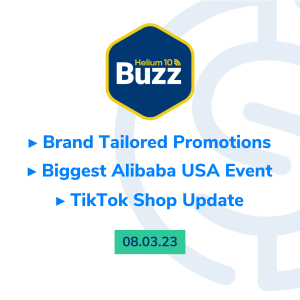
In this episode, let’s talk about the latest breaking news in the Amazon, Walmart, & E-commerce space. Amazon Prime’s record-breaking delivery speeds, angry Etsy sellers, WooCommerce x TikTok Shop, and the biggest Alibaba event here in the USA. Let’s see what’s buzzing this week!
Tuesday Aug 01, 2023
Tuesday Aug 01, 2023
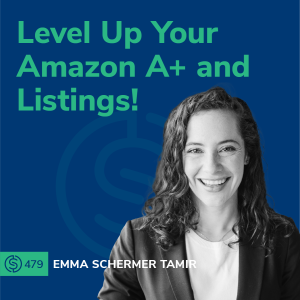
Join us on our latest SSP episode as we tackle the latest strategies on Amazon listing optimization, A+ content, and other marketing strategies. We start with Emma’s backstory, where we explore the journey of moving from Missouri to Las Vegas, sharing the challenges and adventures she faced. Then she shares incredible success stories from her clients, proving the power of her methods and strategies. Stay tuned as we discuss the numerous benefits of having an optimized listing and how A+ content can be a real game-changer based on Emma’s insights. Learn how Emma helped Project X products convert more and discover budget-friendly tips for creating compelling listing images. For aspiring sellers, we offer invaluable advice on exploring other niches, breaking down Project X’s A+ content, and how you can do it too! Curious about avatars in Amazon product marketing? Tune in to find out! And if you’re eager to learn more about her latest strategies for A+ content and the case study with Project X, we’ve got you covered with Emma’s New Freedom Ticket modules! Finally, we wrap up this episode with Emma’s explosive 60-second tip, leaving you inspired and empowered!
In episode 479 of the Serious Sellers Podcast, Bradley and Emma discuss:
- 02:30 – Moving From Missouri To Las Vegas
- 04:25 – Cool Success Stories From Emma’s Clients
- 05:45 – The Benefits Of Having An Optimized Listing
- 07:17 – A+ Content Is A Real Game-Changer
- 11:20 – Listing Image Creation On A Budget
- 14:12 – Breaking Down Project X’s A+ Content
- 15:00 – How Did Emma Help Project X Products Convert More
- 22:14 – Tips For Newers Sellers On Other Niches
- 27:50 – What Is An Avatar In Marketing?
- 30:00 – New Freedom Ticket Modules With Emma Tamir
- 31:30 – Emma’s Healthy Habits
- 33:10 – How To Get In Touch With Marketing By Emma
- 34:35 – Emma’s 60-Second Tip
► Instagram: instagram.com/serioussellerspodcast
► Free Amazon Seller Chrome Extension: https://h10.me/extension
► Sign Up For Helium 10: https://h10.me/signup (Use SSP10 To Save 10% For Life)
► Learn How To Sell on Amazon: https://h10.me/ft
► Watch The Podcasts On Youtube: youtube.com/@Helium10/videos
Transcript
Bradley Sutton:
Today we’ve got a listing optimization expert on the show who’s helped hundreds of Amazon sellers, and she’s gonna show her latest tactics and also show how for one Project X listing, she was able to double the conversion rate. How cool is that? Pretty cool I think.
Bradley Sutton:
Not sure on what main image you should choose from, or maybe you don’t know whether buyers would be interested in your product at a certain price point. Perhaps you want feedback on your new brand or company logo. Get instant and detailed market feedback from actual Amazon Prime members by using Helium 10 Audience. Just entering your poll or questions and within a short period of time, 50 to a hundred or even more Amazon buyers will give you detailed feedback on what resonates with them the most. For more information, go to h10.me/audience. Hello everybody, and welcome to another episode of the Serious Sellers podcast by Helium 10. I’m your host, Bradley Sutton. And this is the show that’s a completely BS free, unscripted and unrehearsed organic conversation about serious strategies for serious sellers of any level in the e-commerce world. And I’m not going too far in the world away from me. About three, 400 miles in Las Vegas is where you’re at right now, right, Emma?
Emma:
Absolutely. Las Vegas, Nevada,
Bradley Sutton:
Trying to stay cool in that ridiculous desert heat We were just talking about. I’m melting here at 84, but what did you say it is where you are right now?
Emma:
A whopping 30 degrees more. It is 104 degrees Fahrenheit. Apparently my math is not mathy. This afternoon.
Bradley Sutton:
We’re gonna be talking about how to make your Amazon listings hot, hot, hot, 115 degrees. But, but yeah, it’s not in, in real life. I’m not about this life. Anyways, just to let people know, we had a little bit of your backstory in episode we did about a year ago, so if you guys wanted to check that out, go to h10.me/368. Or if you’re watching this on podcast or YouTube, just look for episode 360 8 from the podcast. Last year she was on with another friend of the show, Rich Goldstein. So that was a good episode to check out. But today we’re gonna be talking a lot about some case studies that Emma’s been working on with us, as well as some new content that this we’re gonna announce is gonna be available in Freedom Ticket. But before we get to there, let’s just talk about it. Vegas is not where you were born and raised. You just told me you moved from Missouri. So was that a difficult decision to ’cause Missouri to Vegas is kind of a geographically, and culturally, I think a kind of a big difference there. It’s
Emma:
Definitely a big difference. I’ve actually lived a lot of different places in my life, including out of the country. I studied abroad in Ecuador. I taught English in Spain. I lived in Israel for almost three years, so it actually wasn’t super difficult for me to decide to move to Vegas. I will say I wasn’t the most enthusiastic when my husband slash business partner eras first proposed the idea in my mind, Vegas was the strip and not much else. But as I’ve spent time here, I realized there’s a whole city beyond the strip, and it’s a really awesome place to get to spend my days.
Bradley Sutton:
Okay, cool, cool. Have you been to any of the Vegas, Amazon events since you’ve been there? Like Prosper and stuff, stuff that before you would have to take about two, three flights to get to, but now you just hop into an Uber and, and go to it. Have you been able to experience that yet?
Emma:
Yes, and it is amazing to go to an event and then know that you get to sleep in your own bed, <laugh> not have to stress about,
Bradley Sutton:
Ah, that’s a good point. Yep.
Emma:
<Laugh> no stressing about packing everybody’s living in a hotel, you’re just like, okay, goodnight. I’m gonna go get a good night’s sleep without any noisy neighbors or whatnot to worry about. I can brew myself my nice coffee in the morning. Yeah, it’s a, it’s, it’s a great place for the industry that we’re in, and it’s a great place to enjoy all the fun things that Vegas has to offer.
Bradley Sutton:
Okay, cool. Cool. We’re gonna be talking about some project, some, some Project X stuff here, but, but what about just your, your regular clients? Like any cool stories has happened since last year? I mean, obviously I know some people don’t want their products put on blast, but but any stories without, without burning somebody’s identity that you could say like, oh, you had one client and then you guys worked on this plan together, and oh my goodness, their sales doubled or some amazing story like that.
Emma:
A client actually, they didn’t know what was going on. Suddenly their sales were just going through the roof and they’re like, what’s happening? And an employee of mine noticed that they’d gone viral on TikTok and they didn’t know it. So they’re like, oh my gosh, what’s happening? So that was really cool just to be able to be a party to that whole experience, because that can really change a business and the snap of a finger and honestly create a whole lot of other challenges. It’s not all roses. It’s great to have lots of sales, but if you’re not really in a position to know how to manage it, it can definitely create some road bumps. But all the time–
Bradley Sutton:
Was that just random or, like just somebody randomly put it on TikTok or so you guys did that?
Emma:
No, I mean, obviously, well, not, obviously, they were most likely found originally by this person because they had a good listing that helped sell them on it. It wasn’t anything that was well known and then all of a sudden they just blew up. But all the time we have people contacting us about positive impacts that they’re enjoying everything from serious improvements to conversion on their conversion rates, to just completely changing the entire profile of their business. I think, obviously as many sales as possible is the really exciting part of what we do, but there are so many impacts that a well optimized listing can have on your business that go beyond just the conversions. So if you’re dealing with lower return rates or more enthusiastic positive reviews, all of those things kind of feed each other and create this positive momentum that can really strengthen and make a business more efficient so that it’s maximizing whatever spend you’re putting into it to get the most out of those investments. And then generating really positive returns. So I can’t even think of one in particular, but I just know that on a regular basis, we’re getting those messages of the positive ways that what we’re doing is impacting our clients’ businesses.
Bradley Sutton:
Okay, cool. Now, what do you think is one of the biggest factors nowadays that obviously I’m sure when you, when you take on clients, you, you, you, you give complete once over and, and optimize everything. But, what is the biggest game changer for your, your clients that you’ve done where like, people are just doing things the wrong way. Is it, like, on the p p C side, is it, is it going from no A+ Content to A+ Content? Is it creating a brand story? Is it refreshing the images? Is it just the listing copy, what all of this works together? Of course, you can’t have necessarily one for the other, but if you would point to one of those things that really consistently makes a big difference what would you say it is?
Emma:
I don’t want to speculate just purely based on one particular part of the listing. My gut tells me that probably A+ Content is one of the most significant things that you can upload to a listing and have a positive impact. But I don’t have those, that exact enough data to be able to say with certainty. But the reason why I would say that is a few fold. So one being that Amazon comes out and says, A+ Content positively impacts your conversion rate, and they’ve clearly got all the data on that. Sure. Two, you’re gaining more space for SEO because you have the image keywords. So you have a lot of additional fields that you can fill in with keywords that you wouldn’t have previously. So we’re having an impact on SEO, we’re having an impact on the customer experience. You also have an opportunity to be able to upsell or cross-sell with with that comparison chart module, whether you have standard A+ or Premium A+. So it just is influencing so many different aspects of of what you’re trying to do that I feel like that has the most far reaching elements. So I guess that would be my answer.
Bradley Sutton:
Well, pre Premium A+. That’s kind of a newer thing for some people because like, like that wasn’t always available just to the, the masses. What have you been seeing, like, like would you suggest to everybody, Hey, get qualified for Premium A+ Content and 10 out of 10 implement it? Or have you seen cases where putting the effort and spending to get a video and this and that, like it really didn’t change conversion much? Or is it something that you suggest to everybody to get to do
Emma:
To me while it’s free? This, so originally, for those that aren’t familiar, premium, a plus used to only be something that was available to a very select group of very large businesses. It was invite only, and you still had to pay a lot of money in order to, to be eligible for it. So about a year ago, Amazon made it available to any seller that is brand registered, has had has uploaded a brand story and has had at least 15 pieces of enhanced brand content approved within the last 12 months. So you don’t, you no longer have to spend money in order to qualify for the program. Of course, creating premium A+ Content is going to come with a heftier bill, just because there are more dynamic modules, you’re able to upload more images, it’s wider screen. So even having better resolution images, all of that definitely matters, but if you are able to qualify for it, I think that there are so many of the modules that give you so much better ability to really present your product in a way that is more aligned with what a customer is wanting and expecting to see when they’re interacting with a website.
Emma:
From that perspective alone, it’s worth making the effort. You also, if you are low on budget, you don’t have to upload a video, or if you do upload a video, it can be something very simple. You don’t have to go have a super highly produced video. I mean, I think one of the interesting things, even with this case study that we’ve been working on, Bradley, is these are images that Shivali created, she didn’t go to some high priced photographer to get everything done. And, and so it really demonstrates the ability that no matter where you are budget-wise, there’s still a lot that you can do to make the most of the tools that Amazon is giving you in order to be able to sell your product to the best of its abilities. And then maybe as you gain more traction, as you add more products to your catalog, then perhaps it’s worth taking it to the next level and, and upgrading the quality of your images. But I, I wouldn’t let that be a barrier to you. There’s so many different levels of photography and design out there, and with AI you can do some good design work without needing to be an expert at Photoshop anymore. And so, yeah.
Bradley Sutton:
Yeah, Let me just show the results. I know we’re gonna show the results and then work our way back and kind of reverse engineer what happened. But let me just share my screen here for those, watching this on YouTube, and I’m just taking a look at the product performance page in Helium 10 for this Egg Rack. And if I’m looking back at, when is this the first 10 days of May, which is before on our old listing we had a unit session percentage, as you guys can see of 4.93%. Now, sales were still pretty high because in those days we were the, like, all those days, as in all of two months ago, we were the only game in town as far as this particular kind of product for like a year.
Bradley Sutton:
We kind of had a stranglehold. Now it was interesting, went out of stock like for a couple of weeks, but during that time around June was tons of competitors, Chinese competitors came in and are like, I wouldn’t say half the price, but, but very, very cheap price. So like, theoretically you would’ve thought our sales would go to zero because our sessions were way down. But take a look at this guys. If I go up here, as you can see from the first 10 days, so a kind of apples to apples comparison first 10 days of July, and then we look at that same product, look at our unit session percentage now went to 11.24, so more than double my sales would’ve been dead because like, our, our sessions have gone way down, but our sales have not gone down as much as one would expect thanks to this much better conversion rate on the page.
Bradley Sutton:
So let me just show you the end result here of what what was done. We have new images here. What we’re gonna talk about your thought process here with these. We’ve got some new copy right here. We’ve got new bullet points and this listing did not have A+ Content, and now we can see some A+ Content here. So I know it’s been a couple months since you worked in this, but, but think back to the think back to the, your thought process when you saw the old listing, which was just thrown together, you know a while back as part of a Project X like episode or something we had done. But like, what was, what was the things that jumped off where you’re like, okay, yeah, we definitely need to upgrade this?
Emma:
There were a lot of things for, I mean, first of all, clearly there was no A+ Content, so that was a no-brainer for us. The images were just a few basic product images. So we, I don’t bel if I remember correctly, and I could be mistaken, there were minimal lifestyle images. I don’t think any of them really had text in them, which, we’ll, we can get into that and, and why that’s so important. And the bullet points were not the worst, but pretty bland, just sort of straightforward. They didn’t really have anything that helped to communicate why you a person would want to buy this type of egg rack in particular. Another thing that we noticed is that it was very limited in sort of how the product itself was being presented. And so that was something else that we really thought about as we were embarking on this revamp, was how can we think creatively of who’s going to be buying this, why they would be buying this, how they can make the most of it, and put together a strategy that’s going to address all of those things throughout the entire listing.
Emma:
So really bringing to it a clear sense of who the customer is, what they care about, and why this product is, is the best product out there, rather than just kind of a more basic explanation of what it is, and then allowing the customer to decide that.
Bradley Sutton:
Yeah, and we in the past I’ve worked a lot with professional photography studios and three d like AMZ One Step in others, but, but as you said sometimes sellers might not have a thousand dollars, $1,500 depending on what what kind of a shoot it’s done to, to really be able to, to, to afford something that extravagant. And we want to show kind of like, Hey, if you don’t have that kind of budget, maybe you could only afford hiring somebody from Upwork, perhaps to do some Photoshopping after you’ve taken some pictures with some decent pictures with cell phone or, or you have a nice camera. And actually all these pictures, guys, like, I’m pretty sure this is Shivali’s father’s hand. He’s got some bling here, some gold bling here. He is now a hand model.
Bradley Sutton:
Here, these are all pictures done, like with Shivali’s cell phone at her house in North Carolina. A hundred percent of these, this doesn’t look like Shivali. So I’m not sure if this was like a stock photography or, or something here, but everything, like how did you go about this? Did you like give her directions, like, alright, hey, I need a shot, like in a fridge, or, or did you just tell her to just take random pictures or did you give her like this specific direction here on this stuff?
Emma:
Yeah, so we gave pretty specific directions. That’s one thing in general, whether you’re working on a listing or a website or anything that has multiple professionals involved, and they don’t have to be contractors, they can be people on your team, it’s helpful to have someone taking the lead so that there is a clear unifying concept because otherwise everybody’s working individually and then trying to match that up and make something work is really difficult. So we gave a creative brief that suggested the different types of images to create so that those images would then align with the text that we were writing, so that it would be a very strong piece of marketing to gather when you combine those two things. So the image and the text are reinforcing each other. And so in those images, I think we have everything. I mean, some of these are even reflected in the keyword research, right?
Emma:
So kind of to take a step back for a moment, your research for creating a listing is really going to help determine the direction that you take. And so part of that is the keyword research that you’re doing. So seeing what kind of keywords are people searching for? That was one of the things that was really eye-opening for us because we realized, hey, there are a lot of competitors that are using terms like cake pop holder or all these little serving because it has these holes in it that make it so that it can be really great for single serving things if you’re hosting a party or wanting to display food somewhere. And so we didn’t want to stay so limited only to being an egg holder because there were all of these other ways that you can utilize it. And the keywords were really what illuminated that opportunity for us.
Emma:
And so then we wanted to make sure, well, if we’re using keywords like that, then we also need to be showing people what we mean when we say something like a cake pop holder so that they can visualize it and imagine what it would be like to be hosting a party. And this, this egg holder, it’s a more rustic design. It’s wood, it’s kind of a traditional and a little bit timeless too, where it’s very possible that the people that are buying this, they like things that are going to last that they’re also going to be able to maybe use in a variety of ways so that they’re not just buying something that only has one function in their household, but something that they have that they can use in different types of settings. So it really even expands what the possibilities are and even helps to justify the investment a little bit more since this is a on the pricier end of an egg holder. So that’s one example. It’s an, another set of keywords was talking about an egg holder for the refrigerator. This egg holder can be used either in the refrigerator or either on the counter. So being able to demonstrate those things in the images was really important so that people can visualize, okay, this is what it would look like if I put it on my countertop. This is how it would function if I put it in my refrigerator. And, and helping to create those connections for people makes the purchasing decision much easier.
Bradley Sutton:
Yeah, it makes a lot of sense. But what you said, it seems like without me talking to you at all during this process, what you, how you just described this egg rack seems like exactly the way that you, that you tackled that project as well. So this is kind of like a, a template guys of you, you could be in a gothic category, you could be in a kitchen category you could be in supplements, but the the principles are the same. Now that being said, what, or are there categories or kinds of products where your approach actually is different than what you’ve been talking about because something different works in different categories? Or is this approach that you’ve been talking about applicable to most and I’m not, of course, obviously I’m not talking about books or, or something like that, but just most regular products.
Emma:
Yeah, so I think the main difference is, so both in the gothic item as well as with the egg holder, these are a little bit more niche products. So they’re not as competitive as category of categories. And so you can go a little bit broader with how you position something. Whereas on the other side, if you are selling something that’s in a very competitive category, then it’s actually a much better approach, especially when you’re a new brand and you’re launching the very beginning to go hyper-specific. So you don’t want to expand out too and go in too many different directions because it’s going to be really difficult and very expensive to try to gain any kind of traction. So you mentioned supplements. If you’re just selling like a fish oil or something like that, which I’m not recommending that you sell fish oil, well, if you just try to sell general fish oil, like an average fish hold oil, that would be good for any single person to take.
Emma:
You’re not going to go anywhere with that. You’re gonna spend a lot of money and you’re just going to die a slow death on a, a page, whatever, a hundred. Yeah. whereas if you were to maybe identify through doing some keyword research that there’s are actually a lot of people that are searching for fish oil for recovery from knee replacement surgery. I’m just making this up, then it might be worthwhile to make your listing hyper targeted to people that are going through knee replacement surgery. So instantly, what is that going to mean for you? People that are getting knee replacements most of the time are older. And so you wanna make sure in that case that like the images of people that you’re using are older people that are, it’s going to make sense that they’re getting knee replacements versus if you have a bunch of young looking athletes, there’s going to be a big disconnect there.
Emma:
And so I think that’s one of the main elements that you would want to be using in order to determine your approach to how to go. It’s very easy especially as a new seller to kind of get starry-eyed and want to just sell to everyone. And I encourage people to really resist that urge and try to start off quite specific. And then if you eventually want to get a little bit more aggressive, once you have some reviews, have some good movement, demonstrate that this is something that has potential, then maybe you can get a little bit more aggressive with that. But yeah, I would say that overall, aside from that, the basic principles of making sure that the keywords that somebody is searching are also reflected in the content, and that I don’t think is always the most obvious thing.
Emma:
We think of keywords as the thing that gets people in the door, but if that’s what’s on someone’s mind when they’re going into the search bar to search for a product, and then you’re showing them, Hey, this is what you were searching, that’s going to help them understand like, oh, this is, I’m in the right place. I wasn’t just Amazon didn’t just take me to some random product that doesn’t have anything at all to do with what I was searching for, which as a customer, I’ve had that happen plenty of times.
Bradley Sutton:
Okay. So now one of the big things that you, you tackle with this, like you said we did not have A+ Content. So I know there’s like different, different ways to, to kind of tackle A+ Content. Some people like to just have kind of like, make it seem like it’s almost all one image and, and that it just kind of flows, but it’s really different images. ’cause That’s what A+ Content makes you put it in modules. But what was your reasoning behind this kind of like, approach here? And I see a lot of like there’s like it seems like you’re, you’re focusing in on some of the features of it like, like the, the wood finish and then how it has these pegs so that doesn’t go over.
Bradley Sutton:
You show an actual chicken coop. I’m assuming this is maybe to go along with the branding here. And then you show some other use cases like, looks like some chocolate, I’m getting hungry as it is like you said, the cake pops, and then now you can also show how you can, I mean, so you’re saying a, there, there’s like a lot going on here. Do you always wanna focus on the features like this, or sometimes you, you tell a story more, it just depends on the product? Or is this kind of like your plan for A+ Content?
Emma:
I would say it all really depends on the product and what’s required. And the approach really is what do we feel that the customer needs to know? What’s really important about the product that we need to communicate? And also what are the things that are really going to resonate with somebody or make them care about something? And so there were certain design features that we felt like were very important to this product that we did want to highlight. So the fact that it’s solid wood showing the fact that it’s stackable and expandable, I am imagining this and sort of the, the avatar that we had in our minds, which for those that aren’t familiar with what an avatar is, it’s essentially sort of an imaginary person with a very detailed profile that is a potential customer of yours.
Emma:
And it can be a really helpful tool when you are creating any kind of marketing content so that you’re writing specifically to a person instead of just kind of to a whole blob of potential buyers. And so we’re imagining someone that either aspires to have chickens or maybe even has chickens. It’s actually a very popular lifestyle to to have some backyard chickens and raise your own eggs. But if you can’t do that, maybe going to the farmer’s market. And there’s a lot of different ideas that are kind of tied up in that. And so we wanted to draw that connection because it’s very different than if you’re purely just needing function and you don’t care about how it looks like and you don’t really care about the whole idea of everything, then you can just buy a cheap acrylic or plastic egg holder that you can put in your refrigerator and that’s that.
Emma:
But this is something that can be a really nice piece on your counter and is something that’s going to last and that’s sort of aligns with visually the look of that rustic homesteading lifestyle that might just be aspirational or is in fact something that they’re pursuing. And so thinking about, the host, the gracious host the person that’s wanting to eat healthy, all of the different ideas that are associated with that, and then wanting to present that in a way that is visually helping to communicate those ideas. And then textual textually reinforcing the key details.
Bradley Sutton:
Now you what you just said was just some of your tips for A+ Content, now you actually redid one of our older modules that needed some refreshing in, in freedom ticket. So guys go into a Freedom Ticket. And I want you guys those of you who have Helium 10 and we’re trying to always update ones that, that might need refreshing, but go into 8.11. It’s week eight, 8.11. You’ll see Emma’s new module here. And then around eight it’s not showing up here right now, but around 8.13, 8.15 About, you’re gonna see another module. And what was that one about? So it wasn’t about A+ Content, but what was the other one you made about?
Emma:
Yeah, so that one is sort of for a slightly people that they’ve, they have a listing and they’re trying to figure out do does it need work? So sort of how to think about is it worth it? Is it time to do some revamping? So thinking about really that optimization process of you have a listing, it’s existing in the world, how can you think strategically about that to really take your listing to the next level?
Bradley Sutton:
Cool. Cool. So good stuff there, guys. Make sure to check that out. And and once it’s once if you haven’t seen it yet, I might have a clip of it. I’ll try and throw it into the Weekly Buzz or something as well. Alright, now, now before we get into your last Amazon tip of the day one thing I ask people 2023 is my year of health and wellness. So like, what are some of your habits as far as like hobbies when you need to get away from, from the Amazon world what are some things that you’re doing to keep yourself physically, mentally healthy?
Emma:
Yeah, I would say the top one is an evening walk. It sounds really simple and basic. The evening walk is having to get later and later as the temperatures rise because 7:00 PM is still pretty toasty here, but it’s great. I would say for all health it’s fantastic exercise. Walking is still shown to be one of the best ways of, of exercising your body, but it’s also, it’s great to be outside. I think it’s very good for your mental health and I, I feel so much better when I am walking regularly. Also drinking a lot of water should not be underappreciated. And especially again, in the climate that I’m in, I feel like I’m in a losing battle, but most of the time when I don’t feel well, I’m thinking like, okay, what’s going on? And then I sort of run my mental checklist of how many cups of water I’ve had. And so often, either if it’s a headache or I’m feeling a little bit lethargic, it’s just because I haven’t had enough water. So two really simple, basic things, but I think that some of those types of things can have the biggest impact. So
Bradley Sutton:
I like it. Now before we get into your Amazon hacker, if people want to find you on the interwebs, one of the easiest ways is through Helium 10 guys. Just go to hub.helium10.com and just type in Marketing by Emma actually comes up right here in the auto complete, but Marketing by Emma. And then you’ll be able to reach out. And then if you’re an Elite member, you actually have some discounts, like I’m an elite member so I can get some discounts. If you’re a Helium 10 member, there might be different discounts that, that, that end up here. But make sure to hit the get in touch. How else can people find you on the interwebs out there?
Emma:
Yeah, so our marketingbyemma.com is probably one of the best places to go. And on our website you’ll be able to find, if you’re more of a phone person, you can call us, you can WhatsApp us, you can text us, you can email. All the things are there. We also offer a free listing analysis. So if you see all of this and you’re like, I don’t know, this is over my head, please take a look at it and tell me what I’m doing wrong, we can do that. Also,
Bradley Sutton:
I’m looking here, 92 5-star reviews. Good grief here in the hub. And guys, when you, when you see verified reviewer, that means they were signed into Helium 10 when they left the reviews. So you could, you could see lots of verified reviews here, just like on Amazon. My goodness, pretty impressive. I like it. Alright, now what’s your last 62nd or 32nd tip of the day or strategy that you can share with everybody?
Emma:
I think I just wanna talk about the importance of understanding your competitors and going super niche. I think that ultimately Amazon is getting more and more competitive. You are dealing with it yourself, with this a rack holder and fight the urge to want to go broad instead, go specific. Find those opportunities. They always exist. And the more niche you can go, the more opportunity you have to be able to really connect deeply with customers, get that fan that fan loyalty, that excitement around your product, and then you can just use that to build your momentum. So we see that in many of the biggest D2C brands out there, not just on Amazon. It’s a really effective strategy. And as AI becomes even more dominant, it’s, it’s more and more important to go specific to strategically position and to be clear about what makes you special, and then really highlight and celebrate that so that people have a reason to buy from you.
Bradley Sutton:
Awesome. Thank you so much for joining us and thanks for your great work on this egg rack. And yeah, like if you, if you want to go tweak it now, after seeing it and knowing what’s going on, let’s work on it some more and then share results later with it, with everybody. Awesome.
Emma:
I would love to. Thanks so much Bradley.
Saturday Jul 29, 2023
Saturday Jul 29, 2023
Let’s catch up on the latest ventures of Crystal Ren, an Amazon seller from Singapore, after exiting her Amazon brand last year. She also shares how she successfully utilizes other people’s money for her new brand, while also addressing the intersection of consumer goods and mental health services. Get an exclusive insight into Crystal’s new Amazon business and learn valuable strategies for achieving consistent profits and income. Crystal divulges her Amazon launch strategy and her valuable sourcing and negotiation tips and learn essential lessons from Crystal’s recent trips in other Asian countries. Find out Crystal’s exciting outlook for 2023 and beyond.
In episode 478 of the Serious Sellers Podcast, Bradley and Crystal discuss:
• 01:30 – Remembering Bradley’s Trip In Singapore
• 03:05 – What Is Crystal Up To These Days?
• 06:01 – Using Other People’s Money For Business
• 08:08 – Consumer Goods & Mental Health Services
• 11:10 – Diving Into Crystal’s New Amazon Business
• 12:50 – Making Profits And Consistent Income
• 17:06 – Crystal’s Amazon Launch Strategy
• 19:09 – How To Win The Amazon Game
• 22:54 – Crystal’s Healthy Habits & Hobbies To Relax
• 27:28 – Sourcing & Negotiation Tips
• 33:51 – Lessons Learned From Recent Trips In Asia
• 37:02 – Crystal’s Outlook For 2023 And Next Year
• 39:07 – How To Reach Out Crystal Ren
• 40:01 – Crystal Ren’s 30-Second Tip
► Instagram: instagram.com/serioussellerspodcast
► Free Amazon Seller Chrome Extension: https://h10.me/extension
► Sign Up For Helium 10: https://h10.me/signup (Use SSP10 To Save 10% For Life)
► Learn How To Sell on Amazon: https://h10.me/ft
► Watch The Podcasts On Youtube: youtube.com/@Helium10/videos
Let’s catch up on the latest ventures of Crystal Ren, an Amazon seller from Singapore, after exiting her Amazon brand last year. She also shares how she successfully utilizes other people’s money for her new brand, while also addressing the intersection of consumer goods and mental health services. Get an exclusive insight into Crystal’s new Amazon business and learn valuable strategies for achieving consistent profits and income. Crystal divulges her Amazon launch strategy and her valuable sourcing and negotiation tips and learn essential lessons from Crystal’s recent trips in other Asian countries. Find out Crystal’s exciting outlook for 2023 and beyond.
In episode 478 of the Serious Sellers Podcast, Bradley and Crystal discuss:
• 01:30 – Remembering Bradley’s Trip In Singapore
• 03:05 – What Is Crystal Up To These Days?
• 06:01 – Using Other People’s Money For Business
• 08:08 – Consumer Goods & Mental Health Services
• 11:10 – Diving Into Crystal’s New Amazon Business
• 12:50 – Making Profits And Consistent Income
• 17:06 – Crystal’s Amazon Launch Strategy
• 19:09 – How To Win The Amazon Game
• 22:54 – Crystal’s Healthy Habits & Hobbies To Relax
• 27:28 – Sourcing & Negotiation Tips
• 33:51 – Lessons Learned From Recent Trips In Asia
• 37:02 – Crystal’s Outlook For 2023 And Next Year
• 39:07 – How To Reach Out Crystal Ren
• 40:01 – Crystal Ren’s 30-Second Tip
Transcript
Bradley Sutton:
Crystal’s back on the show to talk about what she did after her big Amazon exit last year, and how she started a new brand this year with other people’s money. And she gives us her best sourcing tips and more. How cool is that? Pretty cool I think.
Bradley Sutton:
How can you get more buyers to leave you Amazon product reviews by following up with them in a way that’s compliant with Amazon terms of service? You can use Helium 10 Follow-up in order to automatically send out Amazon’s request a review emails to any customers you want. Not just that, but you can specify when they get the message and even filter out people that you don’t want to get that message, such as people who have asked for refunds or maybe ones that you gave discounts to. For more information, visit H ten.me forward slash follow up. You can sign up for a free account, or you can sign it up for a platinum plan and get 10% off for life by using the discount code SSP10.
Bradley Sutton:
Hello everybody and welcome to another episode of the Serious Sellers podcast by Helium 10. I’m your host, Bradley Sutton. This is the show that’s a completely BS free, unscripted and unrehearsed organic conversation about serious strategies for serious sellers of any level in the e-commerce world. And speaking of different parts of the world, we are going right now, I believe. Are we live in Singapore? Is that where you’re at right now?
Crystal:
That’s correct, yes.
Bradley Sutton:
All the way back in Singapore. It was nice to be out in Singapore a couple times. Was it this year or last year? But I got to do the touristy things there, like see the gardens and look at some places. That was in one of my Korean dramas I was watching, so, so I love it out there in Singapore. But this is not your first time on our show. Crystal has been on the show. We’re not gonna go too much into her backstory because we have it in, I have it written here in my notes, episode 351.
Bradley Sutton:
So if you guys wanna find out her crazy story about how I discovered her from an Amazon YouTube channel and then found out that she had invested a hundred thousand dollars into her first Amazon business and brought it up to seven figures how to exit. And basically that was, you know, I don’t know about by a year and a half, or a little bit less than a year and a half ago. So now this episode, we’re not gonna be going into too much of the backstory, you know, but again, if you’re watching or listening to this and this is your first time listening to to Crystal, maybe maybe pause this. Go to h10.me/351, Get her backstory. ’cause We’re gonna be talking about it as if you guys know about it already. So, Crystal we were just talking like, I, I know you’ve been traveling a lot all over the world, going to weddings and going back home to, to China and everything, but I, I want to go all the way back to the last time we talked. And at that time you were not, I wouldn’t want, I don’t wanna say retired, but you were kind of like still in the aftermath of your exit and just kind of like kicking back and traveling and stuff, so That’s right. Was that pretty much your life for a year or so or what was going on after that exit?
Crystal:
Yeah, no, so actually when we talk, I believe it was pretty much exactly a year ago, I was, as you said, traveling and also kind of manage my finances at the time because you know, I think this should be in the 30-second tip, but I’ll say it now anyway. I think once after you have an accident, it’s actually better to have a plan before you even exit it, just because otherwise you’re gonna find yourself in a situation. And now this is not just for me. Like I heard other sellers saying the same thing, like, it will be a period of time when like, you’re just like, what am I gonna do next? And I heard, you know, people saying that, you know, for a few month or maybe like a year, they’re just like, oh, like, you know what’s next?
Crystal:
So I know people who have the plan before they make an exit, perhaps they already started another, the brand or like, they know, you know, they’re gonna dedicate a few months traveling. So they’re planning that already. Like, I felt like that will make your timeline more productive. And I didn’t do that. So like, I kind of regret it now. And another part that I should say, like I just didn’t know was like how much hassle it goes into manage your finances, because after you have an exit, like you kind of need to decide where do you want to put the money into, right? Like that also took some time for me to like figure out like, how should I allocate, you know, invest this and that. And I would say like, you know, doing business and investing is completely two different ballgame.
Crystal:
Yeah. Some people hire, you know, professional investment professionals for them. Like, it’s funny ’cause I actually had my CFA I used to work in investment bank, but when it come down to your own money, you still think about it differently and you are so much more like risk averse, minus so many. So I felt like that is actually worth some time into it, but I just unfortunately, like underestimated how much time that it would take. So it took me a few months to kind of get my things together. And I was traveling, you know, I think in Europe, in France going to, you know, weddings, I think I was in New York San Francisco. I was in Vegas for the prosper show. So I did a lot of traveling then. But then around August I started to start, you know, preparing for my second brand. So this time around I did a little bit differently. So I, last time I completely bootstrapped it which means I used a hundred percent of my own saving. But this time I actually looked for investors. So I talk to VCs, like I talk to individual investors family and friends. So like, I actually, this time around, I’m using other people’s money to
Bradley Sutton:
Well, let me stop you there and ask you about that, because the first time that was, I mean, that you had a lot already a lot saved up. Now you had to exit. So you actually had, I would even imagine more cash. Why the decision to use OPM other people’s money instead of instead of your own, like the first time, you
Crystal:
Know, the thing is that I could, right, but then I was kind of more thinking about exploring different options, and then I was thinking, I wasn’t sure what kind of values investors might add, you know, kind of what kind of perspectives they might give it to me. And you know, like what, they take me to a different height. So that’s what I was thinking, kind of ’cause a lot of friends around me, I mean, to be honest, I’m a rarity. Like most people I know, they start business with VCs or like other investors. So that’s why I was thinking, okay, maybe I should also explore that as well. But I’m gonna tell you about conclusion after that. But that’s kind of what I was thinking in my head, so that’s why I kind of spent a month just talking to different investors and see what they think, et cetera.
Bradley Sutton:
How did you approach that? You know, like, are these people that were already in your network or did you go to some kind of like website where, where you can meet them or, or networking events? How did you meet these, these people? I
Crystal:
Think those are mostly kind of in my network or like, friends, friends or like, you know, people introduce me to people. I think that if I’m not mistaken, when it comes to investors, it’s much harder to cold call. So like, if you got referred by other people and then then they already kind of, you know, you have that weak link. It’s much better to get the bonding from them and, and to kind of build that trust. And also you can like gonna sit down and talk about it in person, you know, like maybe have a cup of coffee together. Like it’s all about trust, right? For these kind of relationships.
Bradley Sutton:
Okay. Interesting. So these were people, you know, outside, I’m assuming maybe outside of the Amazon world, mainly?
Crystal:
Yes. Yeah.
Bradley Sutton:
So I’m just curious, like what’s the impression of, of these, you know, these hardcore maybe investors Yeah. That had no experience on Amazon. You explain how Amazon works. Like, are they, like, what are you serious? Like, or did they pretty much, do they pretty much know the the game?
Crystal:
So I think and I felt like I wanted to get into it later, is that I never kind of positioned myself as a Amazon only business because I try to position myself as like, Hey, I wanted to do this brand and this is what I’m thinking about. And this is my direction, this is my track record. So I think if you were only talking about Amazon, then most investors these days think about aggregators and, you know, aggregators, you know,, let’s be honest. Like, you know, they don’t, a lot of them failed. So like, it kind of doesn’t give like Amazon, like a good rap on the street when it come down to investors. So like, I would just kind of tell them that, you know, this is my track record and yeah, this is what I wanted to do, you know, this is the gap in the market, et cetera. But,
Bradley Sutton:
And also, yeah, so I mean, it was, yeah. For somebody brand new, it might have been harder. First of all, they don’t have people in their network like that and then coming in with no tracker, but you, you can show them, Hey, you know, or first of all, you know me, you know, like, because these are people from your network. And second of all, Hey guys, here’s my resume of already exiting a and building a big business. So that definitely helped. I’m sure.
Crystal:
Yeah. I felt like it helped, but also in the meantime, like I felt like investors are naturally skeptical. So even if you have a track record, like they, they might be willing to take a call with you, but it doesn’t mean that they will give you the money, you know? So it’s like they always have this sort of KPIs where like they’re, oh, tell me about it while you hit this KPI or something like that. And my conclusion, by the way, even though I raised some money, but like, I kind of stopped at some point because my conclusion is that for a consumer goods business, if you do have a good product, you don’t need to raise a lot of investors money.. So I felt like investors put a lot of money into say something like a technology, because technology has a long process of RnD.
Crystal:
And that process needs a lot of funding because it’s gonna go through a period of time when that happens, there’s no return, you know, they don’t have any income or something like that. Versus for a consumer goods business the setup capital is much lower than a high tech company. And your product, if it does well, can fund your business going forward. So technically it’s kind of like a cash flow business. It doesn’t need like that millions of dollars to start off with in the first place, unless you are, you know, like I felt like in the, say 10 years ago when the D two C model was much more popular in investors’ world, where like they will spend a lot of money building like website, you know, putting in advertisements, money, like pr, you know, that kind of things where like they build a hype up. But that’s a different model, so that’s not Amazon, right? So and that’s kind of my conclusion after the whole, you know, experiencing fundraising.
Bradley Sutton:
Okay. So for your new Amazon business, did you end up choosing somebody and, and saying, Hey, let, let’s work on this together? Or did you end, at the end of the day, end up using your own money again?
Crystal:
Yeah, so I did use some of their I, I use other people’s money to build this business. But I also put my own money into it.
Bradley Sutton:
And when you approached them, like, did you already have like did you already have the product in mind and, and the, the brand in mind? Or were you just like, Hey, let’s build something together and let’s work on it together and decide what it is? How did that work?
Crystal:
It’s funny because I felt like you know, we’re talking about there’s different wrongs in this world, right? Like, we’re talking about this like very early angel wrong and you know, friends and family wrong, like just super early, right? So I felt like for that wrong, it, it’s really just like people’s faith in you. Because if you’re talking about like seed wrong or like series A you already have a product that you have some, like product market fit, it can show traction. It’s a completely different topic. ’cause People was, they started to see a track record of this business, like, you know, oh, this is a product, you know, this is how market reacts to it. But like, when I first started off, like had a rough idea of like what I wanted to do, and I have a rough idea of like what my product’s gonna look like, but I had nothing, you know, like I hadn’t really built it. And I was just like, okay guys, this is what I wanted to do. So that was a very different conversation. I felt like people kind of bad on me because like, they believe in me, and obviously I pivoted at the idea later. So, so yeah, it’s interesting, you know, like to go through the process.
Bradley Sutton:
Okay. Alright. So actually no, I didn’t, I didn’t remember this but I was looking at the notes that our podcast director Mhel prepared, and one thing you had mentioned in the last episode, or the last year’s episode was, was you were perhaps thinking if you were gonna start another Amazon brand, you wanted to do something that was either consumer goods or something that actually had dealt with like mental health. Did you end up going that direction or what?
Crystal:
Yeah, so it’s funny ’cause I actually looked hard along to the mental health business, and I try to like kind of merge these two together where like I have a consumer goods business in mental health. And I honestly, like, this is what I discovered, okay. Like, you can do a consumer goods business, like the old D2C model where you have this amazing product, this shark tank, you know, it’s on Kickstarter and you know, whatever, right? Like the, the way the blanket in like 2010, 10 years ago where like they raised like $5 million the first like, you know, when they first got money from Kickstarters. Or you can do Amazon business. And it’s really hard to kind of merge these two together because the, the way to think about like a ground big breaking product idea and kind of do a lot of RnD in it, that is like the Shopify business, right?
Crystal:
And kind of create that desire and demand in the market, or that you just follow the market demand what you see on Amazon and the way to think about these two and the abilities you use is also different. So for Amazon, it’s a lot more, you know, data analysis, like profit and loss analysis and like do some incremental innovation. But you go with the market demand and the other one is like you completely just created, right? Like, you are like, okay, like I want the market to have this product. It’s amazing. So I felt like in my mind at the time, like I wanted to do mental health, but the, the products that, you know, like the market demands in that, in the mental health space, in terms of physical products, it’s so limited. Like mental health is always like a service and is extremely customized to each, at every one of them I have looking to Amazon.
Crystal:
And there are some products, like for example focus on autism, right? A very niche market, but like, it’s a good, it’s a good market, but it’s very li very, very limited. So at the time, I was say, okay, like I needed to broaden my hypothesis if I wanted to play the Amazon game. So that’s why I started expanding to wellness and beauty. So like, not just mental health, but like more kind of wellness and alternative heating methods. But that’s like kind of a technology, device products, right? So I end up going that route. So I end up, you know, I did create something like that, but it was just not like, you know, strictly in mental health.
Bradley Sutton:
Okay. Now again, last year, you know, the, the crazy stat from from your episode was that, you know, regardless of, you know, it was your money, but regardless of whose money it was, it was, you had invested a hundred thousand dollars, you know, into the company this year. Like you said, you got you know, some investors, but overall, regardless of whose money it was how much was your initial startup cost this time around? Was it also, did you also do a crazy six figure investment like that? Or did you start with less?
Crystal:
So the hundred thousand dollars investment I did at the time, that was the first year’s investment. So, which means those are the money I put in like over the time in the first year, right?
Bradley Sutton:
I thought it was like a hundred thousand before you even had one sale or something. I was about, that was why it was crazy to me,, I was like, what in the world? Yeah,
Crystal:
Okay. But, you know, I did put that a hundred thousand dollars aside, like, I protect it, you know? So I was like, okay, this is money for the business, right? Like, I’m not gonna, I’m gonna starve myself before I even use that money. So like, that’s kind of the spirit behind it. And this time around, it’s the same thing. I putting like, I would say a little bit less than that, but like so far, but still quite a bit, you know, into the business.
Bradley Sutton:
Okay. All right. So when did you actually launch the product? Like what month?
Crystal:
Yeah, so officially, it’s month launched this year in January. It started in January. It’s a bit of a tricky category because it’s like kind of linked to medical device. So I got a lot of like you know, the, the restricted product and it got taken down, got taken down again, you know, so, so a lot of that kind of delayed the product launch.
Bradley Sutton:
Okay. But and then did you start with one SKU, or did you have a variety of ones that you started with?
Crystal:
Yeah, so I did start with like two, three SKUs. So like, I kind of just go hard on it for a little bit. Instead of last time where like, I think even last time I was going a bit aggressive too, compared to, you know, some other people. Like I probably start with one, but then I added two the month after. So so far, like I have had three, four SKUs.
Bradley Sutton:
Okay. And how has it has it done? I mean, obviously, like you said, you’ve run into some, some hiccups. Have those hiccups been resolved and Amazon is not restricting it anymore? And then do you have steady sales now? Yeah, I have any of the products failed already or have any of them taken off? What’s going on?
Crystal:
So I have I have I mean, I’ll say most of existing products, SKUs, they’re quite stable and they’re generating sales, but I constantly would have new SKUs that I wanna launch to be taken down. So like in this category, I think that’s just a constant struggle. And as far as I know, like, not just me, but like anybody in this kind of like medical ish wellness space you just need to be extremely careful of what you say, otherwise you need to have f d a approval, this and that.
Bradley Sutton:
What attracted you to, like, to make you pick this? Did you just see some, some, a lot of demand and, and the existing competition was you felt not strong and easily beatable, or is this something that you thought, you know, maybe the demand isn’t quite there, but you foresee the demand going up? Or what made you choose this?
Crystal:
Yeah, so I think my logic to play Amazon game is very similar. I think that Amazon is a very bottom of the funnel channel. So like, you know, think about Shopify or whatever, that’s like a top of the funnel channel where like people go there and it’s cold tropic, but like unless they know your brands and they go look for it. But like for Amazon, it’s the bottom of the funnel. So like you cannot be the market demand, in my opinion, right? Like, the easiest way to go with it is just to kind of flow with it. So I always take the approach where, like, I want to be in a market where there is demand and there’s less competition. So like, I think everybody does it slightly differently, but like, that’s just kind of my logic always. Yeah.
Bradley Sutton:
Okay. What has been your best month? So far of sales?
Crystal:
My month of sales has always been quite stable, like, around, you know, five figures. So that’s kind of, because I haven’t really launched more products. I think last product launch was February, March, so that has been like, kind of constant stable figure.
Bradley Sutton:
Is it profitable already or it’s still trying. Well that’s pretty good. That’s, that, that’s not something that always can be, can be achieved. All right. So what was your strategy for launching? Did you just use PPC or did you build up a, a social media? Did you send outside traffic run any Google ads or anything like that?
Crystal:
Yeah, so like, I’m planning on Google ads later on. So far for the products I launched, I actually just used via PPC. And then but I think I’m gonna probably start running Google Ads very soon in the future. I think it’s also because at the time my website, I just built it and like, I didn’t quite like it, so I didn’t want it to, I guess you can run Google ads to Amazon, but, you know, like I was like, okay I’m not sure if you know, this brands look legit, you know, with my website. Like, I didn’t really feel like it was up for it. So I didn’t really wanna go outside of Amazon, but I think over time I’ll start to run those outside traffic as well.
Bradley Sutton:
Okay. All right, cool. What are some other strategies that, that you utilize ’cause it’s like, not everybody can, can be making over $10,000 a month right Off the, right off the bat, you know? ’cause That means it’s already Yeah. Instantly six figure, six figure business. So what helped you you know, in this very difficult niche to already start, you know, having that kind of volume?
Crystal:
I think first of all, like, I always tell people, and, and I would actually like to, you know, talk to you about, you know, some insights I’ve noticed in my recent trips in Vietnam and China, talking to Amazon sellers there. But I think, and this is what I tell them, by the way is that like your product in Amazon business in not, we’re not talking about the Shark Tank, whatever, like Shopify business in Amazon business products, 80%, and the rest is 20%. If you have a great product and the like, in terms of it meets the market demand, the rest of things are like not as good. It doesn’t matter. People also gonna buy a product. So the product comes first, and that is your quality of products that will be measured by the, you know, your rating, right? And so if you have these two things, then you’re pretty much winning most of the game. So that’s what I kind of do too. I will only place an order if I’m a hundred percent confident in the product, and that’s what I will say, like I do. And then the second thing is I try to build my credibility for these kind of niches. Yeah, it’s very important to have credibility. We’re
Bradley Sutton:
Gonna close the episode with just a bunch of strategies from you of what you’ve learned in these last couple things. But before we, we get to that, I actually, you know, I, I didn’t do this last year, but my big thing this year is, is talking to people about what they do for mental health. And you’re somebody who can appreciate that. So, you know, I tell people like, Hey it’s important to have hobbies. As an entrepreneur, it’s important to know when to take it easy and have an escape, you know, because sometimes, as you said, when you first started, you were just working, you know, 20 hours a day probably, and then that’s not good for your physical or mental health. So I’m wondering, you know, you know, my hobbies is travel and stuff, so yeah, I’m wondering what’s, what’s your hobbies as far as what you do to kind of relax, and then what are some routines that you have for either mental and or physical health?
Crystal:
Oh, gosh. I feel like there’s so many. So, like, another reason, by the way, I actually didn’t get to that. But you know, this year I have also spent a ton of time developing my own, like, personal self. So like the kind of time where, like I used to spend on my business now, I took a lot of them back just to kind of work on myself internally, and we can talk about this for like another, like two hours, but my philosophy is that at some point, like, you know, money, it’s important, but like, it’s not going to buy you everything. And then, like, you know, when I first started Amazon business, I saw the salsa was, oh yeah, it’s so great. But now I saw, you know, I see the cells, you know, sometimes it’s good, sometimes it’s bad, but I don’t want to get too carried away by the money because it’s, it doesn’t give me the same amount of joy as it used to anymore.
Crystal:
So like, I felt like you needed to look inside of you and be like, what makes me happy? And money isn’t the answer. It’s never will be. So, and there’s, nobody can give you the answer other than yourself. So I felt like that self-development is so important. So there’s a few things that I do. Like, first of all, I also write about, you know, topics on self-esteem for Asian, because I think that Asian as a, as a community, like we lack self-esteem because of the you know, everybody want us to be perfect. You know, let’s face it, growing up, you know, with Asian parents, they’re so strict at the education system and everything. So like it’s really hard for your mental health. You never feel like you’re good enough. So I write about these topics in a way, it’s also like self meditation for myself, where like, I reflect on the topic and it’s just so healing.
Crystal:
So that’s one thing. Like I talk about those things, you know, on TikTok and, you know, stuff like that, like on LinkedIn, write all those things. So that’s kind of my hobby. But also, you know you know, I meditate almost every day. Like, I have done hundreds of meditation sessions for the last two to three years. And I also read a lot of books you know, spiritual books, you know, ranging from Buddhism to you know, to, to mindfulness to like some kind of medical books in the medical area. And I, you know, I have my own like, you know, like obviously I have my own therapist, but I don’t just use one therapist. So like, for example, I also going to like, use energy healers, I go use a medium. So like, I go to that route? Yeah, yeah. To, to kind of make myself understand, you know, like the, the things in the spiritual world, because there’s things in the material world that we talk about. But in the spiritual world, there is such a rich world.
Bradley Sutton:
Sounds like you need a coffin shelf. I think, you might be the target market for for my spooky stuff here,
Crystal:
Oh my God. I was just talking to my quality inspector the other day in China, and they told me me that the most spooky inspection they ever done was like a two coffin, actual coffin company, and they need to inspect the coffins, and it was so great.
Bradley Sutton:
Oh, so they have to lie inside of it.
Crystal:
Yeah, they need to lie inside of it.
Bradley Sutton:
Oh my goodness. Nah, nah, I’d be like, nah, I’m good. All right. Yeah, this passes, this passes. Okay. So, so that’s some good, you know mental health and physical health you know, routines. But what about, what about some specific, let’s go going back to Amazon. Yeah. strategy or marketing, like, you know, specific PPPC strategy, specific keyword research you were doing? Listing optimization. I actually leveraging ai. Like whatever yeah, yeah. What can you tell us?
Crystal:
I will go back to a few sourcing tips.
Bradley Sutton:
Okay.
Crystal:
I like that. ’cause You know, first of
Bradley Sutton:
All, you’re definitely an expert on that.
Crystal:
First of all, I’m Chinese, right? I was born and raised in China, spent like 20 years there. So I know China like quite well. And so, so I felt like that I can give some advice on. And secondly, like, I felt like a lot of people you know, like, let me put it in this way, a few days ago, like I was talking to Amazon itself, and they said that they couldn’t find good sourcing service providers. And now if you do sourcing, like you probably need to listen to this because they need it. But anyway, so sourcing, I felt like it’s an area where like a lot of people struggle with themselves, especially if you’re individual sellers. So from China, like the first thing I wanna say, and I think that Kevin King probably said it in one of his courses with you as well, but said that you know, in China there’s different areas for sourcing different things.
Crystal:
Yeah. So if you want to like source for like wood you might need to look in one area. If you want to like source for textile, you need to look for another area. And if you want to source for electronics, some other area, so that’s a hundred percent true. And sometimes, a lot of times those materials and those products are like actually concentrated in one city. So that means if you source anywhere outside of that specific city, you are actually getting worse material, worse product, and and worse price. So like when you look for factories, like always try to, you know, like see where they’re located and see like whether they are in, you know, the the area that these products have, you know, like are concentrated in. So that’s number one. And number two is that be careful when you use sourcing agencies, because before, like I actually used one myself, like now I do it all my sourcing myself.
Crystal:
If I need help from another sourcing person. I used somebody I could trust, but sourcing agencies always be careful when they’re in China, because you needed to, first of all, sometimes they get kickbacks from the factories, so maybe they, they were like, okay, I’m gonna do a sourcing, this is a price, but they, and this is a money I charge you, but they also keep some money for themselves from the factory. So to be extremely careful of that. And then one way to get around it is that like, I would just have them to gimme a list of factories, right? If I were to be the person who use associate agency and be like, I’m going to reach out to them myself, right? Like, don’t reach out to them like, your work is down here, or something like that.
Crystal:
Or do like, project with them the end there. Or I will also go reach out to a few more factories besides the one they suggest me just to compare the price and terms and stuff like that to see if there’s no, like, no abnormalities there. And then you also need to always order maybe like few samples from the sourcing agency, but also some factory you choose. Because in the past when I used the sourcing agency every single time, the factory the sample, they give it to me. It’s always worse., the samples I found myself from other factories for some reason, you know, so quality is right. That’s why the price is cheaper. And perhaps they also, you know, you know, have a kickback themselves, right? So that’s something I wanted to, to say. Yeah.
Bradley Sutton:
Okay. That’s, that’s good. I think that’s important to, to understand about that. What about on the negotiation side? Obviously, you know, not everybody is a native Chinese speaker and obvi, you know, you would have advantage over me, for example, or my daughter can speak Chinese, so I can probably get her a little bit, but for the average person from Europe or North America, yeah. You know, what are some tips on the negotiation? You know how can we get the best the best deal out there?
Crystal:
Best deal out there, man. I think it really depends on who you’re talking to. So it is funny because like some of the companies, they have like almost two divisions. So they have a international division and they have a local division. And if you are like a foreigner, a westerner, they give you a white person price. And if you are a Chinese, you talk to the main Mandarin, they give you a Chinese person price and the Chinese person price will be cheaper than, you know, the Westerner price. And this is validated, like, I know this because they told me. So I felt like, you know, it’s obviously better to have somebody negotiate on your behalf who’s Chinese, right? If you trust ’em, right? Because, you know, just based on what I just told you about the sourcing agency thing.
Crystal:
But also another thing is from my own personal experience, there’s, there’s certain times there’s benefits to use a trading company. Like people always say that, oh my gosh, I don’t use a trading company. Like, I don’t understand why, because trading company can give you such a good service that if you just negotiate directly with a factory, they’re never gonna give it to you because of, you know, like something that I mentioned before, like how, you know, they don’t see the you as like the Chinese person price or something like that. But the trading policy sometimes can negotiate on your behalf a better, much better payment terms that you can, you know, like, so for example, if you were to only negotiate on your, you know, with a factory yourself, you can probably get like a best case scenario like what, like 20-80 or something that you need to pay like a hundred percent before, you know, they ship out your products. But if you go with a trading company, sometimes they can give you a better payment terms, which extends beyond, you know, after you have shipped out the products and maybe like 30 days, 60 days, something like that. Because they have, you know, perhaps other clients that they don’t present as well, so they can negotiate together. And they also have that existing relationship with the factory that you don’t have.
Bradley Sutton:
Okay, cool. Alright. So, so speaking of sourcing in China, again, I meticulously follow you your Instagram because I love living vicariously through others travels as well when I can’t travel. And unfortunately I haven’t been able to get back to China. And I know I saw you a couple of times, it seemed, went back to China, I’m assuming maybe checking with, you know, your sourcing or, or your factories. But tell me about your, your trip to China. Like, what did you learn? Because I think even for you, that was the first time you’ve been back in China for a long time, since the, before the pandemic, right?
Crystal:
Right. So I think yeah, I have, you know, it’s really o eye-opening experience recently traveling in different countries in Asia, China included. I also went to Vietnam, Amazon inviting me over as a speaker in, you know, I think like a huge big Amazon event in Vietnam where they recruit sellers from. And also got to speak on behalf of Amazon, China in Shanghai to the business there. So I, I gotta see, you know, a lot of different businesses e-commerce businesses and consumer goods businesses in China and Vietnam, and it’s such an like an eye-opening experience. And I felt like it’s two different worlds, right? Like China and the US. So first of all, China’s going through a transition. So first, you know, a lot of people are thinking, you know, like making China cheap stuff. Like they have made a lot of money on Amazon the past 10, 15 years because they are the supplier of the products, right?
Crystal:
So think about Amazon in 2012. You know, if you can sell a piece of cloth or like a mop or something, you make a load of money, right? Because they need those products, they had no products, and then the Chinese people make those products, right? So if they knew the opportunity on Amazon, they will make a lot of money. So that’s how they did it in the past 10, 20 years. But now they are forced to transition because they no longer well have the product advantage going forward because a lot of, first of all, a lot of manufacturings are transitioning into places like Vietnam, Mexico, et cetera. So things are going to be no longer made in China. In fact, I think yesterday India is going to be the first country outside of China to make iPhone. So secondly that Chinese economy currently is going, you know, pretty bad there might be a deflation risk in China.
Crystal:
So the businesses in China are also getting, they’re getting less orders from foreign companies. Their domestic economy is not doing it as well. They’re trying to find ways to expand their overseas businesses because it’s not as competitive as domestically. And now how can they compete? They need to look for ways to build proper brands. So China now is in Japan in the 1980s where it was transitioning from made in Japan, cheap stuff to made in Japan brands. So, so they’re going through that transition as well. I believe that in the future the competition you see from China is not going to be those like, you know, like, okay, like let’s go on a price for kind of competition. It’s going to be a stronger competition, and they’re also going to be building, you know, like western oriented brands. So that’s my observation there on my trips.
Bradley Sutton:
Alright. Interesting. Now, just in general, you know, you were crushing it on Amazon, you know, 2021, first part of 2022. Now we’re, you know, middle second half of 2023. What’s your, what’s your outlook? You know, ’cause it’s, I’m sure you’ve seen it’s not a hundred percent the same game as it was even just two years ago. So, so what, what’s been, you know, some of the biggest differences that you’ve seen and do you have any outlook on how it’s gonna be maybe next year?
Crystal:
Yeah, so I think because I have built a brand, you know, I started build one in 2020 and I built, started build another one in 2022. I have seen a lot of differences in comparison. So first of all, like Amazon in 2023, there’s so much more competition and I think everybody knows that. Because, you know, D2C brands are getting to Amazon retail brands are getting to Amazon, Amazon originated brands are getting outside investors. So, which means they are stronger themselves. Individual brands are got bought out by aggregators, which means they’re getting institutionalized. So, so the competition is in a complete different level. Like, let me put it this way, in 2020 for example what a plus came out. You know, there’s what, like less than 50% of people in my category are using a plus. Now everybody is using A+.
Crystal:
Like, that is a basic requirement, right? Almost to people. So, so it’s definitely getting very competitive. So I think it’s very important that you have a reason behind beyond making money to get into the game. So first of all, you need to have a, like either a good product, which means, you know, like a distinctive advantage in your product, like a patent, you know, or something that’s a differentiator that is harder to copy or, you know, in a good category. And either that or you are well founded. So you are able to do, you know, more on marketing more in product developments. And also you can’t just rely on Amazon as one channel. You need to go all channels. And I, I felt like I have heard this, you know, from other people too, but I think in 2023 it becomes a lot more important than before just because of the sheer amount of competition.
Bradley Sutton:
Okay, cool. Alright, well you know, you, you know the drill since this is your second time around, what’s we, we always close with a 30-second tip, but before we get to there, how can people find you on the interwebs? Maybe they follow, follow your story a little bit, maybe reach out to you in the future?
Crystal:
Yeah, so I’m actually you know, if you are interested in for example, offer unique services that you think is suitable for Asian sellers, just because, you know, I do have a network here you know, in Singapore and in China and, you know, just because of what I mentioned before, where like they are trying to, you know, build, you know, actually Western brands. So if you do offer unique services in those areas you know, I am looking for good partners, service providers to work together. And if you have unique product ideas or you want to work together in any kind of capacity, you can always reach out to me on Instagram, my name is it is the, the handle is literally Crystal Ren but it is xtalren, so X T A L R E N, that’s my Instagram handle. You can DM me anytime if you wanted to contact me for anything.
Bradley Sutton:
Okay, cool. Alright. What’s your 30-second tip of the date?
Crystal:
So one tip I learned to increase your productivity by the way is to color different activities you do. So put everything together on your calendar. Like, if you go take a shower, you put it on your calendar. If you go to do some paperwork, you go put it on your calendar, but you want to categorize them differently. So, for example, I categorize them based on, you know, deep work, shallow work. So deep work could be something like a drafting agreement, right? With a supplier. And that would probably take like two to three hours of uninterrupted time. And shallow work would be something like I don’t know, like you know, putting together expense report, you know, so that’s some kind of administrative work that you need to do. And you know, there’s other things, for example, like personal time you know, a shower.
Crystal:
So you mark them differently to make sure that you have enough of deep work time a week so that you know how much, how many hours you spend on deep work, how many hours do you spend on shallow work, which is something that you wanna shrink as much as possible and how, how many hours do you spend on personal time, which maybe perhaps that’s something that you wanna protect right? And you also want to make sure that you have a balanced life so you’re not overworking. So by coloring them into different categories, you can see that visually whether you’re being productive and whether you are having like a balanced week. And that’s what I’ve been doing for now, like six, seven months now.
Bradley Sutton:
Okay. All right. I like it. I like it. So you gave us two 30-second tips. We’re at the beginning, one at the end. I like it. All right, well let you know, you’ve done a lot in the last few years and, you know, we’ll definitely have you back next year and who knows what you’re gonna be able to tell us. Maybe you’ve already exited this new medical brand then, or maybe you’ve, you’ve grown it to seven figures. I’m very excited to see what the future holds. Look forward to seeing you hopefully at at, at an event and wish you the best of success in your endeavors.
Crystal:
Thank you so much, Bradley.
Thursday Jul 27, 2023
Thursday Jul 27, 2023
It’s time for this week’s breaking news in Amazon, Walmart, and Ecommerce! Starting with the FTC vs Amazon lawsuit, Walmart+ benefits for members, AI-powered Alexa, and more!
Tuesday Jul 25, 2023
Tuesday Jul 25, 2023
In this episode, Vincenzo Toscano shares his inspiring journey, from being a literal rocket scientist to a successful Amazon seller and agency owner. Diving into the nitty-gritty, he discusses upcoming case studies with Helium 10 and explores the strongest Amazon marketplaces. Gain valuable insights as he unravels the differences between managing accounts in the US and EU, divulges his Amazon launch strategies, and reveals how to stay relevant on the platform. Listen in for Vincenzo’s top listing optimization tactics, utilizing Amazon’s Search Query Performance, effective product research methods, selling tips for Walmart, and a collection of both horror and success stories from his clients. Don’t miss this episode!
In episode 477 of the Serious Sellers Podcast, Bradley and Vincenzo discuss:
- 02:02 – Vincenzo’s Backstory
- 03:41 – Today’s Guest Is A Literal Rocket Scientist
- 05:11 – Selling On Amazon And Managing His Agency
- 06:47 – Talking About His Upcoming Case Studies With Helium 10
- 07:44 – What Are The Strongest Amazon Marketplaces?
- 08:43 – Differences In Managing An Amazon Account In US & EU
- 10:59 – Sharing Vincenzo’s Amazon Launch Strategies
- 15:06 – How To Know What Amazon Thinks Is Relevant For An ASIN
- 19:33 – Vincenzo’s Top Amazon Listing Optimization Strategies
- 21:48 – Utilizing Search Query Performance
- 23:56 – Vincenzo’s Product Research Methods
- 26:14 – Selling On Walmart Tips
- 31:19 – Horror Stories And Success Stories From Vincenzo’s Clients
- 33:50 – Find Ecomcy At The Seller Solutions Hub
- 34:31 – How To Contact Vincenzo Toscano
- 35:12 – Vincenzo’s 60-Second Tip
► Instagram: instagram.com/serioussellerspodcast
► Free Amazon Seller Chrome Extension: https://h10.me/extension
► Sign Up For Helium 10: https://h10.me/signup (Use SSP10 To Save 10% For Life)
► Learn How To Sell on Amazon: https://h10.me/ft
► Watch The Podcasts On Youtube: youtube.com/@Helium10/videos
Transcript
Bradley Sutton:
Today we’ve got a great story from somebody who went from being a rocket scientist to now running a large Amazon agency and running a lot of his own brands, and he’s gonna give us all of the latest strategies as far as PPC, Amazon Launch, and even Walmart. How cool is that? Pretty cool I think.
Bradley Sutton:
Wanna keep up to date with trending topics in the e-commerce world? Make sure to subscribe to our blog. We regularly release articles that talk about things such as shipping and logistics, e-commerce, and other countries, the latest changes to Amazon Seller Central, how to get set up on new platforms like Newegg, how to write and publish a book on Amazon KDP, and much, much more. Check these articles out at h10.me/blog. Hello everybody and welcome to another episode of the Serious Sellers podcast by Helium 10. I’m your host, Bradley Sutton. And this is the show that’s a completely BS free, unscripted and unrehearsed organic conversation about serious strategies for serious sellers of any level in the e-commerce world. And we’ve got somebody here who’s been helping serious sellers out there for years. Vincenzo. How’s my italian accent?
Vincenzo:
Thank you Bradley. How you doing?
Bradley Sutton:
How’s it going? You are actually in the UK right now?
Vincenzo:
Yes, I live in the UK in London, but I’m from Italy, as you can say, from my name.
Bradley Sutton:
Yes. Yes. I think I told you this before, but my favorite or one of my favorites, you know Korean dramas. I watch tons of Korean dramas. Like I probably watch a hundred in the last few years, but one of the top five is one from Netflix and it’s called Vincenzo.
Vincenzo:
I know
Bradley Sutton:
About a Korean guy who was born in Italy.
Vincenzo:
Yeah, actually I got a team in Asia, and, and they told me, they always tell me, oh, this is happening right now in the, in the series and all that. And it’s like, it’s crazy that there’s this guy that’s very famous called Vincenzo, but yeah.
Bradley Sutton:
Yep. Yep. But so you were born in Italy, in Naples, you had said?
Vincenzo:
Yes, I was born in Italy in Naples. When I was around three, my family moved for business purposes in Venezuela, South America. That’s why I just speak Spanish.
Bradley Sutton:
That’s why you speak Spanish, because I know you’ve come on a Spanish podcast before. Okay. Now things are coming into a picture here.
Vincenzo:
Yeah. I went to Venezuela, lived there 15 years, and then unfortunately with everything that happened with the country, I left the country. And from there I went to the US. I lived close to one year in New York. Then from New York. I went to Toronto another year or so. And then from there I, I chose the UK to pursue like my undergrad degree and my master’s, which is completely different for what I do, which is Whoa, whoa.
Bradley Sutton:
What did you what were you studying?
Vincenzo:
So, I studied aerospace engineering and I specialize in everything in terms of control systems and computer science behind turbines.
Bradley Sutton:
Okay. So then did you ever work in that after you got your degrees?
Vincenzo:
Yeah, so actually I, I used to work for Roll Royce. You know, roll Royce is very well known for cars, but actually their biggest one of the biggest revenue streams is making turbines for airplanes. And they had a, a manufacture ca facility here in Darby, which Darby the easiest way to find Darby in the uk. If you put a finger in the middle of the UK, that Zaby is the most centric city in the whole uk. And I was working there, I worked there for two years. Yeah,
Bradley Sutton:
That’s kind of like being a rocket scientist in turbine there.
Vincenzo:
Yeah. Okay. We could say that. Yeah.. So then,
Bradley Sutton:
You know, I’m sure that’s a good paying job. Yeah. What then inspired? Like, were, did you start doing stuff on the side while you were working there, like getting into e-commerce, or, or how did this this happen?
Vincenzo:
Yeah, so the thing is, I love engineering. I love everything when it comes to space, all that kind of stuff. But the thing is, because I come from a family that is very business oriented it reached a point that, you know, it was getting that I wanted more freedom in terms of location, in terms of time in terms of how much money I could do. And I remember looking online, that was around, around 2017 or so, you know, ways of doing money online. And that’s how I came into contact with Amazon. And then from there, I started using my part of my salary as an engineer mm-hmm. <Affirmative> to basically just try things on Amazon, sell products and so on. And from there I started selling multiple products. I, I did brands and everything and that.
Bradley Sutton:
Which marketplace did you open up in?
Vincenzo:
So I started first in the uk, the next one into Europe, and then also us. Yeah. Yeah. What, what was
Bradley Sutton:
The first product you sold?
Vincenzo:
So the first product, which then it was became very saturated. It was, you know, these elastic bands to do like exercise. Oh yeah.
Bradley Sutton:
Uhhuh <affirmative>
Vincenzo:
Yeah, super saturated. And I will never advise <laugh> anybody here in this podcast to do the product. But, you know that time it wasn’t that saturated. That’s was one of the first products. And from there, you know I started selling products and eventually I was making more money by selling the, actually my engineering job. And from there, you know, that was also the period when all these Amazon events conferences were becoming a thing in, in Europe and the USA, so
Bradley Sutton:
What year are we talking about right now when you’re selling? So we’re
Vincenzo:
Talking 2018, around that 2018.
Bradley Sutton:
Okay. Yeah. Yeah.
Vincenzo:
Cool. And then from there, I started going to events or so, and then I realized, you know, actually I could also make money basically supporting brands and also business owners, because I realized there were a, a lot of people going to these conferences. They had an amazing product, amazing brand, which is difficult to do. They did the most difficult part, but they did not really know how to operate. Right. And, and from my experience of being a seller, then I say, oh, actually there’s a another opportunity here. And that’s how I also found that a comse where we’re basically a full Amazon and now actually also Walmart, a full brand management agency. So yeah, it’s been a journey <laugh>.
Bradley Sutton:
Okay. Now, have you all throughout this time, did you keep your own private label accounts going and still selling yourself, or you just switched a hundred percent to just doing the agency?
Vincenzo:
Yes. I keep selling, actually. I also doing a little bit of the wholesale approach as well, working with some direct manufacturers. And something I also very excited about which I’m, I’m on the work of doing, I also gonna explore the vendor work, so I’m working with some partners to also do the vendor program, like with some brands we’re working, bringing from overseas. So yeah, I’m still a seller, but I will say where I’m spending most of the time, to be honest, is with agency. We’ve been growing quite fast last couple of months, and now I’m more focused on building the teams, all the processes, and making sure we’re basically giving the best service and resource to our clients that trust us, you know? Yeah.
Bradley Sutton:
Okay. Now, from when you started on Amazon, you know, 2017, 2018, around there, did you start using Helium 10 from day one, or, or you started later in your career?
Vincenzo:
So I remember when I started, my first actually tool was viral launch from my close friend Casey Gauss. Yeah, Viral Launch started with that. And then I remember after, you know, listening many goats with AM/PM Podcast. Which was basically the biggest podcast at the time. And still right now, one of the biggest. Manny Announced that, you know, the, he was bringing Helium 10 and start playing with it. And to be honest, since then, I switched completely to Helium 10. And that’s the tool I use for all my businesses and also for our clients. And, and in fact, we’re actually working with Helium 10 to do some interesting case studies looking forward to that. But yes, we’ve been using Helium 10 for everything from every second.
Bradley Sutton:
Okay. Cool. Cool. Now in your experience selling where, what marketplaces have been the s strong, you know, you, you obviously started in the UK, but what marketplace would you say is strongest for you now?
Vincenzo:
So I would say the strongest are for sure the US and the uk. Those are the strongest. And I think if you talk to a lot of sellers, that’s u usually the norm because, you know, those are some of the biggest markets. Germany is also an interesting one. I’ve been seen traction, but honestly the US and UK are the, are are the ones we’ve seen the most activity, and also with some of our clients the same.
Bradley Sutton:
H how do some of your strategies differ? Because, you know I mean fortunately for people selling USA unfortunately for those in Europe, there’s a lot of features like in Seller Central, you know, that, that US has available, but that either Europe doesn’t have, you know, like I don’t think Europe has virtual bundles, right? That’s right.
Vincenzo:
Yeah. Yeah. So like the things though.
Bradley Sutton:
What are some of the big, the, the biggest differences you say because of things like that where your operations, you know, whether it’s your account or your client’s account where it, there, there’s some huge differences in how you operate an Amazon U s A account versus an Amazon Europe account.
Vincenzo:
Yeah, so I would say one of the, the, the big benefits of operating in the US and also in in Europe is that a lot of the strategies that right now we’re implementing, let’s say in the us, they haven’t arrived yet in terms of either in the form of knowledge to content or in the form of actually, you know tools through the Amazon platform itself. So the nice thing is that when things are happening in the us usually Europe is six months to one year behind in some of these things. And we can prepare our clients for that and make sure that as soon as they become available in Europe, we’re the first one to, to take advantage of some of those tools. So I think in terms of strategies, of course the US is a, is another animal altogether.
Vincenzo:
I mean, the US is much more a professional marketplace in terms of the players that actually selling there is much more complex. We see all these huge in, in influx of money that came during the basically aggregator space. And we have all these big companies with hundreds of employees, basically 24/7 when it comes to Amazon. And the US is, is definitely a very tough market would say right now to, to start selling from zero. Where in the Europe, that’s not the case. Actually, in Europe, we’re seeing much easier for some of our clients to penetrate certain niches than the US And that’s actually been a key for a lot of our clients and the way we actually structure the strategy, because what we’re doing with a lot of our clients is the ones that are struggling to the us, we’ve been bringing them to Europe, and we actually opened all the Pan-European program and so on. And with that approach of diversification and actually finding these on top areas, they’ve been seeing a better resource that actually only focusing in the US. Yeah.
Bradley Sutton:
Okay. Okay. Now you know, one of the, I was just looking at, at your listing on the hub.helium10.com, you know, that’s, that’s where we have like agencies and, and people who are part of our network and, and you guys are actually one of the very few Helium 10 certified agencies in the world. That’s right. I was, I was looking at your, your, your page on there and it says, you know, one of your specialties is Amazon launch. That’s right. So what are some of your, you know, launch strategy are, are you pretty much using PPC for launch? Are you relying on outside traffic? What’s, you know, I, we, we could spend a whole episode talking about this, but what are some of the, the highlights of your launch strategy?
Vincenzo:
Yeah. Something that’s been working very well for us is using brand analytics data to basically understand which are the main cues we need to focus towards launching. I’m gonna give you a very simple example for this. So the issue when it comes to launchings, that people sometimes thinks it’s all about generating sales at all costs and negative for X amount of time until you get potentially rank organically on certain keywords. But we have identified that lately Amazon has been very heavily focused when it comes to ranking in conversion rate, right? So what we’ve been doing when it comes to launch is that, first of all, we need to of course identify the top 10 keywords that bring the most revenue to our competitors. And you can easily do that with Helium 10 by doing a reverse ASIN with Cerebro.
Vincenzo:
We find which are the key, where these competitors are ranking on page one, because we know that 70 to 80% of revenue comes from those keywords. Once we identify those 10 keywords, we then also by using a brand analytics, we wanna identify what is the average for example, conversion rate of our competitors on some of these keywords. And once we understand the conversion rate, that’s when we start strategizing the, the launch phase. Because something that we usually do when it comes to PPC, and then I’m gonna come back, why the conversion rate is very important, is that we only start with exact match campaigns and we only start with the top 10 keywords. The reason for that is because when it comes to launch, and I see this a lot of people when it comes to content and events, and a lot of people are actually migrating towards this strategy is the idea of actually launching phrase broad automatic and all these broad campaigns from day on is actually not efficient.
Vincenzo:
Because first of all, when you’re launching a product for the first time Amazon has no data at all or doesn’t have any real relevancy history attached between certain keywords of the category and your product and what happens. And in fact, you can do this test by going to Amazon when you launch a new listing, if you go and create, for example, a campaign on, on for phrase a, abroad a and look for even suggested keywords, you’re gonna see the tab is empty. Right? The reason why Amazon cannot even suggest a cure in the first place because it has no history. So why would you give free basically a window to Amazon to spend your money around? By
Bradley Sutton:
The way, do you know how to do that? How to check that in Helium 10?
Vincenzo:
In what sense? The keywords?
Bradley Sutton:
No, the what a, the Amazon thinks is relevant to your listing for advertising. I’m gonna drop a knowledge bomb on those. It’ll give you a chance first. Drop
Vincenzo:
It. Alright, so
Bradley Sutton:
You put your, you put your ACE in once it’s done, once you have it active you, or even if it’s not active, you can do this. You throw it into cerebral and most people, you know, 99% of people who use Cerebro That’s right. They’re doing it in order to just see, hey, like, I just wanna see where it’s ranking organically or sponsor whatever. That there’s nothing that’s a hundred percent right. You know, that that’s what you should be doing. But fil when you have a brand new listing, it’s not gonna show anything for organic and sponsored. That’s right. ’cause It’s just new. So you filter it for Amazon recommended, and then sort it by the rank Amazon recommended rank, and the one that’s number one, we’re actually pulling that from the Amazon API. In the advertising API of what score it gives that keyword.
Bradley Sutton:
So then if you have trouble like, like getting impressions, it’s like, like you just said, it’s probably because Amazon doesn’t think you’re relevant. And so if you wanna know what Amazon thinks of your new listing put into Cerebro, we’re pulling from that Amazon advertising a p i, and then you could see look for rank 1, 2, 3, 4, 5, because that those are the highest keywords. And I, I did that I was launching this you know, one, one of these socks as one of these tests, and it’s about bringing me like coffee, right? And so because it’s a sock, like I couldn’t get anything for like coffee keywords in advertising, even though it was a, I mean, a hundred percent like the number one keyword for this is bring me coffee socks or something. So I threw it into Cerebro and I was like, there was nothing about coffee. It was just all like, just regular socks or men’s socks and so that’s how you can tell what Amazon thinks is relevant. Alright, go ahead.
Vincenzo:
It’s very interesting. And actually to also add on top of that tip, we also need to ensure, of course, to that work efficiently to make sure you have a very, very well optimized listing. Because if you didn’t do a very well optimization in terms of the keywords you put on the listing, or even choose the right sub category, which is a huge mistake we see all the time, then you could, Amazon will collect your, recommend the wrong keywords because you don’t have their right to categories or the right keywords in the list in the first place. But now going back to the PPC, yes. We do only m match a campaign keywords because we wanna make sure we force basically the system to build the relevancy between which are your top keywords and, and to Amazon. So Amazon understand and create that history link. And while we’re doing these very aggressive Excel match campaigns, we keep a very close eye on the conversion rate.
Bradley Sutton:
When you say very aggressive, like what is that like? Are you trying to make a bid that’s gonna get you only a top of search? Okay, cool. x
Vincenzo:
Yeah. And while we do as well to basically in our conversion rate, we cover a very aggressive coupon. So we do like a 30, 40% coupon because we need to understand that when the listeners see new and you have no reviews, you basically need to find a way to make it a no-brainer, a deal that somebody will say, okay, this product has, one doesn’t reviews, this one has zero, but what do I prefer to spend $50 or spend $20 on something very similar? Right? So that’s the thought process you need to do as a brand owner. And that’s what we do. And by making a very aggressive price reduction, then we keep very close AI owner conversion because then by using brand analytics, and we do this on a weekly basis, we wanna make sure that our conversion rate on a specific keyword is very similar to what the top sellers are doing those keywords, because that’s how Amazon understand, okay, these products actually a catching up or having similar performance at the top sellers and actually deserve a spot on the first page.
Vincenzo:
This is very important. And the reason why I keep emphasizing this is because I see a lot of people only focusing on sales and sales at all costs, but what’s the point of having all the cells that you want by being on the negative X amount of thousands of dollars? If your conversion rate is very bad, then you build a very bad history for your product, and it’s gonna be very difficult for you to then build that organic ranking back again. So that’s the per first part of the launching. The second thing that we do is we bring some kind of external traffic into the formula, right? So the way we do this is first a factor we we’ve been playing around is with influencer marketing. So usually we try to build like a group of five to 10 influencers that very basically have a very warm audience around that specific product.
Vincenzo:
And we try to come into some kind of agreement when it comes to bringing the extra traffic, especially if we have the brand referral bonus, because with the brand river referral bonds, we get up to 10%, which most of these influencers, if you use only the Amazon influencer product, they get two, 3% at max, and you can do a very nice setup where they make more money, and at the same time they rewire you with that external traffic. And by having a very warm audience, which by the way, what we do in between to filter the traffic we do a landing page, is to make sure that the traffic that comes from external converts very haly. And again, we spike that conversion rate. And Amazon also sees that as a way to rank your product higher. So by combining very aggressive PPC on very relevant queues, making sure you’re converting very high on those queues by being very aggressive with pricing, then con using external traffic, which is external traffic. I gave the example of influencer, but you can also do an email list, you can do even a Google advertisement. There are so many other ways, it depends on your niche, of course. I think those are usually the two approaches most people should be doing nowadays to rank your product higher organically as soon as possible. Yeah.
Bradley Sutton:
Okay. Now, you know, you talk a lot about conversion rate you know, during launch and after. And obviously the one that, you know, spikes in the first part is, is just having that super low price. You know, where makes a no brainer, but then obviously, you know, you could have that low price and if you have a garbage listing, your conversion rate’s gonna be low, and at the same time you raise the price to regular, you know, potentially your conversion rate could go down. So like what kind of listing optimization things are you doing to try and make sure that your conversion rate always stays pretty high, even at a regular price?
Vincenzo:
Yeah, something that we do a lot is we use the tool within Amazon to do split testing, and we play a lot mainly with the, with the main image. That’s the thing that we seen spike in the most, the conversion rate. And thankfully with AI, it is very easy now to come up with new images in a matter of seconds, right? Just by having the right prompts and using many tools out there. So what we do is basically we always keeps during the launch phase when it comes to let’s say we have a very aggressive pricing, and then slowly we are gonna start increasing the price because of course we wanna start getting the profitability, we start doing a little split testing with the main image and the title, which are usually the things that we see affecting the most, at least the initial results page, which is what people see the most.
Vincenzo:
And we do, usually the split testing could last usually between a window of one week to two weeks, periods. And we test different angles, different shadowing, size of the pro main image with the packaging, sometimes even the, the the, the contrast of the colors. And these are things that we keep testing on a week or two weeks period to see if the conversion rate spikes or doesn’t spike. And then that’s how we keep doing split testing. Then after we actually have found the best like image, because it reaches a point after doing a lot of split testing that you’re not gonna have a lot of fluctuation on your results, then you start testing other things such as the title, then you can even do split testing within the listing itself, and always keep an eye that your conversion rate is close to the standard of what your competitors are doing. Because if you keep their conversion rate within those standards, your organic ranking is gonna stay stable right. Than what most people have seen, which is they go to first page because they do all these hundreds of sales to maybe rebates, which is not allowed or external traffic and so on. But once they stick on first page, they don’t stick the landing because of what they don’t have the conversion rate, which is very important. Yeah.
Bradley Sutton:
So to look at your competitor’s conversion, are you talking about like at the keyword level? So then are you looking at search query performance? So look at your competitors conversion rate. Okay.
Vincenzo:
That’s right.
Bradley Sutton:
How else are you using search query performance? You’ve mentioned a couple times, you know, now. Is there any other ways that you’re, it’s in your, your kind of SOP to manage the effectiveness of a listing?
Vincenzo:
Sure. Another thing that we have a close eye is the basket analysis. So we usually like to understand if people after buying a certain product are buying other accessories or things like that, because then if we identify a strong pattern when it comes to the basket analysis, what we can do with that is basically we can say, okay, these certain competitors keep getting a, a purchase in the same transaction. Let’s actually do some pro targeting, heavy pro targeting on this product because there’s definitely a link there and we can leverage that. And usually if you identify the right you know, matching between data, we have found a good use of that data. Another thing that you can use brand analytics tool is to also understand how your conversion rate throughout the, the funnel improves right from the impression to the actual add to card to the actual purchase.
Vincenzo:
So if usually throughout the whole channel you see that you’re having some kind of downwards in terms of conversion, like people add to card, but then for some reason then they’re not making a purchase, that’s usually a red flag because if they went all all the way to the funnel and then they’re actually converting approaches, it could be an issue of pricing usually. So then we start playing with pricing. But if the opposite happens, like throughout the whole funnel, impressions are relatively low, then actually from those impression, they conversion become higher in terms of add to cart. And from the add to cart, the purchase conversions much higher. That means the issues that we’re not pumping enough traffic into this listing in the first place. So that’s when we decide actually we need to put more money and scale our advertisement. So that’s usually some of the sort of process we do with brand analytics. Yeah.
Bradley Sutton:
Okay. Now, for your own brands or for your customers brands who come to you and say, Hey, we’d like to, you know, launch some new products. How are you doing, you know, what are some of your product research methods? Like how are you finding, you know, product line extensions or new opportunities whether it’s a brand new brand or, or, or looking at a brand where, hey, you know, we want to add a couple of SKEWs. What are some of your methods for finding opportunity?
Vincenzo:
Yeah, so one of the things well, Helium 10 of course, we using Black Box for that. So you can find amazing ideas there when it comes to accessories throughout the whole catalog tool that Black Box gives you in terms of funding competitors, so accessories and things like that. That’s one way of doing it. The second way that we do it is basically by using brand analytics. Just to make a quick point on this again, which is using the, the basket analysis and see if there’s some kind of accessory that people keep buying with your product. Like let’s say you’re selling vitamin, vitamin C and then you see every single person that buy vitamin C buys magnesium. This a correlation there, so maybe you’re missing magnesium, your supplement lineup, let’s try a magnesium. And then when we launch magnesium, we use, for example, sponsor display, a type of target advertisement, and we retarget vitamin sync clients because we have seen from data that people that buy vitamin C realistically could buy also magnesium.
Vincenzo:
So that’s usually a top process that we can also do. Then the third thing that we can use, we actually will be doing that a lot, and I’m gonna be speaking on a conference next week about this, is using AI. AI has been amazing for this because usually what we can do with AI as well is for example, one simple way of doing this, you can now with AI analyze the reviews of a specific niche, and you can tell, let’s say this AI, tell me what the top things people love about this niche, things that people hate about this niche, a specific product and things that people potentially would like to see on a product. Then with those ideas, you could try to come up with a new variation and maybe a new functionality, a new feature that is lacking on the market. And that’s usually been working very well because then once you have some ideas drafted that AI throws at you, then you could even keep using AI to give you ideas in terms of how you can even start the manufacturing process, the launch process, how you could do the branding. AI is been amazing for them.
Bradley Sutton:
Okay, cool. What’s a Walmart strategy you can say? You know, a lot of people are reluctant, maybe, you know, sometimes to sell at Walmart but you know, Carrie even has some products that she sells more on Walmart than she does on Amazon. Of course, that’s more the exception, not the rule. But regardless of if a product is a home run or not, I’m sure you have, you know, a couple go-to strategies maybe you’re using for Walmart.
Vincenzo:
Yeah. So when it comes to Walmart, totally agree with you. So not all the products are, are working on Amazon will work on, on Walmart in the first place. So something that you need to do is first do a market analysis on Walmart as well. And thankfully, you know, Helium 10 has amazing tools when it comes to Walmart as well. So you can analyze the search volume of certain keywords, you can see where the relative revenue that some of your competitors potential competitors are doing Walmart. And then from there you can make a basically a strategy and an educated, basically projectional if it’s gonna be a good market or not for you. What I will say about Walmart, and this is something I’m very excited because you know, in the last couple of months we became official partners with them.
Vincenzo:
One of the only agencies top only 20 agencies are working directly with them, and we’re one of them. And because we’re having a lot of meetings with them and things in the backend, something that I feel people is missing where is, I understand that we come from the Amazon space and, and everybody is always in law with the seven figures, eight figures and all that kind of stuff. And because they don’t see that now on warmer, sometimes they, they step backwards and, and they don’t do it is warmer right now because of, of the patterns I’m seeing, the numbers I’m seeing and everything is like 2014-2015 Amazon, right? And I feel like maybe you’re not gonna do the same amount of money that you do on Amazon. And maybe you, you could imagine that yes, you’re gonna dilute your efforts by going to Walmart, but I can definitely guarantee you that Walmart, if you jump right now, you’re gonna have the early move advantage.
Vincenzo:
We’re talking about some of our clients that are paying two to $3, some C P A C P C on Amazon when bring it to Walmart, we’re paying sometimes 50, 70 cents, right? That’s a huge difference. The competition is much lower. And because we already have that, you know, brand Amazon brand that, you know, the Amazon brand is like a survival brand. We know all these tricks are already about P P C, how to some kind of media and all that. And Walmart is only in baby steps compared to Amazon. If you bring that experience and you bring that especially a very good product, I think you’re really set for success because Walmart doing amazing things in the backend, very excited things are coming, and I think it’s really the, the only one I see right now in the market that can compete with Amazon. So definitely give it a try for sure.
Bradley Sutton:
Alright, so what I wanna do now is, you know, as an agency, you know, you, you have so much experience with, with a a, a lot of sellers, so I’m gonna do one, one negative, and then we’re gonna go one positive, but the negative, you know, you don’t have to mention any names or, you know, throw anybody under the buzz here. What, what is the craziest, stupidest thing that you have seen one of your clients was doing? Like, like, you know, ’cause that always happens. You, you onboard a client and you gotta take a look at their account and see what their strategies have been. And you know, you gotta, yeah. I mean, otherwise you wouldn’t have a job if they were doing everything perfectly. There’s nothing, there’s no reason to hire somebody like Ecomcy, but what is the abs the most face palm event where you’re just like, oh my goodness, I cannot believe these guys were, were doing this. Like, they have never negative matched PPC keyword.. Just something crazy. Can you, is is there anything you can think of like a, a funny story that, that you noticed when you took on a, a client?
Vincenzo:
Yeah, there are many, but I, I mean, for example, one I can think on top of my mind is this guy that he was doing pretty decent. This, this guy was a, like a, a seven figure seller. And, when we went inside his PPC, I mean, usually when you’re doing seven figures, you expect people should have figured out how to do PPC, right? And we go inside and this guy had campaigns, manual campaigns, like this guy had a campaign with around 500 keywords on it, and the 500 keywords were all mixed between exact phrase and broth. So that he had the, he had the same key or exact phrase, and bro in the same campaign, and he didn’t have any negative match. So it was like a carnival all the, all over the place. What madness and, and yes, that, that’s a very is example.
Vincenzo:
I can think. Another one is like this sort guy also a very good product and, and branding. And they were doing also nice revenue only doing automatic targeting. They, and this, they’ve been doing fine selling since 2015. They only had automatic campaigns that never Tesla, like product targeting, sponsor brands sponsored display. We have seen even people without using anything in the backend, no search terms or having their own aria. I mean, these are yeah, crazy things like this all the time. And, and it’s, it’s crazy because when these people come to you and you see their revenue, you say how you, you came, you made it this far with all these mistakes and it’s crazy. Yeah.
Bradley Sutton:
Yeah. Interesting, interesting. All right, let’s flip it to that. Instead of the horror stories, what is some cool success stories? You know, like, you know, somebody, you, you know, you were able to help them with some strategies and they were able to, to double their sales or, or they just try this one thing and you know, they brought in all this, you know, new traffic or, or some, some kind of cool story that you can now share.
Vincenzo:
Yeah, of course. So we have this supplement brand that came to us. And when they came to us, they were doing like half a million or so in revenue. So they were not very big. And the thing is, this was like a, a client that bought the brand during the aggregator crazy period, right? There was a person that he had no clue about Amazon. They just bought this because his accountant say, oh, Amazon businesses are now hot. You, you should buy one. Okay? And the bought this Amazon brand, they had no clue about Amazon. They came to us like, we just spent all this huge amount of money on buying this brand, and we have no clue. We came in and we had to redo everything from scratch because all the listings were breaking compliance, doing claims that were in, right?
Vincenzo:
So we didn’t had to do all the images, listings, reapply for some of of, of their categories. On top of that, what we did is because they were doing only USA, we actually have them to expand to, to Europe as well. And now we actually also bring it into Walmart on a span of around, yeah, close to three years. They went from doing, as I say, close to half a million. Now they’re close to hitting 4 million in revenue because of all these crazy things that we did from scratch for them. So this is, this is literally the power of doing things right, because yep, these guys had no clue about Amazon. And we came in and we basically re remade the brand from scratch. And I think just to make an emphasis on this case study, one of the things that brought the bonds revenue for this brand was actually doing the international expansion.
Vincenzo:
This something, I know people is scared about that because of taxes, because of the languages and all that, but please, guys, if you’re the type of seller that you’re already controlling, 70% of a specific niche, even 60%, don’t lose sleep of getting the extra 10 to 20%. Use the extra, actual extra budget and effort to expand into other marketplaces. Because I feel Amazon, the easiest way to scale are two ways, either new marketplaces or more product. I feel they always this, this sort process for some cells that, oh, is I haven’t reached my potential because I haven’t found the perfect bit or the perfect keyword or the perfect placement. Sometimes the reality is that you reach certain level that, that sit on specific niche and, and the best way to keep growing, just diversify. Don’t, don’t lose sleep on, on having the perfect tacos, you know? Mm-Hmm. <affirmative>. So that’s my advice. Yeah.
Bradley Sutton:
I like perfect tacos, but I’m talking about the ones that I, that I eat
Bradley Sutton:
Anyways before we get into your, your final tip, your final strategy of the day I just want to show people like how they can, how they can reach out to you. So guys, just, you know, go to hub.helium10.com and then type in the search Ecomcy and make sure you’re signed into Helium 10 when you do it. Because I didn’t even realize this until I saw this. If you’re signed into Helium 10, you can actually qualify here for a 10% off discount with them and a free consultation. That’s right. But other than here, how can people find you like on the interwebs, you know, maybe and also your, your podcast too.
Vincenzo:
Yeah, sure. So the agency, if you look for Ecomcy in all the social media platforms, you’re gonna find us. My name Vincenzo Toscano on all the social media. I’m very active, ma mainly on LinkedIn, doing a lot of content there. And the podcast, if you’re interested, is the e-commerce lab. And we also do like two episodes per week, also bring experts from the field to talk Amazon related stuff and e-commerce. Yeah.
Bradley Sutton:
Alright, so now let’s close it off with your 60-second tip or 60-second strategy. What is something that you haven’t, you know, you’ve been given a strategies the whole day, but what is something you haven’t mentioned that that’s kind of like a quick hitting one that you think people can, can learn from?
Vincenzo:
Yeah, so when I, when it comes to strategy something that we’ve seen a a lot, I know maybe you have heard this tip before, but it’s focused on the second language of the country you’re selling on. So, for example something we having a lot of success lately with our US brands is using Spanish cures in Canada, we’re using French related cures. For example, in Germany there’s a big population of, of Turkish people Polish and all of that. So there’s a huge potential of using second secondary languages on all these markets. And on top of that, what I would advise as well as an extra plus tip on, on top of this tip in the US for example, you can request your translation to be updated the Spanish one because some of the translation that have been done if the listen is old is it was done with the old translation engine that Amazon had, the backend. So you can actually request Amazon to redo your translation. And this sometimes can help you a lot to reindex for some Spanish queue that you’re not indexing the first time and actually be more relevant for Spanish related keywords. So that would be my tip. Yeah. Cool.
Bradley Sutton:
Alright, well thank you so much for coming on here and you know, it was fun to come on your podcast. Now, now we, we’ve been on each other, so I’m sure we’ll, we’ll do it again sometime next year and yeah. And I’m excited to see about this case study you’ve been working on with, with the other team and, and we’ll definitely let everybody know when when that’s ready as well.
Vincenzo:
Yeah, it should be very interesting. And thank you for having me. It’s a pleasure. And until the next one. Yeah. Alright.
Bradley Sutton:
I hope to see you maybe in Italy if you, if you’re gonna come Yeah, when I go to this event in September, so let’s meet it in Milan. Alright, we’ll see you then.
Vincenzo:
See you.
Saturday Jul 22, 2023
Saturday Jul 22, 2023
Welcome to another episode of our Winning with Walmart Wednesday series! Today’s host is Carrie Miller, and she sits down with two sellers who found massive success in the Walmart marketplace. They share their inspiring stories and reveal the secrets behind obtaining the coveted Walmart Pro Seller Badge. From speeding up inventory check ins WFS to mastering the art of A/B testing for different product types, this dynamic duo provides valuable advice on how to excel selling on Walmart.com. Tune in to learn about their 90-day product launch plan, how to use flat files to solve your technical problems, and the latest Walmart parameters for the Pro Seller Badge eligibility!
In episode 476 of the Serious Sellers Podcast, Carrie, Gustavo, and Leonardo discuss:
- 02:06 – Gustavo And Leonardo’s Backstories
- 03:03 – How Much Are They Selling In Walmart.com?
- 04:23 – Why Did They Choose Walmart?
- 06:10 – 90-Day Product Launch Plan In Walmart.com
- 09:22 – Walmart Changing Parameters For The Pro Seller Badge?
- 11:20 – Optimizing Your Listings For Walmart.com
- 14:15 – The Buy 3 Variations In One Listing Technique
- 15:38 – A/B Testing Your Listings And Product Types
- 19:07 – Reduced Pricing Strategy
- 22:07 – How To Get Your WFS Inventory Checked In Faster
- 23:56 – Check Out The Walmart Lessons Inside Freedom Ticket
- 25:50 – Selling Liquids In Walmart.com
- 27:10 – How Do I Turn One Of My Images Counter Clockwise?
- 32:14 – Walmart Selling Advice
► Instagram: instagram.com/serioussellerspodcast
► Free Amazon Seller Chrome Extension: https://h10.me/extension
► Sign Up For Helium 10: https://h10.me/signup (Use SSP10 To Save 10% For Life)
► Learn How To Sell on Amazon: https://h10.me/ft
► Watch The Podcasts On Youtube: youtube.com/@Helium10/videos
Transcript
Carrie Miller:
Today we are gonna be talking to two Walmart sellers who have found quite a bit of success on the Walmart marketplace. They’re going to share their listing optimization strategies, tips on how to get the Pro Seller Badge and tips on how to get your Walmart inventory checked into WFS quicker. How cool is that? Pretty cool. I think
Bradley Sutton:
If you guys would like to network with other Walmart sellers, make sure join our brand new Facebook group called Helium 10, Winning with Walmart. You can actually just search for that on Facebook, or you can actually go to h10.me/walmartgroup and you can go directly to that page. So make sure to join, you can tag me and carry with questions, and ask questions of other Walmart sellers or even share your own experiences in that Facebook group.
Carrie Miller:
Hello everyone. Welcome to another episode of the Serious Sellers podcast. I’m gonna be your host, Carrie Miller. And this is our winning with Walmart Wednesday that we do every month where we give you some great Walmart information and we answer all of your Walmart questions. So today I’m really excited because I have two new guests that you’ve probably never seen before, and they are Walmart experts. They’ve been selling on Walmart, and so they’ve got a lot of great knowledge to share. So we’ll ask them some questions, you’ll get to know them about their story. And then we’ll go ahead and take your questions live. Go ahead and bring on our guests and introduce them to you. So we have Gustavo and Leo and they’re from Venezuela. So thanks so much guys for joining. How are you doing?
Gustavo:
Thank you so much, Carrie, for having us.
Carrie Miller:
Yeah. So I’m pretty excited to talk about your story. You guys are pretty inspiring. You’re, you know, been working really hard on Walmart. And so I wanted to just kind of give people a background about you just about your kind of e-commerce start and how, you know, your, your company got started. So can you tell us about, you know, just how you got started in, in e-commerce?
Gustavo:
Well, I don’t know about inspiring. But we started on Amazon in around 2016. We sold household items in the UK. We eventually launched in the US and after a couple of years of trial and error we did reach the bestseller badge with several of our products and, and we got excited and launched new brands and we grew those as well. And so more recently we did hear that Walmart was starting to grow a ton. We decided to give it a try. We knew some people and some brands that have launched there successfully. And so far it’s been really exciting. We really didn’t expect the platform to work as well as it is. Walmart’s like a sign us an account manager. They’re adding new features every day. It’s kind of cool cuz you can see some of the like Amazon features that we’ve known you know, for years starting to pop up on Walmart. So it’s like they’re really putting money into this. And you know, we’re already reaching a good amount of sales things are growing, so it’s exciting.
Carrie Miller:
Can you tell us maybe how many sales you guys are doing on like a monthly basis or just to give people kind of an idea of like what your sales are in Walmart so far?
Leronardo:
Sure. We just launched into Walmart, but right now we’re doing that between 20 after eight k a month right now. For the top product in our assortment, we are in average selling like 45, 45 units daily. Even without having top organic ranking position. We even launch for the same position right now. We have the, the second position after, you know, a month of alert work of optimizing our listings, adding rich media, tested the main images, mainly all the, basically all the Amazon, Facebook, and also all the send resources and also suggestions available in your podcast and in your webinar. So we’re very thanking for that.
Carrie Miller:
Oh, that’s awesome. Yeah, so I mean, 45 sales a day for some products is pretty amazing. I mean that’s you know, more than some people are probably doing on Amazon for some of their products. So really, really exciting news and really inspiring knowing that there is some, you know, definitely some good opportunity on Walmart. So basically the main reason you guys decided then is just you wanted to expand. Why did you guys choose Walmart to start selling?
Gustavo:
Right. Wo we’ve seen several successful Amazon brands launch to to Walmart. And I mean, we do a lot of modeling. Like, we try to see what the, what is the best brand out there, what are the best brands doing? And if we can, you know, take a similar path, that’s usually a good choice. And so we’ve seen like, hero Cosmetics obviously had a fantastic run at launching from Amazon into retail. I think they recently got acquired by like hundreds of millions. Yeah there’s like, we, you know, there’s like Angry Orange True skin, like a lot of really good brands that have launched from Amazon to retail. So it’s, to us it was like, okay, some of the big brands are doing it, like they’re really successful people are doing it. Like there’s gotta be something there. To us it’s better to come in early.
Gustavo:
So if Walmart continues to grow, like, I guess, you know, the brands that are in now have a, have a headstart. It’s also easy to find, like in walmart.com particularly, you can look at a lot of information with tools like Helium 10. Helium 10 is actually the one we use the most. Cause you can actually like, analyze the sales. There’s not, like on Amazon, there’s like a thousand softwares that do that, like in, in walmart.com, there’s not too many. It’s also like part of a multi-channel strategy for us. So walmart.com is like the first platform, but ideally we’re trying to look at can we get into Target and Ulta that we’ve heard are fantastic platforms as well. And like, there’s other ones as well. So it’s a, it’s a first step into, into a retail expansion and understanding how other markets work. And we’re seeing that applying a lot of the Amazon strategies do actually work. There’s not a lot of people doing these things. You know, optimizing listings, optimizing your images, doing all the things that you kind of know from Amazon.
Carrie Miller:
Yeah. That’s awesome. So I guess that leads into my next question cuz when I talked to you before Leo, you mentioned that you have like a 90 day plan when you launch on Walmart and that’s kind of the day, the amount of time that it takes you to even get to considered for the Pro Seller Badge. So can you just kind of like walk us through your 90 day plan when you launch a product on Walmart, all the things that you do to optimize and then get the Pro Seller Badge?
Leronardo:
Yes, for sure. Due our experience in Amazon, we link our strategy of launching Walmart into the process of obtain the Pro Seller Badge in Walmart. Because this, the badge involves all the key elements that are successful seller must have in any marketplace. He wants to participate at first they want, they have to provide a great customer experience through onsite deliveries and also providing great customer services. They have to also target a 90% listing quality score in order to drive conversion across the whole assortment products. Third, they have to be compliant with any Walmart target product policy and content policy in order to have a reliable offer in this marketplace. And also to have consistent sales over these 90 days. So the first thing that we, we, we do to achieve that is to use WFS to reduce our sales exposure to any delay in our shipments and also in the imagery handling in order to fulfill this orders.
Leronardo:
The second thing that we do is optimizing our listings based on the warmer suggestions, based on the huge same suggestions and also using the best practices that are competitors are using in their listings in Amazon on also in Walmart. The third thing that, that we use is having all our complimentary information updated. I’m referring to the MSDS, I’m referring to the in Snowbird and also to the product labels that are needed to adverse to sustain a case of product content, product ownership, and also to convert our products to WFS. And the fourth, and I think is the most important thing for our company and for our brand is to have a great product. We have a great product that match our customers expectation and also the promises that we make in our business.
Carrie Miller:
Yeah, that’s very good. That’s really good. I mean, it’s true. The Pro Seller Badge is kind of like a guideline to help you to really not only rank, but just get more sales, but then also people start filtering for the Pro Seller Badge too, which gives you even more sales. So it gives you more exposure. But something I think people don’t know about the Pro Seller Badge too is that you actually get 20% discount off of your referral fees, which is really cool, a really good perk cuz it’s gonna increase your profitability. But did you guys get the email, I think I got it today that said that they’re changing the parameters for the, for the
Leronardo:
Yes.
Carrie Miller:
What did you think about that?
Leronardo:
Yes, and I think it’s a way that Walmart is going to filtering more the sellers that are participating into Walmart because as customer, I always buy, even if we’re in any part of the United States from Walmart, cause it has reliable prices, it has shipments. So I think for one hand it’s a great idea in order to feature in more sellers for the other hand maybe be difficult to meet some of those requirements if you are not participating in programs like WFS. Yeah. If you’re, yes, because you have to, to reduce all exposure to those delinquencies that warm is more targeting this one.
Carrie Miller:
Yeah, definitely. So if you are fulfilling products yourself, you have to be very careful because the, the qualifications are, I mean, there’s just really no margin for error when it comes to, you know, shipping. So you pretty much have to use WFS if you want the Pro Seller Badge. They also increase the number of sales you have to have within a 90 day period to 250. So I’m curious to see, you know, how many people maybe drop off of the the, the pros seller badge, but that’ll be that’ll be something to watch.
Gustavo:
We made that mistake at the beginning. We, we launched with our own warehouse and we were fulfilling orders ourselves, but it is just much better. It’s like with Amazon, you eventually realize that you, you need to be using FBA. It’s just works much better. Fees are better, you’ll get the prime badge. Like same thing with Walmart. You, you just need the WFS badge, like we were fulfilling in three days. But if like it was ever four and then you would start to get like you know, your score would decrease cuz you’re not fulfilling on time. And so it is just like go all in. If you’re gonna go to Walmart, just go all in, just send your inventory. It’s gonna be much simpler longer term.
Carrie Miller:
Yeah, I agree with that. Yeah, cuz especially cuz you can get kicked off the platform if you make certain little mistakes. So it’s, it’s just easier overall, less anxiety probably. Okay, so what tips do you have just in general for optimizing your Walmart listings? Just to, to get them so that they’re going to, you know, rank and, and convert the highest on Walmart?
Gustavo:
So we track our conversion rate the most. I think that’s one of the, obviously the, the biggest or most important metrics along with like sessions. But when you’re tracking that the main thing, you’re obviously, you’re looking to increase it. But what we do is we will maybe test main images for sure and then the other images in the listing, but it’s like very targeted, like you wanna change, like the position of the product, the appearance of the product, the lighting, everything, anything you can, any items that are inside the product, like in the, in the main image for sure. That’s like super important. It’s probably, you know, with the 80 20, it’s definitely in, in the 20% of things that, that produce 80% of the results. Helium 10 has audiences, which works great for that. Shorter titles, like we’ve learned stuff along the way.
Gustavo:
Like we used to have long titles like on Amazon and now it’s shorter titles we’re realizing work better. We’ve also realized we can upload videos, which increased conversion a ton. So that’s by creating a case. You can upload videos, which is fantastic for conversion as well. We’re testing out a ton of stuff with the copy inside, so just changing the copy, like the main bullet points stuff that you say inside the listing. Anything that you can to really just bump up your conversion rate, then you just have to be tracking it. Like if you’re not tracking it, you don’t know the result. So you just have like a weekly tracker or even a daily tracker of your conversion rate and you can go, okay, I mean I changed this on Tuesday, it’s been four days. Like how’s it changing? It’s been, it’s been a week. Like sometimes there’s a delay.
Carrie Miller:
Yeah, well I love how you guys, you know a lot of people just put their listing up on Walmart and they’re like, oh, it should be converting. It’s just like Amazon. But I love that you guys have taken the time to really optimize for Walmart and doing, you know, you can use audiences like you said to split test images because images on Walmart are, I think, the most important thing because you literally have people advertising right. Below you and you have to sell the customer pretty much in the images. So that’s a really good point. But I love how you’re really testing these things and really focusing on all the things that are available on Walmart to, you know, get to the top. And it shows you guys are, you know, successful so far. So it, it’s been
Gustavo:
One example of that is we’ve realized that a lot when we went, when we went to our orders, we actually have several variations and people were buying all three of the variations at the same time. Yeah. So we saw a lot of people were buying ’em, but we’re, we were never promoting them together. So in the listing we now talk about you should get these all three together cuz they actually do go together. But we weren’t like, oh sweet, we, we weren’t promoting them together after we realized a lot of people are just buying all three right away. We’re like, okay, maybe we should put that on the list and go, you can grab these, you know, together. So that’s just how–
Carrie Miller:
How are you putting it on the listing? Are you just writing it on there?
Gustavo:
On one of the images, you could just go, these three go well together and you can give the reasons why they go well together and then you can grab ’em all here and kind of put it–
Carrie Miller:
How do you help people find it? Do you just like say grab ’em on Walmart or find them on Walmart or
Gustavo:
Well there if you, we would have all three variations on that same listing so that you could, okay. Like people can easily see that like all those three products are there. It’s just a reminder that you can buy all three right away.
Carrie Miller:
That’s a really good point cuz some people don’t really think about it. Sometimes you have to tell them what to do. That’s really, really a good like a strategy. So that’s even good for Amazon. So if anyone’s listening that isn’t on Walmart yet, that’s something, you know, you could definitely remind people that they, you know, to get all, all the products on your, all the variations basically.
Gustavo:
We actually got that idea cuz we try to talk to customers as much as possible. So we had customers on our website and stuff and we call them every so often. And one customer said, oh I, you know, I always buy, I like your product because I can buy all three that I need at the same time, can I just click on add to cart to all three variations? And we’re like, oh, that’s, that’s a good idea. Like, then we checked our orders, we saw that a lot of people were doing, then we’re like, oh, we should, we should really remind people that they can do that here.
Carrie Miller:
That’s that’s such a good point. Oh my gosh. The little things that really can make a difference. Okay, so going along with you know, AB testing, what do you all think about AB testing the product type and do you have any strategies for that?
Leronardo:
Yes, it’s very important for us. At first we target the product type and also the path that our competitors have for every keyword. Because if we don’t have the correct product also path, our product is not going be index for the main keywords we’re targeting to. So our recommendation should be to use, maybe to use Helium 10 or also to search manually through the search grid what are the prototypes that our competitors are using. And also because if you, if you target the correct prototype, you’re gonna have a bunch of filtering attributes displaying your listing that were being displayed to the customers before. So these filtering attributes are also very important to be find, to be search searchable in all the keywords that your customer are looking for in, in warmer any changes can be made using a case by submitting a case in support center, even for the club side and also for the shelving bag. We also recommend to use a case instead of changing it through the growth opportunities dashboard because it is more directly and also it’s going to be, you’re gonna, you’re gonna be, you have received a response maybe in the next couple hours, no more than that.
Carrie Miller:
Do they give you better product type options when you do it that way?
Leronardo:
No, I usually search for the prototype.
Carrie Miller:
Well, you know which one you want.
Leronardo:
Yes, I know what whatever. Because in the, in the growth opportunity dashboard, they, they show you a couple of of them, but sometimes it’s not best. And sometimes also your competitor has a more accurate prototype depending on the first, on the first vaccination that Walmart gave gave to you.
Carrie Miller:
Okay. Where are you finding these, the product types of your competitors? Is it on the, the shelving path on the listing or where are you looking?
Leronardo:
Yes. AB testing.
Carrie Miller:
Okay. Yes.
Leronardo:
The second last we’re targeting to.
Carrie Miller:
Okay. Yeah, I mean it’s interesting how much more exposure you can get. Cause I noticed myself just having a challenges getting into certain keywords. So it is really important to, you know, AB test the product type. So how many times is there a product that you had to do multiple, multiple changes on the product type? Like what’s the most you’ve had to change the product type to find the right one?
Leronardo:
We have a product that has like bestseller product, let me say like around creams, bestseller creams. So you have to look for any specific prototype that is also go, is going help you also to achieve maybe the vessels batch in that category because we know that the four top five, the four five products are going to have the vessels branch. So depending on the prototype, ah, their picks, the popular picks or this kind badge, like the best seller badge are gonna be assigned to you. So it’s very important.
Carrie Miller:
Yeah. That’s really, that’s a really good point. Yeah, so look at the products. They’re the best seller badge products so that you can look at their product type cuz they probably have the right product type. That’s a really good point. Okay, so something else I wanted to talk about is reduced pricing because a lot of sellers have a hard time getting the reduced tag. And so you’ve actually explained the reason for that to me and maybe a different strategy to get a reduced price on Walmart. So can you talk a little bit about the reduced price strategy that you guys have?
Leronardo:
Sure. Walmart, since Walmart used the 90 day average price to calculate whether you’re giving the strikethrough or not, you should have a strategy based on when you are going to display it and how much are going to display. At first our, our story is to have two prices. The main pricing that we are advertising any point of time without being containing a deal. And the second price we are using for the flashback and also for campaign or maybe special days we are targeting like weekends where maybe the traffic warmer is higher than other days. It’s very important since Walmart demands that some items in order to participate in these campaigns are also flashbacks, have the strikethrough. If they, if they don’t have it, they’re not going participate. So you have to be very careful. And the second strategy we use is the timeline. If you, you have to, to narrow the timeline, you’re displaying this strike through because if you’re not, if you’re not going to narrow it, the the 90 day average price is going to become lower. So if you want to add, to get this right through to this and also to increase your conversion rate, you’re, you’re gonna have, you’re gonna a lower and lower price. Ok. So in order to be, to get the structure,
Carrie Miller:
Yeah, so that’s really interesting. I didn’t realize it’s the previous 90 days. So you have to kinda keep beating that 90 day average price when you do the strikethrough. But Flash Picks is probably a good one. So you have your, your main price and then if you get the plat flash picks deals. And I think you mentioned to me too that you can open up a case if you don’t see Flash pick steals available to you in your growth opportunities. Is that correct? Is that what you guys did?
Leronardo:
Yes, and also because you have to submit offer for any case, for any flash pick or for any campaigns. And you have to be, you have to work with former in order to monitor all this, your submission status. Cause sometimes maybe the campaigns already started and sometimes you get in time, but there are some, maybe if you are offer is not good enough if you’re, if you’re selling also your products in other market places, so search on Amazon and your price is not getting bid by that, but that the price you’re advertising there, maybe you’re not considered. So, but thankfully to our account manager, we, we have been, we run through this and we are taking care of any flash pick on any campaign we’re advertising.
Carrie Miller:
Very nice, very good. Another question here is we were talking about WFS Walmart fulfillment services and how sometimes, I mean for me it’s taken like two weeks and sometimes a little bit longer to check in inventory and I think you have a strategy to get the products checked in faster. What, what do you think about that and what, what’s the strategy that you use to get your products checked in faster?
Leronardo:
We usually know that for the timing longer for hazardous products at first to convert our products we use flat file from changing from server fulfillment to warmer fulfillment. We received this advice from support center. Cause at first we were having issues also to cover our products to WFS and the second advice is to having an US compliant MSDS. Sometimes warmer does reject some products, even if they’re not hazardous since they don’t have an MSDS, which is complained to to the US regulations. The second thing we, we need to consider is that we have to, is better to send a print images of the packages instead of a picture. Because in the plot file is is mandatory to send a print picture of the label. So in order to avoid any delay, they should send a print images instead a picture. And the third consideration should be also the, the type, the product type you are sent, you are inputting in the flat file because we at first considered that our products were notone instead since chemicals, they should be considered as them even if they don’t have any hazards component in their formula.
Carrie Miller:
Okay. Yeah, that’s really interesting. Yeah, so flat files are probably the best way to go on Walmart. And we actually have instructions on how to use flat files for Walmart in our freedom ticket on Walmart. It’s under, for all helium 10 subscribers, it’s in our Freedom tickets. It’s week 11. So our our freedom ticket course that comes with every paid subscription. You can go into that and we’ll, we show you how to do that. There’s another thing that you mentioned to me about flat file uploads though, that was like you were having a hard time updating the product and you said that you need to use the, the original flat file upload in order to update products. Is that right?
Leronardo:
Yes, that’s right. There are like two flat files. The new items set up flat file or maybe all the conversion flat file or even the change some specification from the prototype but different from the new item setup. The new item setup allows you also to display more keyboard feature attributes and more attributes are display in the, in this flat file. They are not going to be displayed even if you use manual setup the product or even if you change after using the other type of app file. So for us it’s always the best way to also to update any images, to update on any descriptions. Even the key features we copy the with when, since the key feature has like a specific formula, like specific, I have to say like a way to input it in the Walmart seller Central, we always start at first the key features in the manually setup product setup. And then we copy the exact formula that Walmart give us is like a code for a website, you know, when they have like molding, when they have any specific character and then input it into the flat file and put it into a Walmart.
Carrie Miller:
Wow, that’s pretty interesting info. Okay. Another thing is too, cuz you sell, I think you sell kind of liquids and I, I’ve actually run into an issue on trying to get a product into WFS because they want you to label as a pesticide first and then they check it. And did you have that situation where like for our product we were trying to upload it to WFS, but they said we have to label it as a pesticide and then send the safety data sheet. Did you guys have anything like that when you were trying to get into WFS because you had liquids or were you, did you get accepted right away?
Leronardo:
We get accepted right, right away since we changed correctly the ide, which was a chemical. Okay. And secondly, we already sent the MSDS stain pesticide product. It wasn’t like any, doesn’t have any hazardous check the standard requirements that are needed to send an MSDS a compliant msds. And some key features like as you said, pesticide, any canus component, any even California regulations that are ingredients should need, it should be staying in the MSDS. As soon as all these criteria are met, we they’re good to, to go.
Carrie Miller:
Okay. Very good. Very interesting. All right. It looks like we have a question here. How do I turn one of my main images counter clockwise 90 degrees and how do I change the order of variance on an in seem color size? I, I’ve had this issue too, like literally my sizing, it’ll go large large, medium, extra large. It, it’s not an order for the sizing. And I don’t know something must be happening with his images where they’re not like showing up correctly. So do have you guys had this issue?
Leronardo:
No, we haven’t. We, we, we shouldn’t try to any, any images we submitted into Walmart or any marketplace. We when we upload in this cloud, we try to check if the images are the correct, have the correct size, and also are the correct ones we’re trying to submit. We haven’t, we haven’t confirmed this issue. I dunno, it should even as
Carrie Miller:
Do you upload your images directly or do you do it in the flat file with a url?
Leronardo:
We use a flat file with URL might, what you used to do is we, we use Google Drive link. You can, you cannot submit a Google drive in the normal form to download or your copy from Google. You have to transform in a specific formula. We find even in the internet that you would allow to any, any person to only click in Daily Link and that automatically is gonna download the file into your computer without doing anything, without showing display. Like, I dunno, like any new screen,
Carrie Miller:
Is it like a tiny URL or something like that? Or,
Leronardo:
Yes, it’s.
Carrie Miller:
Okay.
Leronardo:
I can even share with you the formula in order to use it.
Carrie Miller:
That’d be great. That would be awesome.
Gustavo:
And that, and that’s probably the best way to upload images. Cause if he is or or if they’re uploading images using like the edit button on the listings, that’s like the worst way to try to upload images. It sometimes they won’t go through so as, as I said flat files are probably best using the link. Otherwise get
Carrie Miller:
And you have to create new links though for each time you upload on a flat file though, because I’ve noticed that they, when you upload the same flat file or the same images again, it doesn’t, or maybe you wanna change a few or the order you have to change the URLs. Is is that still the case for you guys or changing the URLs every time you re-upload a flat file?
Leronardo:
What happened with us is at first we weren’t able to modify the order because we have like WFS conversion request pending is while the, we have other conversion WFS conversion that already got involved into Walmart. Ok. So maybe we think it’s a problem in the system on one hand. The second thing that we do is we change the world that we’re displaying. We use like a open hosting cloud in order to always been changing this images. If this is not happening, we always create a case. A case we get a case and we submit the flat file in order to Walmart to consider also the assets and the change on those assets we’re requiring to.
Carrie Miller:
Okay. Yeah, so maybe that’s probably the way to fix that, is to submit a flat file exact so that you can fix that the image issue. And then what about the order of the variations? Do you use case, do you, did you have to just submit a case when this happened to you? Or what do you do to fix that?
Leronardo:
We haven’t confirmed this issue. We know that the first a variant that’s going to display or is, is the primary variant. If it’s this is not happening we always create a case in Warren in order to maybe change the order of those variants we we’re displaying.
Carrie Miller:
Okay. So maybe the yeah, maybe the primary variant should always be the size you want to come first. Maybe that’s something I’ll try. I actually have opened multiple cases because my sizing is wrong too, so that’s really, really helpful.
Gustavo:
And there’s also a way to change, like the image that appears in the variant, which is, I mean, something small, but like you can maybe use an Oh really add something else to highlight whatever it is you’re, you’re selling. Like if you have different flavors and you have berry and stuff, like you could put like an image of a, of a berry there, like something that can show a little bit more what the berry is.
Carrie Miller:
Wow. That’s, that’s even better.
Gustavo:
It’s something small, but it’s kind of cool, which is like, can highlight whatever it is you’re selling.
Carrie Miller:
Very cool. I think this was a lot of really great Walmart information for everybody who’s listening. So I think it’ll be really helpful, especially just troubleshooting and knowing you should, you know, there are some ways to fix things like with flat files especially, but then also opening up a case is always a good idea too. I wanna thank you guys so much for joining. Is there anything else, any kind of advice that you have as before we let part ways and just that you have advice for anyone who’s wanting to sell in Walmart or thinking about it? What do you guys think?
Gustavo:
So there, I mean there’s, there’s definitely a couple thing we’ve learned. We were told that Amazon, at Walmart, I can say Walmart Amazon, Walmart might suppress. I, I think Walmart might suppress you if your price like higher than in your other channels. So you, you definitely wanna make sure that you have, you have similar pricing as you have. Like say if you’re selling on Amazon or other marketplaces, try to match those prices. Focus on quality listings. Rich media is a big one, I think like Rich Media is coming up and that’s gonna be very big. I think similar to how Amazon added the a plus, you know, yeah, there’s tons of room to, to explore with adding images, videos, stuff inside your rich media. That’s, that’s gonna be very big. I think it’s gonna help with conversion and a ton of stuff like that. People post reviews quite fast. I think that’s not happening as much with Amazon with like new products. Like people will post reviews fast. So I think it’s important to have a quality product right off, right off the bat. And yeah. And you’ll have to invest in pbc We’re, we hired a, a manager for now, but I think that’s, that’s definitely key as as just as it is with Amazon.
Carrie Miller:
Yeah. It’s actually crazy how many people, when I ask them if they’ve started pa pay-per-click on Walmart, they’re like, no. Cuz they’re like, you know, they’ll say, oh, I have no sales on Walmart. And I’m like, well, did you do pay-per-click? No. So you would never do that on Amazon. Right. So it’s crazy.
Gustavo:
You, you have to, yeah. Yeah. It’s part of the, it’s part of just like, you know, knowing how to play that game.
Carrie Miller:
Yeah, definitely. Well thank you guys so much for joining. Really appreciate you guys taking the time to answer questions and just, you know, show, tell us all the things that you’ve learned. I think this is a lot of really great info for anyone selling at Walmart. I think people are gonna be really excited about it. So thanks again and I guess I’ll see you all later. Bye everyone.
Gustavo:
Thank you Carrie.
Thursday Jul 20, 2023
Thursday Jul 20, 2023
In this episode, we talk about a record-breaking Prime Day, Walmart Pro Seller Badge eligibility updates, and more breaking news in the eCommerce industry!
Tuesday Jul 18, 2023
Tuesday Jul 18, 2023
In the world of e-commerce and retail, barcodes play a crucial role in product identification and inventory management. But what lies beyond those familiar lines and numbers? Join us as we dive into the fascinating world of barcodes with an exclusive interview with Michelle Covey, a leading expert from GS1 US.
Michelle shares insights into her current endeavors and sheds light on the latest innovations in barcodes. We discuss whether Walmart adheres to the same GTIN requirements as other retailers and explore the concept of GTIN hijacking scenarios. For Amazon sellers, we uncover strategies to avoid GTIN problems. Additionally, we address the varying pricing ranges of GS1 licenses across different countries and provide guidance for those who purchased second-hand barcodes. Tune in for an informative and engaging discussion!
If you’re interested to learn more, here are additional resources talked about in this episode and provided by GS1 US:
- Homepage – https://www.gs1us.org/
- Estimate How Many GTINs You Need – https://www.gs1us.org/tools/barcode-estimator/home
- GS1 US Podcast – https://next-level-supply-chain-with-gs1us.podcastpage.io/
In episode 475 of the Serious Sellers Podcast, Bradley and Michelle discuss:
- 01:39 – What Is Michelle Up To These Days?
- 02:24 – Is There Innovation In Barcodes?
- 03:03 – Does Walmart Have Same GTIN Requirements?
- 06:05 – GS1 US Answers All Your Burning Questions!
- 07:53 – What Is A GTIN Hijacking Scenario
- 09:50 – How To Avoid GTIN Problems With Amazon
- 13:13 – Why Amazon Does Not Like Barcodes Outside GS1 Or Resellers
- 14:00 – Why GS1 Have Different Pricing Ranges For Other Countries?
- 16:09 – What If I Bought Second-Hand Barcode?
- 18:10 – What GS1 Barcode Or GTIN Fields Does Amazon Look At?
- 20:31 – What Are GS1 License Owner Certificates?
- 21:35 – Does A Brand Name Change Need A New GTIN?
- 23:28 – Common Error Messages Amazon Sellers Get From Their Barcodes
- 25:24 – Always Think About Your Packaging Strategy
- 27:30 – Upcoming GS1 Barcode Innovations
- 29:43 – Michelle’s Healthy Habits And Habits Outside Work
- 31:20 – How To Reach Out To GS1 US & Michelle Covey
► Instagram: instagram.com/serioussellerspodcast
► Free Amazon Seller Chrome Extension: https://h10.me/extension
► Sign Up For Helium 10: https://h10.me/signup (Use SSP10 To Save 10% For Life)
► Learn How To Sell on Amazon: https://h10.me/ft
► Watch The Podcasts On Youtube: youtube.com/@Helium10/videos
Transcript
Bradley Sutton:
If you’re a serious seller, you know you need an official barcode from GS1. But there’s error messages that come up here and there, and questions about what Amazon can really see from GS1 and other concerns. So we actually invited an official rep from GS1 to answer all these questions. How cool is that? Pretty cool, I think.
Bradley Sutton:
Are you afraid of running out of inventory before your next shipment comes in? Or maybe you’re on the other side and you worry about having too much inventory, which could cap you out at the Amazon warehouses, or even cost you storage fees? Stay on top of your inventory by using our robust inventory management tool. You can take advantage of our advanced forecasting algorithms, manage your three PL inventory, create pos for your suppliers, create replenishment, shipments, and more. All from inside inventory management by Helium 10. For more information, go to h10.me/inventorymanagement. And don’t forget, you can sign up for a free Helium 10 account from there, or you can get 10% off for life by using our special podcast code SSP10. Hello everybody, and welcome to another episode of the Serious Sellers podcast by Helium 10. I’m your host, Bradley Sutton, and this is the show that’s a completely BS free, unscripted and unrehearsed organic conversation about serious strategies for serious sellers of any level in the e-commerce world. And back for the second time, we’ve got somebody who indirectly helps millions of sellers out there potentially. Michelle from GS1. How’s it going?
Michelle:
It’s going great. Thank you for having me today, Bradley.
Bradley Sutton:
Awesome. Awesome. Now we’re not gonna go too much into your backstory this time. If you guys are interested, make sure to check out episode 357. All right, so episode 357 was the first time that she was on the podcast. And we talked about, you know, the history of, of GS1, and we talked a lot about some, some basics, you know, like what’s the difference between GTIN and EIN and a whole bunch of cool stuff. But I wanted to just, first of all, just what have you been up to? Like, how’s the last couple years been since you’ve been on the show?
Michelle:
Well, you know, always busy. I think there’s always plenty of work to do. And I’ve changed roles. I’m now in our innovation team, so, but I still help support a lot of the Amazon community, but I’m also working–
Bradley Sutton:
All right, hold on. I gotta ask. Barcodes are barcodes. How do you innovate that? That sounds like a really tough job to have. Like, all right, barcodes are completely set now. We need you to innovate something cool.
Michelle:
No, you could always innovate. I think that, well, we can take that discussion too, but like where industry is going with barcodes, you’ve seen the linear barcode on your products. They’ve been around for 50 years and they’ve been working great, but you start to see 2D barcodes, QR codes on things why not make that the barcode that goes beep up the checkout stand? So we’ve been working on that too. So yeah, I can talk more about that if you want.
Bradley Sutton:
Now that you mentioned that I saw something interesting the other day. It was like these crazy, I’ve seen, you know, QR codes that have some like logos, you know, embedded in it, but now it’s like, looks like art, but it’s really a bar. Like it’s really a QR code. I’m like, how is that even possible? But okay. There is innovation barcodes, I guess. There probably wasn’t for, for a few decades, but now, now we’re getting back back there. You know, right, right before the call, you know, you had mentioned Walmart, and so I just want, you know, let’s just start off there. One thing that’s interesting, you know, about you know, when we’re talking about barcodes, I know just from my limited experience, you know, obviously on Amazon, you know, I have tons of experience. I usually actually put an FNSKU, obviously everything needs a GS1 barcode, you know, for the backend. But I put the Amazon FNSKU sticker you know, over it when I send it to Amazon. But when it comes to Walmart, it’s actually the opposite. Now I have to actually cover up, if I had, like, if I had printed my Amazon FNSKU I actually have to cover it up with the original UPC. Now,
Bradley Sutton:
What is your experience like, you know, like do you, do you see a lot more sellers you know, selling on, on Walmart? And does Walmart have the same kind of very strict rules like Amazon does about the GS1?
Michelle:
So, good questions. I think, and this is something we always talk about when we are talking to the seller community, especially new companies that are just starting out. First of all, always identify your product with the GS1 GTIN that global trade item number, that’s what gets encoded into the barcode. So we talk more about GTIN but again, if you look into listen to that pressed episode, we, we interchange ’em with barcodes very quickly. But so get your, your number. And that’s what’s used on Amazon, but it’s also used on Walmart. So Walmart has the same GTIN requirements for identifying your product. But their barcode requirements are the traditional GS1 barcode. So having that UPC barcode, or if you did assign an EIN, that EIN barcode to your product, so they want that one to go, you know, beef at the checkout. Amazon doesn’t really have, in most cases, a traditional checkout. Everything’s done on the marketplace. And so they use that FNSKU for like their just fulfillment process in their warehouse.
Michelle:
Yeah. Okay. But for most part, we always say, you know, again, sellers usually start on Amazon and don’t think about it, and they’ll just do the FNSKU and then they won’t think about, well, if I am expanding into other channels, I now need this other barcode. So it is a challenge. We’re hoping that Amazon will use more GS1 barcodes in their fulfillment center because it does cause that dichotomy among how you, you know, barcode your products, whether it’s for Amazon or for most other traditional retailers that use the GS1 system.
Bradley Sutton:
Now, personally, I have never applied for a GTIN exemption, you know, to get, I mean, like, I just don’t understand the, the point, like even if I’m not selling on other marketplaces, it’s like, to me it’s just a no-brainer. Would you agree with that? I mean, people might say you’re biased here, but why do you, is it just laziness that some people don’t want want to get a, a barcode or that’s being cheap, or what?
Michelle:
It could be. So there are a couple of reasons why a GTIN exemption or seller seeks GTIN exemptions. One is if you do have a generic product or you label your product generic, right now, currently Amazon does not allow you to have a generic product with a GTIN. However, that’s changing soon. So we do know that they’re, you know, cuz in the standards you can actually have a GTIN associated to a generic product. So they’re working to change that. So we’re really excited that they’re understanding the use of our standards. So that’s one category that we’ve seen the GTIN exemptions, generics other ones could be laziness. Yeah, it could be. We’ve also seen it in high SKU intensity, like in the apparel sector where they have, you know, runs of a hundred thousand different types of t-shirts that could be all customized, that’s a lot of GTINs to assign and maybe not every one of them will be purchased. And so, you know, why, why spend that money on it? So that we’ve seen that case too trying to come up with some solutions for those categories. But ideally, of course I’m biased. I would always say assign a GTIN to your product.
Bradley Sutton:
Sure. Yeah. Alright. I mean, I’m not biased and that’s what I would say <laugh>.
Michelle:
Yeah.
Bradley Sutton:
I actually, you know, there, there are some questions from some of our users, you know, when they found out that I was going to, you know, go ahead and have you back on the show. And, and, and Jay you know, who’s actually been on this podcast before, he was wondering about what’s the latest as far as like catalog corrections made when, like, let’s say the ASIN is showing the incorrect brand, but the UPC is assigned to your brand or no, aligned to your brand. So I’m not sure if I understand that question, but looks like maybe there’s a product that has the wrong brand but has the right UPC, you know, like is does, is GS1 gonna provide any help? Like, does, can Amazon see that, you know, if if it was a GS1 barcode, can Amazon see that it’s assigned to a certain brand in GS1? And then maybe that will help you know, make the transition.
Michelle:
So I think what you’re explaining is what we call a GTIN hijacking scenario. Where you go to list your own product, you own it or, and you have the GTIN associated and then it’s already on the platform.
Bradley Sutton:
If that’s what he meant, then yeah, that I exactly know what that is. It’s happened to me before. Okay. So, so how do you, what’s your suggestion on?
Michelle:
So the best way that, you know, we’ve been working with Amazon selling partner support to try to help sellers through that because it can get very tricky. So if you are the, the rightful owner of your GS1 GTIN what we recommend is, first of all, when hopefully you know, or the reason why it might be out there is it was on the platform a lot longer before Amazon started doing some of the checks against the GS1 database. So we’ve seen that. Because right now, anytime a new GTINs listed, it does check against our database to ensure that that company is associated to that GTIN. So
Bradley Sutton:
What does it mean by like associated? Like what if I have multiple brands, it let’s say I have two, or let’s say I have three companies, you know, obviously with, with you know, GS1, you know, I’m one company, but let’s say on Amazon, you know, I might have three or four accounts, you know, each of them have four different accounts or four different brands or something. If they’re all in the same GS1 account, does that count as, you know, being, I forgot what the word you used related or whatever, or do I need separate GS1 accounts as well?
Michelle:
You don’t need separate GS1 accounts. Now the, this is where it does get tricky cuz you think about like some of the large multinationals, like Coca-Cola, everybody knows Coca-Cola, right? The company is Coca-Cola Company, however, they have multiple brands. They have Diet Coke, Coke, Coke Zero. So they’ll have a whole list of brands. Now, unfortunately we don’t store at GS1, we don’t store all the brands associated to that company. So I think what you’re saying is how does Amazon know that I have Diet Coke, Coke, Coke Zero, all that. That is upon the brand to submit that to Amazon. So they have a like a brand authorization form that they’ll ask new sellers to provide so that they have listed out all the brands that they are authorized to sell. We’re working with Amazon to try to figure out how to help provide that data. But Amazon is looking for that brand level information from directly from the sellers. Right now, unfortunately we don’t, at GS1 don’t collect all that brand information too. So we collect the company name Coca-Cola Company and then your license, but we don’t collect all that brand information and share that with Amazon.
Bradley Sutton:
Yeah, because I was, I’m just thinking, you know, like in my personal experience, I have like a GS1 UK account and I use it for our, you know, helium 10 products, which is called Project X’s Reality TV show that we did on YouTube a couple years ago. But then I also use that same account for the GS1 account to, to make barcodes for some of my other, you know, personal Amazon accounts and, and other people’s Amazon accounts that I, or not other people’s, but you know, other accounts I have full control over. Now I haven’t had any issues, you know, on the Amazon side, so is it maybe because Amazon has already tied, you know, these different accounts to that same, you know, GS1 will say, okay, it’s using the same, you know, prefix and and it’s obviously coming from the same account. Is that why I’m not having issues or It
Michelle:
Could be, it could be. And it could be that your brand, so you are using only your, your brand. There’s cases where third party sellers can be selling same brand. So two or two or three people can be selling the same brand. And so how does Amazon know which seller is authorized to sell that brand? Cuz some may or may not be able to. So in those cases, especially the third party sellers, if they’re not a first party seller, then they might have to submit this brand authorization form, if that makes sense.
Bradley Sutton:
Okay. All right. All right. Sounds good. Another question from Jay, and this is just, you know, I was gonna ask this myself too, but still pretty much the same, where like, Hey, Amazon does not want anybody buying barcodes not from GS1, like from, you know, resellers that that’s still gonna be a, a chance to get you in trouble, right?
Michelle:
Yeah, again, they do check that license information against the GS1 database and they, they are pretty firm with that. You know, I’ve, I’ve heard other cases where I’ve had it before again, before they started making these checks against the GS1 database some of these GTIN s were allowed on the platform, or maybe they weren’t true GS1 GTINs, but they are definitely staying firm with it must come from GS1.
Bradley Sutton:
Yeah. You know, a few people are just curious, like why different GS1 offices have have such different pricing structures. So like, are you guys pretty much different entities or does one have more value? Like does one have more power than, than the other? Or more value as opposed to you know, we’re talking about, you know, databases in Amazon, et cetera, or what, what’s going on there?
Michelle:
We get that question a lot. So if you’re not familiar with GS1 or if you don’t wanna go back and listen to that other episode, just a real, real quick recap. GS1 is a global company as far as we have global standards and we manage them in each local region through local offices. So GS1 us, GS1, uk, GS1, Germany, GS1, Brazil and each of those offices, while we all help administer the standards, we do all operate independently. So we all have different business models. So it’s kind of like a federated model across the, the globe. We all help administer the exact same standard but in each region different business models. So yes, you’ll run into different pricing structures. You might also run into different bundled offerings or support offerings in each region.
Michelle:
So why, why would you go to one over the other generally in your local region, you’d go to your local office. So in the US, GS1 US supports the local office we have in, in-language support and in time zone support. So some, you said you have some accounts for GS1 UK. They may not have, correct. I mean, they actually are an English speaking country, but if you were needing support and it was, you know, your three o’clock in the morning, that’s when you could get them. But maybe not at your, you know, four o’clock in the afternoon. So it just depends on where you want your support and maybe some of their offerings. But it’s up to you, it’s up to, you could go to any GS1 office to get your GTIN s. It’s just, you know, you make those decisions on language support, you know, customer support and possibly other service offerings.
Bradley Sutton:
Okay, cool. Another question that somebody had here was, let’s say, you know, there’s somebody who didn’t know any better and then got one of the, the these secondhand, you know, from eBay or somewhere else or what they thought was a reputable website, a GS1 or a bar a barcode or UPC and they want to get compliant, you know, cuz maybe they’re scared that Amazon might shut them down or something. Like what should they do? You know, that they’ve got an Amazon listing, it’s already tied to this shady UPC code. Is there anything they could do to become not shady?
Michelle:
Well, you know, so Amazon is going back and doing, not only are they checking on initial listing they are starting to go back and clean up bad data or data that’s not authentic GS1. So you might might be a seller that have been on the platform for a while with a non GS1 GTIN and be asked to update it. So we’ve seen that. We do find it’s actually tricky if you are one of those sellers that has a non GS1 and you’re like, out of the goodness of my heart, I wanna update this to a GS1 GTIN. I’ll be honest, I don’t think Amazon has a very good standard operating procedure for that to help sellers do that. Because when you do switch it over, it doesn’t carry some of your customer reviews, you know, all of the, the stats that you want it to. Very easy. I know that they’re working on a process to make that easier for sellers to do that changeover. But from my understanding, it’s still pretty tricky to do that in the, in the middle of, you know, a listing that’s already active and then also if you have inventory in stock in their warehouse that causes an issue. So there’s a lot of complications. So it’s not a quick yes, do it. There’s a lot of considerations to, to be made before you actually do that.
Bradley Sutton:
Okay, now, you know, if we’ve done the right thing and, and we do have GS1 account and, and, and we’re, we’re doing, we’re, you know, generating new UPC codes, the, the right way, you know, setting it up on Amazon, et cetera. You know, what exactly is Amazon looking at from GS1? Like what’s the fields that are important or what, what are the ones where, hey, don’t, don’t worry too much about it. You know, like, I’m assuming that they’re not going down to the very SKU level or manufacturer SKU field inside, you know, when we’re creating a GS1 barcode, but, you know, are is the most important thing the you know, what company we use to register with that we make it our brand or what, what is actually Amazon looking at when they’re verifying information from GS1?
Michelle:
So they have a lot of like proprietary scripts. So some of it I’m not too aware of cuz they do have their own algorithms, but the, the fields that they use from GS1 that they check on the database is your company name. So like, again, I’m gonna go back to the Coca-Cola example. Coca-Cola Company Inc. So they’ll look at your company name, they’ll look at your prefix or your license. Cuz at GS1 US, we also license single GTIN. So it could either be your prefix or even your single gtin. And ensure that that the identifiers you are adding to your listing match your range within your prefix that’s assigned to your company or your single GTIN. They do look at brand name, but again, they don’t collect that from GS1.
Michelle:
So they kind of marry it together and then use that brand name for a validation as well. And then going through the rest of the listing process, there might be some other errors that come up. Again, I think I told you, if you’re now then listing for a generic, it’ll check and see, oh, does it have a GTIN or not? You know, and it may throw an error or not. So there are some other checks along the way. And then of course, you know, they do all other checks not necessarily against GS1 data, but like, you know, you know, the product descriptions are right or, you know, they have other fields that they check. But from a GS1 perspective, it’s the company name and the license and oh, and the address of the company.
Bradley Sutton:
Now this has never happened to me, but I know I’ve heard or I’ve seen in like message boards or something where sometimes maybe there’s an error, you know, Amazon says, Hey, no, this is not your, your, you know, the right GS1 or something, or the right you know, UPC, you need to submit something to prove it is, or maybe there is something that you could submit. So what would I be going to GS1 and printing off or something to, to show Amazon that, hey, I’m legit.
Michelle:
So for each identifier, you’re, you license for GS1 you get a license owner certificate, so a prefix certificate or even a single GTIN certificate. So at GS1 us, you log into your my GS1 US account, print your certificate, and that shows your company name with your g your prefix and or your GTIN. And it also gives you we also assign a, what we call a GLN, a global location number, which is basically that that ties to that address and that submit, if you submit that into selling partner support, that proves your ownership.
Bradley Sutton:
Okay, cool. Cool. Elizabeth here has a question. She says, can I keep the same barcode g gtin if I switch brands, keep selling the same product and rebrand it? Somebody had told me that I have to create a new login entirely with a new brand and get a new barcode. So it sounds like maybe she’s been selling, you know, let’s just say she’s selling this water bottle under, what is this Takea brand, right? and she’s still gonna sell this water bottle, but now she wants to, you know, to, to change it to select bottles in cor you know, select bottles brand or something like that. What responsibility does she have, if any, on the barcode side you know, maybe on Amazon, everything say the same, same ASIN and, and things like that. Does she have to do anything differently now that it’s a new brand?
Michelle:
Yeah, that’s a good question. So anytime your product changes materially so a brand name change would require a new gtin because you’d also think about it too, from a sales perspective and tracking sales. You would wanna know which brand sells better than the other. You could do that. But from a GS1 standards perspective, yes, as a product, if your brand changes, if an image on your package changes, if if the contents change significantly, if your net weight changes there’s a couple of other things, but you know, if even if you printed it in English and, and you also sold it in Spanish, you know, if you have two different types of packages, you’d want two different GTIN.
Bradley Sutton:
Okay. We touched on this a little bit earlier, but what are some, you know, I know we touched on it last episode, but you know, things change in in a couple of years. What are the, you know, some common error messages that Amazon sellers are getting these days? As far as you know, when it comes to their, their UPC,
Michelle:
There’s like two or three as it relates to GS1 data. One of the first ones when you first go in to enter, like the very first question on the listing is what is your product identifier? And then there’s a dropdown, and it’s GTIN, UPC, EIN, there’s a couple others ISBN that one always confuses people because we’ve confused people. We call ’em GTIN s. But then you know, when you get a 12 digit, it’s actually associated to the UPC barcode. Again, go back to your Previ s episode. So if you’re entering the 12 digit, you’re actually supposed to select UPC instead of GTIN. If you have a 13 digit identifier that gets encoded to the EIN, select that one or the 14 digit is actually the GTIN.
Michelle:
So that one always trips people up because, you know, GS1 calls ’em GTINs, but then we also interchange them with UPCs and stuff. So that’s one of ’em. And then again, if it’s a GTIN hijacking that, that says this product already exists on your, on Amazon, but you are like thinking this is the very first time you’ve entered it, it’s probably a GTIN hijacking. So again, providing your certificate to selling partner support saying this is truly my GTIN. And they could help you clear that. We do find that if you write the words, especially if you’re submitting a case online, write the words GTIN hijack or hijacking the, their algorithm sends it to the proper queue. So that’s been a tip that we’ve heard works and we’ve heard also internally from the selling partner support team put that word in there and gets ’em to the right queue versus other words in your list, in your case. And then again, the, the generic that one kind of trips people up, but we’re, we’re hoping that that one will change here in, in the coming month.
Bradley Sutton:
Okay. All right. What are some other, you know, common questions that, you know, I, I think we hit a lot of the most common ones. And these are literally the, the questions that, that people are asking me about this. But are there any others that you’ve been getting that maybe I haven’t asked today that, that you think some of our listeners might, might have?
Michelle:
I think we touched on it initially, but again, you know, a lot of sellers start their journey on Amazon and just feel like that’s the only place they’re going to stay. But we always say think about growth strategy. So think about where you, your product may end up and it could end up on a store shelf. It could end up on another channel such as walmart.com or some of the others. So, you know, think about your barcoding strategy, your packaging strategy. We did hear I, I did talk to a seller a couple weeks ago about somebody who did not print their barcodes on their products and then all of a sudden they got picked up by Target and now they have to figure out how to redo all their packaging and they have like thousands of packages that they now need to put a barcode on.
Michelle:
So, yeah you know, think ahead, you know, she didn’t expect it, which was a great problem that she had, but you know, now she has to go back and print stickers and put it on her packaging, but change her packaging in the future. So so that’s one thing. And then you know, know, we’re also, like I said, we’re working with industry to move to that 2D barcode. So start investigating if you are using barcodes on your products, how that 2D barcode could be used as well, cuz it could be used for not just the point of sale scan. It now can inc include, include consumer engagement. It could in include traceability, so you could track your product back to source. It’s good for recalls. You put warranty information, there’s a lot you could encode into that 2D barcode. And so we’re hoping to see a shift in, in barcodes that innovation in barcodes over the next couple of years. So always we’ve got a wealth of resources at GS1. If you’re interested in going and innovating in your barcode we could help with that.
Bradley Sutton:
Okay. Interesting. Interesting. Well, let’s talk a little bit more about that. Especially being on the innovation side here, do you think that there might be a, a day where, where there’s gonna be a new standard instead of just you know, the, the, the typical, you know, barcodes that products have had for, you know, a thousand years not a thousand years, but, you know Yeah. For, for, for every hero. Like, like could we move to QR codes as being a, a new standard or, or some other kind of format.
Michelle:
So it’s, remember it’s not necessarily a new standard, so you’re still using that core set of identifiers, that GTIN it’s just embedded into a different type of barcode. So at the base of it, it’s still using the same standard. And you’ll still need to get your GTIN, it’s just encoded into a different type of bar barcode cuz that barcode, the 2D barcode, can carry so much more information than just that linear barcode. I mean, think about it, you could scan a QR code with your phone, whereas you can’t scan a linear barcode with your phone. So that’s where technology is going. And so we thought that the barcode should move with the technology changes and now a consumer can scan that barcode and find so much more information about it than just used for a price lookup at the checkout stand.
Bradley Sutton:
Okay. Any last words of wisdom or last strategies that you think the listeners need to know about?
Michelle:
No, I mean, I kind of talked about it, you know, just always think about growth, always think about where your product could end up. And you know, plan for, plan for success is what I always like to say. So yeah.
Bradley Sutton:
Now one thing I do ask not along the lines of, of e-commerce here, but I’ve been asking almost all my guests here in 2023. This is my year of physical health, mental health, hobbies and stuff. Cuz you know, regardless of we’re selling on Amazon and we’re working at GS1 or whatever, you know, sometimes we, we get a little bit too much caught up in our work and we don’t remember to, to disconnect. So I’m just curious, what’s your, what’s your, what’s a couple of your hobbies? You know, mine is, is food and and travel a lot of it, but what’s some of your hobbies and what, what about your you know, you have any routine for mental and physical health?
Michelle:
I am an avid gardener, so most people who know me know that I love to, I guess, decompress in the garden. So but I’m not a vegetable gardener, so I’m an ornamental gardener. So I like to plant flowers and I like to. Yeah, flowers. Yeah. I can’t grow vegetables like the, the squirrels and the gophers and the birds eat everything. So I gave up on that kind of gardening. So I’m an avid ornamental gardener, so that’s where I decompress and have fun.
Bradley Sutton:
Unique ones in your garden?
Michelle:
I’m starting to get into herbs because you could also use them for cooking, so kind of on the edge of vegetables, but they’re also really they’re just different. So yeah.
Bradley Sutton:
All right, well, if the zombie apocalypse happens might not be able to have a lot of food there, but you’re, you’ll have a nicely decorated place, I guess. Okay.
Michelle:
Be very loving.
Bradley Sutton:
All right, cool. Cool. All right, well, there you go. I like it, you know, no, no, two people have the same, the same hobbies, but, but the important thing, guys, if you’re listening, you know, every single guest does have something that they’re doing. You know, it’s important, you know, cuz there, there was a time where I probably couldn’t say that I did. And, and, you know, you work yourself, you could literally work yourself to death if you don’t have your own escapes True. So it’s important that everybody picks their own their own thing. All right. Well you know, Michelle, thank you so much for, for joining us again. And if people want to, you know, maybe they’re like, Hey, I didn’t get my question in, or I’m still curious about this. People wanna, you know, reach out to GS1 to ask some questions. How can they they find you guys on the interwebs out there?
Michelle:
Sure. So we’ve got first of all, our website is gs1us.org which has a lot of information out there. We also have a very robust YouTube channel, the GS1 US YouTube channel, which has a lot of great videos. We also do a couple of spotlights on small businesses and how they got started out with GS1 and some of the challenges they may have been facing. So those are some great business some great resources. We also do a bo a podcast if you’re interested in just all things supply chain. We’ve got a, the supply chain podcast, which I’m sure we could provide all the links for you. So those are some great resources.
Bradley Sutton:
Cool. Awesome. Awesome. Will I be seeing you at any upcoming Amazon events like Amazon Accelerate or anything like that?
Michelle:
I don’t dunno yet. I haven’t really I usually go to the Prosper Show. I think we saw each other at the Prosper show, but I don’t have anything planned at the right now for the rest of the year.
Bradley Sutton:
Cool. All right. Well, I look forward to seeing you when I see you. And then if not, you know, next year we’ll definitely try and bring you back on the podcast and see what kind of cool things you’ve innovated there at GS1.
Michelle:
All right. Sounds good. Thank you.
Saturday Jul 15, 2023
Saturday Jul 15, 2023
In this special TACoS Tuesday episode in SSP, we dive deep into the world of Amazon PPC strategies with Melissa Davis, a Fiduciary Account Manager with Profitable Pineapple Ads. She has 8 years of experience in managing Amazon PPC. In this episode, Melissa shares her valuable insights on the main strategies for Prime Day. We also discussed the key performance indicators (KPIs) to consider when stopping a campaign based on your PPC strategy and answered other burning Amazon PPC questions that the community asked live.
Melissa provides valuable tips on video ads, highlights what’s working and what’s not. Furthermore, she shares her top things to do when taking over a new account and sheds light on when it’s appropriate to consider DSP and what an acceptable minimum spend on DSP is. We wrap up the episode with Melissa’s advanced Amazon PPC tactics and her expert advice on building a solid Amazon storefront, whether you have one product or multiple. Don’t miss out on this insightful TACoS Tuesday Amazon PPC ask me anything episode!
In episode 474 of the Serious Sellers Podcast, Carrie and Melissa discuss:
- 01:59 – Melissa’s Background
- 04:26 – Main Strategies For Prime Day
- 06:23 – How To Control ACoS In A New Listing
- 11:05 – What KPIs Do You Use To Stop A Campaign Based On The Underlying PPC Strategy?
- 12:16 – Using Top Of Search Boost
- 13:10 – Insights On Video Ads, What’s Working And Not
- 16:06 – Top Things To Do When Managing A New Account
- 20:18 – When Should You Consider DSP?
- 21:58 – What Is An Acceptable Minimum Spend On DSP?
- 22:40 – Do We Need To Calculate Your Bid Price Or Choose Suggested Price?
- 23:52 – How To Determine What PPC Costs Are Going To Be
- 26:36 – Keyword In Exact-Match, Is It Better To Negate It From Phrase Match?
- 28:01 – Advanced Amazon PPC Tactics
- 29:54 – How To Build A Solid Amazon Storefront
- 33:30– Building Your Storefront If You Only Have One Product
- 37:40 – How To Get In Touch With Melissa Davis
► Instagram: instagram.com/serioussellerspodcast
► Free Amazon Seller Chrome Extension: https://h10.me/extension
► Sign Up For Helium 10: https://h10.me/signup (Use SSP10 To Save 10% For Life)
► Learn How To Sell on Amazon: https://h10.me/ft
► Watch The Podcasts On Youtube: youtube.com/@Helium10/videos
Transcript
Carrie Miller:
Today on the show, we have Melissa Davis from Profitable Pineapple. She’s a fiduciary account manager for them and has over eight years of Amazon PPC experience. Today we’re gonna be talking about Amazon Prime Day strategies for your PPC Amazon stores and the importance of running ads to them and video ads, and so much more. How cool is that? Pretty cool I think.
Bradley Sutton:
If you’re like me, maybe you were intimidated about learning how to do Amazon PPC, or maybe you think you just don’t have the hours and hours that it takes to download and sort through all of those sponsored ads reports that Amazon produces for you. Adtomic for me allowed me to learn PPC for the first time, and now I’m managing over 150 PPC campaigns across all of my accounts in only two hours a week. Find out how Adtomic can help you level up your PPC game. Visit h10.me/adtomic For more information. That’s h10.me/adtomic.
Carrie Miller:
Hello everybody and welcome back to another episode of the Serious Sellers Podcast by Helium 10. My name is Carrie Miller, and I’m your host today for TACoS Tuesday, which is our monthly podcast where we talk about all things PPC and answer your questions live. So let’s go ahead and get into it. Hello everyone, and welcome to another episode of TACoS Tuesday. I have a very special guest who we’ve actually never had before, so I’m really excited to have her. Melissa from Profitable Pineapple, she’s the fiduciary account manager. Thanks so much for joining me, Melissa.
Melissa:
Hi, Carrie. It’s really great to meet you. I’m super excited. Yeah,
Carrie Miller:
Yeah, I just wanted to kinda get into, you know, your background and, you know, see who you are so that everyone in the audience can get to know you and yeah, so
Melissa:
Definitely. So I started on the Amazon platform about eight or nine years ago as a data assistant. So I started cleaning search term reports before I even knew what a search term report was. I’ve always been really good with spreadsheets and, and admin, things like that, so awesome. I’d started there with a fairly well known Amazon guru and just cleaning data for her and saving her some time and efficiency on that kind of stuff. And then I started asking questions and I started saying, you know, what are these reports and what do you do with them and how does this tie in? And what do you do with all these other things? And she was so great. She kind of took me under her wing, taught me everything that I know to the point that at like we were building courses and teaching.
Melissa:
So some people might recognize me from that. I was very blonde then though, like in 2018-2019. I was very blonde then, so maybe they don’t recognize me. But yeah, I used to run q and as for a pretty well known course that a lot of people have taken and really started just getting into all of the aspects of running an Amazon account from advertising to inventory, to issues with support and all of that. So really have like a, a pretty unique and well-rounded experience and skillset. But advertising has always been kind of my main focus. So I would say definitely expert level advertising, but gosh, if you’ve been on working with Amazon for as long as I have, I think you’ve probably seen just about everything. So in the meantime, you know, covid hit and everything kind of went a little crazy and so I’d, I’d gone off on my own and I was managing some clients just who knew me through the course and through some other things and just recognized me and that I started working with different agencies, doing some consulting, doing some account management really just depended on what their needs were.
Melissa:
And then most recently jumped on with profitable Pineapple. So I know that you guys have had Adam and Travis on before, so working with them and their team, and they are absolutely fantastic. So
Carrie Miller:
Yeah, I’m so excited. Yeah, they’re great. We’ve we’ve had Dr. Travis on here before, so yes I know lots of people really like his teachings. He’s been in our elite group too. So I wanna get started though, because today is Prime Day. So I wanted to you know, just see if you had any tips or anything that you wanted to talk about in regards to Prime Day. And if you guys have any questions in the audience about Prime Day let us know what PPC questions you have in regards to, you know, what kind of strategies you should be using, or if you have any questions of something that’s going on right now, go ahead and drop those in the chat.
Melissa:
Yeah, definitely. So first of all, everybody breathe because I know that Prime Day is like very, very exciting and nerve wracking and oh my gosh, it’s this big thing. Take a breath, everybody’s gonna be okay. The day is here and tomorrow will come too. Main strategies for Prime Day are really just manage what you’ve already got going. I really do tell a lot of people, you know, look at the history of your campaigns. Look at how they’ve done in the previous 30 or 60 days. Not necessarily not necessarily when they’ve announced Prime Day, cuz then you start to get into the, the shoppers are clicking, they’re adding to cart, but they’re waiting for Prime Day to purchase cuz they wanna see that, that discount bar pop up when they go into their cart this morning. I know I’m guilty of the same thing.
Melissa:
I do avoid ads though, you know, business ethics and things like that. But I, I looked in my cart this morning to see kind of what was on sale and what was going on with that. So I, I think that’s becoming a lot more popular than it had been previously. So one thing that we did see quite a bit across the board was a lot of clicks, higher ACoS with these weeks coming up to Prime Day because everybody’s just shopping and they’re looking to see, you know, what that deal’s gonna be then. So I like to base performance on like I would say like May 1st to the end of June. So looking at that, is your ACoS okay? Is it a, is a campaign that’s converting or a target that’s converting for you? Generally on Prime Day you know, you’re gonna see the same kind of thing. You’re gonna be able to convert then and get those sales coming through at that point. So that’s how I kind of trust my metrics in the system and trust my decision making in increasing budgets or, you know, increasing bids because that attribution’s so delayed, you’re not seeing exactly what’s coming in and those numbers look really, really scary right off the bat. So really looking at that history that history to see where you should be increasing those budgets and increasing those bids at to see where you’ve already won.
Carrie Miller:
Yeah. So do you have like a calculation of how much you should increase the budget or do you think it’s a good idea to do it quite a bit?
Melissa:
Usually the well-performing campaigns, I do about 20 to 30% increase right off the bat. Like, I’ve got it ready to go. I know that I wanna spend more there because they are say 5%, 10%, 15% under the ACoS that I’m comfortable with. I already know that they perform well on their own. And then I just really watch ’em throughout the day. I log in, you know, every hour, every couple hours, what’s still in budget, what’s almost outta budget? Is it one of those really well performing campaigns or is it not? What are the metrics? It’s, it’s so many things. What are the metrics look like today? Is it something that’s never performed before? If it’s something that’s never performed well before, I generally don’t give it more budget than I’ve already had because then you’re gonna just see a higher a cost, you’re gonna see more spend come in on something that you don’t have any, you know history or data that’s gonna come convert. You’re just really testing on a day that has the highest traffic, you know, that Amazon has. And it can be a reward, but it’s a huge risk to try to get there and it’s certainly not guaranteed.
Carrie Miller:
Do you think there’s a certain placement, like do you think video ads do better on Prime Day? Is there a certain kind of strategy with just placement too or do you just go with what you already have?
Melissa:
I usually just go with what I already have except for maybe not necessarily video, but sponsored display. So one of the strategies that we’ve really kind of leaned heavy in for for Prime Day is sponsored display remarketing for views remarketing in the last seven and 14 days because so many people have been shopping lately and they’re viewing, they might be adding to cart, but maybe they didn’t, they just looked at it remarketing to them right now and showing them that you have a deal on it, they’ve already seen it, it’ll get that light bulb in their head to say, oh, I recognize that I was looking at that and now it’s 25% off or 50% off. Awesome. That’s what I wanna do. So for these two days, I, I really lean heavily into that seven and 14 day remarketing. And then the post Prime Day strategy that I’ve been using is to also run that same kind of remarketing, but only down to seven days and then keep a coupon on it.
Melissa:
It can be a little coupon, five, 10%, but show the customer that even if they didn’t purchase on Prime Day, they’re not totally missing out on a deal. So that’s something too that we are I’ve seen it work, but we’re testing it in a few different categories now. But you know, a lot of people are going after those really high ticket items on Prime Day whether they get ’em or not, they might feel like they’ve really missed out the days after, but they’re looking if you can get them on those remarketing cuz they’ve looked and not purchased, that’s usually where I like to go.
Carrie Miller:
That’s really smart to do the remarketing. I, yeah, hopefully everyone was listening to that and I actually noticed just in my own sales, the sales, you know, when we kept the coupon on, they continue to be kind of Prime Day numbers,
Melissa:
The, the next two days. Yeah. Yeah. You definitely see that velocity transfer over the next I would say probably like a week, maybe even 10 days. 10 days seems like a stretch, but through the weekend for sure.
Carrie Miller:
Yeah. That’s amazing. Okay. It looks like we’ve got some questions rolling in. Yay. How can we control, this is from Asim. How can we control ACoS in a new listing?
Melissa:
So controlling ACoS in a new listing is going to depend on how much you wanna spend and what those CPCs are gonna do. You really want to decide what your strategy is for that. Do you want to gain organic rank on a couple of keywords and really go really heavy into those? Or are you trying to span that out across a larger number of keywords to really just see where you can get those conversions and testing? So the ACoS is going to heavily rely on what you’re willing to pay for that traffic and whether you have any data on whether it can convert. So I guess if it’s a new listing, you probably don’t have any of that historical data for targets, unless it’s like a variation or something similar to what you’ve already done. But I would definitely say controlling that spend is going to be your best way of controlling your ACoS.
Carrie Miller:
All right. Thank you. Yeah, it says his next comment says when we start PPC and a new listing, the ACoS is much too high. So yeah, I guess it depends on,
Melissa:
Yeah, so what I generally say is, you know, if your a cost is really high, your a and it really does depend on how much you’re spending. So you can, you can have a hundred percent AC oS on a $20 product when you spent $21. The ACoS is a little misleading at that point because you really haven’t spent that much money on it. And if you have, you know, a $2 click or a $3 click, or a $2 $3 CPC, you’re only testing that on, you know, eight to 10 clicks to try to get that conversion. But you really need to look at some more things within your listing. You know, do you have any ratings? Is it possible to add it as a variation to see those ratings to gain more traffic? There’s a lot of different variations or variables within there that that you can kind of play with a little bit. But I would definitely say if you’re trying to control ACoS, definitely control that CPC and what you’re spending.
Carrie Miller:
All right. Thank you for that one. Okay. Yeah. So what KPIs do you use to stop a campaign based on the underlying PPC strategy?
Melissa:
I guess I would have a, just kind of a follow up for that. Is it a ranking campaign? Are you trying to go after organic rank or go after knocking off specific competitors to gain some B S R? There’s a few different things in there. I generally always look at tACoS. I’m, it’s tACoS Tuesday, but I’m big on tACoS. So if I have some campaigns in there that I’m really trying to rank for organically, I’m okay with those being a little bit higher on the ACoS side. Because I’m looking for overall sales and I’m looking for those organic sales to come in. If it’s a really competitive keyword, you’re gonna have to spend the money on it to get up there. And that’s really the only way that you’re gonna start getting those sales if you’re using strictly Amazon advertising.
Carrie Miller:
Okay. Okay, so here’s another question. Have you ever run SP and SB campaigns for the same keyword at the same time?
Melissa:
Absolutely. A hundred percent. Yep. So essentially what you’re doing is you’re showing the consumer that you are incredibly relevant or you believe you’re incredibly relevant for this keyword that you are the best product there. So get that headline for that keyword, get those sponsored product spots. You could even do a sponsored brand video and take another spot within that page. Yeah, we’ve for sure done that for, you know, full search page domination.
Carrie Miller:
Awesome. okay. He has another one. Do you increase the bid by x percent in campaigns for TOS visibility?
Melissa:
Are we talking, I’m assuming we’re talking top of search boost or let’s see here for doing top of search boost? Yes. I, I use tap of search boost all the time. If you’re looking to try to get some more visibility, but you’re not comfortable really putting that CPC super high, the top of search boost percentage is a great way to do that.
Carrie Miller:
All right. Okay. And he said, yeah, the TACoS is the truth at the end. Very true. Yeah. The TACoS are very, very important. So I wanna talk a little bit about video campaigns, cuz I think a lot of people I, I get questions about this cuz they’re like, oh, I don’t have enough money to make a video and I don’t, you know, I don’t know how to make a video, but in my experience, very simple videos have done really well. So can you give us some insights on just video ads and what you think works best for video ads?
Melissa:
Yeah, definitely. Amazon has a video builder. If you don’t have any, any experience with it, Amazon has a video builder within campaign manager that they can do that. You can also hire it out. Amazon has their content creators and different things that you, if you wanna spend some money to do a really good one, you can certainly do that. But I really find that it’s the visual that brings everyone in and it needs to be something really quick. So you have to catch their attention right away because what they’re doing is scrolling and you wanna get ’em to stop scrolling so they could scroll right by, you know, if it’s a very, you know, blurred, there’s no words, it’s just like a product that’s like zoomed in and zoomed out. It’s probably not super interesting to what they’re looking for. But that’s why I like to say it kind of ties into the question before, if you’ve got the headline, you’ve got the sponsored product and then they see it again as a video that’s three times.
Melissa:
Now that they’ve seen it within the same search, they’re likely to click on that. So I would definitely say something that really punches out right away within the first couple seconds. You really wanna get their attention to get them looking at that. So that’s gonna be the most important part. I’ve, I’ve worked with quite a few clients that are, you know, they want the ad to tell a story and they want their ad to show them this and this. And I said, you know, the idea that people are watching 45 seconds of an Amazon ad is fairly low. I mean, some of them do, but most of them don’t. You, you really wanna just catch ’em right off the bat and go, oh yeah, that’s what I’m looking for. Have ’em click on it and then get that sale from them.
Carrie Miller:
Yeah. Like maybe they put their top selling point right there or exactly
Melissa:
What
Carrie Miller:
Exactly,
Melissa:
Whatever that benefit is that your product offers that you think makes it way better than everybody else. Put it right in their face, put it bold, bright, and ready to go.
Carrie Miller:
Yeah. Something I think could be a good place to look for inspiration is if they have it, TikTok is really good. Those viral videos that they have, the people who go viral, they usually have some really good attention getter right at the beginning and it’s the same idea. Just you gotta get something that, and they do a lot of product sales on TikTok. So really something to think about. Maybe add that kind of what is the best thing that my product has offer and what you know, what can I do to really stand out?
Melissa:
Yeah, definitely I feel like all of those all of those start with like, someone like yelling. They all start <laugh> somebody yelling about the issue that your product is gonna solve and then they get into how your product solves it. Yeah. I know I’ve caught myself a few times watching ’em and not even realizing that I’ve watched an ad Yeah. Until I’m like 10 seconds into it and I’m like, oh, they got me. They really did get me on that one. So yeah, they really do. Yeah. It’s something like right off the bat that really kind grabs ’em, shows them what your product can do right away. But I think you definitely see a longer viewability in TikTok than you do on an Amazon ad. People don’t quite scroll the same way on the Amazon ad as they do. But what I do love about the Amazon ad is how much space it takes up before they get to more of your competitors.
Carrie Miller:
Yeah, exactly. For sure. Okay, here’s another question for you. Say you were to take over a new account. Okay. And and this new account they’ve not been doing well and they need some help to really boost their sales and their, you know, their TACoS are outta control. What are some strategies, what are the first things that you do to kind of, you know, when you take on a new account to really optimize it and just start improving upon the account?
Melissa:
Yep. So I first take a look at where they’re bleeding money. So what are they trying to spend money on where they’re not converting? What do those targets look like? Are they relevant? Are they not relevant? If they are relevant, why aren’t they converting? Tie that back to the listing. Take a look. Are they, is it in the title? Is it in the bullets? Are they indexing for it? You know, really looking at where those huge issues are right away and then stopping it. So we might need to get back to it later, but let’s make sure that for the time being, let’s run on what we know works. Rather than doing too much testing, I think that a lot of new accounts when they first get started, if they don’t have the knowledge, it is all a test, but you really need to like dial it back just a little bit because you are just throwing things out there, letting Amazon spend your money and not necessarily knowing where you’re gonna convert if you don’t have any historical data.
Melissa:
So I love using long tail keywords that are super relevant. They don’t have as much, they don’t have as high a search volume, but you can get ’em a lot cheaper. Start getting those conversions in and then expand from there to go a little bit broader with those. Get the organic rank going, get those reviews going. That’s where I like to start with maybe like a new listing. But making sure that within a new account that they’re also working on that too. I also like to look at their negatives. Have they added any negatives? Are they spending a bunch of money in auto campaigns that they ne they shouldn’t necessarily be? It’s another point that I would look at. And then I really start to optimize starting with their best seller. So everybody’s got a best seller or a number one product hero product that they have.
Melissa:
Start with that. And then really do really good keyword research, really good competitive analysis, making sure you have all the targets that you should be on and do that profitably. So if you can be a little bit more competitive where you wanna rank, put the spend there If you wanna test out some more stuff cuz they don’t have enough historical data, span it out a little bit. But I’ve had new accounts come to me, you know, with, they’re trying to go after 20, 30, 40 targets and I’ve brought it down to two or three and just said, this is where we’re focusing that money, this is where we know we convert. Let’s get that organic rank up and then let’s start expanding.
Carrie Miller:
Okay. So how quickly do you usually expand those keywords? You know, when you, you’ve narrowed it down? Do you just put them in different campaigns or how do you?
Melissa:
So I like to put them in different campaigns. So I like to, if if a campaign is performing poorly, I’m totally fine shutting it off. If it has really good history though, I really like to try to save it. So if it’s got good history, you know, let’s say you’ve got a manual campaign, it’s got all exact keywords in there and there’s 10 keywords, there’s two in there that perform really, really, really well. Everything else is terrible. They perform at a good a cost, they bring in the most orders. That one I could save, turn everything off, pick the best seller and change that into like a single key phrase campaign. So just using that one for that I would save the history there, move the second one to its own and see how it does by itself. That’s really the best way for you to control the top of search, boost the product page, boost the budget, the CPC to determine how much you should be spending on each of those. So if you’re going for organic rank, that’s where I really like to push that in those single keyword campaigns.
Carrie Miller:
Wow. So you just have literally just one keyword in each campaign.
Melissa:
One keyword in a campaign per product. Cuz that’s really the only way that you can attribute the right sales to it or attribute the in the right metrics and decide if this is going to work for you or not.
Carrie Miller:
And when you expand out, are you doing more single word campaigns? Are you gonna add to those campaigns?
Melissa:
I’ve done both. So it really depends on how the product and how the account has taken to the single key phrase campaign. If it took a little bit to get it going, I’ll probably start another manual campaign with four or five keywords in it that I wanna test, see how those do in there and then start picking them out. One thing that I don’t do though is I’ll shut it off in there, but I never negative it. Like if it’s a good keyword okay. And it can pull from there. If you can get it cheaper in an auto campaign, get it cheaper in an auto campaign, you don’t need to put a negative in there as long as it’s still relevant.
Carrie Miller:
Okay. Very good advice. So DSP, I’ve had actually some people ask me, you know, when they should dis you know, move into SDP, they’re not really sure if it’s worth it or how they can really see if it’s working for them. So can you give us some insights on, you know, when you might wanna consider DSP, how you know it’s working and you know, what, what you should?
Melissa:
DSP is a big commitment. So DSP needs, it needs a good amount of spend to work. So I will say that right away. I mean, if you can commit to you know, the thousands of dollars that it takes to get DSP running, I’ve, I’ve personally tried to, in the last couple years, tried to run some DSP campaigns with an agency that we were working with with really low budgets like 500 or a thousand dollars a month. And they don’t work, they just don’t get the traffic. They should, they don’t get the conversions they should. You really need to be in a place where you can test that and you have the commitment for that spend. If you’re confident in your product that you can use that type of placement and use that type I would definitely do it cuz we’ve, we have for sure seen it be super successful where it’s appropriate. But it’s not a, it’s not a beginner’s game. That DSP is something that you know, you really need to get into. And just speaking from previous experience if you’re working with a DSP account manager, don’t be afraid to push back a little bit.
Carrie Miller:
Okay.
Melissa:
Push back a little bit. Tell them where you want your product to be. Tell them what your competitors are. Tell them where you don’t want your product to be or what, who your competitors aren’t. I know that some of the ones that we’ve done previously, we almost did them as like an entire campaign build and a spreadsheet and sent it over and we were like, this is the only place that we want to be. Please don’t spend our money elsewhere. Okay. So that’s, I mean that’s something that we have done before. It takes a little bit of a, an edge and a little push, but it’s certainly doable.
Carrie Miller:
What do you think the minimum spend should be? Just to give people an idea? Cuz I know you said definitely not 500 to a thousand,
Melissa:
Not 500 to a thousand. I’ve heard 10 K is a minimum for most. Okay. I’ve heard that. I’ve seen it work for five, but I would not, I mean, if you’re not willing to spend like two or three K at least and be prepared to not see super awesome results at that, I would wait until you can get to the point where you can do five or 10,000.
Carrie Miller:
We just started some DSP and it seems like it’s working, but our, our budget’s 5k, so Yeah.
Melissa:
Yep. I would say, I would say right around there is a comfortable spot to start. I would be worried about, about anything a little bit less than that. Yeah.
Carrie Miller:
That makes sense. All right. So we have some more questions here. Do you calculate your bid price or just choose something in between the suggested price range mentioned by Amazon?
Melissa:
Depends on how important profitability is for you and where you’re at in your sales journey for your product. If it’s a new product and you really need the, and you really need the traffic to get going, you’re gonna have to use that suggested bid price. If your margins don’t allow for you to be within that suggested bid price, all you’re gonna do is just like slowly bleed money over a long period of time cuz you’re really not getting a lot of traffic. You really wanna push out there and get out there right away to make sure that you take advantage of that honeymoon period that Amazon gives you right off the bat. So I would say at the beginning of the product’s life, you’re definitely gonna wanna be in the higher end of that suggested bid range. After you’ve been established, you have the reviews, you’ve got organic rank, then I start to figure out the bid price based on profitability and what we can do with that. That’s how, I guess that’s where the, the different phases that I usually go with are a very easy way. If you’re not getting impressions, a very easy way to find out why is to look at that suggested bid range. And if you’re under that low piece that, that very low excuse me, the minimum suggested bid range, that’s why you’re not getting impressions am Amazon doesn’t feel like you’re bidding enough.
Carrie Miller:
Here’s something a question like say somebody’s launching a new product and they’re not sure what the PPC cost is gonna be. Do you have a, you know, weight that you’re g you can kind of test that out or see what you should expect and whether or not you’ll be profitable with a product or?
Melissa:
Well, there is. So there is and there isn’t. So this is something that I have tested, but it’s not always true, but it does give you a really good idea of kind of how you can do this. If you’re brand new to Amazon and you’re saying, you know, I I just wanna figure out how much I’m gonna spend for what I’ve always said in the past, if you cap your spend, you’re gonna cap your sales. It’s always what happens if you’re gonna cap your spend, you’re gonna cap your sales. But what you can do is go into campaign builder, put the keywords in that you want to advertise on, add them to a a draft campaign, take a look at what those suggested bid ranges are, take each of those, multiply them by what you think you’re gonna convert on.
Melissa:
So are you gonna convert in 10 clicks, 15 clicks, 20 clicks? And then how much are you gonna give that per day? So looking at how much is gonna cost you per conversion based on the suggested bid range that they’re giving you. I usually just go off the mid range of that. Let’s say if I’m looking at a newish product, it’s probably gonna be like 15 to 18 because it doesn’t have a lot of reviews. It’s gonna need some more clicks to get going with that. Take whatever that is, multiply it by that and then say, okay, do I wanna give this enough to convert if this works, do I wanna give it enough to convert one time two times, three times a day? Cuz if you’re looking at 20 clicks 20 clicks for conversion, it’s a $2 CPC on average for the suggested bid range that’s gonna be $40 just to get you one conversion that that campaign is gonna have to at least have a $40 budget. Do you want more than that per day? That’s probably what it’s gonna take until that conversion rate starts to get better. So that’s kind of the formula that I use just in a, an estimation way cuz that’s gonna tell you what you’re gonna have to spend initially for those to get traffic. Yeah,
Carrie Miller:
That’s, I mean, I think, I think that’s the one thing that people forget to calculate when they’re calculating, when they’re trying to, you know start a new product or starting to sell on Amazon is they completely forget about the pay-per-click part. Agreed. And so I think
Melissa:
That’s a, and I think it’s like a, I think a lot of them come into it with a, oh, I only have to spend 10% of my sales to get there. And I’m like, but if you haven’t started yet, 10% is zero. So you’re gonna have to allot some money to get that going. Unless you have a magic genie of external traffic that’s going to build up your organic and you have an amazing email list and a lot of brand loyalty, you really need that, that Amazon PPC to help you build.
Carrie Miller:
Yeah, exactly. So yeah, it’s an interesting, interesting thing that but that’s a really good strategy, so thank you for that. Yep. Somebody else, streets of Ontario says, if I have a keyword in exact match, is it better to negate it from phrase match? Why or why not?
Melissa:
I, if it’s a keyword that’s converted, I don’t negate it anywhere. If you’ve pulled it out of somewhere else search term report or something and you’ve put it as exact match, I always leave it because you might get it cheaper in that phrase match campaign. It might pull a little bit cheaper from there than the exact match. And you want the sales regardless of where you’re gonna get them, because the ranking is gonna help you either way. So that’s not something that I do if I am, if I have a keyword that’s an exact match that’s not converting, if it’s relevant but not converting, I might negate that as an exact match in that campaign. But if it has something within there that is not ever going to be relevant, then I would do that. Just that word as a phrase match. So I’m not negating everything else in that phrase that’s relevant for mine.
Carrie Miller:
Very good. All right. If I cannot afford the suggested lowest bid price for a keyword, even though that might be relevant for my product, I have to skip this keyword and need to find I e a cheaper long tail keyword. Yes,
Melissa:
Correct. Yes. So I would do that and then I would start going after competitors that have the same price range as you within $5 ish. And then also go after about $5 ish and a lower star rating than you have. That’s usually how I kind of niche down competitors when I’m going after product targeting.
Carrie Miller:
Okay. Very nice. All right, so I wanna get into some advanced tactics. Yeah. So what are some advanced tactics or features within Amazon PPC that that experience sellers can leverage to gain some, you know, competitive advantage? They wanna just take it to the next level. What, what do you recommend there?
Melissa:
I I really do recommend these single key phrase campaigns, these single keyword campaigns that you really wanna dominate on. Give them enough budget, go after them, take it with the top of search if you know you’re converting on them. I mean, really, really go after that, really win that over and then take over multiple spots once you have the historical data. I know that a lot of people there was a, there’s a Twitter thread that went around I think about two years ago or a year ago that I swear 50 people sent it to me and they’re like, you have to see this, this thing is crazy. He shut off all his Amazon ads and I said, well, yeah, and I won’t name who it is, but
Carrie Miller:
Oh, I remember this, this thread. Oh yeah, yeah.
Melissa:
They’re in, they’re in Target and they’re in Walmart and they have their own website and they have all of this brand loyalty following where they already have the organic rank for it. They don’t need their PPC. Yeah. This is not applicable to 99.9% of sellers on Amazon. Yes. Like the fact that they put that out there. And then I had all of these, you know, there mid-age accounts, great products and everything, but I was like, this will not work for you. Everything in your account will die if we shut this off. Yeah. I, I don’t suggest going after things like that. You really need to look at when you’re taking advice or strategy advice from another buyer. Look at the level of their account, look at their category. Like if it’s something similar to that, that’s just crazy. But I really believe, you know, if you wanna take over a keyword and you want that organic rank and you wanna own it sponsored brand headline, really get the the sponsored products top spots there, sponsored brand video at the bottom. They also have the sponsored brand video that’s driving to the storefront now. Have you seen that yet? That’s taking over the headline search.
Carrie Miller:
Oh, I don’t, I don’t know if I’ve seen it. It
Melissa:
Is so sponsored brand video has opened up to storefront traffic, so you can drive to the storefront now rather than the product detail page. These are appearing in place of the headline ads. So they’re actually the first thing that you’re seeing to go to the store, which is super interesting because it’s not showing three products now, it’s just showing the one with the video, but they are going to your store so they can see your whole catalog. I really foresee Amazon starting to expand their store coverage and ads for the stores. I think it’s gonna be really, really big for brands. So another strategic thing you do is really make your storefront unique, authentic, and all about what you’re offering. I think storefronts for the most part are somewhat looked over at the beginning Yeah. Because it’s not a, they really wanna get that product out there and get that product sold. But the storefronts I think are gonna start becoming a lot bigger cuz you can drive so much more traffic to them. You can get those multi-unit purchases, you can get repeat buyers once they really like your stuff. And it’s really a good way to show your consumer that you are an authentic brand, you care about your products and really kind of portray that through your visuals and your creatives there.
Carrie Miller:
Wow. Do you, can you think of like a, a store that you’ve seen on Amazon that you think was really good example? I’m always trying to look for a good examples of of stores. Sometimes I go to the store and it’s like one little picture and maybe one tab and then others, they have this beautiful, you know, these beautiful infographics and videos and I can’t think really like a website.
Melissa:
Yeah. I can’t think of one off the top of my head, but I will tell you that if you just put I, I mean I could, I could come up with some terrible ones, but I could just give you examples of what, of how they build them. Yeah. The product grid, don’t use the product grid. The product grid is terrible unless it is at the bottom of the page. So if you’re, if, if you’re just trying to add variations to the bottom of the page, go ahead and put those down there. But what you really wanna do with your store is on that first page, highlight your hero product, highlight your number one seller, and then really give the creatives and the images like the chance to sell that. It’s like have it be used in real life. Really put the consumer in the situation where they would want or need that and they can see themselves using it. I think that’s the biggest thing, rather than just using the, the product square and it’s this, and here’s the price and that’s it. And you can scroll through the product images, but those really don’t tell you anything. I really think like expanding those lifestyle images, showing the product in use is huge for these.
Carrie Miller:
Yeah. and yeah, it’s, it’s interesting because you can actually do the stores yourself and it’s pretty easy to just kind of, they have these little templates that you can literally Yeah. Drag and drop and and do it, do it yourself if you want to start trying things out. And then you can get, you know, some graphic designers from Fiverr and to help you out. But definitely it’s such a great place to really showcase your, your products and mm-hmm. <Affirmative>, I agree with you. I think that people have been kind of sleeping on that and a lot of brands that I’ll click on their brand name, it’s literally just either their products.
Melissa:
Or they’ve not even built storefront and it just takes you to like the, the search for their brand name
Carrie Miller:
Or it doesn’t even take you to their products. It’ll be all their competitors’ products when you click on their brand name too. Absolutely. So we haven’t done a store. Yeah. It’s not too difficult to, to put together a store, but you know, a lot of people do hire professionals to do it, but I personally did our store myself. Yeah. So it’s definitely doable.
Melissa:
I built many a store.
Carrie Miller:
Yeah. And people are always like, oh, how’d you learn? I’m like, I just, you gotta get in there and just do it, you know? Yeah. It’s not,
Melissa:
The best way to do it is look at your competitors and see who you like, or even not your direct competitors, but look for a really good brand name of something that you purchase yourself. Something that you, like, a product that you trust or a brand you really trust. What does their storefront look like? Yeah. You don’t, maybe you don’t necessarily wanna copy obviously their images, but if you wanna look at their templates and the way that they’ve got it built out, and if it looks really eye appealing, it’s super easy to build with an Amazon. I mean, Amazon, yes. For as big as it is, it is very simplistic tech-wise when it comes to building out stuff.
Carrie Miller:
Yeah.
Melissa:
Fueling out one product, build out subpages for different things that you’re using for it. The other piece of this is your virtual bundles. Make sure your virtual bundles are on the appropriate pages for those products, because you can use those in sponsored brands too. As long as they’re in your storefront. They’re not in your storefront, you can’t use ’em. And that’s the only place you can get ads for those virtual bundles right now.
Carrie Miller:
Oh wow. That’s oh, somebody Shivali, she’s a Helium 10 girl that I work with. Awesome. She’s an evangelist as well. So she says, true I’m launching a new brand at the moment and looking forward to conveying brand values through the storefront, hoping it hits home with consumers. Yeah. I do think it is.
Melissa:
So, I think it’s huge and I think showing the consumer that it’s not a that it’s not necessarily Amazon that they’re buying from, because I, that’s really the general assumption of most consumers is that they’re buying from Amazon and they’re buying from, you know, Jeff Bezos and that’s what it is. But it’s a lot of small businesses, so every time, you know, I have friends and family who talk to me about Amazon and you know, they’re like, oh, Amazon did it. I’m like, you bought this from a private seller. Like, I know you don’t realize that, but this is a different company. Amazon didn’t produce this thing, they’re not running this, you are buying from like, an actual small business, whether you realize it or not most of the time. Yeah. So yeah, just trying to like, I’m always trying to like educate people and see if I can get them on board with understanding a little bit more of it.
Melissa:
Same here. But yeah, it’s it’s, it’s a different beast in Amazon and the, the overall assumption is that it is just Amazon. It’s a big store and there’s not a lot of personality to it. So if you can convey those things through your storefront and through your a plus content and all of that, yeah, it’s super helpful because I think it really makes a connection with the consumer where they trust your product and, and they know that they’re getting something of quality or they know that they’re working with people, you know, who care about what they’re doing.
Carrie Miller:
Yeah. I think that’s really key. Is it, it conveys quality because when I’m, I shop a lot on Amazon. I buy most stuff off of Amazon, and when the listing doesn’t have that added kind of the a plus content or just nice photos, I don’t really trust that it’s a good supplier because, you know, really if you really care about your products, you’re gonna put effort into putting mm-hmm. <Affirmative>, you know, into your photos, into, you know, what you’re doing on your listing and on your storefront. Yep. So
Melissa:
I usually assume, like if they haven’t put that much effort into it, I generally assume it’s mass produced and it’s probably of low quality that they’re just trying to put it out there to sell a high quality of it just to get them going. I really love, and, and working with Amazon for as long as I have, I shop a little bit differently than most. But I really think that like, you know, if you go to a, if you go to, if you’re shopping or something and you’re going to a small boutique, you’re looking for stuff of quality, you’re looking for something that you’re not gonna have to take back or send back. So I think that that’s kind of rolling over to Amazon a little bit more than it was previously where everybody used to be looking for deals. Don’t get me wrong, it’s Prime Day. Everybody’s still looking for deals, you know, you have to price competitively. But I think that you can really, you can really showcase your authenticity and the quality of your product in the different avenues and channels that Amazon is providing to you, which I think is awesome. So yeah, ABC content storefront, your video ads, they’re really giving you more opportunities to show a customer who you are.
Carrie Miller:
Yeah. Well, and on this storefront, that’s where people can follow you too. For Amazon posts. So you can even, you know, reach them even more. So, that’s pretty much the end of our show, so I just wanted to say thank you again for coming on. If somebody wants to get in contact with you because they really liked what you know, you’ve been saying on here. How can somebody contact you after this?
Melissa:
So you can contact me melissa@profitablepineapple.com, so that’s my email address. It’s the best way to get ahold of me. I work with, I’ve been working with Profitable Pineapple Team for a few months and I’ve known quite a few of the members now for years. So if you wanna get ahold of me, that’s probably the best way. If you have any follow up questions, I’m always happy to offer it. One of my passions with working with Amazon is really helping consumer or helping sellers build their businesses and seeing success with it. Having all of this knowledge is no good to me. I don’t have a brand, I’ve only ever helped people build theirs. Oh, okay. So yeah, that’s, that’s really my, my passion for working with Amazon is helping people navigate all of that and learn as much as they can through what I’ve already learned.
Carrie Miller:
Very good. Well, thank you. So your email address and then are you on LinkedIn at all or?
Melissa:
I am on LinkedIn. You can find me on LinkedIn. I think it’s my, the last part of it’s like melissa.davis515. But it’s Melissa Davis. You can find me on LinkedIn too.
Carrie Miller:
Okay. And thanks again everyone for joining and asking questions and and thanks again. Melissa and another person said he appreciates you too.
Melissa:
It was great to meet you. And thank you everybody else for coming on. I much appreciate the questions. Yeah.
Carrie Miller:
Nice to meet you and we’ll see you later.
Melissa:
Sounds good.
Thursday Jul 13, 2023
Thursday Jul 13, 2023
In this episode, we cover the latest news in Amazon and the E-commerce industry. This week’s breaking news includes results from Prime Day, how the UPS strike can affect your business, and more!