4.1M
Downloads
929
Episodes
Are you an Amazon FBA, TikTok Shop, Walmart, or Ecommerce Seller, or someone interested in becoming one? The Serious Sellers Podcast by Helium 10 is an unscripted, unrehearsed, BS-free, organic conversation between host Bradley Sutton, and real life sellers and thought leaders in the ecommerce world, where they share the top strategies that will help sellers of all levels succeed. In addition, every week there is an episode of the ”Weekly Buzz” which gives a rundown of the latest news in the Ecommerce world. ► Instagram: instagram.com/serioussellerspodcast ► Free Amazon Seller Chrome Extension: https://h10.me/extension ► Sign Up For Helium 10: https://h10.me/signup (Use SSP10 To Save 10% For Life) ► Learn How To Sell on Amazon: https://h10.me/ft ► Watch The Podcasts On Youtube: youtube.com/@Helium10/videos
Episodes
Saturday Aug 26, 2023
Saturday Aug 26, 2023
Let’s dive into the world of successful Walmart-selling strategies with the latest SSP episode! Join Carrie Miller and her guest, Jake Lebhar Co-Founder and COO of SellCord, as we explore key topics such as his company’s remarkable experience managing an impressive portfolio of 250 brands on Walmart, and the burning question: Is everyone cut out to sell on Walmart.com? Tune in for invaluable insights into navigating the application process, including expert advice for sellers whose applications face rejection and application tips tailored for international sellers.
Discover Jake’s expert recommendations for launching a product on Walmart, unravel the mystery behind COMP errors on Walmart and gain a comprehensive understanding of dealing with account suspensions and compliance issues inside the Walmart marketplace. Don’t miss out on Jake’s personal journey and takeaways from the Walmart Open Call, as well as pro tips for using the Helium 10 Xray tool for Walmart. Learn about new advertising features and placements on the horizon, and dive into Jake’s top-notch advice on conquering the Walmart marketplace. Wrapping up, find out how to get in touch with Jake Lebhar and SellCord, rounding out an episode brimming with practical strategies for thriving in the Walmart marketplace.
In episode 486 of the Serious Sellers Podcast, Carrie and Jake discuss:
- 02:13 – Jake Lebhar’s Backstory
- 02:59 – Managing 250 Brands On Walmart
- 05:21 – Is Everyone A Good Fit To Sell On Walmart.com?
- 07:55 – Advice If Your Seller Application Is Rejected
- 11:42 – Application Tips For Sellers Outside The US
- 13:38 – Q: What Do You Suggest For Sellers Looking To Launch A Product On Walmart?
- 15:14 – What Is A COMP Error In Walmart?
- 18:46 – Talking About Walmart.com Account Suspensions
- 22:27 – Getting A Hemp Product Inside Walmart.com
- 24:20 – Is It Too Late To Sign Up For Walmart Open Call?
- 25:01 – Jake’s Walmart Open Call Experience
- 28:03 – Helium 10 Xray Tool For Walmart
- 28:16 – Tips For Launching A Brand On Walmart
- 29:38 – New Advertising Features And Placements Coming Soon
- 30:07 – How Can I Deal With Compliance Issues with Walmart?
- 31:03 – Jake’s Top Tips On How To Succeed In The Walmart Marketplace
► Instagram: instagram.com/serioussellerspodcast
► Free Amazon Seller Chrome Extension: https://h10.me/extension
► Sign Up For Helium 10: https://h10.me/signup (Use SSP10 To Save 10% For Life)
► Learn How To Sell on Amazon: https://h10.me/ft
► Watch The Podcasts On Youtube: youtube.com/@Helium10/videos
Transcript
Carrie Miller:
Today on the podcast, we are talking with Jake Lebhar from SellCord, and he’s gonna be sharing some strategies for sellers who maybe applied to the Walmart marketplace and got rejected. We’ll also talk about COMP Errors as well as what to do if you get suspended from the Walmart marketplace.
Bradley Sutton:
How cool is that? Pretty cool I think. If you guys would like to network with other Walmart sellers, make sure to join our brand new Facebook group called Helium 10 Winning with Walmart. You can actually just search for that on Facebook, or you can actually go to h10me/walmartgroup and you can go directly to that page. So make sure to join, you can tag me and Carrie with questions, and ask questions of other Walmart sellers or even share your own experiences in that Facebook group.
Carrie Miller:
Hello everyone and welcome to the Serious Sellers Podcast, brought to you by Helium 10. My name is Carrie Miller and I’ll be your host. And this is our winning with Walmart Wednesday show where we come live once a month and we answer all of your burning Walmart questions and we give you lots of great new up-to-date information about Walmart. Thank you all so much for joining me again today. I’m really excited ’cause we have a really special guest today from SellCord. His name is Jake Lebhar and he deals with a lot of of the questions that I get often about you know, count suspensions, COMP Errors, how to get your account activated if you were rejected from Walmart. So we have a lot of really good information coming from Jake today, so I’m really, really excited about that. So I’m gonna go ahead and bring him on.
Jake:
Hey guys, how are you Carrie?
Carrie Miller:
Good. How are you doing?
Jake:
Thank God. Easy. Wednesdays, this Walmart Wednesdays is perfect, you know.
Carrie Miller:
Yeah. I’m really excited to have you on today, especially because I’ve had you help me with some comp barriers and just some difficulties that I’ve had and I’ve also kind of referred a lot of people to you to help you know, get everyone going. So I’m pretty excited to talk with you about these things today. I’m gonna start with some questions. Maybe Jake, could you just tell us a little bit about yourself and, and your whole kind of Walmart journey?
Jake:
Yeah, I’m Jake from SellCord. I’m one of the co-founders here. I work with David Millstein and Michael Lebhar, which, you know, I’m sure the listener, some of them, you know, may have seen them. They have been on quite a few webinars and Freedom Ticket and whatnot. So yeah, I started in the e-commerce space when I was 13 years old as a seller. Up until 2018, we were just selling on Amazon. We ran into issues with one of our accounts with an account suspension on Amazon actually. And that part we weren’t able to get solved, so we really moved to Walmart. At that time we had one of the first few, like 3P accounts, you know, in Walmart. So we just started spending all our time there and there were very few sellers we were sharing our sales with, like one piece sellers.
Jake:
We were selling fitness products. Covid came along and then it flew off the shelf. And yeah, ever since then we basically we started off managing a few, you know, relationships that we had in the space. We managed their Walmart accounts and in 2020 we just branched out, you know, started SellCord. And since then it’s been a crazy ride, basically launching and scaling brands on Walmart. You know, currently we’re managing over 250 brands on Walmart. You know, some clients, you know, are doing, you know, just 10% of their Amazon sales. But then we have, for example, a brand that does 750k a day on Walmart, just to give you an idea in furniture. Yeah, there’s a lot of opportunity, there’s especially a lot of opportunity for the 3P brands right now to come in and kind of take their share of revenue from all those one p sellers that have been on Walmart for a while.
Jake:
And I think that’s what people really need to understand that yeah, Walmart isn’t exactly where Amazon is right now, but there’s so many markets where you can just come in and take your fair share and also establish yourself as an early settler on Walmart. So I’m always really excited and that’s why I do a lot of sales every day and, you know, hey, telling people about the opportunity that there is on Walmart. I always wish I would’ve launched more products in Amazon in 2013, and that’s kind of what I compare Walmart to right now. So that’s a little background to me and what I spend my time with everything for my whole day spent on Walmart, and it’s really exciting, you know, how quickly they’re growing.
Carrie Miller:
Yeah. Did you say was it a 1P seller that’s 750 K a month? No, this is Marketplace
Jake:
Actually. This is Marketplace.
Carrie Miller:
Oh, marketplace. So a third party, 750k a day.
Jake:
Yeah. Just to give people like the extended idea that there is, there are some categories like that, like furniture and stuff, which are massive in Walmart. And then there’s also, you know, some categories which yes, in the average, like if someone would want me to give an give a number, it’s usually about 10%. You know, like you’ll hear around, it’s usually about 10% of what you can make on Amazon, but that number is growing every month with how quickly. You know, Walmart’s growing, so I can be sitting here next year and saying it’s 30%. And I wouldn’t be surprised literally if Walmart’s growing, you know, that quickly. I’m very definitely very optimistic about it.
Carrie Miller:
Wow. That’s very encouraging. ’cause People are always asking me about, you know, how much there, you know, opportunity there is. And I guess it really depends on the effort you put in. I think that’s really the bottom line is how much do you wanna make on Walmart? That’s where it is. So I guess that kind of leads me into another question is, do you think that everyone is a good fit for Walmart? And like, you know, who do you think has the best chance at success for, you know, doing, like, getting to the point where you’re doing 750k a day? Like, what, what do you think, what have you seen?
Jake:
So there are more niche categories that aren’t built out, you know, in Walmart, like they are in Amazon. I do think everybody is a fit, but some are more of a fit than others. Meaning that if you have a more niche product, you know, that, you know, the search volume isn’t, you know, that high or you see that the category’s just not, you know, it’s not competitive. You just see, see a few sellers selling your product and then just random listings of other products not related. Yes, the category isn’t that big in a Walmart for certain, you know, the niche products, but it’s definitely worth listing the product. And for most products, even the more like niche products, you should be able to at least bring in a few hundred units in sales a month if you really launch a properly. And even if like for the main keyword, you know, you’re not able to bring in a ton of sales, there’s always other ways that you’re able to bring in traffic through advertising.
Jake:
I think a lot of times people kind of limit the opportunity at Walmart by looking at just the search volume, by just the Walmart search volume. When really, and Carrie, I know you spoke about this before, there’s a lot of searches that come from just Google and most of the Walmart searches come from Google, come into Walmart that way. So there definitely is, you know, opportunity for these niche products, even if it looks like, you know, sometimes the market isn’t that great. And yes, for the more niche products, sometimes it can only be about five to 7% of your, you know, Amazon sales. You know, depending on, you know, how good your Amazon store is, obviously. But on the most part, you know, you always have a decent amount of potential to come in there with. And you never know, which niches pick up, you know, really quickly.
Jake:
I’ve seen some niches and I’m always auditing different, you know, products and everything like that, that have just, you know, grown because, you know, shoppers are just starting to get used to shopping those products on a Walmart and you know, obviously Walmart started off by like, you know, their grocery and that’s what they’re really known for. But once you know, customers and shoppers are starting, you know, getting used to, Hey, I can also find this and I can find this. And they’re just seeing a lot more of a variety now those niches are opening up, so you never know exactly when it’s going to like open up and when you can hit 10%, but if you could already hit 5-6% right now, or 5-7% right now, why not launch it and, you know, get yourself to the top of the page and it’ll be a lot cheaper right now to get yourself to the top of the page. Yeah. You know, with your efforts and your advertising and everything like that. So yeah, there are, you know, there are more niche categories, but it’s definitely worth for everybody to go, you know, into the game.
Carrie Miller:
Yeah, I agree with that. So what advice would you have? I know there, I get this question a lot, like maybe in the last two or three years somebody has applied to sell on Walmart, but they were rejected. What advice do you have for them and is there, is all Hope lost or like what do you recommend for them?
Jake:
So yeah, this is a subject that I’m very familiar with because I’m talking to a few sellers a day on this that, you know, have been, you know, rejecting a Walmart and we’re probably getting like 40 to 50 accounts at SellCord accepted a month. So let me just explain a little more. Yeah, it’s, it’s crazy. And I’ll just explain a little more of the background of how the Walmart application process works and what’s going on, you know, in Walmart, so unlike Amazon where you could just easily open an account, everyone knows with Walmart there’s a bunch of like nightmare stories where people have tried to open accounts and then, you know, for three, four years they just haven’t been able to get in contact. They’ve tried getting new contact and they can, so I’ll explain kind of what goes on, you know, behind, you know, the Walmart applications.
Jake:
So obviously Walmart’s getting thousands of applications a day, like from Amazon sellers, right? Just this past year there’s 40% more sellers on Walmart than there was last year. 40% more 3P sellers. So just to give you an idea of how many applications they’re receiving now, they’re verifying every business and there’s a few things that they’re looking into every business. But at the end of the day, any regular Amazon, or not even Amazon, any regular, you know, business has a good, you know, proper tags, documents that, you know, that everything matches their address matches and everything like that, they’re able to get an account at Walmart. It’s not like Walmart was a few years ago where it was, they were looking really into the SKU count, the amount of revenue that they’re really not that like picky anymore. They’re just taking on a bunch of sellers right now.
Jake:
They just wanna make sure that, you know, verified seller. Now there are different reasons, and I’m not gonna sit here saying I know all of them ’cause at end the day that is the trust and safety department, and there are, you know, different reasons why they will reject, you know, an account. Sometimes that information doesn’t add up. There’s one thing that they saw that looks a little off, and a lot of times they’ll just end up just looking at the application, not approving it right away. So they’ll put in the archives and then, you know, that’s it. Once it’s in there, there’s no way to contact Walmart. You know, there’s no way to get any information in it, and you’re kind of just like left in the dark because they put your application in archive. I’ve seen sellers that make 30-40 million dollars a year and their application, there’s an archive and you know, it’s not like, you know, Walmart’s a corporate company.
Jake:
There’s a lot of people working there. It’s not just like, you know, they’re, you know, you can just reach out to somebody like, oh, you’re a massive brand, you know, we’ll take you in. You know, you have to, once the, once the once the applications are on the archive, it’s kind of impossible to reach ’em. So you really have to work with one of the Walmart partners, whether it’s myself or, you know, there are a few other partners that definitely, you know, have contacts with Walmart or Walmart directly. Honestly, if you meet Walmart or show Walmart directly, you can also, you know, speak to them. But with working with a Walmart partner like us, we usually, you know, have the contacts, you know, in Walmart that are able to take the application out of archive and basically show the trust and safety team, oh, here’s the documents.
Jake:
And they basically find the issue that was in the application. So, you know, maybe this one was the address didn’t master document they provided, or there was this, you know, they wanted to confirm that the business is actually operating out of this state, or one or two, you know, small things they need to confirm. And then, you know, they’ll just approve it. And, you know, our applications, you know, when I get, you know, people coming to me with applications, we usually get them within that week just, you know, approved. It’s just some back and forth information with Walmart and that’s it. But that’s just how the Walmart game works right now. It’s kind of like having something on the inside just basically taking the application out of archive and making new live on Walmart. So yeah, it’s definitely different than the Amazon process.
Carrie Miller:
Yeah. And I have sent some people over you to you who were rejected and they were able to get on, so that’s true. You, you have to have somebody who has the access to Walmart to be able to get you back and reinstated or have your application reviewed again. So that’s, that’s really good information. And I know I’ve also sent some international sellers your way. So what advice do you have for international sellers who want to sell on Walmart? Any kinds of tips or insight information about international?
Jake:
So international, I know there’s like, and I have quite a few people in my inbox that keep asking me like when their countries are gonna be added because you know, right now it’s just like, you know, UK, China, India.
Carrie Miller:
Japan
Jake:
Japan, Canada, and then the other ones, there’s one, there’s one or two.
Carrie Miller:
Mexico.
Jake:
Yeah, Mexico. And then they are adding all other countries and hopefully, you know, within the next six months to a year, you’re gonna see a lot more added on. Right now they just, you know, started like with the main ones. So you know, for those, you know, for those countries that you have obviously, you know, sign up, why not, you know, ready, you know, get moving with it. If we’re talking about is the question also what sales are, you know, like Walmart, Canada sales or Walmart, Mexico, or are you just saying for those international sellers on Walmart.
Carrie Miller:
The international sellers on Walmart? I know you guys have helped somebody, I think from Israel who was like, he was selling millions on Amazon, but he couldn’t get, his products were already on Walmart by other dropshippers, but he couldn’t get on and you guys helped him.
Jake:
Yeah, because a lot of times the international sellers and those accounts, they’ll get flagged because their IPs and everything like that, especially Israel being, one of them, Walmart’s seen a lot of and that’s my hometown, you know, just seen a lot of like, just activity that they don’t like from Israel or just a lot of applications being submitted. So certain countries, sometimes they just, you know, they have a harder time, you know, accepting applications from those. So definitely, you know, you know that that’s where you have to, you know, basically go through the back door and, you know, we have to go in there for you saying, Hey, you know, this is a good brand. We go to Walmart saying this is a good brand, they’re serious about scaling, this is the brand, no questions about it, you know, let’s get them going.
Carrie Miller:
Okay, very good. And I think this question kind of goes along with it. What do you suggest for sellers looking to launch a product on Walmart? Is the keyword research tool with Helium 10 a good start? Or like what do you recommend? I know you guys have launched some new products like just for Walmart, so what advice do you have?
Jake:
So I do plenty of audits you know, for new brands coming in, and I’m always using the Helium 10 tool, there’s no question about it. Obviously there’s that abstract traffic, which is, you know, hard to always, you know, to estimate, but I found un 10 very accurate. I’ve crosschecked it on multiple, you know, accounts that we manage and the X-ray tool’s working well as well. So I can definitely speak for that. And I wouldn’t if, I would’ve if the sales were off, but I definitely crosscheck it across many of our accounts and it’s pretty much accurate. So you use the X-ray tool as well as the search volume tool. If you kind of like, you know, spend some time on on both of those tools, you’ll be able to get a good idea of what your category really is like.
Jake:
And then, you know, part of it is obviously logic and, you know, common sense, like the larger products right now, you know, the, the more general products are gonna have a higher search volume, and that’s what you’ll find. So being that I’ve done like so many audits by now, I can kind of, you know, throw out a product to me, I can kind of tell you, you know, with just guessing around how much the search volume is and you know, how big, how many of the product, you know, you can sell on Walmart. So once you start really just spending a few hours in Walmart and, you know, using the Helium 10 tools, you kind of get a good feel of what categories are like, what the search forms, like, what the sales are like in comparison to Amazon. You know, all the tools are really there for you. So use the tools and you’ll have an easy time figuring out what potentially you have.
Carrie Miller:
All right. And the next question I have for you is about COMP Error. So what, like, what happens if you get a COMP Error? What is it? What does that mean?
Jake:
Yeah, so Walmart’s still trying to figure out their COMP Error, you know, process, and it’s definitely not as quick as Amazon where they have, you know, internal SOPs of every single thing that’s, you know, should be prohibited. And that’s not like on Amazon, I’m sure if you list many products, you know, right away if you have the wrong keyword or whatnot, they’ll flag you in a second. On Walmart, many times you can have your product listed for a few months and then out of the blue they’ll give you a COMP Error just because the system, you know, found something all of a sudden. So because they’re still building out their processes, this is just one of the annoying, you know, processes that, you know, affects accounts where, you know, they’ll add in a few new keywords, may be into their you know, COMP Errors, you know, system, whatever it is that’ll say, okay, you know, whoever has these keywords in their titled in their anywhere in their copy, you know, will get flagged and then all of a sudden a whole bunch of listings, you know, throughout Walmart will get flagged for those products.
Jake:
And then you have to, you know, take out some keywords sometimes, so there’s no exact guide on, you know, which on what to remove or, you know, which keywords are flagged like internally at SellCord, we always, you know, keep a document of like, which, you know, keywords and everything like that can, you know, can be flagged and which products usually are the most common and everything like that. I think it’s pretty much, I haven’t checked Amazon’s like comp, you know, process or prohibited products and everything like that, but I’m assuming it’s pretty much similar to Amazon’s. But yeah, what I do know is you just have to go back and forth with them and it, and it does take time to get a response from them sometimes to respond in a week or two.
Jake:
It’s not gonna help bumping up the case 50 times because that’s just Walmart’s support right now that that team is growing and they’re figuring it out. You know, they work hard at Walmart, it’s just that they’re growing at a rapid rate right now. So it’s just, you know, certain processes, no matter how much money you have as a company, takes time to build out, right? So yeah, randomly you’ll have listings that’ll get flagged for compliance and you just have to play around. And also, once again, use common sense and try to figure out which keywords, you know, would be maybe the ones causing the issues and then re-upload and re-upload the listing or a lot of times it even works, you know, if you are able to use another UPC for the listing, just re-uploading under another UPC and a lot of times you won’t get the error on that next listing. So first try taking out like some keywords that you think may be problematic after that, if that doesn’t work, maybe even try listing the product again under a new UPC.
Carrie Miller:
Yeah, I know with, with mine it was a keyword that was forbidden and it’s pretty much what I think you should do is if you take Amazon, there are some forums that have, people already have kind of discovered a lot of the forbidden keywords on Amazon. They’re pretty much the same on Walmart. Things like antibacterial, antimicrobial, all those kinds of things. Like they’re called like basically pesticides on Amazon. So what I remember what we did is we just deleted some of these forbidden keywords out of my listing and it just went live again within 15 minutes. So that is you know, something that they don’t even tell you. So I was trying to open a case and open a case and I don’t know what a COMP Error is, but and then when I reached out to you and you were like, oh, just take out those words, it went live immediately and you didn’t, I just closed the case. So Yeah,
Jake:
A hundred percent. Yeah, I remember searching up the Amazon you know, the Amazon like you were and being like, okay, it makes sense, you know, if we have one of these, it makes sense, Walmart’s going to, you know, shut it down as well.
Carrie Miller:
Yeah. so here’s another question. What happens if your account gets suspended and are some account suspensions, you know, permanent? Like what advice do you have for account suspensions?
Jake:
Okay, so Walmart or like, I don’t know what it is about like Sundays or something like that. Like in the be of the week, a lot of accounts will get suspended before Monday. I don’t know if Amazon works that way as well. They have like, because they keep, you know, changing around their metrics and like, you know you know, really, you know, put, putting their foot down on different metrics. Obviously the most common ones are, you know, just being on top of your shipments, late shipments, invalid tracking rate and then like too many cancellations. Those are the most common ones. And then here and there you’ll find like, you know, for like other reasons, but those are the most common ones. Walmart’s a lot easier about their standards, their seller performance standards.
Jake:
It’s not like Amazon where, you know, you have to freak out if you miss a message within 24 hours. And Walmart just started putting those metrics into place. But like, I haven’t seen an account suspended, you know, because you know their response times and everything yet. So most accounts will get suspended just because they either have some API that’s just shooting in a bunch of inventory that they don’t have and they’ll have a ton of canceled orders or their shipping templates aren’t set up correctly. And they’re not shipping orders in time and or just invalid tracking. A lot of times they’re not uploading tracking if, you know, they don’t have the right tool connected. So those are just the most common reasons and Walmart were to suspend accounts for those. So what to do when you have an account suspension you put an appeal together just like you would on Amazon, and a lot of times they ask for the invoice of the goods, just the invoices for the products, let’s say that were canceled to make sure that you guys basically, that you have them in stock, make sure to always provide that on the first appeal.
Jake:
I was actually just on a call right before this webinar with an account that a suspended account and their, in their first appeal, they didn’t include all the invoices. And now their second appeal is, is taking a lot longer for Walmart to look at. They will always look at your first appeal really quickly, and these days, in most scenarios, they’ll respond literally the next morning. So you want to give them all that good information in the first appeal. If you don’t give them all the information they need in the first appeal, it could take a lot longer to hear back the second time around. Once it gets to like the third appeal, meaning, you know, you’re submitting something for the third time and they denied the past two. It just lengthens out the process and could take a while before you get your account back.
Jake:
You can always get a suspended account back. It’s impossible to get a terminated account back. Terminations usually happen after, like an account is suspended for like four times, like four extensions or something like that. I haven’t seen that many terminations ’cause it’s very uncommon, but it does happen here and there. Or they’ve terminated a few accounts for like shipping products via Amazon fulfillment service and this and that. So I always warn people about that, like, people are still trying that funny business. It’s like, yeah, it’s like, no, you’ll save a lot more money by just returning the goods from Amazon, paying Amazon for 35 cents or 50 cents whatever return fee and then chipping it into Walmart. Like, don’t try that. But they’re very quick on their suspensions. Recently it’s like, you know, it used to take weeks to hear back from Walmart these days it’s like seen many accounts suspended and you know, we, we have an account reinstatement service, so we’ve gotten many accounts like by the next morning they’ll back in live on Walmart.
Jake:
So very important. You’re just very careful about the first appeal, basically. Yeah.
Carrie Miller:
So if you, if you need help with that, you can reach out to cell cord and they can take care of that. I do know you’ve gotten some people up that have sent your way. So that’s very helpful. Let’s go ahead and get into some of these questions here. I think I’ll go with this one first because, and I have a little bit of an explanation for this. Carrie’s having a hard time getting a hemp cream of mine on Walmart. Even Walmart giving her the runaround. If you can help her get it on, I’ll treat each Novo. I actually have made some progress in this. The hemp thing, once I put it on, I got a COMP Error for the hemp listing and then I was able to get past it and it was reinstated because I was able to prove, you know, there’s other products just like this that are selling at Walmart. And then I tried to get it into WFS and it was kind of taken down again and they were like, no, you can’t sell this product, you can’t do anything. But I was recently able to get it so that I can sell it and so we can ship the product. So basically fulfilled by the, by merchant kind of shipping. We just can’t fulfill it through WFS. Have you seen this kind of thing before?
Jake:
So you actually have more of an update than me on that. I’ve seen so many issues with hemp right off the bat. I was gonna say really hard to get a hemp product through. Yeah. I know that there are ones live and people always come back to me with that and I’m like, Hey, listen, you know, they may have listened to Walmart a little before and gotten it through. I think I even saw it in their guys specifically. It’s like, no hemp products, but like you’re saying, there you go, that’s a wall. Great workaround that like, you know, try listing it. You’re probably not gonna be able to send it to WFS, but like, you know, the fact that you gave them that was like good enough to push your listening through. And I’m not saying that’ll even like work for everybody but I know they’re very strict on hemp Walmart.
Carrie Miller:
Yeah, I was actually told by support to stop contacting them, they told me to stop contacting them, that was the final answer. So then I went directly to Walmart and they were able to give me the go ahead to sell it fulfilled by merchant. There are same products that are being sold on, on Walmart. So they’re 1p I think mostly that’s why they’re shipped by Walmart. Yeah. Okay. So kind of a rough one. Okay, so another one, this is from Bradley too. Is it too late to sign up for Walmart Open Call?
Jake:
Yeah, I just ended like, I think it was someday last week.
Carrie Miller:
Are you guys going to open call again this year?
Jake:
Yeah, we’re gonna be at Open Call and more importantly next week we’re gonna be right next to you guys by Walmart Seller Summit. That’s gonna be exciting.
Carrie Miller:
Yeah. Very, very cool.
Jake:
It’s gonna be really exciting.
Carrie Miller:
Do you, can you share what products you’re going to Open Call for? Or is it secret?
Jake:
Oh no, not at all. We have like fitness products and everything. That’s how we got ’em, you know, originally Michael, my brother has a nutrition two by four nutrition brand that they got into Walmart stores nationwide, you know, after they launch a marketplace. So it’s pretty cool. We’ve gotten a lot of brands recently, and it is why, you know, brands will come to us sometimes they don’t even care about marketplace sales. They just want to get into Walmart store, sorry, Walmart stores. So it’s a whole other side of Walmart. If you want to get into Walmart stores right now, you have to launch a marketplace and the buyer has to see that you’re basically getting your products, you know, to the top of the page or optimized properly, and they’ll notice your products. Like if you ask a buyer in the Walmart category, like, you know, if you tell ’em about your product and they’ve seen your brand a lot they’ve seen you sponsor, they’ll be like, oh yeah, I know you guys.
Jake:
And that’s a great way to get it into Walmart stores. And we, we have gone many brands in this past year and to Walmart stores, brands that are just mom and pop, Amazon shops and they’ve gone into Walmart stores, which is huge, right? So it’s a really cool part of Walmart that, you know, Amazon doesn’t really have where, you know, you’re not looking, and again, there’s no Amazon stores looking to get into, but Walmart retail’s huge and because of their emphasis that they’re putting on marketplace, you know, they’re putting a lot on the line for that. So they’re saying, Hey, you know, any new brands you wanna come into our stores launch a marketplace for us. So that’s a really cool side of things.
Carrie Miller:
Yeah. Are you guys going in for the latest four by four product, or would that automatically get invited to the Walmart stores? ’cause I know that you guys just launched another four by four product.
Jake:
Two by four products.
Carrie Miller:
Sorry, two by four.
Jake:
That’s Michael’s that’s Michael’s brand. So I don’t know exactly as much where they’re holding on the launch. I don’t know if every SKU’s in or whatnot, I’ll have to check with him on that. But I know we’re always, like some of our clients are going down with their products you know, that they, they’ve launched a marketplace, let’s say, for the past year or two, and, you know, they’re going down with their products and, you know, presenting them as well.
Carrie Miller:
All right. Let’s see, let’s go down here. So we’ve got Jake, are we saying SEO needs to be more optimized in a way to pull the right SKUs and volume to show it during a search that a shopper lands on the, I don’t know exact, do you know what he’s saying?
Jake:
Tell me if I’m wrong, but I think he’s just saying that you need to, and you need to optimize a Walmart listing for– It’s basically even for, for some main keywords that you could find in the space, even if it’s not directly like, related to the product. So sometimes we’ll do that where we’ll give up a little on like, you know, exactly what we wanna say the product is in order to get it in a larger space. So you know, let’s say Bamboo cutting board, you wanna put in the regular cutting board space? Well, you’re technically gonna have the cutting board keyword, but I can give an example off the top of my head, but yeah, sometimes, and I think this is his question, but you want to find whatever keywords, you know, are somewhat relevant to the product to, you know, get in that space because it is, you know, easy.
Jake:
Right now, it’s relatively easy to launch in some spaces in Walmart where even if you know your product isn’t exactly related to the, to the main keyword, you can still make a lot of sales off that. So it’s really case by case. You have to know, I guess, which product it can be like too irrelevant or else, you know, just, it’s gonna be, you’re gonna have a low conversion rate, but here and there, yes, we will like, use a larger keyword that’s maybe not exactly like the product, but, you know, maybe bring in some extra sales.
Carrie Miller:
All right. Somebody else said, is there a way to get the X-ray tool for Walmart working to the Platinum plan? We do, I think have some uses of, for the Platinum plan, but mostly Diamond is where you’re gonna get full access to, you know, unlimited access to the Walmart tools. So if you do wanna sell on Walmart, I would recommend going to the Diamond Plan. David, ask any tips for launching a nutrition brand on Walmart?
Jake:
Yeah. Launch sooner than later. That’s really, I mean, we could talk from today to tomorrow about all the Walmart tips and everything like that, but there’s just, like I said, there’s 40% more sales on Walmart this year, and there’s thousands of sellers coming in every day, literally into Walmart right now. So we know how competitive this space is in Amazon. And right now Walmart is, you know, not even a quarter of that. So you want to get in for nutrition specifically because, we’ve seen how quickly the nutrition game came up with Amazon, where, you know, in the be, you know, 2014, 2015, you had like–
Carrie Miller:
Yep.
Jake:
Nutrition brands, and now every day there’s a new one coming out. So yeah, get a head start, basically. If you wanna go more into details, yeah, it’s just more, you know, it’s starts with the listing optimization advertising. Everything has to be strategic because there are a decent amount of sellers in the nutrition space already that are putting in the proper work. So, you know, you wanna basically get ahead of the game right now. And there’s new advertising tools that are, you know, coming out constantly, sorry, not tools, but just like Walmart’s offering, you know, like video ads, you know, it’s coming out and there’s a few more, you know, a few more ways, especially nutrition brands can use to, you know, to advertise on Walmart. So launch now, basically. Yeah.
Carrie Miller:
Do you know when the video ads will be available to everyone?
Jake:
They say by the end of this year, so Okay. Anytime within the next few months hopefully. Yeah,
Carrie Miller:
I saw that there’s also brand stores as well in beta.
Jake:
Yeah. Brand. Yeah, that’s the most exciting one. Yeah, but also search brand ads, right? SBA search brand ads, you know, that’s also, but yeah, nutrition, you gotta launch ASAP because ASAP just being more competitive. Yeah, it’s a competitive space.
Carrie Miller:
All right, last question here. How can I deal with compliance issues causing my listing to get unpublished?
Jake:
Oh, that’s David over here. Look at that. Yeah. How can I deal with compliance issues causing, okay, so this, David, you should have been there at the beginning of this. If they’re getting unpublished once again, just like the compliance issues that we were, you know, talking about before you have to number one, you know, try to find the certain, the keywords that are wrong, just to recap your, trying to find the keywords that, you know, maybe causing it, you know, to, you know, to get ’em published. And then, you know, if after that, and if you’re trying for a good, you know, I would say two months, cap it at about like two months of going back and forth with Walmart and not finding out which keyword it is, then try a new listing. For now that’s what I would do.
Carrie Miller:
All right, perfect. All right. I think we’re about done for this episode, but I was wondering if you had any last tips or anything that you wanted to say to the people who are listening. We have about quite a few people listening right now. So any tips or anything that you didn’t get to say that you wanna tell people?
Jake:
Yeah, sure. I mean, let’s talk about Walmart in general. We see the traffic that’s coming into Walmart now. You know, I’m gonna be meeting Carrie by the show next week where Walmart is coming down with their whole executive team, I mean the CEO of Walmart, CEO of Walmat US, head of e-commerce in Walmart marketplace, just to show. And they’re all coming down for this show. It’s called Let’s Grow. Just to show you how much they’re putting in behind their marketplace. So when a company that big like Walmart shows you, you know, that they’re putting that much behind their marketplace, you know, that they’re spending whatever ad dollars to get more shoppers on the marketplace, you know that they’re fixing up their platform in whatever ways to get more shoppers. So they had, they grew 28% in overall sales this past year, which is a nice number.
Jake:
They’re the fastest growing marketplace, and by next year, they’re definitely gonna even beat that number. So we’re looking at, you know, the next few years of tremendous growth from Walmart. I know Walmart has been around technically as a 3P marketplace since 2018. And here and there, I’ll get a settle. It’ll be like, yeah, Walmart tried, it didn’t work. It’s very simple. This is the first time they’re actually putting proper effort into it. Before they were trying to, like, they started off maybe using Jet and Shopify, they realized none of that will work, and they’re just taking their own approach and they’re handling everything themselves. And that’s why it’s been working right now. And this past year it’s seen tremendous growth and it’s just gonna be crazier from here. So I remember, like I said, back in 2013, I was watching the first YouTubers putting out their Amazon content.
Jake:
So this is it right over here. You know, this is the first like Walmart content, and I know there’s a reason Helium 10 is investing a lot, lot in it, because the earlier you get in, you know, the more opportunity there is, and it doesn’t cost a lot to launch a Walmart right now. You know, take a bit of that Amazon revenue, you know, profit that you’re making and launch it into Walmart, and you’re setting yourself up to be one of the top sellers in whatever category you are, whether it’s niche, more, you know, really competitive category. If you are just detailed and on your game and optimizing listings, optimizing your ads, figuring out the new Walmart ways, you know, the new Walmart promotions that may be eligible for you, just doing all the, like the nitty gritty stuff, that’s how you’re going to, you know, get to the top of the page in Walmart, be one of the top sellers.
Jake:
If you’re like the other 90% of sellers of Walmart, they just list their products and wait for it to sell and don’t put any work behind it, nothing’s gonna come of it. And then you’re just gonna have that same outlook on Walmart. Oh yeah, just, I make, you know, 2% of my, of my Amazon sales. There’s no point to spending any time in it. Just like Amazon took time to build up. Walmart’s gonna take time to build up. So final tip, put in the work, now’s the time. All opportunities are in the timing right now, so now’s the time and, you know, start, get down and dirty. You know, with the, with the Walmart stuff, which aren’t that easy, we know how much errors and issues could come up. So if you’re one of the few sellers that fights through that, you know, then you’re gonna, you’re gonna win, right? If it was easy, everybody could do it. Spend the time and now put in the effort now, and I guarantee you’ll see results and especially over the next few years as Walmart grows that, you know, the numbers will just keep scaling.
Carrie Miller:
That’s really good advice. Yeah, I definitely agree. Put the effort in now and start now. So, well, thank you so much for joining us. I think you gave a lot of really good insights for questions I get all the time. So I’m really glad we were able to do this episode and talk to you since you’re an expert in these areas. So thanks again for joining us and we’ll see you. I’ll see you next week at the Walmart conference.
Jake:
I’ll see you then. It was a pleasure being here.
Thursday Aug 24, 2023
Thursday Aug 24, 2023
In this episode, let's explore the hottest news in the Amazon, Walmart, and E-commerce industry: From TikTok's plan to ban Amazon links and sunset Shopify integration, Amazon's influencer video offer, to Walmart's surging online sales. Discover new Amazon listing requirements, Etsy's diversification efforts, and Amazon sellers sentenced for price fixing! Learn about Solana Pay's Shopify integration and catch the replay of the Amazon data webinar. Plus, learn how to download your reviews inside Amazon with this week's training tip. Tune in to the latest episode of Helium 10 Weekly Buzz hosted by Bradley Sutton, Helium 10’s Director of Training and Chief Evangelist.
► Instagram: instagram.com/serioussellerspodcast
► Free Amazon Seller Chrome Extension: https://h10.me/extension
► Sign Up For Helium 10: https://h10.me/signup (Use SSP10 To Save 10% For Life)
► Learn How To Sell on Amazon: https://h10.me/ft
► Watch The Podcasts On Youtube: youtube.com/@Helium10/videos
Tuesday Aug 22, 2023
Tuesday Aug 22, 2023
Today, we have a special Serious Sellers Podcast episode where we recap our latest fireside chat with Amazon. Our guests are Francesca Smith and Julia Hiltzik, Senior Growth Consultants at Amazon, and they are members of the team behind Brand Analytics, Product Opportunity Explorer, and Search Query Performance! And for the first time ever, Amazon is “opening the hood” and letting us know how these data points are collected and used. Tune in and learn how you can leverage unique Amazon data points in conjunction with Helium 10 to level up your business.
In episode 485 of the Serious Sellers Podcast, Bradley, Francesca, and Julia discuss:
- 00:28 – Why This Is A Special Episode
- 01:26 – Search Query Performance Brand View
- 04:27 – Search Query Performance ASIN View
- 05:10 – Search Query Details
- 06:50 – Search Analytics Search Volume Is Now Denormalized!
- 09:10 – What Counts Towards Search Volume
- 11:05 – What Does Not Count?
- 12:00 – What Counts For Products With Variations?
- 15:10 – Difference Between Helium 10 And SQP?
- 17:30 – How Is Search Query Score Calculated?
- 19:00 – How Does Product Opportunity Explorer Work?
- 21:26 – Product Opportunity Explorer: Search by Keyword or ASIN
- 23:12 – Product Opportunity Explorer: Keyword Niche
- 24:40 – Product Opportunity Explorer: Search Terms Tab
- 26:58 – What Is Unit Sold Data Based On?
- 27:45 – Download Feature Now Available In Product Opportunity Explorer
- 28:30 – Niche Details: Insights
- 30:15 – Niche Details: Trends
- 30:56 – Brand Analytics x Helium 10
- 34:39 – Search Query Performance x Helium 10
- 37:15 – Q&A with Francesca And Julia
- 41:20 – Get Your Tickets For Amazon Accelerate Event
► Instagram: instagram.com/serioussellerspodcast
► Free Amazon Seller Chrome Extension: https://h10.me/extension
► Sign Up For Helium 10: https://h10.me/signup (Use SSP10 To Save 10% For Life)
► Learn How To Sell on Amazon: https://h10.me/ft
► Watch The Podcasts On Youtube: youtube.com/@Helium10/videos
Transcript
Bradley Sutton:
Today’s a special episode as we’ve got reps from Amazon, from the departments that are responsible for Brand Analytics, Search Query Performance, and Product Opportunity Explorer, opening up the hood for the first time, these super cool metrics and answering all your questions about them. How cool is that? Pretty cool, I think.
Bradley Sutton:
Hello everybody, and welcome to another episode of the Serious Sellers podcast by Helium 10. I’m your host, Bradley Sutton. And this is the show that is our recap of our Fireside Chat that we had with Amazon. Now, these are the people at Amazon who actually work in the departments and are responsible for Search Query Performance, Brand Analytics, Product Opportunity Explorer. And for the first time ever, Amazon is kind of like opening up the hood and letting everybody know like how these different data points are to be used. So this is definitely something that is gonna be very informational and we wanted to make sure that you guys got the best highlights of it. For those of you who missed the our live workshop keep in mind that if you have questions after this send them in our serious Sellers podcast Instagram account, because we’re gonna try and do a follow-up event where we go over all of the unanswered questions that you might have after today’s lesson. So let’s go ahead and hop right in to this Fireside Chat. Now you work for Amazon. Can you go ahead and you know, tell us what your title is there, how long you’ve been there, et cetera?
Julia:
Yeah, so my title at Amazon is a senior growth consultant. I’ve been at the company for about a little over two years now. And I get to work with our awesome analytics tools that you were just talking about. So excited to be here.
Bradley Sutton:
Talk about what we’re seeing here a little bit, Julia.
Julia:
Yeah, so this is a screenshot, I believe it’s from your Project X account for Manny’s Mysterious Oddities Coffin Shelf brand, the famous coffin shelf. So you can see we have where the customer starts and where they end going from impressions, clicks, card ads, and purchases. And in this case, just to clarify, purchases means orders. So what’s really cool is you can see for each of those four metrics what your brand count is, or how many of each metric your brand’s ASINs received versus Amazon as a whole or total count. So you can start to really get a sense of what mark your market share is for a specific search term over different time, sorry, over different timeframes. You can also see where the customer’s dropping off across the funnel. So in our case, you know, if I’m adding to my cart and not coming back to it, I might drop off before I see purchases show up. So maybe you have high click share, but a customer isn’t necessarily transitioning to adding your product to their cart. You can start to think of different strategies on how to entice them to move forward, you know, towards a purchase. Mm-Hmm. <Affirmative> maybe it’s a coupon, maybe it’s getting more defensive with your ad campaigns or even just optimizing your detail page to include certain buzzwords that customers are searching for.
Bradley Sutton:
I know some of you guys that don’t have big screens right now, maybe it’s gonna be hard for you to see the number, but those of you who can see it take a look there at the top. This is what we had opened up before. Do you see how the number one keyword was coffin shelf? Right? You see there under search query volume, it says that there are 4,000 searches for this keyword, and my brand had 9,000 impressions. Now, of those 9,000 impressions, if you look on the right hand side, you’ll see that buyers clicked on one of my brand’s products about 220 times. Okay? And of those 220 times, only 30 people added it to their cart. Now, if off screen, you can’t even see it here, if you scroll to the right from there, you’ll be able to see how many purchases I had from those 220, or from those 30 adds a cart. So this is for my brand as a whole. Now, this is the brand is Manny’s Mysterious Oddities, I have like five or six different coffin shelves and a coffin tray and other spooky items in there. So this is showing me this kind of level of information at the hole, but what other view do people have an option to see?
Julia:
Yeah, so you can also switch to the ASIN view to see which we did earlier actually. And you can see which are driving the most engagement for you. So you’ll see a similar format to the brand view, but at the ASIN level, so you can drill down to see how each of your products are performing. Another difference on this view is that, which is really cool, you can see now that each search term has a, has like a hyperlink. So if you click on one of those, you’re going to be able to see the top 10 ASINs with their actual number of impressions and clicks for the selected timeframe, which is data that we’ve never shared before.
Bradley Sutton:
Okay? So we can see that here, like, like take a look guys. So this is, this is, you can only click on the word. So everybody, I hope you guys are doing this with me. I hope you still have your window open. So if you were on the ace in view, you’ll see that all of the search terms have a hyperlink. Now just click on one of those and this is the window that should show up. Does everybody see the search? And see who were the top 10 products that had activity for this keyword? And if you see here, I’m not number one, but something interesting here that, again, I understand that you guys probably can’t see if, unless you’re looking on this on a big screen, but I noticed there was one competitor here that only had 3% of the impressions, alright?
Bradley Sutton:
3% of the impressions, and they had 200 clicks, 200 of the clicks, all right? That means their click share was 10%, despite only having 3% of the impressions. So people are loving this product right now. Take, compare that to mine, where I had more impression share. I had 4% on one of these products, but I only had 6% in the click. So these are the kind of insights that you’ve never been able to to see before. Now, us, a while back, there was actually a big change in the numbers that were shown in Search Query Performance. And then there was a message across the screen that said, Hey, this is used to be normalized and now it’s de-normalized. So can you talk a little bit about the search volume that we see in Search Query Performance and what this whole normalized and de-normalized? I mean, I think we already know that. I’m like, I’m the de-normalized one ’cause I don’t purchase and I’m kind of weird, but I don’t think that’s what we’re talking about here.
Julia:
Yeah. So within the 24 hour period, we count all search queries by the same customer. And what this means is that if a customer types in dog brush if they enter it into the search bar, again within that same 24 hour timeframe, the search volume will count as two. Whereas before it would only count as one. And there are some other nuances as well. If a customer searches for, again, dog brush and they click through to the next page of search results, or if they hit the back button, this is also going to add to the total search volume.
Bradley Sutton:
Okay, hope everybody caught got that. That was very important. You know, so, so you know, th th you know, like if you’re using Helium 10, you might see a number that’s a monthly number that almost is the same as, or very similar to the weekly number. So you might be think, wait a minute, thi this monthly number must be off because Amazon is showing that this in a week, it gets this almost. But remember what the, the Helium 10 data is normalized. All right? So does, did you guys understand what she was saying? Like when you type in dog brush, that’s one search. And then let’s say I click on a product and then I click back well, there, there’s another search all of a sudden. Now what if I go to page two of the search results? Well, guess what?
Bradley Sutton:
There’s another, another search right there. So it’s just a different, it’s not that one way to look at search volume is right and one is wrong. It’s just one is de-normalized, one is normalized. ’cause Different people have different viewpoints on what they wanna see. But with Search Query Performance, the number that you see includes all of those different scenarios. Now next question. You know, if, if we go into the search results, you know, I I could see one product maybe like seven times, right? You know, it could be the sponsored brand headline ad. It could be a sponsored brand video ad. There’s an organic placement, there’s a sponsored product ad. Maybe there’s the, the highly rated like little widget and maybe there’s some sponsor display here or there. Now we’re going over now all of the top questions that, that you users had submitted for what is going on in Search Query Performance. So the one of the top questions is, is what, which of all of these placements counts as an impression that Search Query Performance is, is counting?
Julia:
Yeah, there’s a lot going on on that first page of search results. So both organic and paid placements are included in Search Query Performance in that impressions number it’s the same as I, like you were saying, shows up twice. So once sponsored, once organic, it will count as two. So it’ll count as two impressions. Also mobile app, any views or purchases on mobile are counted. And then in terms of pages, there is no concept of scrolling. So if the page is loaded, the ASIN will be counted as impressed. The customer has to click on the subsequent page for those ASINs to count in the report. So within the mobile app, infinite scroll is actually still using that pagination logic, but it’s just hidden from the customer. So when the customer’s scrolling to the bottom of the screen, when they reach page two, the results will be counted as they would on the desktop when a customer clicks on page two. And then lastly, just as a clarification point multi-unit purchases. So if I put three dog brushes of the same Asian in my cart and buy it are counted once, so that would be counted as one order, so not as three separate units.
Bradley Sutton:
Excellent. Excellent. Guys, I hope you understand the fire that’s being given right here. Like, this is stuff that Amazon has never fully explained in their documentation. This is like a historic moment here. Amazon is opening up the hood and letting us know what goes into this. Like all if all of a sudden, like, you see Julia’s camera go off me, it means she’s maybe giving us too much information. Her bosses are like, yanking her away, but let’s keep going here with this stuff before that happened. So that’s what counts. Now another question that a lot of sellers were having was, what are the things that don’t count for impressions and purchases et cetera?
Julia:
Yeah, so we don’t include paid ads shown in widgets, like what you’re seeing on the screen here, like highly rated climate pledge friendly new arrivals, as well as Sponsored Brands and Sponsored Video Ads. We also don’t count purchases that originate from search, but occur after the customer clicks a link to the PDP. So if it’s from the brand store or like from the related products, from a different detail page,
Bradley Sutton:
Okay, that makes sense. Alright, now another question that comes up and that I’ve always had too is variations. Because now this opens up a whole other can of worms here. Let’s say I type in a search, I click a listing that has variations, be it color, be it size, whatever. But then when I click into it, it’s maybe the red one or something. But now I go in and I click on the black one or the blue one. What happens then?
Julia:
Yeah, so this is a little tricky and I’m gonna do my best to explain it, but basically the child ASIN has to be clicked from the search page to be counted as a purchase through search. So the impressed ASIN has to be purchased for it to be considered as a search attributed purchase in SQP. In the case that we have pictured here, child ASIN A or the gray T-shirt would have one impression and one click if I click on it when it comes up in search, but zero purchases if I decide to go with a different t-shirt color child ASIN B or the red T-shirt is a variation of child ASIN a. So if I decide to click on this color and purchase it, it would have zero clicks and zero purchases since it didn’t show up and search and get the original impression.
Bradley Sutton:
Interesting. Okay. It’s a little bit complicated, but I think overall I hope it may makes sense to most people now though in some categories I don’t think I have this in for the coffin shelf, even though I have variations, but I know in some categories in the search results you can actually, while still being on the search results click through to a different variation, like in this little mini carousel kind of thing. So in that situation, how does Search Query Performance work?
Julia:
Yeah, so there is a nuance where if a child ASIN is impressed, but a different color or pattern is clicked from a search page that child ASIN child will receive the impression. So for example, if I search for red bedsheets, we can see on the screen that this ASIN has multiple colors that you can click on. So if I click on the blue color, the blue ASIN will actually receive the click, but the red ASIN or what appeared in search results will receive the impression.
Bradley Sutton:
Okay. Now how does the brand level, not the ASIN level, but the brand level search crew performance report account for a customer who clicks through to a product page for a Brand Parent ASIN, let’s just say, but then they purchase a different ASIN from the same brand, from that same page. So we were talking about the ASIN level here, but what, how does it work when we’re looking at that brand report?
Julia:
Yeah, so it’s the same logic if a customer clicks through to the detail page for Brands Parent ASIN, but then purchases a completely different ASIN from the same brand. So brand is an aggregation of ASIN level data. So if a brand has two ASINs A and B and the impressed ASIN is A and the purchase ASIN is B, the metrics are computed independently for each ASIN and then aggregated or rolled up to the total brand level, which is what you would see on your brand SQP report.
Bradley Sutton:
Got it, got it. All right. Next thing, another question that users have is probably the most common thing that as soon as this came out, everybody was saying, Hey, there’s no way this is right. You know, like the purchases seem way too low. Like for example, what I’m showing you guys right here in the screenshot I have Helium 10 atomic, what I use for my PPC management, and I just did a date range of eight six to eight 12. And just in PPC, you know, forget about my organic orders just in PPC for the word coffin shelf or for the search term coffin shelf. Amazon is saying that I got six orders, but then if I look for the same exact date range in Search Query Performance, it’s saying that overall organic and sponsored purchases, I only got four. And so e everybody else, you know, has a very similar thing where it’s like, wait a minute, this doesn’t even match with what my Amazon advertising is saying.
Julia:
Yeah, so that’s a great question and probably the most frequently asked for sure that we receive. So search for your performance attribution is currently only 24 hours. So you will see a difference between SQP and your advertising reports, which does have a longer attribution window. We are looking to update this in the future to show a more consistent view. However, for now, let’s say you received a click and add to cart ad from advertising one of your sponsored products campaigns but the customer left the product in their cart and not like you, Bradley, only checked out and they, you know, they checked out or purchased it four days later. So you may actually see that attributed sale in your advertising report, but you won’t see that reflected in Search Query Performance since it’s outside of the 24 hour window. So I know it’s a little confusing right now, but definitely something to note.
Bradley Sutton:
Okay, that kind of makes sense. You know, the attribution window, the action has to be taken guys within 24 hours. So, you know, if, if I search for something and I’m clicking, I’m adding it to cart and that all happens like at the same time, those are all counted. But then if I just leave it there and I still purchase it the next day, even if it was just 25 hours later, it’s actually not going to count in Search Query Performance. So good to know. Alright, next question is on the left hand side, the very first column after the search term itself is this column entitled Search Query Score. Alright, so how is this calculated and is this like the reason why sometimes keywords might fall off of our Search Query Performance list?
Julia:
Yeah, so I actually saw a question in the chat about that earlier. So glad that we’re addressing it now. The keyword score the Search Query Score is calculated for each query based on impressions, clicks, card ads, and purchases count. You know, the four metrics we don’t share the calculation externally, but
Bradley Sutton:
I thought you were sharing everything with us today. What’s going on here? Hold them back on us, Julia.
Julia:
95%.
Bradley Sutton:
Okay. Okay, that’s cool. Sorry, go ahead.
Julia:
But basically the higher the number of impressions clicks, card ads purchases, collectively the higher the keyword score, and then we use the keyword score to rank the queries based on performance. So essentially, to answer your question, yes, this would be the reason why you may see a search term one week, but not the next. We only show within the brand view the top 1000 theories in the selected timeframe and top 100 for ASIN view.
Bradley Sutton:
Francesca is gonna be talking about product opportunity explore. But before we get into that, please introduce yourself to us how long you’ve been at Amazon and what’s your title, et cetera, et cetera.
Francesca:
Yeah, so my name’s Francesca Smith. I am a Growth Consultant at Amazon. Work really closely with Julia and the Product Opportunity Explorer team. I’ve been with Amazon for about five years, so most of my time actually has been spent working with some of these seller central analytics tools, so really excited to be able to share more about Product Opportunity Explorer and Brand Analytics.
Bradley Sutton:
Awesome, awesome. Yeah, I see here on the slide here it has a little section about customer searches. Now you guys, as in the Opportunity Explorer team, kind of like take it to a different place than just a Search Query Performance. So can you talk about how you group these, et cetera?
Francesca:
Absolutely. I can definitely walk you through that. So very similar in the search funnel description. Earlier, customers tell Amazon what they want when they enter search terms to find their next purchase. So we’re taking that same search data, but there is a clustering component to it. So essentially what we’re doing is combining those similar search terms and those top click products to group them into product niches. And so we’re looking at the top 90% of click and purchase products coming from the search terms. So from there you can take a look at these niches and understand more about what customers are looking for and identify any other opportunities for improvement. And then last–
Bradley Sutton:
Oh, hold on really quick. Hold on really quick. Did anybody catch something she just said that is new? Like, she kind of just like completely glossed over it, but it, but for those of you who have been using Product Opportunity Explorer, she kind of like slid something under the radar there that is new Robert’s Got it. Steve’s got it. Okay. Yeah, Helen’s got it. Yes, 90%. Like before guys what Product Opportunity Explorer would be based on was 80% of the market, but they just like slid that under the radar a couple of weeks ago where it’s now 90%. So anyway, sorry for interrupting. Go, go ahead and continue.
Francesca:
Definitely excited to reveal that. Yeah, so I think really from here we’re taking the same concept, being able to review what are those search terms, what are those top clicked and purchased products representing the top 90%. And from there, sellers can use this information to understand where they can potentially launch new products, discover potential for new products, as well as how to optimize their own listings.
Bradley Sutton:
Here, I entered coffin and this is showing the matching niches for coffin. Now we’re gonna talk a little bit later about what exactly makes up a niche, but Francesca, what if instead of a keyword I entered an ASIN?
Francesca:
Yeah, so if you enter asin what we’ll end up sharing here is a Target ASIN, which is the ASIN that you just entered. And then we’ve also got similar ASINs that are gonna be in the same bestseller rank category as yours. And we’re also going to order them based on the relevance to the title as well.
Bradley Sutton:
Cool. Now guys, here’s just a quick hack. Quick hack here of how you can use this information. Let’s say, you know, a product and its variations have been in stock the whole year, never went outta stock. You know how Amazon reports BSR at the parent level, you know, not at the child level. So you never know which one is a good seller unless you, you know, use the other hack of using Helium 10 review insights to look at who has the most reviews. But another way to, to kind of estimate which color is selling the most is you enter that any of the ASINs into Product Opportunity Explorer. And then as you can see here, the top ones are almost always going to be the other variations. And if they were always in stock for the last 360 days, you could see kind of which one is probably the sold the most. Like the black one here got 22,000 clicks, and then the pink and the purple only about five, six, 7,000 each. And so that’s just like another way of getting estimations on how much each child item in the variation is. Let’s go to the next kind of view here. And this is a a keyword niche. So if I were to click into one of those keyword niches that, that came up, and I’m gonna go to this page now again, talk about how you make a keyword a niche.
Francesca:
Yeah, so what we do is we take a look at groups of similar search terms and check out what are those top clicked products that represent the 90% clicked and purchase products. So that’s actually what you’re looking at here on the products tab. Those top 90% of clicked and purchase products after customers might enter coffin shelf. If you wanna see what those similar search terms are, you can actually look at that in the search terms tab as well.
Bradley Sutton:
Yeah, so, so guys, this is actually a kind of cool way to see the domination or the non domination in certain niches. Like if there’s only five products that you see in a keyword niche, that means that those five products make up 90% of the sales. And so those five products are absolutely crushing it? So it might be, you know, some people might view that as opportunities, some might view it as the opposite. There, there’s, there’s no one way to look at things, but then you look at a niche where there’s like, it’s made up of 200 products, well, that means it takes 200 products to get to 90% of the sales for that niche. So, so just that in itself, the number of products that show up here is an insight. Keeping going here on this, this topic of the keyword niche, this tab is a different tab. This is the the search terms tab that make up this niche. So how, how, what goes into to this getting, getting search terms into this page?
Francesca:
Yeah, so these are going to be the search terms that are going to have a really similar search to purchase funnel. So you’re going to see coffin shelf, coffin bookshelf these are similar terms as coffin shelf, and we basically share with you there that search volume, the search volume growth, and the top three clicked products. I think a lot of times if you haven’t taken a look at this page, search conversion rate is often missed as well. So you can really see what are those successful search terms and maybe study these over time to see where you might need to transition in terms of discoverability.
Bradley Sutton:
Absolutely. Now just for those who didn’t notice this a few weeks ago or a few months ago, Amazon changed the Opportunity Explorer Search Volume to 100% match the Search Query Performance one. So if you see a number in Search Query Performance, it, it’s based on the same exact de-normalized data that you would see in Search Query Performance here in Opportunity Explorer. Now really quick, this page, I’ve talked about this before a year ago, something on this page inspired a Manny’s mysterious oddities product. So I noticed that a lot of products were getting like 1% and such conversion rate, you know, like coffin shelf, but then this keyword coffin bookshelf was getting like 0.1, like less than 0.1%, meaning that people were not finding what they were looking for. They were searching for it, but not clicking into it.
Bradley Sutton:
And so that told me that the market was kind of bare for this product, and so that’s why we made a coffin bookshelf and, and started killing the game with it. But that original idea for the product came directly from Product Opportunity Explorer. So that was a good, what did you say?
Julia:
I love hearing that.
Bradley Sutton:
Yes. She gets she gets a little bonus check from Amazon every time somebody says, says something like, I’ll, I’ll, I’ll need a little bit of a commission on that. All right. Now, now that was a good overview of these tabs here. Now one of the tabs there, it had shown something that said units sold. So where does that unit sold come from?
Francesca:
Yes. So again, taking that same concept from Search Query Performance, this unit sold data is based on when customers purchased products after entering the search terms. So it is a search to purchase conversion sale that is counted. And we are also following the same logic there as Brand Analytics. The sale only counts if the customer searched one of the search terms and made a purchase in the first 24 hours. So that same attribution time window is the same as Brand Analytics logic.
Bradley Sutton:
Okay, perfect. Perfect. Now, a couple questions came in already about this. We’ll get to the questions later, but is this available for download or through the API only?
Francesca:
We are very excited to share that we have just launched the download feature in Product Opportunity Explorer. So you can download data and Product Opportunity Explorer in five different places. You can download the niche view, the ASIN view of the search results page and then when we go into those niche detail pages there we have the products tab and search terms tab. I think the most popular download that we’re seeing right now is on the search terms tab. So definitely take advantage of that. And then we also have one more download there on the product deep dive page where this niche product appears in.
Bradley Sutton:
Awesome, awesome. Speaking of the niches, this page here, Niche Details insights. Now, what are a couple of highlights from this page? This is something we haven’t shown people yet.
Francesca:
Yeah, so on this page what we essentially do is provide some high level statistics about this niche. So you can see starting from that top line, which we will get this update here, here to show you that it is top 90% of clicks and purchases. But we’ve got, you know, from today, 90 days ago and 360 how many products have existed in this, in this niche. So you can track, you know, how many entrances are coming in, in and out. We also have the what I think is really important and what we heard from sellers when developing this page is they wanted to understand how many products and brands were representing the top five or, or 20. And so you can see we have the top five and top 20 product and click share displayed. This page can also tell you a little bit about the maturity of the niche.
Francesca:
We have things like what is the average brand age selling partner age, and then probably my favorite part of it is the customer experience, which is that bottom section there. In addition to seeing that star rating tracked over time, we also display average out of stock for this niche. And I think this is one of those really simple ways to identify if there is unmet demand. If there’s a consistent high out of stock there, you’ll, you probably do have some opportunity to to meet unmet demand there. And then it’s a little bit cut off on this slide, but we also have the listing quality score so you can get a sense for how these ASINs are, are doing in terms of their listing quality, you know, title, image, detail page. That’s a really easy way to differentiate yourself if you’re taking a look at that.
Bradley Sutton:
Okay, cool. Another page we didn’t show was this trends page. And this is cool because of all those search terms that are in that niche. This aggregates that data and, and shows the, the overall search volume week by week. Alright, week by week it’ll show the search volume and then it actually so shows the product count as well. So this is kind of interesting. You can kind of see like over time, well that 90% metric of how many products it takes to the niche, you can kind of see is it going down, you know, going down, meaning that, you know, there’s a few products that are starting to dominate a little bit more, or is the number of products going up, meaning that it’s kind of like wild west in this niche as far as who’s dominating the sales.
Bradley Sutton:
Those of you who have a Helium 10 Diamond account, I hope you are using the Brand Analytics. We talked about Search Query Performance which is inside of Brand Analytics. We talked about Opportunity Explorer. Some of this stuff you need to start using in conjunction with each other. Like if you go to cerebral or magnet, if you have a Diamond account or above, you are gonna be able to click on any of these keywords and see the, the top click and purchase share that comes directly from these data points we’ve been talking about today. And why this is beneficial is because sometimes combining Helium 10 data with what we talked about, it gives you a next level of insight. Like, for example, if I was looking at these coffin letter boards, I could see that to be the top clicked in October of last year, for example, it was almost all about organic rank.
Bradley Sutton:
Like the, the other top two click. They weren’t even in the top, you know, they weren’t even on page one or two of sponsored ranks. But sometimes you’re gonna see trends where the sponsored rank is more important, like for our coffin shelf, if you look at Brand Analytics, you see, hey, coffin shelf is the number one most clicked product for this keyword, but then you look at the Helium 10 data and we’re only 12th or organically, but we are number one. So then now all of a sudden I’ve got this insight, well, wow, for this keyword, I really have to make sure my sponsored rank is at the top because it looks like people are buying from the sponsored ad on the top row as opposed to the organic rank. Another keyword might be something totally different, but again, you need both the Search Query Performance and Brand Analytics data and then combine it with the Helium 10 data, which like I said, if you have the Diamond account, you’re going to be able to do.
Bradley Sutton:
Another thing that you guys can do is on, you know, even people on the free account of Helium 10, you guys have the search widget. When you go on the widget for BSR on any Amazon page, I suggest looking at your top competitor, right? Look at your top competitor and find when they had, they were just crushing it in sales, you guys should know that it’s the valleys of A BSR, the lower the BSR, that means the higher the sale. So I’m looking at this one competitor and I can see that, oh my goodness, like in July they had this crazy dip in BSR, so they were just probably selling like crazy. They had another crazy dip in like November, you know, during the holiday season where their sales just kind of skyrocketed compared to what it was normally.
Bradley Sutton:
So there’s the Helium 10 data, and now I go into Search Query Performance or Brand Analytics, either one Brand Analytics, if it’s not my competitor, if it’s my product, I would look at Search Query Performance. If it’s my competitor product, I would run it in Brand Analytics. And then I go into the daily or weekly history for this Amazon data point that correlates to this exact time that they had a big peak in sales. And now I can see where were the keywords that they were one of the top clicked for that day or for that week. So another situation where you combine Helium 10 data and then now take it back to Brand Analytics and get some additional insights. Another thing that we just opened up again for Diamond members is the time machine. So I could, instead of just looking at Brand Analytics, who is the top three picked?
Bradley Sutton:
If I noticed that there was somebody crushing it in sales in the month of September, 2022, well I can enter them into Cerebro and now I can hit this historical function where I click on a month like September, and now I know all of the keywords that they were ranking for, all of the keywords that they were running sponsored ads for. Another way that you can combine data Search Query Performance, this is, this is directly from Amazon. This is what we were looking at. I can see here that coffin shelf, I had about 4,000 or the, not I, but Amazon had search volume of 4,000 for the week, and I, as in my product had 4,000 impressions. So as you guys learned from Julia, that means that pretty much every time that somebody searched for this product, my product showed up once on the page, right?
Bradley Sutton:
But take a look at this coffin decor, it had a very similar search volume of almost 4,000, but look at my impressions, there is only 704. So if you see this in Search Query Performance, you are like thinking what in the world is going on? Why is my impressions to search volume one-to-one on this keyword, but it’s like one to five on this keyword. What’s going on? Well, this is where again, you now take it to another Helium 10 tool keyword tracker and take a look here, this is coffin shelf. You could see that for my sponsored rank and my organic rank, most of the time I was towards the top of the page, it was going off and on. And so it make, it makes sense that at least one of these times, every time somebody searched, I was near the top of the page on those times.
Bradley Sutton:
But then take a look at that other keyword, coffin decor, look at my organic rank and my sponsored rank, my organic rank. Most of the time I’m on like page two, page three, sponsored rank. Only half of the time I’m on page one. So now all of a sudden it becomes clear what I’m looking at in Search Query Performance of why I’m getting so few impressions. It’s because my organic and sponsored rank, which are the two things that Search Query Performance is taken into consideration. It’s not high. So now, you know, for, for my sponsored rank, I can just snap my fingers and increase my bid if I wanted to and, and go to the top of the page. And hopefully over time that might help my organic rank. These are just like two three of the ways where you can combine what we’ve learned today with Helium 10 data and then really getting to understand what is happening with your products on Amazon or what is happening with your competitor products. So make sure to use this especially if you’re a Diamond, you have a Diamond account, you’ve got full access to all of that. Ahad says it’s not a question, but more of a request. Hey, can you add the parent ASIN option in Search Query Performance? Because when we have a lot of variations, it’s hard to look at it. So I guess that’s kinda like a feature request.
Julia:
Yes, that’s something that we are definitely looking into is also a very common request and totally makes sense when you have a lot of variations, it’s a little tough to figure out what is coming from which child. So keep your eyes peeled for that for sure.
Bradley Sutton:
David has a question for me. He says, Hey, if a search period performance is de-normalized, helium 10 is normalized, why is Helium 10 search volumes always higher? It’s not, the one you’re looking at is the week. Alright, the one that shows up in Helium 10 is a 30 day search form. So it’s much, much higher, the search courier performance, you’re comparing a month to a week which is two different, two different things. You, if you wanna apples to apples, you can compare the month, the 30 day value. This is from Nicole, why would a product or search term not have any matching niches? I’m assuming we’re talking about opportunity explorer here. Yeah, that’s a good
Francesca:
Question. Question. I can take that one for Product Opportunity. Explore, it’s possible that there might not be enough search volume yet on the term that you typed in. So I would just go ahead and try some alternate terms to see if that could bring up some results. I definitely like what Jason pointed out with how he started with SQP going into OX to see what are the related niches to those search terms. I think if you’re not finding what you need, just try different search terms or you can also try the ASIN view as well. If you type in your ASIN and go to ASIN view, you can also take a look on that ASIN detail page, what are the niches this ASIN matches to, and you might be able to discover some niches that way as well.
Bradley Sutton:
Okay. And keeping with you, Francesca Logan says where it says, we talked about this a little bit, but where it says average units sold, is that per listing per month or it’s overall all of the products in that niche.
Francesca:
So it would be all of the products in the niche for the last year. And just keep in mind that it is counting the sales in that 24 attribution window. So it’ll probably will not match up with your standard sales reports.
Bradley Sutton:
Kay says, when you’ve got like 300 plus products, four brands, it’s a lot of data to go through. So what do you suggest the main focus or takeaway should be with the Search Query Performance? Like, you know, like if she’s a one woman show, you know, she can’t just sit there all day every day going through 300 products, Search Query Performance reports. So what, what would you say she should be looking for?
Julia:
I mean, in my opinion, I think you really focus on your top and your bottom ASINs, especially in Search Query Performance. Your top ASINs are most likely going to be showing up in the top 100 or at with those top 100 keywords. So I would really look at those top ASINs and see how you can continuously improve them. And then also take a look at, you know, are my bottom ASINs, are they showing up in this report and can I, you know, can I do anything to get them higher up on search or to get them, you know, more purchases. Also, take a look. I think some of the key funnel metrics are really looking at those clicks to add to carts, add to carts to purchases is your, you know, are you getting that traffic and if you are, are you getting the conversion from it? If you aren’t getting the conversion, take a look at, you know, your competitors and look at why is it pricing, is it your detail page? Could you be advertising more on different keywords? So I think that those are really the most important things I would take a look at. But agreed, it is a lot of information and we are going to try and find some ways to make that a little bit easier for you.
Bradley Sutton:
Well guys, that’s another reason that we gotta Hurry app Amazon and get this available in the API because you know, once that’s available now Helium 10 can like do a lot of that work for you and then you can set alerts and stuff. We’ll just let you know when certain things happen. Hint, hint, wink, wink to Julia there, I was teasing Francesca and Julia that they’re gonna be celebrities after this. ’cause So many people we had over 1200 people live on this webinar. So please ask them for an autograph. If you see them walking in Amazon Accelerate, you can ask them offline some questions. If you guys haven’t gotten your tickets yet to Amazon Accelerate, it’s still open. Go to h10.me/accelerate. Let me that’s just an easy way to remember the link. So h10.me/accelerate, that’ll take you directly to the Amazon website.
Bradley Sutton:
And I see that there’s maybe 60 other questions, but it’s hard to scroll in this Zoom thing here. So what we’re gonna do is we’re gonna consolidate all your questions. We’re gonna try and get to everything that Search Query Performance or Product Opportunity Explorer related. I saw a lot of questions that were just general, but we’re not gonna cover those. But we’ll try and do a follow-up, either podcast or video or something with Julia and, and Francesca. I thank you two very much for coming on here. This is unprecedented. You guys have never really opened up the hood on these things before. So we thank you for allowing us to break this to the audience out here. Jason, thank you for coming on and giving us a real world, real life experience of an Amazon seller who has benefited from this information. And I’ll be seeing all of you guys and everybody else out there, hopefully at Amazon Accelerate. Thank you so much. Goodbye everybody.
Saturday Aug 19, 2023
Saturday Aug 19, 2023
Today, we’ll have a special TACoS Tuesday episode in the Serious Sellers Podcast, where our host Shivali Patel and her guest, Chris Rawlings of Sophie Society, dive into the world of Amazon PPC by answering your questions live and talk about strategies to level up your PPG game, uncovering hidden gems that can significantly enhance your click-through and conversion rates. We kick things off with a critical takeaway: the importance of benchmarking your essential metrics, a practice that forms the bedrock of a successful Amazon PPC strategy. Tune in as we unravel techniques to boost your CTR and conversion rates while exploring the intriguing “Random Walk Hypothesis.” Listen as we tackle live audience questions and even share wisdom on countering dips in conversion rates caused by negative reviews. Exploring bid adjustment modifier percentages and unveiling the Stealth Targeted Product Placement Campaign, we ensure every stone is turned in in your quest for Amazon PPC excellence. Stay tuned till the end for ways to connect with Chris Rawlings and Sophie Society, plus an invitation to participate in Chris’ Amazon PPC Challenge that will propel you to the next level!
In episode 484 of the Serious Sellers Podcast, Shivali and Chris discuss:
- 01:12 – Meet Our Guest Chris Rawlings
- 03:01 – Amazon Ads Strategy For New Sellers And Brands
- 09:58 – You Need To Benchmark Your Key Metrics
- 11:45 – How To Improve Your CTR And Conversion Rates
- 15:58 – The Random Walk Hypothesis
- 19:46 – Q: How To Find CTR And CVR In SQP and Product Opportunity Explorer
- 21:32 – Q: My Conversion Rate Has Dropped Because Of Bad Reviews
- 25:26 – Q: Do You Do Bid Adjustment Modifier Percentages On Top Of Search And/Or Product Pages?
- 29:38 – The Stealth Targeted Product Placement Campaign
- 32:29 – Join Chris’ Amazon PPC Challenge
- 32:59 – How To Contact Chris And Sophie Society
► Instagram: instagram.com/serioussellerspodcast
► Free Amazon Seller Chrome Extension: https://h10.me/extension
► Sign Up For Helium 10: https://h10.me/signup (Use SSP10 To Save 10% For Life)
► Learn How To Sell on Amazon: https://h10.me/ft
► Watch The Podcasts On Youtube: youtube.com/@Helium10/videos
Transcript
Shivali Patel:
Today on TACoS Tuesday, we answer all of your PPC questions, live and discuss some underrated and rarely discussed optimization strategies that have the potential to completely transform your click-through and conversion rates. How cool is that? Pretty cool I think
Bradley Sutton:
You wanna see the size of your niche or your market, maybe how much sales overall is it generating, and more importantly how the size of your piece of that pie changes over time. Or maybe you want to know when there’s a new mover or shaker, an up and comer in your niche that you need to be on the lookout for. You can monitor these things and more with Market Tracker by Helium 10. Find out more information at h10.me/markettracker.
Shivali Patel:
Hello everyone and welcome to another episode of the Serious Sellers podcast by Helium 10. I’m your host, Shivali Patel, and this is the show that is our monthly TACoS Tuesday special, where we talk to you about anything and everything Amazon PPC related. Today our guest is Chris Rawlings, who is a multimillion dollar Amazon seller and the host of Profitable PPC Challenge. He’s also the CEO of Sophie Society, which has become recognized as one of the most in demand PPC and conversion optimization agencies. There is. They regularly work with 6, 7, 8, and even nine figure businesses today. Chris is here to answer your questions. Let’s go ahead and get Chris up here. Alright. Hi Chris, how are you?
Chris:
What’s up? I’m good, I’m ready to go. Let’s answer some questions.
Shivali Patel:
I love that energy and PPC is such an exciting component of your brand, your business, building out your business, even reoptimizing later on. It can be a little bit nerve wracking. There’s so many different components and if you don’t know what you’re doing, man, man, oh man, that can really affect the bottom line of your business. So where are you now?
Chris:
I’m in Cyprus. I’m in Cyprus with my team and we’re actually doing like a PPC deep dive workshop here. So we’re going super deep on PPC every single day. Today we had a bunch of sponsored brand, defense campaigns up and we were talking about, you know, sponsor display retargeting and we had all kinds of wizardly things going on here at our PPC workshop in Cyprus.
Shivali Patel:
Well, that’s incredible. I’m excited for everyone that’s tuning in and listening in on this episode to tap into some of your knowledge and expertise that I know those of you, those of the people that are there in Cyprus right now are enjoying. But let’s just kind of backtrack into the beginning stages of an Amazon seller’s journey. Maybe let’s talk about what really goes on or how should somebody be approaching their ad campaigns or their advertising aspect of their business once they’re just getting started as an Amazon seller.
Chris:
So when you’re just starting, the key is to not make it too complicated. That’s the key. A brand new brand just starting on Amazon, can’t be running every ad type, every possible ad configuration, every targeting and you wouldn’t want to anyway. You’re gonna blow your budget and you’re gonna hear a lot of fancy things, different types of campaigns you can run and different types of features in in PPC and most of it you can just ignore when you’re just getting started. The most important thing during like a new brand new product launch is using PPC as a tool for ranking. So a lot of your ad budget is gonna go to campaigns that are specifically purposed for getting you ranking and mostly that comes down to single keyword, exact match sponsored products campaigns. So inside sponsored products, which is one of the three main types of advertising available to most sellers, you can target one single keyword in the campaign.
Chris:
And exact match means that it’s Amazon is only gonna target people who search that exact term and that drives ranking very powerfully. The next most powerful ranking driver is ASIN target, meaning you’re putting your ad on another ASIN on their listing rather than in search results. And you want to target the ASINs that are already ranking for the keywords you’re trying to rank for. And advertising on those ASINs gets you to rank better for the keywords that they rank for. So it’s like a rising tides raises all ships type of deal for that. You’re gonna wanna drive a lot of your ad budget to just those types of advertising. And really, if you want to keep it super simple, you could just do just that. And that makes it so much easier for someone just getting started where they don’t have to learn like the entire complex sophisticated suite.
Chris:
I will say like as the launch progresses and as the brand matures, you’ll get left behind if you don’t start to learn more and more sophisticated ad strategies, which some of which I’m sure we’ll go into during this hour, but in the beginning, keep it simple. Focus on ranking and sales velocity. Get to your review milestones as quickly as possible. The first five reviews, there’s a big increase in click-through rating conversion rate. Then there’s another big increase, another plateau after 21 reviews. And then once you get into the hundreds, that’s the next big jump. The thousands is the next big jump after that. So hit those milestones as quickly as you can.
Shivali Patel:
So when you talk about a plateau, could you go a little bit in depth with what you mean with that? Like the ranking itself or just in terms of reviews?
Chris:
Yeah, so review strategy is one of the factors that affect PPC. That’s not taken into consideration when looking at PPC metrics because it’s one of the few things that affects both your click-through rate for certain keywords and your conversion rate once they’re on the listing. So the two numbers that affect PPC that are not PPC metrics the most, ’cause we all know a costs average cost of sale. I spent $10 in advertising and I made a hundred dollars in revenue. I had a 10% aid cost rate and TACoS, which is what this whole session is named after total average cost of sale, which is I spent $10 total in advertising and I got a thousand dollars in in sales. So my TACoS is 1% because it’s in, that’s my all my total sales, not just my advertising sales.
Chris:
But there are other metrics that are super important that affect PPC that are not PPC metrics and click-through rate and conversion rate are the most important ones. So everything that you do to increase your click-through rate for your most relevant keywords and everything that you do to increase your conversion rate, more people that land on your listing end up buying, make your PPC more effective and make your TACoS and ACoS healthier and lower. And reviews is one of the few things that affects both click-through rate and conversion rate. So you get a double hit. So getting more reviews, number of reviews, that’s one thing. And then getting better star rating in the better average star rating in your reviews is the other main metric when it comes to reviews. So putting in place systems that increase your number of reviews at a faster rate, we call that review velocity.
Chris:
How many reviews do I get per a hundred sales? So if I get one review for every a hundred sales, that’s a 1% review velocity, a healthy review velocity is four, 4%. So that means every a hundred sales that I make, I get four reviews. That means you’re doing great if you have a review. Velocity of four. I know sellers that have review velocity up to 8% where every a hundred sales they get, they get eight reviews. And I wouldn’t really try to go past 10, I honestly wouldn’t really try to go past five. ’cause At a certain point you start to send red flags to Amazon, they might be doing something tricky, but the main things you can do to affect that are having a Amazon terms of service compliant product insert or packaging feature that gets people on into your ecosystem in order for them to get the warranty or something else that helps ’em with their product.
Chris:
Like how to guide and then get them on your email list and then later on down the line without offering them anything in return or asking ’em to leave a good review, just invite them to leave a review. That’s one of the primary things you can do to up it. But also helium tends tool that that allows people to automate the request review within Amazon is also a great way to do it. There are lots of ways to do it, but those milestones that I mentioned are where the, the, you see like the steepest drops in the steepest increases either in conversion rate or click-through rate or both. So the first five you get, it’s like big difference between when you’re between one and four and when you’re after five and then the first 21 you get, again, a big difference when you’re before 21 and after 21. And then once you’re in the hundreds, big difference again. So putting in place the systems to make sure you get to those milestones quicker is, is, is good.
Shivali Patel:
So let’s say somebody has gone through those steps and has really optimized those underlying factors you’re talking about, which is really interesting ’cause you don’t hear a lot of people talk about it. I feel like it’s, it’s kind of known, but no one’s actively thinking about it thinking, okay, well like what should I do to optimize these underlying factors? But let’s say somebody has gone through those things, well then when do you really start to begin adjusting or thinking about things like, well this keyword might not, I I should change out this keyword for my ad groups. Or even just considering that the click through rate or conversion rate isn’t what you want it to be, or you wanna change something out in your actual ad set.
Chris:
Yeah. So the main way to know whether you’re doing good or bad when it comes to these outside factors that affect PPC, like click through your click through rate and your conversion is by benchmarking them. So for conversion rate, for example, you can use the product opportunity explorer tool, which is inside Seller Central to benchmark the search term conversion rate of the entire space for that search term. So now, you know, for those sellers that are ranking for that keyword, what they convert at and each space is, is radically different. If I looked at the search term conversion rate of like vitamin D supplements, it’s gonna be totally different than the search term conversion rate of commercial hand blenders because one is something that people buy all the time, you know, over and over again and it costs less than $20.
Chris:
The other thing is a $300 item that people tend to shop around and, and do a lot of research for, right? So first you have to benchmark it by getting that data. And now you know, okay, is my product above or below that benchmark in terms of my conversion rate? Now I know some idea of if my conversion rate is good or bad. If it’s bad, then every dollar you put into PPC is not totally wasted, but in a sense wasted because you haven’t fixed underlying issues that are gonna keep your PPC from allowing your product to perform well. So once you’ve benchmarked it and you know whether it’s good or bad, if it’s bad, fix the underlying problems to make it good. If it’s good, then you do wanna shift your attention to proper PPC management and you’re in a good place to perform well with PPC.
Chris:
As long as you have everything dialed in, some of which we’re gonna. When it comes to click through rate, you normally, you’re you. So a big part of the benchmarking of this is benchmarking it against yourself. You do have the search query report inside brand analytics that allows you to see the whole funnel for your product and for the space which helps you benchmark your, your click through rate. And then you also get your own click, click-through rate inside your advertising metrics, inside the Amazon ads dashboard and in your search term reports. So now you know your click through some idea of if your click-through rate is healthy, and it’s the exact same thing with your click-through rate as it is with your conversion rate. So once you’ve determined that you click through rate is at least above is above average and your conversion rate is above average, now you know that you’re ready for PPC, but most people or a lot of sellers are not always gonna be in that scenario or they’ll dip in and out of those scenarios as time goes on.
Chris:
And that’s why it’s, those two metrics are so important to measure over time because once you dip below the benchmark for your space or for that keyword for that product, now you know you have an issue to solve. And there are a lot of ways to solve those two issues and we can, we can get into them now or later or whatever, but each of those has a diagnostic checklist that you can go through to, if I have a click through rate problem, there’s so many things I can try to solve it. And if I have a conversion rate problem, again, there’s so many things that I can try to solve that problem. So you really have limitless options available to you to solve those things.
Shivali Patel:
I think now’s a great time to get into it. Let’s, we’re already on the topic and I’m sure those people that are listening in would love to know. So what are those? What’s that checklist?
Chris:
So clickthrough rate and conversion rate, the two most important things that have to be healthy in order for your PPC to perform well. Let’s start with clickthrough rate. Let’s open up the box of clickthrough rate. What’s inside clickthrough rate? What is click-through rate? What affects it? Well, everything that the customer sees on your listing thumbnail is affecting whether or not they click through. So just talking about the listing thumbnail for a second, because there’s also the topic of the actual keyword relevance itself. But just to talk about the listing thumbnail, what elements, what makes a listing thumbnail? Let’s, let’s talk through it. So the primary image, first of all, again, getting everyone on the same page, listing thumbnail is what you see when you search Amazon. And those are the search results. Each one of those things is a listing thumbnail. You’re not on the listing yet, you just have a little preview of it, right?
Chris:
And what do you have? You have a primary image, which is the first image you upload on the listing. That’s the only visual piece of content that shows on both the thumbnail and the listing is the primary image. And that’s arguably the most powerful factor for influencing the clickthrough rate. That’s its own science in and of itself. So it’s primary image. What else is there? There’s the title of the product. So the title is like the main text that you see in the thumbnail. Then there’s the number of reviews, which we talked about before. So now we have three factors affecting click-through rate. Then there’s the review rating. Is it 3.5? Is it 4.5? Is it four 4.8? And there’s not just the number 4.8, 4.7, but the icons of the yellow stars, which is more important even than the review rating number.
Chris:
Is it showing as four and a half yellow stars or is it showing as four stars? Those are really the main, the main two options. Most products are gonna fit in one of those two categories. So we have that. Then we have the badges. Do I have a bestseller badge? Do I have an Amazon’s choice badge? Do I have some of the more exotic badges like climate pledge friendly or small business badge? Those, that’s the fifth factor there. Then we have the price, the price of the product influences whether or not someone clicks on it. Then there’s the potential to have a strikethrough price, which is independent of the price itself. Having a strikethrough price can affect whether or not someone clicks on it. Then there’s the size of the thumbnail itself. So not many people know this, but you can influence the size of your thumbnail.
Chris:
And if it’s bigger, it’s more likely to be clicked because of the random walk hypothesis. This is a hypothesis inside chaos theory and math. I majored in physics. I don’t think I’ve mentioned that to you ever, but I’m a math guy. So I think of things mathematically, statistically, as much as possible. And when a shopper who’s, who’s scrolling through search results, you know what we do on the phone? We flick the motion, the word of for what our thumb does is flick. We flick and it zooms through things and then we stop, we stop with our thumb and then we flick back up and then we stop. And it’s, it’s, it’s a random, you know, it’s a random motion. The bigger your, your listing thumbnail, the more likely someone is to land on it randomly when they’re flicking through search results.
Chris:
So that impacts it as well. So now we’re at, I’ve actually lost count, I dunno if we’re at eight. All those things affect click-through rate and each one of them is its own full science. So I could go so deep on testing different things on my primary image. I can go super deep on getting super highly relevant keywords by pulling data from my search terms to make sure that my title is highly relevant in getting me more clicks. I can go really deep on getting every type of badge. I can go really deep on maximizing the size of my thumbnail. There’s so many things that I can, I can do. So you could see how it’s like, yeah, there’s, you always have limitless options to improve when you have issues with these, these underlying factors. And then conversion rate. So conversion rate, we have some things that are overlapping, like the review rating, the review number.
Chris:
Those two things also affect conversion as well as the click-through rate. But then there are things that are completely independent that don’t affect the click-through rate at all that are very important for con for conversion. Like the secondary image set. Everything after the primary image is the secondary images. Do I have a benefits graphic? A features graphic? Do I have lifestyle shots? Do I have in-use shots? Do I have flourish shots? Do I have a competitor comparison shot? If you’re missing any of these things that might be affecting your, your conversion rate and making you below average for the space. Then you have the copy of the listing, the bullet points, the title itself as well affects somewhat the, the conversion, although it’s not the the biggest thing. Then you have the video on the listing. So this is also not the top of the list but it does affect the conversion.
Chris:
But the most powerful things that affect conversion are the visual content on the listing, which is the secondary images, the a plus content and the brand story content, the brain story section. And these are again, things that each one is their own science and you can look up on YouTube how to create the best version of it. There are lots of videos on it. I have some videos on it. The q and a section and then the top voted reviews. So this is a part that you can’t see in the click-through rate. So it doesn’t affect the click-through rate at all ’cause it’s not in the, the thumbnail. But the top voter reviews are actually arguably more important than any of the content because most Amazon shoppers, their shopper shopping behavior is actually to click onto the listing and they skip all of the content almost immediately. Go right to the reviews, read the top voted ones, and then if they’re satisfied they’ll read the rest of the listing and all of the content that you put out as the brand. And if they’re not, they’ll click back and look at some other things.
Shivali Patel:
It’s almost like you’ve been looking over my shoulder the whole time I’m shopping ’cause that is exactly what I do.
Chris:
It’s what I do too. I do the same thing.
Shivali Patel:
I’m just like, I don’t care about any of these listing description images.
Chris:
Yeah, I don’t care what you act to say about your product. I want to hear what people had to say. People
Shivali Patel:
Have to say about the product. Yeah, yeah. I mean speaking of clickthrough rate and conversion rate, this is I think specific to search query performance and product opportunity explorer. So is there anything you wanna add?
Chris:
Yeah, so what is the best way to CTR and CVR on search query performance and product opportunity Explorer? Yeah, so go to Product Opportunity Explorer, navigate to product opportunity explorer inside Seller Central. Put in a go to search term, then put in a search term and then you’ll see right in the Product Opportunity Explorer, the search conversion rate, they call it the search conversion rate, which is the average conversion rate for listings that are ranking for that search term. And that’s your benchmark right there for the click through rate. You don’t get the raw click through rate in the search query performance report. You get like your, your click share in the search query performance report. So you basically get to benchmark. You don’t see it itself, the actual click through rate, but you can see if it’s high or low.
Chris:
And if you’re getting more clicks, you, you see relative to the funnel, if you’re getting more or less clicks than your competitors that are ranking for that term. Relative to the other stages of the funnel, like if I’m getting lots of conversions but not more conversions than I should based on the, the space but less clicks than I should, then I know, oh that’s the part of the funnel that I need to work on is the click part of the funnel. So that’s what the search query, performance search query report helps you with. But the, another great way to benchmark CTR is just your actual advertising data. You see how you’re doing and how it changes over time with your, your search term reports and right inside the advertising manager as well.
Shivali Patel:
Awesome. I see we have some more questions here, so let’s jump into those here. We have Victor who says, had a few bad reviews, some trouble with the product, but I fixed it 4.4 stars. Do you think I should relaunch 46 total ratings? People still buy the product, but I can see that my conversion rate has dropped. So what would you recommend here?
Chris:
Yeah, so let’s see. 46 total ratings still pretty early on in the product’s life. I know that feels like a lot when you’re in the launching phase ’cause you’re like, yeah, I had to beg, borrow and steal to like get there. But 4.4 stars is not bad. You still have the four and a half star image in the gold stars. So you’re still showing us four and a half gold stars. Your conversion rate, so you’re saying your conversion rate dropped because you had a few bad reviews. So this isn’t bad enough for you to relaunch 4.4 stars and a couple bad reviews, 46 ratings. I mean, there have been way worse scenarios that have come back from this and without having to relaunch and and start fresh, that is an option if you wanted to try it. But you, it’s, you have to risk that you’re gonna have to deal with, you know, relabeling all the inventory and starting from scratch and doing a brand new brand new ace and getting, starting from zero reviews and all that stuff.
Chris:
So it is possible for you to come back from this. And basically what you wanna make sure of is that those negative reviews aren’t showing as top voted. That’s key. The main thing is the top voted reviews. ’cause Those are the ones that everyone is looking at. So the way to get them off of top voted, since you say your conversion rate dropped, I’m assuming that these negative reviews are showing it stop voted because otherwise it wouldn’t affect your conversion rate that much with a 4.4 star rating because that’s, that’s not bad. That’s, that’s pretty good. So the way to do it is get more reviews and the way to get more reviews is to get more sales and have review systems in place. So some of the main ones are automating the request, request a review button, which you could do with helium 10 in a smart way that doesn’t request it from folks who ask for a refunder or a return for instance, which it’s great.
Chris:
Also having a product insert in place has a follow-up sequence. So the product insert has like a URL or a QR code. The customer scans, it brings ’em to a landing page where they put in their information, they get put on a list and then later on down the line that you invite them to ask for to leave a review. So that, and then also there are things that you can do that are kind of like review triggers that you can pull at any time. So if you have a negative review, there are things that you can do to quickly bury it. And one of those things is keeping a sort of bank of customers who accidentally left seller feedback as a review, which happens to every seller. This is very common because shoppers just still to this day don’t really get the difference between seller feedback and a review.
Chris:
So I’d say it’s anywhere between one and five and one in three seller feedbacks is actually a product review, whether it’s negative or positive. And so this is kind of a bank that you can, you can like, it’s like a like a water tower that you can like drain at any time, like pull water from at any time because you can ask these people who left this feedback, you can let them know they left feedback as a review, they left a review as feedback mistakenly and to ask them to please leave a review and some portion of them will, especially if they’re actually really delighted by the product. So that’s a good way to quickly, quickly bury bad reviews that are coming in that are affecting your conversion rate. So yeah, long story short, I would say if it were me, I probably wouldn’t relaunch, although you know the situation better than me and it is an option for you. You still can come back from it, is ensure that the negative reviews are not showing up as top voted. And if they are, do everything you can to fix that and then push for ranking with your PPC hard for highly relevant search terms.
Shivali Patel:
Wonderful. What about this question right here, which is, do you do bid adjustment modifier percentages on top of search and or product pages?
Chris:
Yeah, that’s another awesome question. I guess I’ll have to get close for it ’cause it’s an awesome question. So yeah, the bid adjustment modifiers are super useful for all different reasons. So you can go up to 900% on your, your bid adjustment modifiers, meaning you’re giving Amazon a huge amount of leeway to adjust the bids the way that you want them to be. So every sponsored product campaign can show either in search results or on product detail pages. It’s kind of annoying because if you’re targeting search terms you think, well I’ll only show up in search. Well, it’s not the case. Amazon can show your ad either place whether you’re targeting keywords or ASINs. So if you really wanna show up only on product detail pages or only in search, you can up the bid adjustment modifier that Bradley is is mentioning, is referencing here to make it more likely that you show up where you wanna show up.
Chris:
So here’s an example of that is if I know that I need to drive search placements, top of search placements for a particular keyword that I wanna rank for and say I sell kids omega three gummies and I know that the highest relevant search term for me because I really focused on my particular customer demographic is non choking kids chewable omega three gummies because all of my branding is about how no, no kid can choke on it ’cause it’s circular and it has hole in it or something like that. I’m literally just making all this up. This isn’t, this isn’t a real scenario, but if I know that that’s my my a super high relevant search term for me and I really wanna rank for it, I’m gonna want to get a lot of top of search clicks for it because that drives ranking the most powerfully.
Chris:
So when I create that campaign a an exact match campaign for non choking kids chewable omega three gummies, I’m going to put a bid adjustment modifier on top of search to make sure that most of my placements are top of search. And I’m not showing up so much on random product detail pages because I know that that’s what’s gonna drive my ranking and I wanna show up there. And I also wanna segment my campaign so it’s easier for me to tell which campaigns are doing well and which ones aren’t for my ranking. So I’ll go, you could go super high on that. You could start with a hundred percent, you could go up to 2, 3, 4 or five, 600% all the way up to 900%. And it doesn’t necessarily mean that Amazon is still, even if you go 900%, it doesn’t necessarily mean that Amazon is still gonna gonna show your, gonna only show your ad there.
Chris:
It still can show in the other placement like product pages, but it makes it more likely and it makes, it allows you to control those ads more. And then the same way it goes the other way for product pages, if I know that I want to, like we were talking about earlier before target products that are already ranking for the keywords I’m trying to rank for and I have my list already and I want to just show up on those product pages, I will adjust the, the product pages up to make it more likely that I show up only on those pages and not as much in search. Oh, and then there’s one other related factor to this and that is there’s a type of campaign that’s super lean. This is another if, if people are trying to take actionable stuff out of this.
Chris:
And that brand story thing was one that anybody wrote down or, or thought, Hey, I could do this. Here’s another one coming at you right now. This is a type of campaign that we, we discovered, and it’s not complicated, I’m sure that other brands and and agencies have discovered it themselves, but we put a name to it and we called it a step campaign, a stealth targeted product placement campaign. This is a type of campaign, we apply it to every brand, every brand should be running this type of campaign. It produces a low volume of sales, but they’re highly profitable and they, well they tend to be highly profitable, not always, but they tend to be high margin, high profitable campaigns. And we have some of these that have been running for definitely months, quarters at least over a year. And they’ll produce week after week 8% ACoS sales.
Chris:
We have one that’s producing consistent average 5.1% ACoS sales, but a lot of times it’ll be 13% ACoS, 12% ACoS. You can get really healthy ACoS with these campaigns. And what it is, is you target, it’s ASIN targeting inside sponsored products and you target the same product that you’re advertising. So usually you’re targeting either other competitors’ products or your other products. Right? So that’d be sponsored product offense campaigns, ASIN targeting offense campaigns or ace in targeting defense campaigns. Either I’m trying to get on a competitor’s listing or I’m defending my own listing. Well this is even further in than that. It’s like inception. I’m advertising my listing on my own listing. So it’s like, is that possible? Is that a dream within a dream? Within a dream? Like and Amazon actually won’t do it, so they won’t show your ad for your listing on that same listing because it’s pointless.
Chris:
Like what would happen? Nothing would happen if someone clicked it. They’re already on the listing. Like it’s not, all it could do is reload the page. So what it does do though is it then takes anybody who’s landed on the listing and then not purchased and gone back to search results and it’s like instant retargeting. So it immediately starts showing the ad to them in search. And also probably on product detail pages, I’m not sure, but in search, once they’ve visited your listing, so everyone knows retargeting within sponsored display that you can do, but this is a site type of effective retargeting that you can actually do within sponsored products. So that’s a, that’s another application.
Shivali Patel:
That’s incredible. I yeah,
Chris:
It’s cool. It’s cool hack. Yeah.
Shivali Patel:
‘Cause you think a lot about retargeting and you have that when you’re driving external traffic, but I’ve always wondered on Amazon, so I I had no idea. That’s really cool. Thanks for sharing. Now one last question. How can people contact you if they’re interested in asking you more questions or working with you? I know you also have the PPC challenge that’s coming up, but how can people contact you?
Chris:
Yeah, like you said, if people want more actual one-on-one time with me, joining the PPC challenge that we’re hosting at the end of next month is the best way to do that. You’ll actually see me live every day. It is a commitment you have to show up every day. In order to join, you have to have the ability to do that or at least watch the replay daily. But it’s the most well-attended Amazon PPC focused event for sellers by sellers. And that is a five day event happening at the end of next month. I’d love to see you guys there live. So if you want to contact me live, that’s, that’s the way. If you want to contact me asynchronously, I’m hello@sophiesociety.com or my Instagram handle is @hippiemogul and you can hit me up there and I do check my DMs. Well,
Shivali Patel:
I’m excited for everyone listening in to hopefully implement all the things you learned today, and hopefully you did learn a lot. I know I did. I look forward to seeing you again, Chris, and best of luck as you go ahead and start this PPC challenge. I’m looking forward to hearing about it next time.
Chris:
Yes. I’m excited as well. And this was great to do Shivali, it was really, really fun and I hope we, I hope we do it again.
Shivali Patel:
Absolutely. All right, take care.
Chris:
Okay, take care.
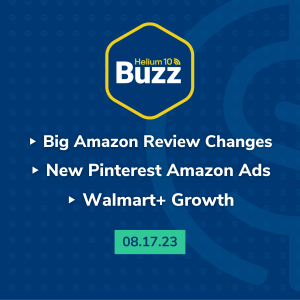
Thursday Aug 17, 2023
Thursday Aug 17, 2023
Today, we talk about the latest stories in the Amazon, Walmart, and E-commerce space. From Amazon review changes to how Walmart+ is ramping up pressure to Prime. Let's see what's buzzing this week!
Tuesday Aug 15, 2023
Tuesday Aug 15, 2023
In the world of Amazon and Ecommerce business expansion, the Latin American market holds immense potential. Belen Bauza and Cecilia Meghirditchian, the dynamic duo from Nocnoc, come from diverse backgrounds that uniquely equip them for navigating this vibrant marketplace. Let’s dive into their journey and unveil the strategies for expanding your brand across Latin American marketplaces. Discover the top 5 marketplaces in the region, backed by compelling numbers that underscore their significance. Nocnoc emerges as a game-changer, simplifying the path to expansion with their user-friendly platform. Learn how to seamlessly set up your Amazon or eCommerce product catalog within Nocnoc, leveraging their brand awareness program, listing translation services, and their experience launching successful products on the Latam marketplaces. Uncover the success story of Project X Egg Tray on Mercado Libre and other prominent marketplaces. Looking for a good deal with Nocnoc? We’ve got you covered! Seize the exclusive Bradley Amigo Discount. The doors to Latin America’s thriving online marketplaces are wide open – it’s time to step in with confidence!
In episode 483 of the Serious Sellers Podcast, Bradley, Belen, and Cecilia discuss:
- 02:33 – Belen And Cecilia’s Backgrounds
- 04:24 – Expanding Your Brand In Latam Marketplaces
- 07:17 – Top 5 Marketplaces In Latin America
- 09:39 – The Numbers Tell It All
- 14:57 – Nocnoc Is Making It Easier To Expand In Latin America
- 19:05 – Setting Up Project X Products Inside Nocnoc
- 20:45 – Nocnoc’s Brand Awareness Program
- 22:38 – Project X Egg Tray In Mercado Libre & Other Marketplaces
- 23:43 – Nocnoc Helps In Translating Your Listings
- 26:15 – How To Get 3 Months Free Trial With Nocnoc
- 27:00 – How Much Does Their Services Cost?
- 28:00 – Get The Bradley Amigo Discount
- 28:15 – Bradley’s Experience With Mercado Libre
- 29:20 – Tips To Succeed Selling In Latam
- 31:05 – How To Reach Out To Nocnoc
- 32:40 – Your Favorite “Knock Knock Joke”
- 33:20 – Cecilia’s 60-Second Tip
- 34:25 – Belen’s 60-Second Tip
► Instagram: instagram.com/serioussellerspodcast
► Free Amazon Seller Chrome Extension: https://h10.me/extension
► Sign Up For Helium 10: https://h10.me/signup (Use SSP10 To Save 10% For Life)
► Learn How To Sell on Amazon: https://h10.me/ft
► Watch The Podcasts On Youtube: youtube.com/@Helium10/videos
Transcript
Bradley Sutton:
How would you like to potentially increase your sales on some products by 10 to 15% with no upfront cost or inventory requirements? You can do that by opening your catalog in minutes to Latin American marketplaces reaching 500 million customers. Today’s guests are gonna explain how, how cool is that? Pretty cool I think.
Bradley Sutton:
What was your gross sales yesterday? Last week. Last year. More importantly, what are your profits, after all your cost of selling on Amazon? Did you pay any storage charges to Amazon? How much did you spend on PPC? Find out these key metrics and more by using the Helium 10 tool Profits. For more information, go to h10.me/profits. Hello everybody, and welcome to another episode of the Serious Sellers podcast by Helium 10. I’m your host, Bradley Sutton. And this is the show that’s a completely BS free, unscripted and unrehearsed organic conversation about serious strategies for serious sellers of any level in the e-commerce world. And we’ve got a couple of people who help serious sellers from all over the world get into a certain part of the world. And we’re gonna be talking about what that is in a couple seconds here. But let me go ahead and introduce our two guests. Now, I had said, you know, before to myself, I wanted to try to, to get the pronunciation right of both of your last names. So for first of all, like, like for example, Belen, I’ve never said your last name, but like I noticed on it, you’ve got an accent, like on the last part of your name, so is the way you pronounce it Bauzá or just so Belen Bauzá and then now Cecilia. So let me give it a try here Meghirditchian or something.
Cecilia:
Well, almost.
Bradley Sutton:
Oh my goodness. And guys
Cecilia:
Meghirditchian. Better than some of my coworkers. So it’s better.
Belen:
Yes, it’s difficult for us. So sorry. No worries.
Bradley Sutton:
It is spelled a lot worse than it. Even that sounds, guys like, it sounds pretty cool. And then you try and spell it like, like if that was the winning word for like, you know, some spelling bee. I was watching the spelling bee where these 14 year old kids in America, they spell these crazy words. They would never have been able to win the spelling bee if they had that. And anyway, we’re just going to we’re just going to call you Belen and and Cecilia here because that’s a lot easier. You are calling us now from Chile. Is it? Or what part of the world are you in?
Cecilia:
Uruguay, South America
Bradley Sutton:
Okay, excellent. Excellent. So what is that where you guys were born and raised?
Cecilia:
Sorry?
Bradley Sutton:
Is that where you were born and raised? Both of you?
Cecilia:
Yes. We are from Uruguay, but the, the team is distributed in Brazil, Mexico United States, China, also Argentina. So just the headquarters are in Uruguay and we are from here, but the team is from all part of the world.
Bradley Sutton:
Okay, excellent. Now, what did both of you end up studying in university then?
Cecilia:
I studied business management because I was really interested with marketing. I saw like, it was like a good way to learn about how a company works and also all the different areas. So I ended up studying that and I really loved it. And now I am like specializing in marketing.
Bradley Sutton:
Okay. So yeah, you’re kind of working in the field that you studied. What about you Belen? What do you study? Yes,
Belen:
I also study business and I have three degrees. I study also marketing and communications. It’s like corporative communications and yes, I also study digital marketing, but yes, I, I’m continue studying every year. I’m doing something new this year, for example, I study like some programs of digital graphics. I dunno if you have like that there. I’m learning to use some programs to make like additional photographs and all that things, but I don’t know, I’m always, I’m 30 years old and every year I’m studying something new.
Bradley Sutton:
Now, was your company here NocNoc, was that the first entry into e-commerce for both of you or were you involved in any way, like another company or for yourself? In e-commerce?
Cecilia:
Yes. It was the first time that I was so immersed in the e-commerce area because my best companies were like solution providers or software providers, but not in e-commerce. I mean, we had like retail clients, so I knew something about the retail market, but not like in depth like it is now. It’s like my first time really selling marketplaces and home marketplaces work because here in Latin America, e-commerce is not just e-commerce. E-Commerce is like marketplaces because it’s the, it’s a huge it has a huge volume of e-commerce sales. So yes, it’s the first time like I really started learning about that. And the market.
Bradley Sutton:
Do you also do other Spanish and Portuguese markets? You know, for example, Spain and Portugal like help sellers for their or only ones in North America and South America. Okay. Now is what you’re focused on is non-Amazon marketplaces. Like you’re not helping people to sell on Amazon Brazil, for example. It’s mainly the non-Amazon.
Cecilia:
We do. The Amazon Brazil, Amazon Mexico. But in LATAM America, Amazon is not the main marketplace. So if we only help sellers to sell in Amazon, they will only gain like five to 10% of the share potential e-commerce sales in LATAM. So what we do is to help them expand in the most marketplace possible. We have like 15 market different marketplaces that we have agreements, we have stores on them. So basically it’s not just, okay, I help you expand to Brazil to replicate your business in, in Amazon, Brazil. It’s like, I help you expand to all the market basis. Sure.
Belen:
If want to expand to Latin America, it’s important. They have to understand that it’s not the same like US that you throw your products in Amazon and you’re probably going to have a good performance. Because everyone knows Amazon is like the king in US here in LATAM, you have many, many marketplaces in all countries. For example, in Brazil you have more than 30 marketplaces and you want, and if you want to have real sales, you must be in most of these ones, for example, I know, but Mercado Libre is one of the biggest ones, and it has only a 12% of the share. So imagine the important to understand what is happening here in which marketplaces you have to be selling to have a good performance and to make sales. Yes. ’cause If not, if you’re in only one or two, marketplaces going to be quite difficult.
Bradley Sutton:
Okay. Now you mentioned, hey there, there’s 30 marketplaces in Brazil and we know there’s many n other countries. If you were to list the top five for GMV or, or for the most volume of sales, what are the top five marketplaces in all of Latin America?
Cecilia:
The first one, Mercado Libre, because it’s present in all countries, but also in ra, Brazil is the strongest one. So it’s the strongest.
Bradley Sutton:
So, so the specific one, so then is number one out of all the mecal libre, like for example, I view Amazon USA and Amazon Germany as number one. And number two, it’s both Amazon, but, but separate. So then number one, out of all the countries marketplace would be Mercado Libre. Brazil,
Cecilia:
Yes. Mercado Libre Brazil. Then I would say I think maybe Magalu, Brazil too.
Bradley Sutton:
Also the top two are from Brazil. Interesting. Okay.
Cecilia:
I believe the top fire for Brazil, because Brazil.
Belen:
Yes. But of course that it depends a lot in the type of product and the price you have. Because for example, maybe for your product, if you’re selling, I dunno, something, a small device of technology probably in Brazil is you, you’ll have more sales in Mexico because you can’t sell there, eh, a full price, more expensive. Or if you have cosmetics, it’s going to be better in Brazil because in this markets you have like more competition and more people are used to buy this type of products. What we have in Nono is like a special team that, first of all, we analyze a little bit your products to understand in which country you are going to have a better fit. Because it’s, we can say like, well, I think that Merkel live in Brazil and then Maga and then Merkel live in Mexico are like the, the biggest one and the best ones. But of course that it will depend a lot in the type of product. We have products that if they wait, I don’t know, more than, I don’t know, 10 kilos, maybe you can be in some countries, you have like different laws different prices and weights that we have to understand in each country. So more or less, yes, it’s like Mercado Libre Brazil Magalu, Mexico,
Cecilia:
Americanas too in Brazil
Belen:
Americanas popular.
Bradley Sutton:
Yeah, I never even heard of that one. Well, what country is that in?
Belen:
Brazil
Cecilia:
Americnas in Brazil too. Brazil
Bradley Sutton:
Also Brazil. Okay. Now, you know, before we go into too much details about selling down there, let’s just give, let help people understand the, the potential. So can you give some numbers from some customers, you know, where hey, you don’t have to say their name or anything, but I know one seller, you know, they started, they’ve been on there for one year and now they are doing, you know, $5,000 per month down there, they’re doing 10,000. You like what is the potential for somebody who is, you know, an Amazon USA or an Amazon Europe or like you said, maybe they’re from China and they open up in Latin America. What is the ceiling, I guess you could say for, for sales?
Belen:
More or less for you to understand? It’s like in LATAM you can have like the 15 or 20% of the sales you have in US. Every seller, every case is so different. And it would be depend in the disposal if there is a affluent communication. But yes, I think that maybe–
Bradley Sutton:
Yeah, so I mean like if I’m selling a million dollars in Amazon USA, there’s a potential, yeah, hey, I could do a 100,000-150,000 or so in Latin America amongst all the marketplaces, but if my product is good for it, you know, like if I’m selling if I’m selling in in Mercado Libre and Magalu, I can’t be selling a shirt that says I hate Luis Suarez or something like that. You know, like, maybe if that’s my product, maybe it does good in America. It has to be kind of appropriate for the marketplace. Now have you ever seen a case where maybe there’s something that even sells better than somebody in another marketplace, but actually sells better? Like for example, everybody says something similar about Amazon USA and Walmart USA like, hey, Amazon USA usually 10 to 1, the sales, but you know, Carrie, who, who works with us here, she’s got a couple of products where on Walmart it actually sells better or the same as Amazon just because there’s more demand. Is there anything like that or usually it’s always less than than the other marketplaces.
Cecilia:
First of all some marketplaces have like their own special day, special sales. So it has happened to us that, for example, during a certain period of time, the seller had more sales in LATAM because of that special sale. That the hot sale, for example, in Mexico, that was in May. During hot sale in Mexico. That seller had like, I don’t know, three times, four times more sales in, in Mexico in LATAM than in the US for a specific product. And also, of course, I think depending on the marketplace because there are some marketplaces where we can push with ads on advertisings or maybe the keywords works better. And I don’t know that sales increase in the specific marketplaces. And we are always monitoring that analyzing the performance on each marketplace to push sales, to push advertising campaigns inside the marketplace. And of course that’s what we try to do, like to push sales in the marketplaces we see most potential.
Belen:
And also what happens a lot is, for example, when we start with a seller, they always tell us like, okay, look, this is my top selling product. This is the best sky you here in US. And when we expand their products, they can’t believe that, for example, a product that they don’t sell too much in US is the best opportunity here in LATAM. And the product that they are used to sell a lot in US is not that competitive here in latam because of course that you have a lot of factors that, I don’t know, season or sales, for example, when you finish a campaign in US, maybe then it’s going to be attractive here in LATAM market. So yeah, it is like, it’s everything different of what is happening in US, and these are good opportunity for sellers because maybe you have some products of summer and then here summer, so you can finish your size here. So it’s like we are always looking for different opportunities for sellers to boost their sales.
Cecilia:
Yes. last year the one of the top selling products in Brazil during Christmas was an outdoor game. So, of course, in the USA, an outdoor game won’t make sense because it’s winter, but here the beach, outdoor playing games. So we see that all the time during the different seasons. And I also remember, this is really funny, it’s like a funny fact. I think it was last year too, that Brazilian football player had a, the nickname? They told them pigion, like people told them that he was called pigion. I don’t know why. So a seller had pigion pledges toys. I don’t know why a Chinese seller. So during that time, the sales for that pigion plus boost in Brazil and seller said to us, what’s happening that this specific project had a lot of sales. It was because of that, of that nickname of that Brazilian football player. So those things usually happens. Yes.
Bradley Sutton:
Okay. Now the way that that you guys even exist is because it’s hard for, for example, Americans, Canadians to just open up and sell these marketplace. I know, like I did, maybe I want to say eight or nine years ago, I started Mercado Libre in Mexico, you know, when I was doing in a phone case business, and it was tough. Like I had to have someone local and just, you know, like thinking about the customs and making the listings, it was a headache. And I ended up stopping, like after, after a few months, I was just like, this is not, I could see the potential, but I’m like, I don’t have the time to deal with this. So, so if I understand correctly, like the thing that you guys do is you take all of that hassle away. Like nobody has to have entities or bank accounts or anything down there, and I don’t even have to ship to Latin America. I’m shipping my products to Florida, right? And then you guys take it from there, and then that’s how you deliver from there to the customers. Is that right?
Belen:
Yeah, yeah, yeah, yeah. I think that NocNoc exists because we understand the headaches of the sellers when they try to expand. And yes, what we try to do is like solve all that problems. Like we make payments in dollars, we take care. You only have to give us like your bank account in US, and we transfer in dollars there. We make translations listing, we have customer service 24/7. We have offices in Mexico and Brazil, and if you have cancellations, we found returns, we’ll take care of that. We have our warehouse in Miami, so sellers only have to ship there to Miami for a seller. Imagine that is the same like selling in US. So they only ship there. It is like the first month shipping, and then we take care of everything. It’s like we ship to Mexico to Brazil, they have, if the seller has questions or problems, we’ll chat with them.
Belen:
We’ll answer the questions. It is like, I think that’s what happening with us. Our key in our business model is like we, we take care of the sales headaches and we try to solve all that problems because we have so many marketplaces here and to understand what is happening with each countries regulations are changing every day. So we understand the problems. These can be for a seller if they want to, to start selling by themselves. And yes, I think that this is like a whole solve problems. Yes, it is. Like what it is NocNoc.
Cecilia:
Yes. And also, and most important, we have the local team in all different countries that are experts in regulations, in compliance, in customs. They know which products can be sold in each marketplace, in each country. So that’s really like one of the, the biggest advantages, I think because you are talking with someone who knows the market, who already has been selling in the market for years and knows which products can or can’t be sold. And we do that like catalog analysis before telling a seller, yes, you can sell this, or no, we are really honest with them about everything, about pricing, about products. I think that’s the key of success, that we have a team that is really committed to customer success and to boosting sales in marketplaces. Well, yes, because
Belen:
No, yeah, that is really important. We have like a team and we have the experience and the knowledge of understand what is happening. When we have a new seller, we see that their catalog, and we know if with that price, they are going to be competitive. What is happening with that, that type of products in each country, we, we know in which marketplace is going to have more sense. It’s like we, we, we have offices in each country dedicated analysis teams that are always understanding which products are going to be better. So it’s like, I think that the, the knowledge is like, yes, really hard, but it’s really necessary here to make work side.
Bradley Sutton:
Now what I did, and you know, you guys know, I don’t like you know, talking about things I don’t have experience with. So I actually went through the process of getting set up here with NocNoc, and I took one of the Project X products, the, the egg tray. We figured that one would be a little bit more wide wide reaching as opposed to the coffin shelf, and it was pretty easy to get it set up on their website, you know, set the price of, you know, how I’m going to you know, the price before I ship it to them in Florida. And then what they started doing is going to the different places for example, Mercado Libre, right here, this is what it says. This is Mexico, I think. Yes, lib.com do mx.
Belen:
Yeah.
Bradley Sutton:
And we’ve got this is not $805 even that’s pesos guys, so don’t worry. I’m not I’m not doing some crazy price. And we have the, the listing is translated and, and then you, since, since you’re selling it on a bigger account, you guys get this Mercado Libre gold mark because you’re a big seller, as opposed to me, if I was just getting started, I wouldn’t be able to have this, this badge. Right, exactly.
Cecilia:
We also have some stores that are like exclusive. So for example, company in Mexico is we have a store there, but we are the only international store available. So it’s the only way that any seller can like, have their products there in mere sellers, of course, can enroll by theirselves. It will be much more difficult and they won’t have like their reputation as we have, but we also have some other stores that, okay, the only way of selling is with NocNoc. So that’s a good point.
Belen:
Yes. And also when we have is like, eh, in some marketplaces we have like spaces, like banners, blog where we can push products. If we have new sales or marketing campaigns, we can like boost your sales, like you have spaces in the best marketplaces in LA town where we can publish your brand, your product. So that is really, we will be really difficult for a seller if they want to make it by their own to have like that reputation, that spaces in Mercado Libre or in Amazon or in Americanas, I don’t know. And yes, this has been like a work of years of NocNoc, and we have so good reputation in this marketplaces that for us is really easy to show your products, to help you have like a brand awareness to make your brand known here, because we work with brands that are new in, and right now we have like a new brand awareness program that for us, imagine that it’s really easy to make sale.
Belen:
I don’t know a small device of, I dunno, a computer, a Sony computer, okay, here in LATAM, we all know what it is, or a Apple, I don’t know any brand well known a perfume, a Carolina, a red perfume. I can make you say that tomorrow if you want, but what, what happens with new brands that want to start a growing latam and nobody knows the brands, their products. So what we do is like a brand awareness program that they can start, I don’t know, like paying $300 per month, and we can help them with influencers, with blogs with us, social media. We, we can make like an Instagram if you want. And yes, it’s like something new. We, we, we started working and it’s going really good because for new brands, it’s really important to, to get known the brands in the beginning. Yes.
Bradley Sutton:
Yeah. Okay. Now there’s other you know, I don’t I can kind of speak Spanish a little bit, but I don’t speak Portuguese, but I can tell this is a Portuguese, so this must be Brazil here. Yeah. So it’s called Bandha instead of or still called wait, which band? There’s both. So the, wait, the word is the same, or wait, I thought it was a different word
Cecilia:
In Portuguese and Spanish.
Bradley Sutton:
It’s the eggs. That’s a different word. Okay. So the same in Portuguese and Spanish. Okay. OBO is Portuguese for eggs, I guess. All right, interesting. So I can see here the listing is completely in Portuguese, translated here. Yeah. I cannot read any of this down here. Interesting. what one is this? Dot cl Is this Chile?
Belen:
Yes. Yeah.
Bradley Sutton:
Okay. All right. So here’s another, the same listing I guess, in Mexico here. So yeah, you put it in a lot of marketplaces there. There’s another one here. The pictures aren’t loading for me, but this is that Magalu. Big Brazilian website here. And so now it’s in this place, and it was pretty easy. It was pretty easy to get this set up here in this, in this portal that I did. Now let me show people another screenshot here of, you know, I don’t have we, we just added this just a little bit ago, so I don’t have a lot of I don’t have a lot of sales yet, but here is a dashboard of I guess one of your other you know, customers and you’ll be able to see what’s the pending orders, products out of stock and wow, look at this. $3,400 worth of sales, the top SKUs. Okay, this is pretty, pretty easy to to to navigate. Go ahead. Yeah,
Belen:
No, yeah, there you have like all your information, your balance, your what, your job. I use dashboards, pending orders, and also in the service center, you can upload your products. You don’t need help of us. If you want, you can make it by your own uploading products manually, maybe then in your Seller Central, you can show that you can upload products manually or you can integrate via a p I and we can help you with our IT team or you can upload with your ASINs, your Amazon ASINs. We take all the information from there and we’ll get like descriptions, titles, photographs, and we’ll translate everything to marketplaces here in LA Town or your, with your SKUs information, you upload a, a template that you can download it from there. And it’s like really easy and friendly for sellers. It’s like you log in, you will have an account, you say, okay, I want to upload products. You upload it, and probably in two days your product will be published in these marketplaces. And once we start with communicating with the sellers, we can make marketing like actions, we have campaigns, discounts, adds a lot of things to help them have more sales. So yes, the process of uploading products and starting seeing your products in publications in marketplaces is really fast and really easy.
Bradley Sutton:
Is there a setup fee for any of this? Like, I didn’t pay, but I don’t know, is that just the Bradley Amigo discount or there’s no, there’s no there is, there is. Do other people have to pay to get started on the platform? Well,
Cecilia:
First of all, eh, we offer three months free trial for anyone to try. So if you don’t want, I mean, if you want to try your success in Latin America, maybe you are not so sure about starting with your owner solution, we will give you three months free trial. Okay? So during that time, we of course we’ll help you get sales and boost your sales we’ll do analysis for you to determine which product are most successful, how it went, and then if you decide to continue, we of course offer like a small fee, but it’s the land maybe can talk more about that, but it’s really, really small. It’s just for us to like operate and have your account open. Yes,
Belen:
Yes. It’s like, well, three months for free and then it is only a fee that goes from 30 to $90 per month depending on how many SKUs you have. So probably you can have like a hundred SKUs with us and pay us only $40 per month. Yes is a little small commission for all the things you can make here. And for sellers, it’s like they only give us their products with the FOB price that the amount of money they need get by any sale they have, and they will have that money in their balance in their, we are going to pay them in dollars. And yes, it’s only a small commission that we charge sellers, but they can trade for free. And we have like also a budget, a marketing budget that we can help them extra these with discounts, with ads once they start selling. Yes, we can help them with that marketing actions also, and if you’re Bradley friend, we can help you, like maybe we can make something like the first month, we can give you a 10% of discount by saying us that you are Bradley friend. So yes, tell this opportunity.
Bradley Sutton:
Okay, there we go. Alright, we’re gonna have to make a NocNoc code Bradley Amigo discount will be the code that you enter or something? No, but yeah, just, just name drop me.
Cecilia:
We’re gonna make something. Of course, yes, of course.
Bradley Sutton:
Alright guys, just inserting this sound bite because actually we made this Bradley Amigo discount code happen. So make sure to stay at the end and I’ll give you the link on how to redeem this. Now, I mean, to me, this seems like a no-brainer, especially that there’s no upfront costs. I’m not having to send inventory, you know, in and, and then maybe it sit like, like I said, when I was doing Mercado Libre in Mexico, I sent you know, like 10 cases worth of phone cases that I ended up not selling, and I just lost it all because, you know, I couldn’t get it right. Nobody’s having to set it up. So it’s like a no-brainer, almost like, Hey, we should set up a call with you and then, and then maybe do you take a look at their, I mean you did, you did that with mine a little bit where you took a look at the products and said, Hey, you know, let, let’s start with this egg tray one where somebody could just reach out and then choose one. Just, just see how it goes. Maybe it works out well, maybe doesn’t, maybe you should try a different product, but I’m trying to see the downside here. There’s no downside, you know, since it’s free to start, at least
Cecilia:
We encourage all sellers to send us their entire catalog because sometimes they only send us, I don’t know, I want to try this product, and they send us one or five ASINs or SKUs. But we, we always tell them, no, no, send us your entire catalog because we can help you determine the products. We feel. We’ll have a lot of sales. Yeah. Not just the ones you want to try. So we always encourage them to sign up to our website or to schedule a free exploratory call and we can’t help them get started asap. So as soon as they reach to us, we’ll start the process. We’ll study and analyze their catalog expand all projects in the marketplaces.
Bradley Sutton:
Now how like for example, me, I’ve got my own warehouse here. And so like, you know, when I was calculating it out, like how it’s gonna ship to, to you in Florida, it was pretty easy. ’cause I have the egg trays right here. I know how many days it takes me to get to, to Florida, how, how long it’s, or how much it costs. But what about the sellers who maybe they don’t have a 3PL warehouse, they only have Amazon inventory. Are they Yes. Doing the, the, what is it called are are they just taking inventory out of Amazon and then sending ah, yes to you or doing the, oh my goodness, my mind is blank right now. What’s it, what’s it called? Okay. It
Belen:
Is like they have fulfillment with Amazon,
Bradley Sutton:
Multi, multi-channel fulfillment. Is that what they’re doing to send to you? Then
Belen:
We have sales that work that way, and once they have an order, they advise Amazon, they take the products from there and they should be to us it’s like, yes. Really simple for that. Yes.
Bradley Sutton:
Okay. All right. Now guys, if, if you’re interested to, to give ’em a try, there’s there’s a couple different ways. Like I suggest going to the you know, our, our hub, they have been in the hub. We don’t just put anybody in the Helium 10 hub. So just go to hub dot helium ten.com and then right in the search you can type in knock, knock and it’ll, it’ll be the, the only one that comes up and then you can hit get in touch. How else can they, they find you out there like your website and, and
Cecilia:
Sure they find you website
Belen:
They can. Yes, they can sign that directly in our website or also they have the option to have an exploratory call by free with us and we can have a meeting with you a 15 minutes meeting and to explain a little bit more to talk about your products, to see like if there is a real fit or not. So yes, please don’t hesitate to to sign up or ask for an expiratory and we can help you.
Bradley Sutton:
Put another soundbite in here, guys. They did actually make this discount code happen. So if you want to save 10% cash back on your sales for the first month, go to h10.me/bradleyamigo. Alright, h10.me/bradleyamigo, no spaces, no anything. And that I’ll take you to the NocNoc page and then get you that 10% cashback. Alright, now one last thing before we get into your 30 or 60-second tip or strategy is, I’m sure you get it all the time, but because of the name of your company, I need to know what is your best knock, knock joke?
Cecilia:
Oh, I don’t know.
Belen:
Don’t know what, sorry,
Bradley Sutton:
You don’t know. Oh, but but you don’t know about this. You don’t know about knock, knock jokes. Yes, in America.
Cecilia:
I know that I know them, but okay, it’s
Bradley Sutton:
Alright. I’ll give you one. I’ll give you one. You guys ready? Yes. Alright. Knock-Knock. Who’s
Cecilia:
Who’s there?
Bradley Sutton:
Interrupting Kat,
Cecilia:
Interrupting Cat.
Bradley Sutton:
Meow.
Cecilia:
I’m gonna, I’m gonna make that joke to my boss.
Bradley Sutton:
Okay, there we go. All right. Yeah. Sorry guys with the dad jokes, but all right, now let’s get serious your 30-second tip or strategy of the day.
Cecilia:
Okay. my strategy would be if we are going multi-channel and also multi-country, if you are starting to blind like a multi-country strategy to pay attention to your keywords, of course, because they will vary from country to country. For example, the keywords we use in Colombia are not the same one we use in Mexico, even though they both speak Spanish. So that’s a good way. Like searching the, the most popular and trendy keywords and to see which one applies to your products will be like a, a good strategy. And also, of course it’s not a literal translation. If we have something in Portuguese and we want to translate it in Spanish, it, we don’t have to make it little because for example, I don’t know, waffle machine in English will translate as Makina in Portuguese, but in Spanish is, it’s different. It’s like, yeah. So you have to pay attention to that. I don’t know, Berlin, your team,
Belen:
I think that everything visual in marketplaces is really important. Every day. We, we are dealing with that. You have a lot of competition, a lot of similar products, a lot of grants, and we are like trying to make like everything more, more important and put that to be in the top with a good photograph, a good title attractive to make it different from the competition. And look what is happening with similar products. Look to a competition, what they’re doing good that you don’t, or maybe, or it is like, don’t, don’t publish a product and forget about them. It’s like a day-to-day work to understand what is happening there.
Bradley Sutton:
Okay. Excellent. Excellent. All right, well thank you so much for joining us today. Are you going to be coming to America for any upcoming conferences? I know I’ve seen you at a couple of conferences before like Amazon Accelerate or Unboxed or anything The rest of this year,
Belen:
Yes. Maybe next month to Amazon Accelerate, we are going to be there and yes, we we’re like seeing month by month what show is going to be new to be there. But yes, we are always trying to be every month in a different show in US, so yes.
Bradley Sutton:
Okay. Alright. If anybody else is interested in Accelerate, I’ll be there too. You can go to h10.me/Accelerate. And I would love to see everybody there. Maybe it’s in Seattle. Maybe we could find a local Uruguayan restaurant there and you could show me some dishes. But healthy ones, yes. Not the online food that’s s eats there. All right guys. Thank you so much and we’ll see you soon. Thank you very much. Thank you
Belen:
Thank you very much. Bye Bye.
Cecilia:
Thank you very much. Bye Bye.
Saturday Aug 12, 2023
Saturday Aug 12, 2023
In this information-packed Seller Strategy Masterclass episode, Bradley dives into the world of advanced competitor research and alerts using Helium 10’s powerful features. From unlocking historical keyword insights for seasonal products to harnessing the trend-tracking prowess of the “Show Historical Trend” button inside Cerebro. Discover the strategic advantages of the Cerebro “Time Machine” and uncover hidden opportunities by examining significant drops in your competitor’s BSR. Bradley unveils the true value of these features, guiding you to reverse-engineer your competitors’ success on a month-to-month basis and offering insights into top-level competitor information.
Bradley also teaches your, how to set up tailored alerts from competitors’ listings, customize your notifications, and gain priceless insights into pricing and coupon strategies. Join us to grasp the immense potential of these new features and create an unfair advantage against your competitors with your own suggested insights. Let’s learn how to elevate your Amazon game today!
In episode 482 of the Serious Sellers Podcast, Bradley discusses:
- 01:31 – What You Will Learn In This Episode
- 03:00 – Using Cerebro History For Seasonal Products
- 07:31 – The Cerebro Show Historical Trend Button
- 11:51 – How To Use The Cerebro “Time Machine”
- 13:25 – Look At Big Dips In BSR
- 14:29 – Why Are These Features So Valuable
- 20:43 – Reverse Engineer Your Competitor’s Success On A Month To Month Basis
- 23:54 – How To See Top-Level Information For Your Competitors
- 25:19 – Getting Alerts From Competitors Listings
- 27:04 – How To Customize Your Competitor Alerts
- 28:07 – Getting Insights On Pricing And Coupon
- 29:21 – How Valuable Are These New Features?
- 32:36 – Suggest Insights That You Want To See In Helium 10
► Instagram: instagram.com/serioussellerspodcast
► Free Amazon Seller Chrome Extension: https://h10.me/extension
► Sign Up For Helium 10: https://h10.me/signup (Use SSP10 To Save 10% For Life)
► Learn How To Sell on Amazon: https://h10.me/ft
► Watch The Podcasts On Youtube: youtube.com/@Helium10/videos
Transcript
Bradley Sutton:
Today in our monthly Seller Strategies Masterclass, we’re gonna be going over some amazing features that you should be using that’s gonna help you see what your competitors are doing on keywords on a month to month basis, going back to yours, and allow you to get notifications on if they change their price or add a coupon to their listing and much more. How cool is that? Pretty cool. I think
Bradley Sutton:
You wanna know what keywords are driving the most sales for listings on Amazon. To do that, you need to know what highly searched for keywords the product is ranking for. Maybe at the top of page one, you can actually find that out in seconds by using helium ten’s keyword research tool, Cerebro. Now, that’s just one of the many, many functions that make this tool my favorite tool in the whole suite, and it’s the most powerful keyword research tool ever created for e-commerce sellers. For more information, go to h10.me/cerebro. Don’t forget to use the Serious Sellers Podcast, discount coupon SSP10. Hello everybody, and welcome to another episode of the Series Sellers podcast by Helium 10. I’m your host, Bradley Sutton, and this is the show that’s a completely BS free, unscripted and unrehearsed organic conversation about serious strategies for serious sellers of any level in the e-commerce world.
Bradley Sutton:
And today, we are going to be going over some kind of like game changing features of Helium 10 here, where these are strategies that you should, guys, should be using, whether you’re using Helium 10 today, or maybe you, you’re using another tool that might have the, these strategies. I’m not sure if anybody else can do what I’m about to show you today, but for some of you who aren’t elite members, a lot of this will be game changing for you because you’ve never had access to this. But I’m gonna be showing you guys how to look at the history of where somebody was ranking in a certain month. There’s a plethora of applications for it. We’re gonna be going over that today. You’re gonna be able to see what was like their Cerebro, or where were they ranking organically?
Bradley Sutton:
Where were they ranking in sponsored ads of a certain month of any time in the last couple of years? You know, where were they showing up in Amazon? Recommended what was the search volume of those keywords when they’re ranking for it? And this is going to be great if you’ve got a seasonal product that you’re just about to launch. It’ll be great to just look at your current products, to look at your competitors, what they’ve been doing in the past, just there’s a never ending list of, of kind of cool things that can come from this that you cannot get anywhere else in Seller Central. This is not something that you can get in Search Query Performance because it’s for your competitor’s products. And then I’m also gonna be showing you some ways to track your competitors that you’ve never been able to do before or that you had to do manually.
Bradley Sutton:
So let’s go ahead and hop into it. Now, the first the first kind of use case I want to give is, let’s just say you’ve got a seasonal product, like something related to holidays or maybe it’s, you know, like a Valentine’s Day product or Christmas or something like that. Now, let’s go ahead and just use something. Let’s pretend that we are gonna do Christmas straws. I used to do a lot of straws on, on Amazon for Project 5k. I still do a lot of straws. So let’s just say I wanted to relaunch on Christmas straws. So if I were just to type in Christmas straws here, I spelling this, right? Yeah, Christmas straws. You know, I’m not sure these products are not selling well, you know, like these two aren’t even selling like 50. Because, you know, here in, in August, people are not exactly ordering Christmas draws unless they’re really trying to get ahead of the curb.
Bradley Sutton:
So if I were to choose this and run cerebral on it, you know, would I know a lot of the main keywords? You know, probably, but, but they’re probably not even ranking for that many keywords. Let’s just take a look at some of the estimated sales here, but the, these products are probably not doing many sales at all. And so the keywords that they’re getting sales from, the keywords that they’re ranking for also will not be the kind of true keywords that they are getting their sales from during Christmas time, right? So what is the way that we can find out? Well, first of all, are these Christmas straws even in stock? Like I, am I even looking at the bestseller just because it’s page one, you know, position one and two and three and four and five are they the best seller?
Bradley Sutton:
So let me just show you how to do that. And yeah, look at this. A couple of them are only doing 109 hundred units of sales, but this is across the whole, across all of their variations, which they’ve got tons of variations in this listing, but these are not the best sellers necessarily at Christmas. So what you can do is you go to brand analytics, And I am going to look at, as you can see here, I’m gonna look at brand analytics, top search terms, and I’m going to go to reporting range monthly and select year 2022, and then I’m going to go to December of 2022, and then I’m gonna type here under search term Christmas straws. Now take a look. The number one keyword for Christmas straws was Christmas straws. And the, the rest of ’em are just long tail keywords that have Christmas draws in it.
Bradley Sutton:
And let’s just take a look at the second one here. Let’s see, how did they do? They had 6% of the click share and 6% of the conversions. This was the number two listing for all Christmas draws in December during Christmas time of last year. So let’s look at this listing now on Amazon. And look at this guys. It’s unavailable. This product is not even in stock. So if I was just looking at Cerebro on the top products right now, I wouldn’t have even seen this product on Amazon, right? And if I were to run Cerebro on this product, now it’s not gonna show me anything useful because it’s not even in stock. So it’s not even ranking right, right now, right? So this is what you can do. I’m going to take this and go ahead and, and I’m gonna go ahead and put it in cerebral, okay?
Bradley Sutton:
It’s gonna run cerebral. I can click on keywords right here inside of the actual Amazon listing. It looks like it actually was in stock recently. Just went out of stock a few weeks ago. But let’s go ahead and run Cerebro on this. And you’ll see probably not that many keywords are going to show up now because it hasn’t been in stock in a couple weeks. So we still have the history. It wasn’t stock within 30 days ago, so there’s still a lot of keywords here, but almost none of these have any significant search volume you guys see here. Almost all of these are like, you know, 200, 150, some of them zero search volume. So this is not really gonna tell me what the best keywords are, but watch this. What I’m going to do is I’m gonna hit this button.
Bradley Sutton:
Now, this is something that you guys who are diamond members and above now have access to Elite members have had this for a year. This is something that I, I’ve always wanted for years and years. We were able to launch it last year for Elite, but now it’s available for Diamonds. So you Diamond members. I mean, lemme just kind of preface this with, with how amazing I think this is. I would’ve paid for Elite membership just to get this. I would’ve paid the $400 for Elite just to get this feature. That’s how powerful. It’s now it’s available to Diamond members, you know, and you only have to pay like $150 more for it. More than worth it just for this feature, let alone everything else that the Diamond has. And you guys know me, I’m not like some software salesman where I’m, I’m gonna tell it to you straight.
Bradley Sutton:
That’s how valuable this is. Now, why? Let me explain, watch what happens when I hit show historical trend here, which is now the new thing that you d members have available. It’s gonna show me the history of this asin. And as a matter of fact, I wanna make, you know what? I wanna make sure that only this listing is th this might have had other variations in this. So I’m gonna hit exclude variations. That’s something important that you guys should do. Now, it might, it might, it might just come out with the same information. But whenever you’re in cerebral, if you are in a variation listing, and the listings are very different, like there are in the Christmas category here, or in the straw category, I should say hit exclude variations to make sure you’re only analyzing this ace. And sure enough, the number was different here.
Bradley Sutton:
But anyways, I’m gonna look at this show historical trend. And, and look at this guys, you could see how many keywords they were ranking for in history, In July, June, may, April. Obviously they, they weren’t even ranking for any keywords and they probably weren’t even showing up in the search results for many products. They probably weren’t even in stock. But then look here in December, you could see that they had 613 organic keywords and 618 sponsored keywords. So what you do is you then hit this month of December. ’cause Obviously that’s when they probably sold the most for this product. And then I’m gonna hit apply filters. Now, here’s where the magic happens. Now all of a sudden I am looking at Cerebro as of December of 2022. In other words, Christmas of last year. So now this top selling product per brand analytics for this keyword and this niche, I can now look at why were they the top selling product?
Bradley Sutton:
What keywords were they getting sales from? And so you can just take a look here. Let’s go ahead and search for anything that’s over like 300 search volume, where maybe their organic rank was between one and 15. Let’s go ahead and apply. And then right here I could see the top keywords for this product. Christmas straws paper, looks like they were even getting some action on Halloween straws for some reason. That’s kind of interesting. So yeah, I wouldn’t have expected that. Paper, Christmas straws, paper straws, there are one of the top ones. So they were getting a lot of sales just from regular paper straw keywords Christmas, plastic straws, Grinch straws, holiday straws, all of these keywords that probably have no search volume now or very little Now I can see which ones they were getting sales from. And now I know which keywords that if I am going to make Christmas straws, what are the keywords that I need to start ranking for now in August to get ready for December?
Bradley Sutton:
Alright, so there’s one use case. I hope you guys can see the value in that is if you got a seasonal product and, and you’re wanting to make sure that you have some special PPC campaigns, oh, by the way, speaking of PPC, I could see what, what, what were they putting their money in as far as PPC goes. I could go to sponsored rank one to 10 and just see what keywords they were paying for top of search placement. Let’s actually go one to five, so that’s more towards the top of the page and take a look. Now I could see which keywords that they were showing up for in sponsored results are very high, right? But that’s the first use case. You gotta, like I said, you’ve got a seasonal product. It’s, maybe it’s a summer product, maybe it has nothing to do with holiday, but it’s maybe something that’s only for summer or only for winter, and you are not in that time period.
Bradley Sutton:
You know, like, let’s say it’s a St. Patrick’s Day, or let’s say it’s spring decorations. Well, people are not usually buying spring decorations in August. So whatever’s showing up in Amazon right now is not going to be the best, the indicative of which products were the top ones and what their performance is, what keywords they’re ranking for in springtime, right? So any ASIN at all, even your own ASINs, you put into Cerebro and then hit the historical trend and now you can see Cerebro as of those days. Now, I could also do this for a multi ASIN search as well. The same way that you guys do multi ace in searches in cerebral. So I could see, hey, where is everybody kind of like ranking for overall? Alright, now that’s one use case. Now for another use case of how you can use this Cerebro historical data.
Bradley Sutton:
I call this time machine, cerebral time machine, how we can use it in order to analyze what the competitors have excelled on. Let’s go ahead and, and go into the niche of egg trace. That’s something that Project X has a lot of. And so maybe I want to take a look at one of the competitors here who have been selling for a while. Let’s go ahead and run. I’m gonna run X-ray right on this page, and I wanna find somebody who has been selling products for a while on here. Let’s take a look. So I’m gonna look for somebody who’s been selling for a while, at least like a year or two. And then let’s go ahead and see if I can find something that will show some kind of seasonality with their, with their keywords. So first of all, let’s go ahead and say at least estimated sales.
Bradley Sutton:
I want somebody who’s been selling at least a hundred units a month, okay? So of the ones who have sold from at least a hundred units a month we see here, here’s one that was made in 2021. So let’s just take a look at his listing, see if it’s relevant. It’s a egg tray stackable. All right, this is cool. So, so this guy’s been selling for a while. So what I might wanna do is I’m going to look at his BSR chart because I want to see when it, or if he had any kind of like really peak times of sale. So I’m gonna go to all time on his BSR chart, and then let’s take a look here at when he was selling really well. And there’s not too much, like this guy is not that his sales don’t seem that seasonal, all right?
Bradley Sutton:
But however, look here, there is kind of a dip here in a couple of BSR dips. So I’m looking here, let’s just say that he had a bigger dip here in March of 2023. So how I can use that information is I would go to, again, hitches this keywords button and now it’s gonna open up cerebral for what’s going on right now, which of course is, is valuable in itself, but what I’m gonna be looking for is how to tie in his increase or decrease in sales to keywords. Now, I, you couldn’t really see it. I’m just doing this live guys, so you know, I didn’t pick a great one right there, but you’d especially be mindful of your competitors who have big dips in their BSR or big increases in their BSR, meaning that their sales go way down.
Bradley Sutton:
So what you do is you run Cerebro, and then I’m gonna hit again the show historical trend. And let me look back at that month where he was doing a lot. Now look at this, I said March. Look, all of a sudden he went from 48 sponsored keywords to 401 sponsored keywords from February to March. So that’s in interesting in itself. So what I would do is I would go here and I would choose this month, and I would now look at his keywords that were from March of 2023, and then I would take note of what he is ranking for organically high. Now, what I would do in another window, let me just show you guys here, and now I, I probably download this there, there’s other ways too, I could do it. But what I would do is I would look at, I would open up another window and I would look at the month where he wasn’t really doing much.
Bradley Sutton:
Like in February, like let’s say that his, his keywords, his sales went up in March. So I would go ahead and open it up. Let me go ahead and do that right now. So I would open up another window of cerebral and let me look at their previous month where maybe their sales weren’t as much. And then I’m going to compare what is going on here between these two months. So here I have March, I’m gonna go ahead and put minimum, let’s just say 500 search volume and let’s go organic rank one through 10 for March. And let’s do the same thing. Minimum 500 search volume now that I’m looking at February and look at organic rank one through 10. Okay? Now let’s just take a look here at their main keywords would an egg holder, counter egg holder, et cetera.
Bradley Sutton:
And what I’m looking for is something that went up from February to March. So let’s see, wooden an egg holder, he was number one in March, but in February he was number one too. So we know that he didn’t get extra sales from that keyword counter egg holder, he was number four, he was number two before. But look, look here, there’s a couple of keywords I can tell already that is not even on here. And as you can see here, in March, he was ranking position six for this keyword egg storage for countertop. Let’s see where he was ranking in February, because I don’t even see that keyword here. So let’s just open this up to maybe rank 50. And then let’s look for egg storage for countertop. I don’t even see he was not even ranking guys in the top 50. So guess what?
Bradley Sutton:
If there was an increase in sales in February to March, which there was, we now know that we can tie some of that increase in sales to the fact that he was now at the top of the page for egg storage for countertop, wherein in February he was not even ranking in the first 50 positions for this keyword. So you guys see the power here you would do it the opposite way. Let’s say that somebody, one of your competitors had a really bad month of sales, you saw that from his BSR, like he normally gets around, you know, 5,000 B S R and then the next month his B S R was like 15,000 or 20,000, right? So his sales obviously went down. Well, now what I would do is I would do the same search that I just did right here, but I’d be looking at where did he lose keyword rank and now what does this do?
Bradley Sutton:
This is going to show me what are the keywords that I really need to maintain my rank on. You know, like sometimes we have this idea, hey, I need to be at the top of the, the search results for all these keywords, but you really want to be top of the search results for the keywords that have the best chance to bring you sales. So what can we learn from this, this lesson here? Look at your competitor’s listings or even yours. You know, if you don’t have Search Query Performance, you know, this might be the only way you can do this, but look at your competitor’s sales history on when they had super great months or super bad months, and then look at the previous month and compare it to the month that they did super good or super bad. And now see if you can tie certain keyword ranks going up or down, tie that to their sales going up or down.
Bradley Sutton:
And now you know, like, hey, if my competitor lost sales because he went from the top of page one to page two for this keyword, well, guess what? I better make sure that I don’t lose the top of page one for this keyword. I’m gonna make sure I, I bid heavily on sponsor ads or the opposite way. Now you know that, hey, during this month, this competitor increase in sales and it’s because they got to page one for this egg holder countertop keyword that I wasn’t even paying attention to. Now, you know, that’s an important keyword. So that’s another way that this is super, super valuable, this Cerebro time machine or historical trend feature. Now, let’s just say that you’re doing a multi ASIN search. Like for example, maybe I’m I’m back on that egg tray page. I’m gonna say, Hey I wanna run all of these stackable egg trays all together at the same time in Cerebro.
Bradley Sutton:
So I just select them all and then I hit run Cerebro. And now what I can do is, again, going back to the show historical trend, I can actually see at a very granular level this whole niche, like, look at this, these products weren’t even doing that much back in 2022, but I can see overall these products have gotten stronger on their organic placements. All right, if I hit this button products, I could see at the product level how many keywords they’re showing up for organically, right? Let’s go back to this keyword type. And what I can do is I can see, I can click on each of these ASINs, I could see that this product has only been around for three months, and then I could see how are they doing and sponsored and organic. So take a look at this one here.
Bradley Sutton:
I just clicked on this one ASIN, I could see that in December, for whatever reason in April, they actually don’t run any sponsored ads at all. So there’s another insight I can get like, hey, if my competitor turns off their sponsored ads in December and February, well now I know that I can go ahead and crush them on sponsored ads during, during this time. Here is another product that I clicked on. And as I’m looking over time, I can actually see that he is turning down his sponsored ads because of it. He’s actually losing his organic placement. Like look at this from July to August, I can actually see that his organic keywords have gone down and you could tie it directly to maybe a decrease in his PPC spend. I mean the, the, the possibilities go on and on guys.
Bradley Sutton:
The reason why I always wanted this tool was because I love Cerebro as is, you know, like I love to be able to look at where a product’s been ranking for somewhere in the last 30 days, but so many times I want to see what their situation was in a certain month of the year, like going back maybe two years, maybe I wanna look back at the last two Christmas seasons how they did. And now this is going to allow you to reverse engineer your competitor’s success on a monthly basis throughout the year. And also spot trends like maybe you see that your competitors, they’re increasing in the keywords that they are showing up for in search results. Maybe it’s decreasing. Maybe you could see are they spending more money on PPC? Are they spending less money on PPC?
Bradley Sutton:
There’s so much things that you can do. So again, if you have a diamond account, hop into cerebral and look at the historical trends ASAP. If you do not have diamond, you just have platinum. Trust me guys, the value you can get from this, I cannot even put into dollars how much value you can get. I mean, imagine if I was selling those Christmas straws how much money I can get by making sure I start ranking for the right keywords in August and September when it’s super, super cheap as opposed to waiting until December and then let me run Cerebro and see where my competitors are ranking for. I mean, you can’t even put a dollar value on that, you know, because it’s gonna cost so much less to get ranked for these keywords when the search volume is low because I have the visibility on it and not having to wait for this year’s information.
Bradley Sutton:
So guys, if you don’t have Diamond you can use one of our discount codes like SSP10 to upgrade and get a 10% off discount if you haven’t used a coupon in the last couple of years. So SSP10 will get you that discount, but guys, get this right away. Alright, the next thing we’re gonna be talking about today, we are going to go into Insights Dashboard, speaking of competitors for something that I think is really gonna help you monitoring what is going on in the competition. And again, this is something that you know, Diamond members can get full access to you Platinum, you have limited access to this, but you can also get some information here and enter some competitors. So if you look on your dashboard you have the, my product table, right? And I, I have all of my, my product families here.
Bradley Sutton:
You can see me. Here’s my coffin shelf and my coffin egg tray, my stackable egg rack and some egg trays here. But what I want you guys to do, and you might see this for some of your products, is click this down button and then click on competitors. And this is a section where you need to put your top five competitors who you think are the most, like your product that you are battling sales for. Now, some of you might have this already, and that’s because Helium 10 might have put some competitors here. But what I want you guys to do is, you know better than Helium 10 what, who your competitors are. So you can edit your list here and, and pick which ones are your top competitors. You know, maybe just drop the ASINs in here or, or just, you know, do a, a quick search for them.
Bradley Sutton:
But what I want you to do right now, you know, you can even pause this episode and do this and do this and pick this up later, is for all of your top products to put your competitors here. Now let me just show you the kind of fire that comes from this. If you do this, the very first thing is now anytime I can just click here and I can see some top level information for the comparison. Like what’s their current price, what’s their current sales, what’s their current revenue for the last 30 days, what’s their listing quality score? For the buy box, is it FB A or FBM? Does it have variations? Coupon this guy is running a 5% coupon. All right, this, this has never been available inside of Helium 10 before. Let’s take a look.
Bradley Sutton:
If he is running a coupon, lemme just take a look at this coffin shelf right here. There it is right there. You see he’s got a 5% coupon, right? So you can just see that instantly right in here inside of, of your competitor dashboard. The other thing I’m going to be able to do is if I have all of them selected, I can go ahead and run them all in Cerebro or I can one by one run them in Listing Analyzer. Or maybe I want to see, hey, for this product here what is showing up in the frequently bought together for this coffin shelf competitor, I hit analyze and then I hit product targeting in black box and it’s going to go ahead and open it up right here. And I could say, Hey, show me everything that has been show that is showing up in frequently bought together.
Bradley Sutton:
And now I have the full list of products that are frequently bought together with my competitor products. Those are great for product targeting ads, et cetera. Right now, that’s just, this is just the beginning guys. This is what you’re gonna start to be able to do. So what you’re gonna start seeing is you’re gonna start getting these insights and alerts for when competitors do things like, for example, I got one here that a competitor has updated their listing. So I’m gonna take a look at this and see what they actually did. And I can see here that, you know, this is obviously not my competitor, this is a shoe here, but we just threw in some random competitors. Oh, I can see that my competitor changed their title and now I’m gonna go see, well, what did they change it from? Two.
Bradley Sutton:
All right, so maybe there’s something going on there. I wanna look at that. Maybe they changed their image, maybe they changed their bullet point. You are gonna start to get these insights or alerts on your competitors’ products. I mean, we’ve always been able to do that on our own products, in, in alerts, the Helium 10 tool alerts. But now if you have specified your competitors in your Insights dashboard, you are gonna get alerts on what your competitors are doing. And this is something that hopefully you are checking on on your own, but maybe you had to hire somebody to go look at all of your competitors listings every day and say, Hey, who changed their their image, who changed their title? What’s going on? Now you are gonna get those insights. Other things you might get insights or alerts on is, for example, look at this, five competitors, BSR sales or review counts have drastically changed.
Bradley Sutton:
So let’s just take a look at that and let me go ahead and open it up here and then I can see, all right, well look at this. B S R they went from their BSR in one day changed by 5,000. Good grief. Alright their sales went to went down. So you can see these little like little magic buttons right here. That means that there was something that changed. Now here’s the thing. Maybe you don’t care if somebody’s BSR goes down by 25,000 because it’s not that big if they were at 277. So you can actually go in and customize how you want to get these alerts. Like maybe, hey, I only want to get BSR insights if their BSR gets better than myself. Or maybe their BSR increases by 20%, or maybe it decreases by 20%, or I just wanna know if the review count increases by a certain number percentage or decreases by a certain percentage, that’s what you want to get inside.
Bradley Sutton:
You know, maybe the reviews you know, Amazon takes away the reviews and you want to capitalize on that by going harder on your PPC. Like, you know, sometimes Amazon might take away all the reviews of a competitor, right? You know, and just, and they’ll give it back. But maybe that during that time you want to, you know, capitalize and pounce on it and, and go a little bit harder in PPC. Well now you can know when your competitors reviews are taken away. Maybe you want to get a notification if their sales drastically increase or decrease in a day. ’cause Maybe you know, something is going on. Another thing you are gonna start getting insights on is your, their pricing, right? This is super, super important for a lot of you is what are your competitors doing with pricing and coupons?
Bradley Sutton:
So you’re gonna be able to specify what kind of insights you get and when. So for example, for these coffin shelves, I see, oh, this one sourpuss Coffin Shelf, they raise their price. Oh, now this goth vanity, they had a coupon and now they don’t have a coupon, right? They don’t have a coupon going on. So you can get notifications, and again, these are customizable. So hey, a coupon was offered or it’s no longer offered. If the price increases by a certain amount or a certain dollar amount, or the price or the price decreases by a certain amount, all of this, you are going to be able to specify and say, Hey, I want to get notifications or insights on this. Guys, this is really powerful because hopefully you were checking some of these things before, but you probably, it was probably a very manual process to monitor when your competitors are changing their title, their image, when they have big peaks in sales if they start running a coupon that you are not and you are not running a coupon.
Bradley Sutton:
I mean, a lot of us, we like to match our competitor coupons, like, Hey, my competitor’s gonna run a 5% coupon for this week. Well I wanna do a 5% coupon. So this is gonna be powerful for you to stay ahead of the game so that you are not having to kind of play catch up or make some really long manual process to monitor what your competitors are doing. Now, this is just the beginning guys of the Insights Dashboard for competitors. Like I said before, what’s coming is we’re gonna start letting you know, hey, your competitor is getting sales from this keyword and you don’t even have this keyword in your listing, right? Your competitor is ranking high on, on sponsored for this product or for this keyword, and you’re not even bidding on this keyword in P P C. Would you like to add it?
Bradley Sutton:
Pretty much anything you could possibly imagine that you are doing now, either manually in Seller Central or Amazon to monitor competitors you are gonna be able to do without doing it because helium ten’s gonna do it for you and we’ll just give you insights or alerts on when these things happen. So what I want you guys to be thinking about right now, I just told you what’s definitely coming, that keyword one, a lot of those keyword ones, but you let me know or not let, don’t let me know that you have no way to contact me. Let Helium 10 know what kind of competitor insights are you looking forward to or do you want help on? I just told you a whole bunch that we are currently doing right now, like, you know, when the competitor changes their price and, and things like that.
Bradley Sutton:
I told you what’s coming as far as when competitors are ranking highly for certain keywords that they’re not May, maybe it’s a, a keyword rank. Hey, you want to know when your competitor drops or inorganic rank for a certain keyword. But what I want you guys is think of your best competitor insights that we could help you out on. Something that you are having to tediously manually do right now. But we can automate it for you. And then what I want you to do is on your dashboard at the very top, under send feedback, hit this button and then go ahead and answer this survey that comes up so that you can offer insight into what insights you want to get as far as the competitors go. Again, some of this stuff is not game changing in the fact that oh, nobody has ever thought to monitor your coupons, your competitor coupons.
Bradley Sutton:
It’s something that you’re probably doing, but it’s a manual process. We’re just trying to automate automate it. So let us know, help us help you, but in the meantime, all of your products that you’re currently selling, go in there and add your competitors. Now, one question I get is, Hey, I’ve got a lot of variations right now you can only add competitors at the parent level and it populates the variation Later on, you’re gonna be able to take like, Hey, here’s my five competitors for my black coffin shelf and I want five pink competitors for my pink coffin shelf, et cetera. So right now you have to select the competitors at the parent level, ASIN level or the parent ASIN level inside of insides dashboard. But don’t worry that’s, it’s coming soon where you’re gonna be able to do it one-to-one.
Bradley Sutton:
So all of your all of your child items have their own competitors, right? Really exciting stuff guys. This is just the two things that we went over today in Cerebro, the historical thing, and also these insights and notifications on what is happening with the competitors. This is stuff that does not exist in the industry today and stuff that you can start getting the leg up on your competition. A lot of it is maybe stuff you’re already doing, but instead of you taking five hours to do this stuff or paying somebody to do it, now we’re just gonna do it for you and deliver the results. So make sure you Diamond members are using this. And again, both of these things I mentioned are only on the Diamond plan. So if you want to test it out, see if it’s right for you, just use a discount code SSP10 and try out the diamond plan for a couple months.
Bradley Sutton:
And if you don’t find the value in it, go ahead and go back to the Platinum plan. But trust me guys, if you are not finding the value in it, you’re not using it in the right way because you cannot not get value out of these things and have it not be worth the $150 more that the Diamond plan is cost because these are super, super valuable. So let us know, give us feedback on these tools. How would you like it to be changed, both the Cerebro one and Insights Dashboard. Let us know what we can do and I hope you guys have a great time playing with these new tools and we’ll see you in the next episode.
Thursday Aug 10, 2023
Thursday Aug 10, 2023
Let’s discuss this week’s buzzing news about Amazon and E-commerce. From Amazon Seller Fulfilled Prime is back to Amazon events happening in the next two months, and more!
Tuesday Aug 08, 2023
Tuesday Aug 08, 2023
In this episode of the Serious Sellers Podcast, we feature the awe-inspiring journey of Elizabeth Rivas, the operating mastermind behind two remarkable 8-figure brands. Discover her captivating backstory and how she soared to greatness in the Amazon space from humble beginnings. Unravel the secrets of 1P and 3P seller programs, and gain valuable insights into killer PPC and listing optimization techniques.
Dive into the fiercely competitive niche of supplement brands and learn how to thrive in a crowded category niche in the Amazon marketplace. Brace yourself for game-changing marketing initiatives and innovative strategies for Amazon brands who want to crush it. Elizabeth’s serial beta testing approach and her favorite Helium 10 tool will leave you inspired. Learn and take advantage of her ingenious launch tactics using Helium 10’s Market Tracker 360 data and the joys of an 8-figure seller while using the all-new Insights Dashboard. Plus, learn how you can grab a free demo of MT360!
In episode 481 of the Serious Sellers Podcast, Bradley and Elizabeth discuss:
- 01:30 – Elizabeth’s Backstory
- 02:57 – How She Got Started In The Amazon Space
- 03:43 – Started From Nothing To 8-Figures In Sales
- 04:46 – Amazon 1P And 3P: What’s The Difference?
- 09:05 – 1P Seller PPC And Listing Optimization
- 09:49 – Which One Is Best? 1P Or 3P Seller Program?
- 14:00 – Talking About AlgeaCal’s Amazon Brand
- 15:58 – Competing In A Very Competitive Niche
- 19:41 – Talking About Amazon PPC And Their CPC
- 25:59 – “You Don’t Have To Be The Cheapest In Your Niche”
- 29:26 – Marketing Initiatives And Strategies Inside Amazon
- 33:31- Serial Beta Tester And Other Creative Strategies
- 36:43 – Elizabeth’s Favorite Helium 10 Tool
- 37:33 – Launching Products Using MT360
- 39:05 – Why She Loves The New Insights Dashboard
- 39:26 – How To Get A Free Demo Of MT360
- 40:48 – Elizabeth’s Healthy Habits Outside The Grind
- 43:46 – Elizabeth’s 60-Second Tip
► Instagram: instagram.com/serioussellerspodcast
► Free Amazon Seller Chrome Extension: https://h10.me/extension
► Sign Up For Helium 10: https://h10.me/signup (Use SSP10 To Save 10% For Life)
► Learn How To Sell on Amazon: https://h10.me/ft
► Watch The Podcasts On Youtube: youtube.com/@Helium10/videos
Transcript
Bradley Sutton:
Today we’re gonna talk to a seller who’s already brought one company on Amazon to eight figures of sales. And by next year. She’ll bring another company to over 10 million in sales. And it’s through using a lot of cool strategies she’s gonna share with us by opening up her products and listings to us. How cool is that? Pretty cool I think.
Bradley Sutton:
Are you an agency enterprise-level seller or an eight or nine-figure seller and need advanced analytics market Tracker 360 might be the product for you to get a demo of Market Tracker 360, go to h10.me/mt360. That’s h10.me/mt360. Hello everybody, and welcome to another episode of the Serious Sellers podcast by Helium 10. I’m your host, Bradley Sutton. And this is the show that’s a completely BS free unscripted and unrehearsed organic conversation about serious strategies for serious sellers of any level in the e-commerce world. And we’ve got a serious seller here from not too far away from me, but coming from Canada. We’ve got Elizabeth. How’s it going?
Elizabeth:
Hi Bradley. How are you?
Bradley Sutton:
I’m doing just delightful. Thank you. Now where in Canada exactly are you at?
Elizabeth:
Yes, so I’m located in the province of Quebec about an hour from Montreal. It’s called Mirabel. So I’m near the mountains here.
Bradley Sutton:
Okay. Now is that where you were born and raised, or did you go there at a later stage in life?
Elizabeth:
So my parents are originally from El Salvador in Central America and my mom came into the States and stayed there for five years in the 1980s. And I was born there. I was actually born in Long Island in New York. I
Bradley Sutton:
I hear a little bit of New York there in the accent.
Elizabeth:
Maybe because of my cousins, but I’ve never lived there actually, I came here to Quebec and I was like a year and a half. Okay. So I’m mostly Canadian although I have my two passports there. But yeah.
Bradley Sutton:
That’s kind of amazing, you know, like, Hey, you can be in New York when you’re seven months old and then it just sticks with you? So somehow I guess I lived there for a year only or two years. I still feel like, and I was like, more than 20 years ago, I still feel like a little bit of like a New Yorker, but anyways, been in Canada most of life. So then I’m assuming English, Spanish, and French? You speak?
Elizabeth:
Correct. Yes. So my mom talked to us at the house in Spanish. French came at school and English too. But I did have the opportunity to study at the HEC Montreal, which is in European university here in Canada.
Bradley Sutton:
Okay. What was your major?
Elizabeth:
It’s a marketing and international in business.
Bradley Sutton:
Okay. And then upon graduation, did you enter that field?
Elizabeth:
Yes. So part of of my career path here is a bit different because I didn’t really touch e-commerce before like 2018. Prior to that, I was actually selling to big companies in pharma, like Thermo Fisher, VWR 3M. I was a marketing sales director, so I have always been in the business field, but it was more B2B, it was not digital.
Bradley Sutton:
Okay. Alright. Interesting. Now, how, then, you know, in the late 2010s, I guess Yeah, you could say, how did you discover Amazon e-commerce?
Elizabeth:
Yes. so in 2017, I started working at a company called Pelican International. They’re the Canadian company, which is actually the largest manufacturer of plastic kayaks. And I had a particular mandate, which was to develop an accessory product line for them to sell online. So they usually sell out all of their products through big stores like Sporting Goods Costco, and Walmart. And they didn’t have any real presence with e-commerce direct to consumers didn’t exist at the time, and they wanted to start it with Amazon. So because it wasn’t an existing channel, I just like actually just arm myself with my enthusiasm, and curious mind, because I didn’t know anything about Amazon. Okay. and, you know, like even after now it’s been like five, almost six years that I am within this ecosystem, it always continues to surprise me every day.
Elizabeth:
It changes always. But at the time, just to go back there we were set up as an Amazon 1P. So we were not doing 3P seller. And after 18 months we lounge a full accessory product line in 2020 for paddles dry bags and many different accessories for nautical outdoor activities. And it was a whole process because Amazon helped out during the process of the lineup. I’ve actually read through it, like at the time I didn’t use Helium 10. So I’ve actually read a lot of all the reviews of different competitors and based off those reviews, we came out with the different models and concepts with our RND company I’m sorry, the department outsourced these models in China. And that’s how we came with, you know, like when I left in 2022 the brand alone was selling eight figures across a hundred different ASINs, and it started from nothing.
Bradley Sutton:
And what in particular were you responsible for
Elizabeth:
I was responsible for everything, so from A to Z.
Bradley Sutton:
Okay. So then, you can take most of the credit then from that increase in sales?
Elizabeth:
Yes. Most of it, of course, I had like a team, you know, with me helping me out. Like just RnD and graphics and content and everything. But like the strategy, like the go-to-market strategy. Yeah. It came from,
Bradley Sutton:
Did you launch products as well, or just take their existing listings and, and, and try to just, you know, market it in a better way on Amazon? Like where did a lot of most of that growth come from?
Elizabeth:
We launched products, like all of them. For instance, we used to have five different models of paddles. When I left, we had five different categories and each of them have three to five different variations. So it was mainly like taking the small, small category of accessories that they had and just broadly coming with different subcategories and how do we sell these to the Amazon customer.
Bradley Sutton:
And a hundred percent of the products that were launched were all 1P or like through Vendor Central, where it says, shipped and sold by Amazon.
Elizabeth:
Yes. It was all through 1P.
Bradley Sutton:
Now, for those who might not be familiar, you know, we’re not gonna fast forward yet in your journey to the 3P side, but what are some of the biggest differences like things you might not have control over, things that are completely different on the process when you’re a 1P as opposed to 3P?
Elizabeth:
Yeah, so I feel like 1P it’s good when you have a good relationship with your vendor manager if you get to talk to him. The first year we didn’t have this relationship, so it was kind of hard. But basically what is different is that you don’t control demand. You don’t have all this access to different promotions that you do with the 3P seller side although I’m not really familiar of the changes that have been made in the last year and a half, ’cause I’m not anymore in the 1Piece. So maybe it is but just like brand analytics, like on the 3P side that it’s, it changed my life, you know, here as a seller now and the vendor side, we didn’t have access. I believe they do now. But at the time they didn’t.
Elizabeth:
One of the things also, it’s forecasting, the forecasting process the way they order for us, it was every Monday, so they actually just issue PO’s and you have to go to how can I say, the process of seeing if you can accept those or not if you have enough stock or not. So it was more how can I say a little bit more difficult. And also all the negotiation part, you know, with the percentages that they take for allowances and all of that. It gets very corporate. It is a B2B relationship when you are a 1P seller.
Bradley Sutton:
Okay. How about Amazon advertising? Is that a very similar experience or are there differences there with how you run the PPC?
Elizabeth:
It was however I run it now on a very different strategy side, meaning that I do it with an agency. I do have the budget. I’m with a company now that has a budget for that. Pelican at the time didn’t do it that way. It was very sporadic and we didn’t really have like a strategy around it. It was more like a keyword base. So I don’t know exactly what they’re doing now. I believe they have somebody doing the the advertising part.
Bradley Sutton:
Okay. what about listing? You know again, some of this is different to me ’cause I don’t have personal experience, you know, with 1P, how much control over your listing optimization do you have? Or is Amazon the one who is creating the listings or you have full control over the images and the copy and things like that? So
Elizabeth:
Copy and images, you do have full control. The only thing that you don’t have full control is pricing. That’s one of the things that we didn’t like. It’s like interesting. It was sporadic. Sometimes they just run like a deal or something on our, on our product listing, and we didn’t even agree to that, or we didn’t issue that.
Bradley Sutton:
But they still have to pay you the same, like if they decide for some crazy reason, Hey, we’re gonna give a 50% off discount. It’s not like there’s gonna, they can tell you, Hey, you need to give us 50% off, or something like that.
Elizabeth:
Exactly. So mainly, I believe it’s mainly for them to, they, it’s, I’m pretty sure it’s an algorithm doing that, so they have too much talk, it’s not moving enough. So they just like issue like a 10%. Our problem with that is that you know, it’s, we were an omni-channel company, so we had other retailers also where we cannot just run random promotions and having 1Price at Sporting Goods and another on Amazon, you know. We were a map company, but they don’t, like, Amazon doesn’t really go with the MAP policy, you know, so that, that was one of the things that was difficult for us. But it was more the, like the first, first 18 months, because after that, when we got our good relationship with the vendor manager, he did understand that we cannot be like, playing around with our prices.
Bradley Sutton:
Okay. Now, in retrospect, you know, my question is gonna be like, which would you choose? Like, so, you know, there might be some sellers out there, or some companies maybe they’re not on Amazon yet. I’ve heard this question before, it’s like, Hey I’m trying to get on Amazon. I actually have an offer from from Amazon. They wanna do 1P with me. They want me to go vendor central route. Or should I just start, you know, like, like most people and, and go full 3P and just, you know, set up my own seller central account and, and, and do everything on my own. Are there situations where that answer might be different or is, is your answer the same in all situations? And if so, what is which, which one would you choose?
Elizabeth:
That’s a pretty good question. I think 3P seller is just like the setup that you need to have to launch, and it just offers so much more opportunities and more control. Especially if you do it FBA the only part where I see it a little bit more difficult, it would be like when you do big bulk items like kayaks. Those are not profitable on a 3P seller program, you know? Yeah. So the fact that Amazon is buying those from you, stalking them, and you actually just giving in an allowance. Yeah. Mainly allowance is big, but it doesn’t cover for, what would it cost for you to send it out to an FBA center? Okay. So I would say that it depends on your product, depends on the dimensions. If it is for Control 3P all the way I do believe you do have much more capabilities within the 3P seller program. One, ultimately what we’d love to have, it’s like a 3P seller program direct, you know where you have all this infrastructure that can have a customer services and Sure. Where you have the full control and you own the Amazon customers data, that would be the ultimate setup.
Bradley Sutton:
Okay. Alright. Now, you seem to be riding pretty high, bringing this big brand to eight figures, but you’re not at that company anymore, so how, how did it come about that you were looking for another opportunity?
Elizabeth:
Yeah, so after five years with Pelican, I found a brand called AlgeaCal, and it really caught my attention. It’s a company based in Vancouver. They make supplements for bone health. They are experts in bone health and everything that they do is around both bone supplements. So it just call out to me because I do have my family all, almost all women’s in my family suffer from osteoporosis. So it’s something that their mission really called upon me, and I joined them, you know, to help them grow their Amazon business because they already had something going on there. They were a seven figure, very nice, healthy company. I just thought that my experience could bring them to the next level, you know? And since it’s been a year, almost a year and a half now that I’m there we’ve achieved a double digit growth. We launched–
Bradley Sutton:
So when you got to the company, what, what was like their annual revenue and about now?
Elizabeth:
It’s still seven figures, but we are, we are getting to like next year we, we’ll make the eight figures for sure. Actually this year is our most successful year in history. We also launched Amazon Canada, and we most recently launched walmart.com too.
Bradley Sutton:
Wait, isn’t this a Canadian based company to start with?
Elizabeth:
Yes, it is.
Bradley Sutton:
So before you came to the company, they had decided to, to start an Amazon U s a? Yes. Not even in their own home marketplace.
Elizabeth:
Just by the way, Pelican did the same.
Bradley Sutton:
Okay. Well, I mean.
Elizabeth:
They started with the US and then they went for.
Bradley Sutton:
I know people who go both ways. You know, obviously US is way higher demand, but then some people are like, Hey, this is my own country. I’ve already got my packaging, you know, for this. I’m assuming the you know, I have a little bit of experience with supplements in North America and it’s like completely different. Not completely, but pretty, pretty big differences in packaging for my US version and Canadian version, like the Canadian one, I think it had to be in French and English and I can only say some things. Is that similar with, with you guys too?
Elizabeth:
Yes. So supplement facts are different. The measurements there it needs to be bilingual. You need the NPN number too for your your products. And, you know, there’s also the formulation, like for instance vitamin D in, in Canada we cannot be above 800 I IUs on, on the supplement facts. But however, on in the us we have it at a thousand IUs. So it, it, it, it really depends on the, on what you’re selling. Part of the, part of al what it’s good, it’s that we actually manufacture in the US and in Canada. So that’s, that gives us much more leverage there to have our own formulated products for the different territories.
Bradley Sutton:
Okay. Now I’m just looking here, I’m just going to run X-ray keywords on here just to see some of your, your main keywords that, that, you know, might be driving some traffic. ’cause I’m not fully familiar with your brand, but I would’ve expected mainly branded keywords, which I do see here. You know, I do see your brand algae cal, you know, you’re ranked high and Algae Cal plus, but you’ve got like, you know, high search volume keywords that I would think is very like, competitive, like calcium supplement, 70,000 search volume keyword, tons of products. And you’re coming in at this price point of like $70, $80, I saw another product, you had a hundred dollars. Yes. You know, the traditional thought might be, man, it’s gonna be hard to complete compete in supplements at all, let alone with this like super high price point. So this is a product that, you know, according to Helium 10 estimations, you’re selling over, you know, between these two variations here, over 2000 units a month. So you’re obviously very successful. How are you able to compete in such a competitive niche at this nearly a hundred dollars price point?
Elizabeth:
Yes. so I think you got a great point here Bradley. It’s that our product is high end in the calcium supplement category. Part of it is because we have a unique formulation that most of the calciums comes from rock based calcium. Ours is actually plant-based. It comes from the south shores of Brazil. And it’s based from a red Algea that contains the 13 different nutrients that are proven. And that’s, that’s one of the things with AlgaeCal, we actually have three clinical supporting studies that says that our product will increase bone density within six months. So if a customer starts today and has osteoporosis, goes for a DEXA scan, which is a test that your doctor can subscribe for you to do, and we can see the density of your bones within six months, you will see an increase in bone density.
Elizabeth:
And if it doesn’t and you have proof of that, we’ll actually give you back all your money. That’s one of our guarantees that we have. So it’s like, yes, it’s an investment, but it’s an investment that works. And that is the message that we are trying to get to our customers as much as possible through Amazon. We do it very well on their D2C side. And my mission was to do the same on on Amazon. You know, we have today we have a community of over 25,000 members within Facebook. That is actually a community where we share recipes. We have lives with different doctors or bone experts. So we are not just selling a calcium supplement, we’re actually taking care of our customers, giving them all the support they need. Our biggest customer is going to be within the seventies, eighties.
Elizabeth:
They are hurt, their bones hurt. Most of them maybe just broke a hip. They can’t move anymore. They can’t do their activities as they did before. So we have this our customer service. We actually call them bone health consultants because that’s what they are. They actually provide support to these customers. And they are like our average call, it’s above 30 minutes. You will not have a call of five minutes. We actually want to understand what you eat, what are your exercise activities what other supplements or medications you are taking to making to make sure that our product is well integrating within your lifestyle. So that’s our difference and that’s what we’re trying to put out there. Within our PDP, if you look at it we have a lot of content.
Elizabeth:
I know that most of our competitors they do it more shorter bullet points and imagery for us. Yes, the imagery needs to be condensed straight to the point, but also it needs to have much mu much information around it towards why to take our product. We also have our A+ Content that has a lot of copy, I know. But the customer needs to understand at what stage of their li their life are their bones. So that’s one of the things that we are trying also to communicate through the the A+ Content. We also have all these documents. You know, we have spec sheets, we have a Bone Health Companion, which is actually a magazine that we release every two months with different recipes. And every two months we go in it and we change it. We have the user guide also of our products. So a lot of different content, and I know that maybe not all of the customers will read through it, but I wanna make it available to make sure that for those ones that really want to do their research, the information is there.
Bradley Sutton:
Interesting. Interesting. Now, again, I’m just looking at the, the main keyword here, and sure enough, I mean, I didn’t look at it before, but sure enough, it’s just what I thought. You know, like you look at who’s at the top organic position on some of these keywords, and you’ve got nature made $15 and Nature’s Bounty, $11 and $12 you know, another, another one here, $15. And then you could, you could just, now first of all, I’m just looking here, like your organic positions even isn’t even that high, but you’re still getting tons of sales from this keyword because you do have multiple, looks like you’re out bidding them on sponsored ads. I saw like, like I refreshed the screen and now it’s not there anymore. But I saw like you had two spots here in sponsored ads. I see you’ve had sponsored header, the Sponsored Brand Header, the headline ad there. But, and you can compete on this, on this, on this keyword. Now, I would assume, like, I don’t even wanna know, almost the cost per click on a keyword, like calcium supplement must be like outta control, like, I don’t know, $10 or something crazy, right?
Elizabeth:
No, not that bad. Calcium supplement is not that bad. The worst, we do have a product, which is an Omega three fish oil supplement that is just incredible. But calcium supplement, it’s around four to $5 a click. Yeah.
Bradley Sutton:
Okay. I mean, that’s still, coffee shelf is like 50 cents. But for I guess at that higher price point, it allows you to bid high. You know, like sometimes, I mean, just imagine guys, that four and $5 price point is what these like nature made and these $11 products are having to compete at. They’re obviously losing money there, but they’re making the money back on the subscribe and save, because you get people into this product and you get them on subscribe and save, and now you don’t have to pay PPC on them forever. But if you go in at a higher price point, because it’s a higher end thing it’s important to get them and subscribe and save and make even more money.
Bradley Sutton:
And, and it’s not a race to the bottom guys. You know, we’ve had people on the podcast before Anne Ferris, you know, might be one that people are familiar with, and she’s in like the baby niche. And, and people sometimes go into their main keywords and they actually look for the most expensive. So her strategy is, Hey, I want to be the most expensive on the page because people, parents, they want to make sure they’re giving their baby the best. They don’t want to go cheap on that. And this might be one of those niches too, you know, like, like calcium supplements. I mean, this is like somebody in their twilight years, you know, it’s like, Hey, I want to make sure my last 20 years on this earth are as pleasant as can be.
Bradley Sutton:
I don’t, might not want to go ahead and get this $11 calcium that I used to get, you know, when I was young. So it’s a strategy that’s I think, important to understand that don’t always be thinking you have to be the cheapest in your niche in order to be successful. And here we have Elizabeth as an example. That’s not the case now. I guess while we were talking, I was running Cerebro on your product here. And I noticed you’ve got like a lot of sponsored brand Sponsored Brand Header. I see you’re running some, looks like some, some video on some keywords. And then you’re, you’re showing up in the, the highly rated section here. So you’ve got a lot of placements. What gives you the most bang for your buck? Is it your organic placement? Is it the sponsored video, your Sponsored Brand Header? Where do you think that you’re, you’re getting the best ROI? Yeah,
Elizabeth:
So at the moment, our ratio is still 60-40, so 60% of our sales comes from organic, 40% come from sponsor. Okay. Out of that sponsor. What is really working for us at the moment is definitely sponsor brand videos sponsor brands videos, and you do have to have, you know, the content and how can they say the different types of videos that you wanna have, depending on what it is, your strategy or what are your targeting. But it’s mostly for engagement. It’s, it’s the best. It’s the best placements that we’ve reached for the last, I would say, maybe two months since it has been available. And part of it is also because we tied it with our Amazon store our Amazon store. We recently did a full refresh on it, and we have different pages sub pages there.
Elizabeth:
For instance, we will have sponsor brand videos at the moment about adding to cart if we want. And once they click, they go on our subpage, which is for deals. So we make sure that the customer looks at a sponsor brand video ad, and then they go out on the right subpage where they will be more comfort. You know, we actually run a campaign for osteoporosis month in the month of May, and everything was around bone health, and we had this sub page called Bone Health that was built that is a half for conversion, but also half for content. And it did really, really good. We pair it out with subscribe and save coupon. We’ve managed to only that month get 550 new subscribers. So that’s one of the things we’re trying to leverage more and more.
Elizabeth:
It’s also our subscriber space. It is now 4% of our revenue and we are increasing at about eight to 10% every month. So that too, we need to make sure that we get that customer once, then we want it to be a loyal customer. Yeah. because we do know what is our LTv down the road, and we wanna make sure you know that yes, the cost per acquisition for that, that particular customer, yes, maybe during Prime day it was almost nothing, let’s say. But on the long run, it will bring you much more revenue.
Bradley Sutton:
Interesting. Interesting. Now I’m looking at just another key word. And I saw one of your Sponsored Brand Video comes up. It looks like it almost starts with like a UGC or Hey, this is like, you know, our typical avatar here and this customer submitted, it’ll kind of like get the attention of some people might scrolling here. Is that kinda like the route you went with this video? That is
Elizabeth:
Correct. We actually, like I mentioned before, we have 25,000 community members and we receive hundreds of testimonials every month. It’s incredible how our community loves our product and wants to talk about it. So our video team does a lot of different ads with these testimonials, and we just feel that it’s much more engaging. The message really resonate with our audience when it comes from a real life testimonial.
Bradley Sutton:
I see at the very top of the page, this is one of the first I’ve seen of a different kind. I mean, this is that same keyword, but this, you know, traditionally is just a regular, you know, Sponsored Brand Ad or Sponsored Brand Headline ad where there’s like 3 products. But then what I’m seeing here, it’s another video that auto plays and it almost seems like it takes a bigger section of the top of the page. Yes. But this one is going to your storefront. What kind of ad is this here at the top?
Elizabeth:
That’s the sponsor brand video. And it’s actually, you have, you can choose that per category or you can choose it per subpage. And that one is actually just going to our homepage, if not mistaken.
Bradley Sutton:
Interesting. So you have two Sponsored Brand Video ad placements on the same exact page. So that’s an interesting thing I haven’t even seen before.
Elizabeth:
Which try to get the more real estate that we can. And I cannot take credit for all of this. It’s our agency. They’re pretty, pretty innovative there. We work in pair, you know I draw the strategy, they execute. One of the things that really worked with us too is that it’s been maybe a couple of months now that we’re doing a lot of DSP and we are actually moving much more towards DSP advertising okay. Than sponsor just because of the capabilities of doing, really targeting with audiences. And that really just gives us much more control over what are we serving to the customer, depending on where on the purchasing journey they are. So for instance, we are pairing customers, let’s say upper funnels. It’s more about are these customers?
Elizabeth:
I don’t know. Let’s say for instance, one of the things, because I used to work with Pelican, I knew that their audiences on Amazon actually were about 50 plus because these are customers that didn’t really want to, you know, go to Sporting Goods, take out the kayak, put out on the car. They actually just rented out sorry, buy it, and it went out to the cottage. So what I did is we actually had an outdoor video where we see a couple just doing Kayak on the water, and we have all of this messaging around fortifying your bones to make sure that you can continue doing your activities and that video we are actually using it in the category for nauticals within the Sponsored, but we are also using on DSP so on DSP, we’re able to say, you know, like if they bought a kayak within the last 60 days and they are 50 plus we can do like a lot of more targeted audiences there.
Bradley Sutton:
Interesting. What other unique programs are you doing? We’ve talked about some common ones. We’ve talked about some more unique ones, like, like DSP any more unique things that you’re, you’ve, you know, programs that you’ve taken advantage of at Amazon or have we hit most of them?
Elizabeth:
I tend to be, I’ve been classified as a tester. I love to test everything. Every time I see a beta out there, I’m just trying to get my hands on it and see what I can do with it. And I think it’s part of the success because you can really try and test to see what’s resonating, you know with your customer. One of the things that we’ve recently have done, and I cannot tell you if it’s going to work or not, ’cause it’s fairly new, it’s actually, you know, these tailored promotions that came out on Seller Central. We can actually now serve an exclusive deal, let’s say, to a particular audience. For instance, we’re doing with brand card abandonment audience, which is perfect because Prime Day was just like a couple of weeks ago, you know and we are serving them a coupon for, to get them within the brand. But we’re also at the same time having this catchy add to card OTT video within DSP that is serving to that same audience the ads, so they can see that we have a coupon. So it’s just like making these connections between what you’re able to do in promotions, how you can pair it out with DSP or with sponsor. I guess just being very creative.
Bradley Sutton:
Interesting. And then now, now that first part that you mentioned, a lot of regular sellers have that, like the second part is definitely through DSP, but that tailored thing, I think, I think a lot of sellers now have access to that. So you’re combining both of it. I like it. What about in Helium 10? What, what are some of your favorite tools and, and functions that, you know, like you said, you know, back in the day you, you didn’t have Helium 10, like what kind of things are you using now for your brand that you’re probably thinking, dang it, I wish I had this in 2017 when I was, when I was trying to, to figure this out. Or something like that. Yeah,
Elizabeth:
So I have have a colleague of mine that he’s really the one that is using you know, Listing Builder, Keyword Tracker, Cerebro, all of these most of, for me within my job more a strategic level we actually use Market Tracker 360. So Market Tracker 360 is one of the tools that we, that I use a lot to understand actually how much of market shares are we actually getting every quarter what are our competitors doing that maybe we are not. And also for product launch. So we are launching new products in September and October and more part of the research is all based on Market Tracker 360 to see like, what is really our competitive advantage here. What is the market that we wanna target, what are we trying to aim, you know, with this product launch after six months, 12 months? So it’s just part of our strategical planning. But other than that–
Bradley Sutton:
Now for those who are listening, like, and they’re like looking at their dashboard like, wait a minute, I don’t have this. So Market Tracker 360 is kind of like, almost like separate from Helium 10. For higher end sellers. Now this is it’s not something that you have just like in your diamond plan or, or something. Even me, I haven’t used it. It’s for kind of big sellers like Elizabeth here. So talk to me about what, like one strategy, like you said you, you’re looking it at launch, so like before you get into the niche, what are the data points that you’re looking at in Market Tracker 360 to are you saying that you’re looking at that to even decide if it’s something you want to go in, or you’re like, Hey, we are definitely going in here. Let me just kind of like benchmark what the existing landscape is doing so that I can see taking market share from them, or, or how are you using it in this sense of launch, like you said? So
Elizabeth:
At the beginning it was more to, yes, we are launching this new product, what is the benchmark, you know on Amazon? Now it’s difficult for me to go into the details without revealing what we’re going to launch and I can’t do that. But one of the things now with time knowing that, okay, this is our market share, it’s more about how do we position the product so the product have different ingredients if we want in it. And with Market 360, for me it’s about, okay, what is the market for each individuals of these categories or these sets of keywords? So we have these different ingredients and or vitamins if we want within the same formulation, and we wanna see which one of them has the more potential for us. As far as sales and then serving within that category and say, Hey, by the way, we’re not just selling this.
Elizabeth:
Our formulation have this, and this for this price, actually. So it’s about getting more value to the customer within one category and made them switch from what they are already buy-in. But actually they are paying for something that if they go with our product, they will get much more value out of their money. So that’s the type of strategy now, like, but it’s more like go to market and yeah, I could maybe talk to you later on next year about how it went, but that is how I’m utilizing to Market Tracker 360. But another tool that for me as a director marketplace I love is your new dashboard, your new dashboard insights. I just go in, I have all the information I need and I saw this morning that now we have competitors there for each of our products. It’s awesome. So for me, it’s just going to 1 place and having all the information when I need it.
Bradley Sutton:
Awesome. Awesome. So guys, if, if anybody out there is, you know, doing four or $5 million or more and think that Market Tracker 360 might be a fit for you, just just go to h10.me/mt360, You can get a free demo on that tool. As far as what you also mentioned, the insights dashboard, that’s what everybody has access or as long as you have a diamond and above and we got some cool things, Elizabeth, that’s, that’s crazy. You know, the competitor was just a start. But now, once you set your competitors, you know, like we’re gonna tell you, Hey, did you know that your competitor’s getting sales from this keyword? And you don’t even have it in your listing? I mean, theoretically you should have been, I mean, I’m sure you, like you said, you have a colleague’s using or that’s probably the his or her job to use Cerebro and try and find those.
Bradley Sutton:
But now, instead of him having to take 10 minutes to do it, you’re just gonna instantly get this notification that, that did all the work for you. It’ll be interesting to see. I wonder if your competitor is gonna feel, or your competitor, your coworker there is going to feel a little bit nervous. Like, man, Helium 10’s taking my job way. I gotta find some new strategies to stay to stay relevant here. Before we get to your last strategy like we always ask everybody for their 60-second tip of the day. Let’s switch gears. Somebody who’s in the kind of like health niche here. And might have some interesting insight, but what I ask all my guests is this year is on the health side.
Bradley Sutton:
Like, like we’re, we’re all entrepreneurs, we’re, we’re working for companies in the space. Actually, your story is similar to mine. Like before Helium 10, I used to work for a supplement a very popular supplement company. I didn’t sell on Amazon myself, but anyways regardless if we’re in the supplement space or we’re not, health is important and, and sometimes when we get in these kind of jobs and it’s, it’s fun for us. I’m sure I could just see, you know, from talking to you, it’s fun and sometimes we, we might overwork ourselves or, or, or just, you know, forget that we just work 12 hours. Like what do you do for hobbies to make sure that you get away from work and what are some like healthy habits that you have, that to make sure that you’re, you’re staying, you know, grounded emotionally, mentally, physically?
Elizabeth:
Mostly. One of the things that I do is to have like a routine. I’m a early person. I wake up at 5:00 AM I make most of my day in the morning, you know, reading I’m listening to either one of your podcasts or some something else about Amazon for sure. I go for a run. I love running. I’ve started out, at the beginning I couldn’t even have like half a K I couldn’t even do that. And now I run between 10k and 15 k every week. So I love to run. I run in trails nature. I love nature and just getting outside. So it’s something that really helped me out.
Bradley Sutton:
Alright, let’s close it with what’s a 30 or 60-seconnd tip? You know, you’ve been talking a lot about your strategies and things, but is there something you mentioned today you can say in 30 or 60 seconds or less that you think can help our listeners out there?
Elizabeth:
Yeah. So we’ve been talking about different strategies, you know, that could help you within Amazon marketplace. But one key takeaway that is, I think it’s crucial, and I did talk about it and during our conversation is content, but not just any content but the right kind of content. So we are using ChatGPT, I’m pretty sure a lot of our audience here. But we use it to dissect our product reviews, but not just to gain deeper understanding of our customers. We are really asking about their psychological, social, cultural factors within these reviews to try to understand, you know, their intrinsic and extrinsic values. So really what they are trying, what is driving the customer ths your product and what are they tangibly wanting to have, you know, what are the benefits that customers are getting out of the product.
Elizabeth:
And we actually had a lot of success with this understanding these various factors and values from our customers. We tailored our message. We actually, like, for example, on our analysis, it revealed that like a large portion of our products were actually purchased by adults for their agent parents. So we actually took this and we make it a, a caregiver campaign with Amazon DSP with tailored messaging around these adults, not targeting 55 plus, but maybe targeting 28 to 45, you know, with this message. About taking care of your parents, not just an investment for them, but also an investment for you. So these types of information you can get by utilizing ChatGPT with the reviews, but not just like, oh, what they are saying, no, no, no. Like go deeper. Ask them, yeah, ask ChatGPT, like really questions about what do you think their values are where do they find our products? Like for us, it was a lot recommended by doctors. So now we have a lot more, much more doctors or clinical types of imagery within our content. So these types of informations are very good to have.
Bradley Sutton:
Awesome. Awesome. Alright. Well Elizabeth, it was great, you know, getting to know, you know, your story really inspiring and seeing all of the success you’ve had. Where will I be seeing you? Like, are you going to Amazon accelerate or maybe Amazon Unbox or any of these conferences coming up?
Elizabeth:
So I’ll be at Amazon Unbox this year.
Bradley Sutton:
Unbox. All right. I’ll see you there in October. And when we have you back on this show sometime next year hopefully you can be able to say that, hey, maybe you hit that eight figure mark already for the second time now in six years. So that would be awesome. So thanks a lot and we’ll see you soon.
Elizabeth:
Thank you Bradley.
Saturday Aug 05, 2023
Saturday Aug 05, 2023
Welcome to another special episode of the Serious Sellers Podcast which is our monthly training and live Ask Me Anything with Bradley Sutton. Our focus today would be how to analyze listings, whether your want to get into a niche or maybe compare yourself to your competitors. Bradley will show you a quick way on how to look at their keyword strategy, their listing optimization strategy, and most importantly their listing image strategy as well. Let’s hop into it!
In episode 480 of the Serious Sellers Podcast, Bradley discusses:
- 01:22 – Using Helium 10’s Listing Analyzer Tool
- 02:55 – Cool Features Inside This Tool
- 04:37 – The Category & Subcategory BSR
- 05:22 – Traffic and Conversions Graph
- 06:29 – Compare Key Metrics Across ASINs
- 06:47 – Listing Quality Score Analysis
- 13:03 – Media Comparisson Feature
- 15:28 – Export Images Of Your Competitor’s Image
- 16:52 – Another Way You Can Run Listing Analyzer
- 17:39 – Product Research with Listing Analyzer
- 21:18 – Q&A with Bradley
- 21:45 – How To Send Tool Ideas
- 22:19 – Profits Tool Questions
- 25:25 – Why Is Your Bullets Too Short?
- 25:50 – Draw Graphs For Product Sessions
- 27:26 – Compare Key Metrics Data Automation
► Instagram: instagram.com/serioussellerspodcast
► Free Amazon Seller Chrome Extension: https://h10.me/extension
► Sign Up For Helium 10: https://h10.me/signup (Use SSP10 To Save 10% For Life)
► Learn How To Sell on Amazon: https://h10.me/ft
► Watch The Podcasts On Youtube: youtube.com/@Helium10/videos
Transcript
Bradley Sutton:
Today we talk about how you can analyze your competitor’s keyword, listing optimization and image strength and strategies, along with answer all of your questions you gave live on the show. How cool is that? Pretty cool I think.
Bradley Sutton:
Did you know that just because you have a keyword in your listing, that does not mean that you are automatically guaranteed to be searchable or as we say, indexed for that keyword? Well, how can you know what you are indexed for and not? You can actually use Helium 10’s Index Checker to check any keywords you want. For more information, go to h10.me/indexchecker. Hello everybody, and welcome to another episode of the Serious Sellers podcast by Helium 10. I’m your host, Bradley Sutton, and this is the show that is our monthly Ask Me Anything and training. So welcome one and all to the show. We’re gonna be going over how to analyze listings, especially maybe you’re gonna get into a niche or maybe you want to compare yourself to your competitors. So a quick way to look at their keyword strategy, their listing optimization strategy, and in my opinion, almost more importantly, or one of the most important ones is their image strategy as well.
Bradley Sutton:
Without further ado, I’m gonna, I’m gonna hop in here. Have your product in mind. Find your top keyword on Amazon where you are on page one. Alright, let me show you guys. I obviously picked Coffin Shelf, you know, for me, and I ran X-ray on the page. All right. Now the very first item you pick, I want you to pick your product. All right, so I chose our coffin shelf first and Manny’s Mysterious Oddities Coffin Shelf. You guys see that here? I put a check mark and then I want you to choose like 5 or 6, 4, 5, 6, whatever of your main competitors. All right? So I’m you’ll notice here that I am not choosing like these makeup shelves because to me, that’s not my competitor. Are they competing with me on page one for my main keyword? Yes, but I think that that customer avatar is a little bit different.
Bradley Sutton:
I’m just trying to hyperfocus what my direct competitors are doing. So, so black coffin shelves is what I’m choosing, and it has to be very similar and, and form function and price. And I, I want it to be selling a little bit. Like I’m not gonna, I’m not gonna choose, oh, I didn’t choose this guy here. I should have chose him. He’s selling like 147 units, but I’m not gonna choose some of these. Some of these others, matter of fact, I might run this again. The, some of these other guys are actually selling some decent amounts of units. Well, that gothic life, I already had, let me see, I didn’t choose this one here. Spooky look, spooky looky life. All right, come on guys. With these, with these, some of these brand names that people are choosing are, are not great.
Bradley Sutton:
All right? So once you guys have it chosen, let me know in the chat if you guys have about five or six or seven competitors. And then what I want you to hit is run Listing Analyzer. All right? Once you’ve got that hit Run Listing Analyzer, all right? And then it’s gonna open up Listing Analyzer in another window. So now you guys should all be looking at a screen that kind of looks like this. Now, if you had connected your Helium 10 account to to your Amazon account, you’re gonna have some extra information here, such as the Act, the actual sales of your product at the top of the screen right Now. Another thing that if you only have one sku, it’s probably gonna show up here. A cool thing that this is good for, but your Insights dashboard can do it too, is that it’s gonna track your alerts, right?
Bradley Sutton:
So it’s going to track the alerts of when things happen to this exact ASIN or this exact SKU. So like for example, if you change your price on July 4th, right? What you’re gonna see is a.here on July 4th, and then you’ll be able to see, oh man, my sales went up or my sales went down, you know, and then take action. Let’s say you did an image change and you want to know when it actually registered on Amazon and then how things happen afterwards. Well, that’s gonna show up. So that’s the benefit of having alerts set up on your account in Helium 10 is on this chart here in Listing Analyzer. It is going to graph out when these things are are happening. Alright, so now the next step that we are going to go over here is, lemme see if this other one went.
Bradley Sutton:
Alright, there it is right there. Let’s scroll down. Here is the subcategory and category B S R. Now, I don’t think I could see this on Amazon. Let me just double check and look at the B SS R in Amazon here. And let’s see, I don’t think, yeah, it’s not, when you look on Amazon and use your Helium 10 Chrome extension, it’s not gonna show you the subcategory B Ss R. So Listing Analyzer is one of the only places where you can actually see what your subcategory at the lowest level is. So it gives you home and kitchen 175,000 here on July 5th. And then it says floating shelves 644 here on July 24th. It says 281 and 1089. So it gives me a little visibility into my subcategory BSR. Now, if I had chosen the right SKU, which I didn’t, you guys should see under traffic and conversion, some really cool graphs, it’s going to show you the history of your sessions, page views, and unit units ordered.
Bradley Sutton:
So this is kind of important to see what your sessions rate is, what your average page view rate is. I’m gonna have to check this which data points it’s actually pulling from. And then your units ordered your average order session rate. That’s pretty abysmal as you can see here. 2%, 3%, that is no bueno. All right, that’s not good. All right, so this shows me like how it was over time, and I can actually choose different dates. So this is kind of cool because when you’re looking at this in your seller central dashboard, or perhaps other parts of Helium 10, you might not see it fully grafted out here. All right? So it’s really cool to see it graphed out, like what kind of conversion rate you are seeing. Again, this is on your product. You don’t need to have your own product to run listing Analyzer.
Bradley Sutton:
And I’m gonna show you guys how to do that in a couple seconds here because you guys are gonna give me an idea of what I should do. Alright, so now this is where we start getting into the nitty gritty here, where it is this section that’s called Compare Key metrics across ASIN. So these are all of the products that I had pulled in from X-ray. It has my product and the other product. So I can see, hey, what’s the listing quality score of these products? This is just the the Helium 10 algorithm that is based on what you know, users said was the best practices, right? I could say, Hey, where’s the seller region from? Wow, okay, I see three of these coffin shells and manufacturers are from USA, there’s actually an Australian one here, and then one from China.
Bradley Sutton:
I could see, hey, are, is everybody in the same category and subcategory? Look at this. Not all are, here’s one that’s in standing shelf units. So it might be interesting to, to see for this seller, do they have a better conversion rate or, or not a conversion rate, but a better rate of sales. You know, due to being in that other category, what’s the price? If I wanted to go in and say, wow, look at this guy who’s so cheap. Has he always been this cheap? Has he always had this price of $21 and 99 cents? Well, I can click this graph here and now instantly I can actually see how let’s go, let’s go all time. Let’s go one year. And I could see, okay, well, he was actually 23.99 before he went up to 29.99. He was 23.99 for months, and then starting in June, he dropped down to this 21.99 price.
Bradley Sutton:
So I could, I could see that if there is an inventory levels available, we’ll see that here. I could see the history of his reviews. I could see the size, this is a good one. Like, let’s say everybody was the same product as mine and I knew they were the same size. Instantly I’m gonna see like, wait a minute, why, how is this one person able to get their product in a box that is nine inches wide or something like that, you know, when everybody else’s is seven inches. So that’s gonna give you some, some insights there as well. Another thing that I like to look at is the age of the listing. I’m like, man, here, this guy’s brand new. He’s only launched this product two months ago, but everybody else is kind of mature listings. Hey, everybody’s got this number of images.
Bradley Sutton:
Now what I’d really like to see though, guys, is this one on the end here where it’s top 10 keywords and top 10 search volume. So if I’m looking at this, I can kind of see the strength of me compared to my competitors, right? And look at this, look at this. So I’ve got 31 keywords that are in the top 10, and if I add up those search volumes, it’s up to 9,000. But then look at this competitor. He’s top 10 for 63 keywords. And if I were to add up those search volumes, it’s 32,000. So maybe I wanna see which competitor is this. Now look at this guys, take a look here.
Bradley Sutton:
This guy is selling 212 units. He’s almost double a lot of the other competitors. And now instantly, I kind of know like, well, okay, now it makes sense. Look at him. He’s 212 units per month. But part of that has got to be because he is ranking for so many keywords in the top 10 for more than everybody else, all right? I’m doing pretty good. I’m ranked for 31. You know, he’s better than others, but these guys are getting probably a lot more visibility. So that’s how you can kind of see the strength of the niche. As I go here, I could see what’s the average listing quality score. All right. Hey, nobody, look at this, nobody it’s telling me that nobody has symbols or emojis in their listing. So everybody’s doing the right thing. Everybody’s got five bullet points. So these people obviously know how to make Amazon listings.
Bradley Sutton:
Everybody’s got the first bullet point capitalized. The first letter of the first bullet point, I should say. Let’s see, everybody’s got at least 1000 characters in the description or they’ve got a plus content. Only one of them though has video in their listing. All right? So there, there’s maybe some opportunity I see there, all right? Everybody’s got more than 20 reviews. So this kind of just tells you the strength of the listing and I could actually go in one by one and then take a look at some of these ASINs one by one a little bit more. All right? Now this is another part that I really, really like. There’s not much going on here in the coffin shelf, ’cause Coffin shelf is a very small niche, right? But this is this is showing me the total shared keywords of these products.
Bradley Sutton:
In other words, the number of keywords where at least two of these ASINs that I entered here are organically in the first seven pages. Now, here are some of the top keywords I believe to be listed here. It’s gotta be, you know, at least some of them are in the at least like three of them are in the top right or something like that. Or in the top 10, if I’m not mistaken. Now, this is where you can see the strength of your niche. So these are the top keywords in the niche. And now what I’m looking for is on this right hand side. Now, th this, this has been here since last year, guys, this is nothing new, but I think a lot of you guys haven’t been using this as much. But take a look. These numbers represent where we are ranking organically.
Bradley Sutton:
So what you wanna see is who’s got the most light green numbers, right? That means that they are really crushing it. Now, if a whole bunch of people have a bunch of dark numbers, then that means that they’re not doing very well, right? And then look at this. Look, look at this guy here of the top keywords of the niche. Every single one, he’s in the top 20. Look at that. He’s ranked seven, he’s ranked 8 7, 19, 19. So what you would want to see here is perhaps a bunch, a few of the competitors that maybe are not doing as well as the others, right? Like you want them to have a whole bunch of these non dark green ones or these dark green ones. And that means that for their keywords, they’re rank lower on the top. And then now you know, you have more opportunity because the more that the top competitors are not ranking for the top keywords, that means you’ve got a little bit more opportunity there.
Bradley Sutton:
So, so that is something that’s really cool about this. All right? Now almost all of this I think you can see if you’re a platinum member, let me go scroll up here and then kind of show you what you can do if you’re a a diamond member and above. All right, I’m gonna hit this button right here. You guys should see that here. Optimize, not, not optimizing. Let’s see, but whoops, I hit the wrong button. Media comparison. You guys see that under compare key metrics across ASINs. Find that, scroll to the right and then hit media comparison. All right? When you do that, what it’s going to do is it’s going to plot all of the images from these competitors on one page. I know those of you listening to this on the podcast in your car might have trouble picturing this, but this is super, super cool because this is the strategy we’ve been teaching for years about, hey guys, you’re trying to get into a niche where, where these competitors are, you know, have been on here for a year or two, they’ve probably been testing their images, right?
Bradley Sutton:
They’ve probably been been split testing using manager your experiments, or they’re like, man, you know, I got some complaints about this picture, or I got some bad reviews about something that people couldn’t understand, so let me just change my image and show it. And if these are the top competitors, you can kind of get a feel for what has been working for this niche, right? And it’s all right here. So for example, if, if I’m looking at this like this, what, what do I notice? I’m like, wow, you know, in the first few images, everybody has an image where it’s an infographic that has details of the size of the product. Everybody. So look at this, everybody, like in their first three or four images has this infographic. You guys notice that here, every single one has got a very similar image where it breaks down the exact size of the product.
Bradley Sutton:
So now if you’re making a new product or maybe you didn’t have that in yours, it’s like, man, I should probably think about putting an image like that. Another thing that I don’t notice here, you know, which could be good, could be bad, but I don’t notice any models in these, IM in these images. So maybe people being confused about the size of the product isn’t that much of an issue because if it is, what would you think that you would see? Right? You would see a bunch of lifestyle images where somebody is holding the product because then it gives perspective. So the fact that none of the top competitors have that could mean that nobody is getting, you know, some, some bad you know, nobody’s getting bad reviews on that, right? What else do you guys notice here? Almost all of these images have like little spooky trinkets in them.
Bradley Sutton:
You know, very few show the actual coffin shelf just completely empty. And so there’s just various different things that you can glean from this. Now, if this was a brand new image, what I would do with this information is I would ex, I would hit this export media button up here on the right and then it’ll make a PDF and I can actually share this with my graphic designer or photographer and be like, Hey guys, this is what’s working for everybody else in this niche. You know, how can we make sure our images have a similar vibe, but maybe we can do a little bit better? So this is one of my favorite buttons actually in all of Helium 10 guys. This is how valuable it’s ’cause back in the day. This is not a new strategy. I’ve been doing this strategy for five years ’cause I learned it from Tomer Rabinovich, but what I would do is one by one, I would have to go into all of my competitor listings, copy and paste their images into like a PowerPoint or a Google Slides, and then get, you know, print it all out and then try and look at it all in a printout and then, you know, send it to my, my designers and things like that.
Bradley Sutton:
But now I just took all of that work and it’s one click of a button. Alright, let’s go ahead and try this on another niche. Let me see if anybody puts something in the comments here. Castor oil pack wrap. I have no idea what in the world that is. Let’s look it up. Castor Oil Pack Rack that was given by Kate Marshall. All right, let’s look up that inside of Amazon. I think I kind of know what this product is. Alright, so what, let, let me show you the other way you can run listing Analyze. It’s kind of good that, that we’re doing it this way. I could just go to Listing Analyzer right here in my screen, and then I’m just going to go back to the search. So the other way I can run Listing Analyzer is just put in the competitor ASINs by copying and pasting the ASINs.
Bradley Sutton:
So let’s go ahead and do that here. All right. Now if you run Listing Analyzer, it’s gonna look a little bit different because I’m not selling castor oil packs, right? Okay. So it’s not going to put it into, you know, I’m not gonna be able to see those alerts and things like that. Like I could on my product when I was running coffin shelf. Which is fine. When would I use this part of the tool? Well, I would use this part of the tool guys. If I’m doing product research and I’m thinking about getting into a niche, I might go ahead and choose some of the top competitors. And now what I’m looking for is I wanna see what’s their image strategy, what’s their strength of the keywords, what are the top keywords that we are looking at here?
Bradley Sutton:
And that’s what is going to be helpful here. All right, so let’s take a look here. All right, so I see this main one here has a listing quality score of 8.2. Here’s a sales estimation overview of these products. Here’s the category B S r, history of it, and let’s go ahead and open up media comparison. First of all, we’ll do this a little bit backwards. All right, let’s see what we can find out. I have never looked at images of castor oil wraps before, but let’s see, do we see any differences? Right off the bat, guys, right off the bat, what’s the big difference that you see with these images compared to the coffin shelf? Every single one of these listings have models in multiple images. You guys see that big contrast we already found just by one click of the button.
Bradley Sutton:
Looking at the media comparison. Now I’m like, all right, for this product, obviously having it on models is super important compared to the coffin shelf. What else do we see? I see everybody has a detailed, just, here’s one that’s similar to the coffin shelf. Look at this. Everybody has a detailed picture showing the looks like the length and the height of the product, and an infographic about that. Look, all of these competitors have that same, that same vibe right there. Now I know that, hey, this is something that must be important to the customers because that’s why they have it. So I just got all of that information with just a click of the button looking at their image strategy. So really, really cool feature right there that you can see. Let’s go ahead and look down here at the listing quality score.
Bradley Sutton:
Not all of them have 150 characters in the bullet point, but for the most part, these guys are professional. Look, they all, they all have a thousand pixel images. They’ve got seven plus images. Only one has videos, though they all got 20 plus reviews. So for the most part, they’re doing pretty good on their listings. Now, take a look at this, these keywords here, right? Look at these keywords, and now all of a sudden I could see the strength of these competitors. So just by looking at this, like I’m not even looking at the keywords itself. I kind of know that this middle one here, they’re, they’re doing pretty well because look how many of these top keywords they are in the top 10. Remember I’m looking for the light green color. Now, compare that to this last competitor. Most of their keywords, they’re actually in the dark green, and you can see the number corresponding to it.
Bradley Sutton:
They’re ranked on the bottom of page one, or potentially on page two on some of these. So I can see, hey, what’s the relative strength of these competitors on the top keyword? So guys, you could do this for any you could do this for any listings out there comparing yourself to your competitors or you’re looking to expand into a new niche. You wanna see, hey, what’s the strength of the keywords of the competitors in this niche? What are they doing on their image strategy? How is their listing quality score working. This is something that I want everybody using this week multiple times. Some of these you can only do if you have a diamond account. But most, a lot of the stuff that I went over, you can absolutely see if you have a platinum account as well.
Bradley Sutton:
Alright, now let’s go ahead and open it up to any questions that you guys have about Helium 10 or about listing analyzer in general. Edison says, when off topic, when will AI feature listing builder be available for Germany? That’s not off topic. Edison, that is a Helium 10 question. So it’s absolutely on topic. It will come when enough people ask for it. So we always prioritize the, the functionality that we do based on how many requests there is. So every, if anybody, if you’re in a country where a listing builder with AI is not working yet send in a request you, you click let me show you guys where to click to send in request to, at the top of any Helium 10 screen, to the very right of the button that says what’s new, you hit the question mark, right?
Bradley Sutton:
And then you hit share your ideas and that’s where you would say, Hey, I need listen builder for Deutsche Bitta, right? Isn’t that please in German? I don’t remember. Alright, let’s see. Vaed says I need to, I want to see the manual cost, which I added by myself in the profits tool, It should absolutely work. So, so if, if you entered something in to your cost, there’ll be a record of it and it should be there. So if you’re not seeing that cost, you just a, you know, open up a ticket with support and then they’ll, they’ll they’ll help you out. Like I, all of my costs of goods sold, we is, is completely in there, even the ones that I enter with a flat file so that it has dates on it. So that should absolutely be there. Bain Kirk says, can we see more than 60 days for traffic and conversions? Yes, but not there. Listing analyzer. To do that, you would need to go Kirk into profits. Let me see if I can find it on the fly here.
Bradley Sutton:
All right. You would go into profits and then I think if you’re looking at it at the product level, I would go to product performance. Actually, you can do that from the dashboard too. What am I saying? You can actually do that on the dashboard. I’m gonna show you guys two different ways you can do this from the dashboard and from the product performance page. So if I’m in the product performance page, where I’m gonna want to go, Kirk is on the top right there is going to be a date range. All right? So this date range is where, you know, I’m assuming you want it to be outside of 60 days. So I would change this date range at the very top. I don’t know why Europe is showing April. I don’t even sell in Europe. Let me change that to u s a. You would change this date range, find the product you’re looking for, and then let me show you where to look for that, you would go right here and it’ll show that page views and sessions. You can see it from any time period, but it’s not gonna be a fancy graph like was on Listing Analyzer. But let me see what that graph looks like. Can I even see the graph from here? Let’s take a look. Page views sessions. I might be able to see that from the listing. Dashboard.
Bradley Sutton:
Let’s go down here. I’m at the child level again, you would change the date right up here on the top right, and let me hit listing. I think it’s an under listing down here. There we go. Let’s hit listing. Okay, and then there it is right there. You see unit session percentage sessions and conversion rate. You’ll see that right down here. All right, and then in product performance, I have, yeah, I can’t see the full one, but I can add a, a widget here that I can graph it out to in in profits, Kirk.
Bradley Sutton:
All right, let’s see more questions. Why are my bullets so short? Alright, you’re gonna have to stay tuned for that episode of why she changed some of our bullet points. But, but in a nutshell, remember Neil, that overall you can only index for a thousand characters total on your bullet points. So you should keep them where it it, it comes really close to a thousand characters on bullet points. Tunji says, is there any way to draw a graph for sessions in Helium 10? Well, outside of listen analyzer not necessarily, but let me show you one thing, what you guys can do on the insights dashboard. All right? Go up here to the top and at the very top right it says chart. All right, so you are gonna hit the chart and then choose. I’m gonna, I’m gonna show you, it’s not here because I already have it on mine, but you’re gonna choose the one that gives you your detailed percentages and that is called sales and traffic conversion.
Bradley Sutton:
Right here. UIs want to add the sales and traffic conversion chart to your dashboard. This is for you too, Kirk, and this is gonna show this graph throughout for all of your products. But I can go into individual products like for example, our coffin shelf and now for any time period. So yeah, completely erase what I said about 30 minutes ago where I said you couldn’t do this. You absolutely can. This is how like Insights dashboard, it has so much stuff that I even, I’m not keeping up to date with it, but look at that here. I could see what my conversion rate sessions, page views for any time period at all. How cool is that guys? Pretty cool, I think. Cool. I’m glad you asked that Tunji. ’cause I just discovered something about Helium 10 I didn’t even know was available or I knew it, but my memory is so bad. I forgot.
Bradley Sutton:
Kirk says on the compare key metrics data section, can we automate it to give us some keywords where we do better while others are selling and doing well? Absolutely. That’s what’s coming. That is exactly what’s coming, Kirk. That is exactly what is coming where you’re gonna set your you’re, you’re gonna be able to e eventually set your parameters and say, Hey, give me a notice when my competitor is in the top 10 sponsored results, but I am not advertising for it. Like, that would be an example. Or you’d be like, Hey, give me a notice when there’s a keyword with at least 1000 search volume where my competitor is organically in top five and I am not on page one. I mean, just random things that you’ll be able to do because everybody has their own, you know, everybody’s got their own strategies of what they wanna see and what they don’t wanna see.
Bradley Sutton:
This is what you’re doing already in cerebral, I’m assuming. Absolutely gonna be able to automate that so that we can just give you the results and you’re no longer gonna have to like run cerebral every, every other day for your products. Alright guys, that’s it. We’re at time here. So thank you guys so much for joining us on this. Serious Sellers Club members and elite members get this every single week, 52 weeks a year pretty much. And the rest of you, we, we like to open this up once a month and then we repurpose this as a podcast as well. So thank you all, all non-elite and Serious Sellers Club members for joining us. Hope you guys got some benefit of it and we’ll see you guys in the next episode. Bye-Bye now.